

Shrimp and vegetables excluding carrots, broccoli, and dark-green leafy; no potatoes, soy-based sauce
Common food
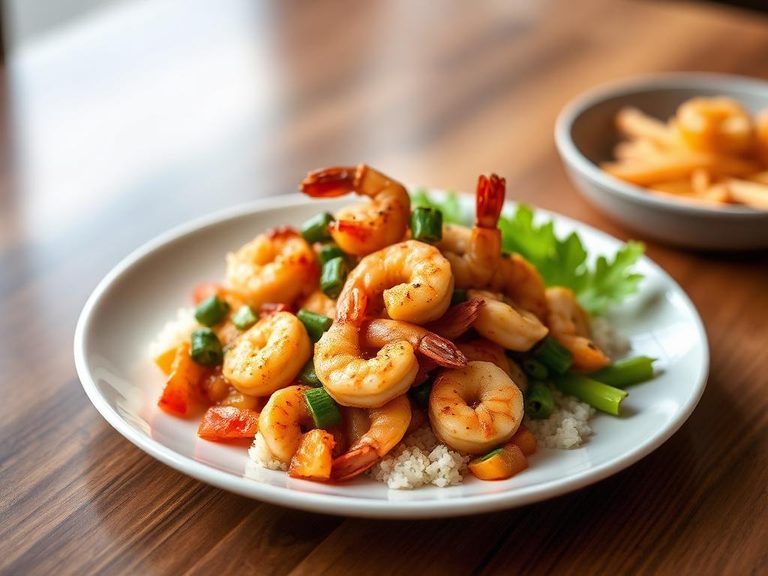
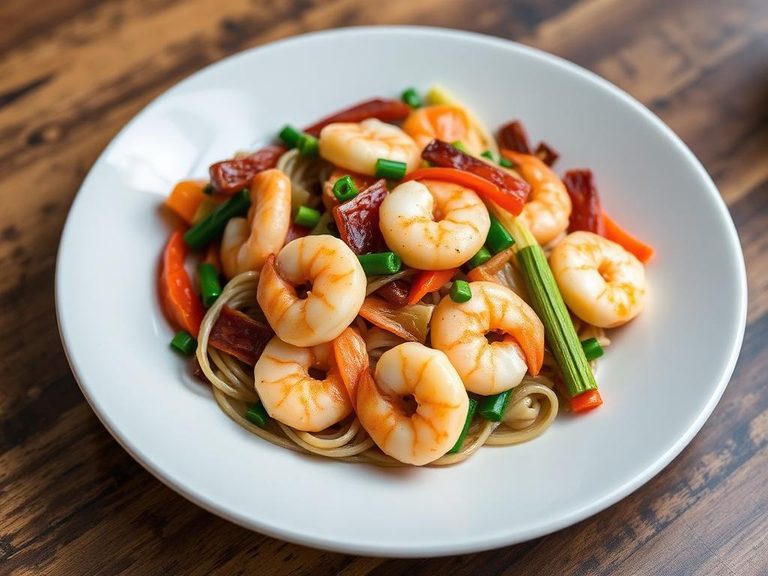
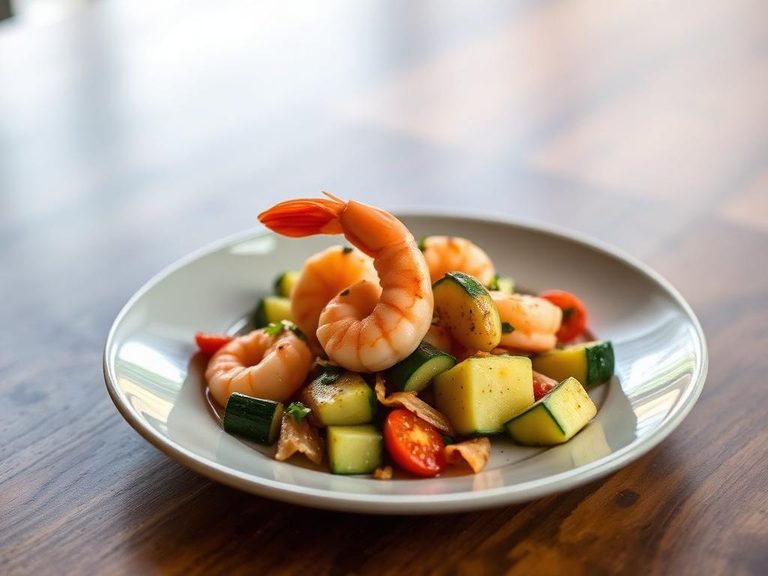
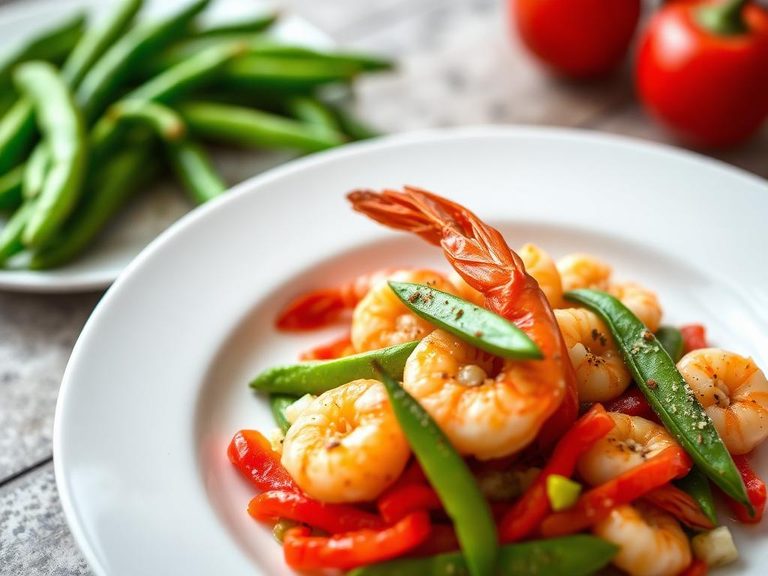
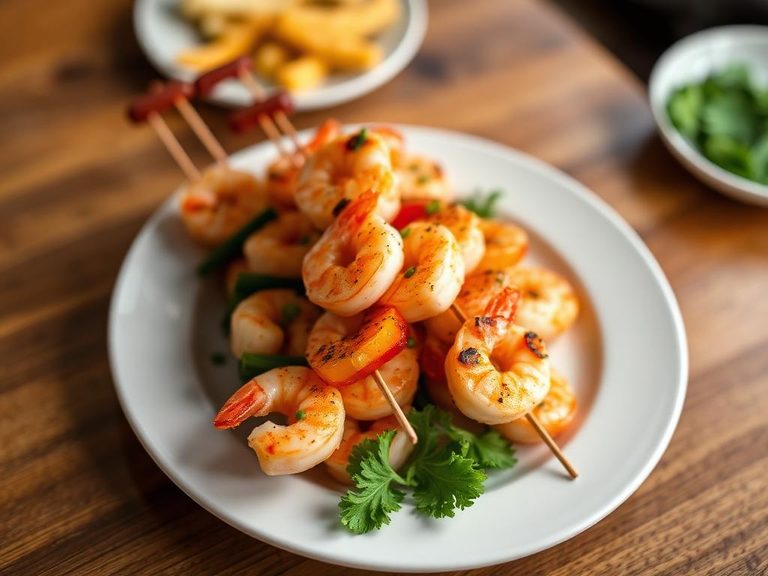
A light, savory stir-fry featuring succulent shrimp tossed with crisp, colorful vegetables like bell peppers, zucchini, and snap peas. The shrimp provides a clean, briny sweetness and satisfying bite, while the vegetables add a fresh, slightly crunchy texture. Nutritionally, it's a low-calorie, high-protein powerhouse with a balanced fat profile, making it an excellent choice for a lean, satisfying meal.
Calorie split: 32% protein · 17% carbs · 51% fat
↓ Full nutrition💚 Why it's loved
People love this dish for its clean, bright flavors and the satisfying contrast between the tender shrimp and crisp vegetables. It's incredibly versatile, easily adaptable to various cuisines, and feels both light and nourishing.
⚠️ Watch-outs & how to enjoy it better
The primary caution is for individuals with shellfish allergies, as shrimp is a common allergen. Additionally, the sodium content can be high depending on seasoning, so those monitoring blood pressure should be mindful. To counteract, use low-sodium seasonings like herbs and citrus, and ensure the dish is part of a varied diet.
Key benefits
- Excellent source of lean protein for muscle maintenance and satiety.
- Low in calories and carbohydrates, suitable for weight management diets.
- Rich in selenium and vitamin B12 from the shrimp.
- Provides fiber and antioxidants from the mixed vegetables.
- Naturally low in sugar and free from common allergens like soy.
🍽️ Popular dishes
🌍 Where it's eaten
💡 Did you know?
Shrimp are one of the most sustainable seafood choices, with many fisheries using responsible practices that minimize bycatch and environmental impact.
Full nutrition (USDA data · scales with serving)
| Water | 77.3 g |
| Energy | 118 kcal |
| Protein | 9.5 g |
| Total lipid (fat) | 6.6 g |
| Carbohydrate, by difference | 4.9 g |
| Fiber, total dietary | 1.0 g |
| Total Sugars | 1.6 g |
| Calcium, Ca | 48.0 mg |
| Iron, Fe | 0.45 mg |
| Magnesium, Mg | 24.0 mg |
| Phosphorus, P | 142 mg |
| Potassium, K | 211 mg |
| Sodium, Na | 242 mg |
| Zinc, Zn | 0.76 mg |
| Copper, Cu | 0.16 mg |
| Selenium, Se | 19.2 ug |
| Vitamin C, total ascorbic acid | 13.2 mg |
| Thiamin | 0.04 mg |
| Riboflavin | 0.07 mg |
| Niacin | 1.6 mg |
| Vitamin B-6 | 0.18 mg |
| Folate, total | 21.0 ug |
| Folic acid | 0.00 ug |
| Folate, food | 21.0 ug |
| Folate, DFE | 21.0 ug |
| Choline, total | 54.5 mg |
| Vitamin B-12 | 0.67 ug |
| Vitamin B-12, added | 0.00 ug |
| Vitamin A, RAE | 40.0 ug |
| Retinol | 32.0 ug |
| Carotene, beta | 96.0 ug |
| Carotene, alpha | 10.0 ug |
| Cryptoxanthin, beta | 1.0 ug |
| Lycopene | 0.00 ug |
| Lutein + zeaxanthin | 167 ug |
| Vitamin E (alpha-tocopherol) | 2.0 mg |
| Vitamin E, added | 0.00 mg |
| Vitamin D (D2 + D3) | 0.00 ug |
| Vitamin K (phylloquinone) | 21.7 ug |
| Alcohol, ethyl | 0.00 g |
| Caffeine | 0.00 mg |
| Theobromine | 0.00 mg |
Fat & fatty acid profile (per 100g)
| Fatty acids, total saturated | 1.0 g |
| SFA 4:0 | 0.00 g |
| SFA 6:0 | 0.00 g |
| SFA 8:0 | 0.00 g |
| SFA 10:0 | 0.00 g |
| SFA 12:0 | 0.00 g |
| SFA 14:0 | 0.01 g |
| SFA 16:0 | 0.69 g |
| SFA 18:0 | 0.23 g |
| Fatty acids, total monounsaturated | 2.6 g |
| MUFA 16:1 | 0.04 g |
| MUFA 18:1 | 2.5 g |
| MUFA 20:1 | 0.04 g |
| MUFA 22:1 | 0.00 g |
| Fatty acids, total polyunsaturated | 2.5 g |
| PUFA 18:2 | 2.1 g |
| PUFA 18:3 | 0.27 g |
| PUFA 18:4 | 0.00 g |
| PUFA 20:4 | 0.03 g |
| PUFA 20:5 n-3 (EPA) | 0.05 g |
| PUFA 22:5 n-3 (DPA) | 0.01 g |
| PUFA 22:6 n-3 (DHA) | 0.06 g |
| Cholesterol | 74.0 mg |
Amino acid profile (per 100g)
Estimated from Restaurant, Chinese, shrimp and vegetables — USDA does not publish this profile for Shrimp and vegetables excluding carrots.
| Tryptophan | 0.06 g |
| Threonine | 0.21 g |
| Isoleucine | 0.22 g |
| Leucine | 0.40 g |
| Lysine | 0.43 g |
| Methionine | 0.15 g |
| Cystine | 0.06 g |
| Phenylalanine | 0.21 g |
| Tyrosine | 0.18 g |
| Valine | 0.24 g |
| Arginine | 0.47 g |
| Histidine | 0.12 g |
| Alanine | 0.31 g |
| Aspartic acid | 0.59 g |
| Glutamic acid | 1.2 g |
| Glycine | 0.29 g |
| Proline | 0.25 g |
| Serine | 0.22 g |
FAQ
Is this dish suitable for a low-carb diet?
Yes, with only 4.86g of carbs per 100g, it's very low-carb and fits well into ketogenic or low-carb diets.
Can I make this dish without shrimp?
Absolutely. You can substitute shrimp with chicken, tofu, or another protein of your choice, adjusting cooking times accordingly.
How can I reduce the sodium in this dish?
Use fresh herbs, lemon juice, or garlic for flavor instead of salt. Opt for low-sodium seasonings and avoid pre-made sauces.
Nutrient density (calculated · NRF9.3)
Nutrient Rich Foods index: beneficial nutrients (protein, fiber, vitamins, minerals) minus saturated fat, added sugar & sodium, per 100 kcal.
NRF9.3 index — Fulgoni, Keast & Drewnowski, 2009. Computed from USDA nutrients.
Weight-loss friendliness (composite index)
Energy density 1.18 kcal/g · 32% calories from protein · 1.0 g fiber · 1.6 g sugar per 100 g.
Composite of energy density (Rolls et al., 1999), protein & fiber satiety, minus sugar. A calculated heuristic — ranks satiety-per-calorie, not a clinical measure.
Dietary load (calculated from USDA values)
Potential renal acid load. Positive = acid-forming, negative = alkaline-forming.
Sodium-to-potassium ratio: 1.15 (lower is better — aim for ≤ 1)
Sodium:potassium per WHO potassium guidance. Computed from USDA nutrients.