

Chicken or turkey and vegetables excluding carrots, broccoli, and dark-green leafy; no potatoes, soy-based sauce
Common food
A lean, savory stir-fry or sauté of diced chicken or turkey breast with a medley of crisp vegetables like bell peppers, zucchini, and onions, cooked in a light broth or oil. The texture is tender with a satisfying crunch from the vegetables, offering a clean, savory flavor profile without heavy sauces. Nutritionally, it's a high-protein, low-carb option that provides substantial energy with minimal calories.
Calorie split: 32% protein · 13% carbs · 55% fat
↓ Full nutrition💚 Why it's loved
People love this dish for its simplicity and adaptability; it’s a blank canvas that absorbs herbs, spices, and aromatics beautifully. It’s a staple in home kitchens worldwide for quick, healthy weeknight meals that feel both nourishing and satisfying.
⚠️ Watch-outs & how to enjoy it better
The lean protein can become dry if overcooked, and the dish may lack richness for those accustomed to creamier or starchier meals. To counteract dryness, cook the poultry quickly over high heat or finish with a splash of broth; to add richness, incorporate a small amount of healthy fat like olive oil or avocado.
Key benefits
- Excellent source of lean protein for muscle maintenance
- Low in carbohydrates, suitable for low-carb diets
- Provides dietary fiber for digestive health
- Naturally low in sugar
- Versatile base for various flavor profiles
🍽️ Popular dishes
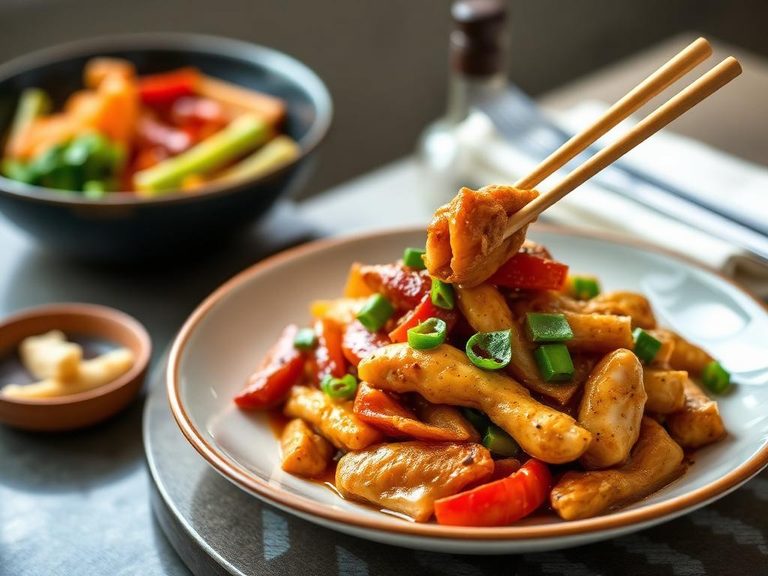
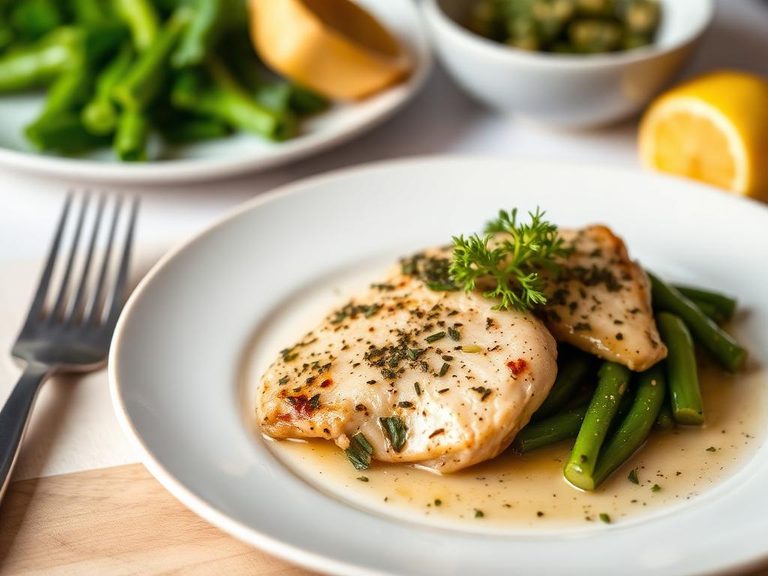
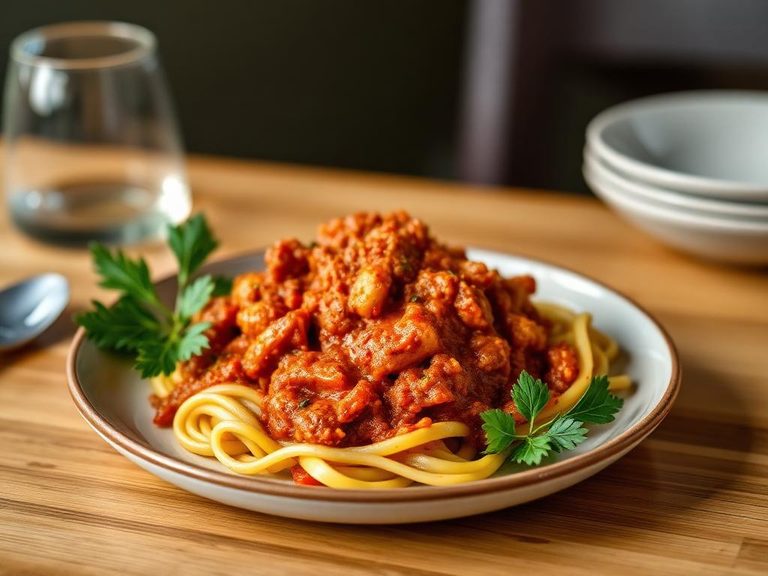
🌍 Where it's eaten
💡 Did you know?
The combination of chicken and vegetables is one of the most universally adapted meal templates in human history, with evidence of similar preparations in ancient Roman and Chinese culinary texts.
Full nutrition (USDA data · scales with serving)
| Water | 75.5 g |
| Energy | 133 kcal |
| Protein | 10.7 g |
| Total lipid (fat) | 8.2 g |
| Carbohydrate, by difference | 4.4 g |
| Fiber, total dietary | 1.0 g |
| Total Sugars | 1.6 g |
| Calcium, Ca | 22.0 mg |
| Iron, Fe | 0.60 mg |
| Magnesium, Mg | 19.0 mg |
| Phosphorus, P | 112 mg |
| Potassium, K | 234 mg |
| Sodium, Na | 352 mg |
| Zinc, Zn | 0.76 mg |
| Copper, Cu | 0.09 mg |
| Selenium, Se | 10.2 ug |
| Vitamin C, total ascorbic acid | 13.2 mg |
| Thiamin | 0.06 mg |
| Riboflavin | 0.13 mg |
| Niacin | 3.2 mg |
| Vitamin B-6 | 0.18 mg |
| Folate, total | 15.0 ug |
| Folic acid | 0.00 ug |
| Folate, food | 15.0 ug |
| Folate, DFE | 15.0 ug |
| Choline, total | 29.4 mg |
| Vitamin B-12 | 0.13 ug |
| Vitamin B-12, added | 0.00 ug |
| Vitamin A, RAE | 11.0 ug |
| Retinol | 3.0 ug |
| Carotene, beta | 97.0 ug |
| Carotene, alpha | 10.0 ug |
| Cryptoxanthin, beta | 1.0 ug |
| Lycopene | 0.00 ug |
| Lutein + zeaxanthin | 167 ug |
| Vitamin E (alpha-tocopherol) | 1.4 mg |
| Vitamin E, added | 0.00 mg |
| Vitamin D (D2 + D3) | 0.00 ug |
| Vitamin K (phylloquinone) | 21.6 ug |
| Alcohol, ethyl | 0.00 g |
| Caffeine | 0.00 mg |
| Theobromine | 0.00 mg |
Fat & fatty acid profile (per 100g)
| Fatty acids, total saturated | 1.4 g |
| SFA 4:0 | 0.00 g |
| SFA 6:0 | 0.00 g |
| SFA 8:0 | 0.00 g |
| SFA 10:0 | 0.00 g |
| SFA 12:0 | 0.00 g |
| SFA 14:0 | 0.01 g |
| SFA 16:0 | 1.0 g |
| SFA 18:0 | 0.27 g |
| Fatty acids, total monounsaturated | 3.4 g |
| MUFA 16:1 | 0.18 g |
| MUFA 18:1 | 3.2 g |
| MUFA 20:1 | 0.04 g |
| MUFA 22:1 | 0.00 g |
| Fatty acids, total polyunsaturated | 2.6 g |
| PUFA 18:2 | 2.3 g |
| PUFA 18:3 | 0.28 g |
| PUFA 18:4 | 0.00 g |
| PUFA 20:4 | 0.01 g |
| PUFA 20:5 n-3 (EPA) | 0.00 g |
| PUFA 22:5 n-3 (DPA) | 0.00 g |
| PUFA 22:6 n-3 (DHA) | 0.00 g |
| Cholesterol | 40.0 mg |
Amino acid profile (per 100g)
Estimated from Turnover, chicken- or turkey-, and vegetable-filled, reduced fat, frozen — USDA does not publish this profile for Chicken or turkey and vegetables excluding carrots.
| Tryptophan | 0.16 g |
| Threonine | 0.41 g |
| Isoleucine | 0.47 g |
| Leucine | 0.80 g |
| Lysine | 0.61 g |
| Methionine | 0.23 g |
| Cystine | 0.13 g |
| Phenylalanine | 0.47 g |
| Tyrosine | 0.37 g |
| Valine | 0.53 g |
| Arginine | 0.51 g |
| Histidine | 0.30 g |
| Alanine | 0.45 g |
| Aspartic acid | 0.80 g |
| Glutamic acid | 2.2 g |
| Glycine | 0.38 g |
| Proline | 0.87 g |
| Serine | 0.42 g |
| Hydroxyproline | 0.00 g |
FAQ
Can I use chicken thighs instead of breast?
Yes, chicken thighs will work but will increase the fat content and calorie count. They are more forgiving and stay moist, which can be an advantage.
What vegetables work best besides the excluded ones?
Bell peppers, zucchini, onions, mushrooms, snap peas, asparagus, and green beans are all excellent choices that hold up well to sautéing or stir-frying.
How do I prevent the vegetables from getting soggy?
Cook the vegetables in a single layer over high heat without overcrowding the pan. Add them in stages, starting with the ones that take longest to cook (like onions), and finish with quicker-cooking ones (like snap peas).
Nutrient density (calculated · NRF9.3)
Nutrient Rich Foods index: beneficial nutrients (protein, fiber, vitamins, minerals) minus saturated fat, added sugar & sodium, per 100 kcal.
NRF9.3 index — Fulgoni, Keast & Drewnowski, 2009. Computed from USDA nutrients.
Weight-loss friendliness (composite index)
Energy density 1.33 kcal/g · 32% calories from protein · 1.0 g fiber · 1.6 g sugar per 100 g.
Composite of energy density (Rolls et al., 1999), protein & fiber satiety, minus sugar. A calculated heuristic — ranks satiety-per-calorie, not a clinical measure.
Dietary load (calculated from USDA values)
Potential renal acid load. Positive = acid-forming, negative = alkaline-forming.
Sodium-to-potassium ratio: 1.50 (lower is better — aim for ≤ 1)
Sodium:potassium per WHO potassium guidance. Computed from USDA nutrients.