

Sauce, teriyaki, ready-to-serve, reduced sodium
Whole food · Soups, Sauces, and Gravies

Photo: Wikipedia
This is a glossy, mahogany-brown sauce with a syrupy consistency, offering a balanced sweet-savory flavor profile with notes of soy, mirin, and caramelized sugar. Nutritionally, it's a low-fat, carbohydrate-based condiment, with its calories coming almost entirely from sugar.
Calorie split: 28% protein · 72% carbs · 0% fat
↓ Full nutrition💚 Why it's loved
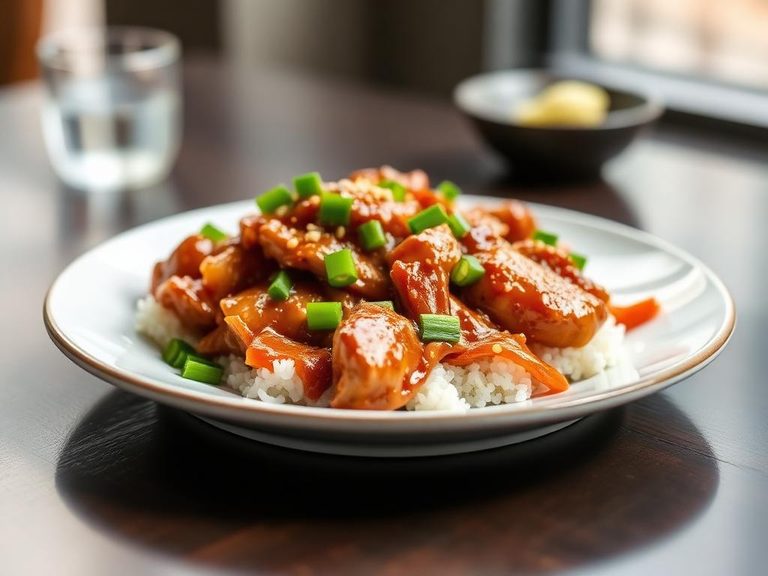
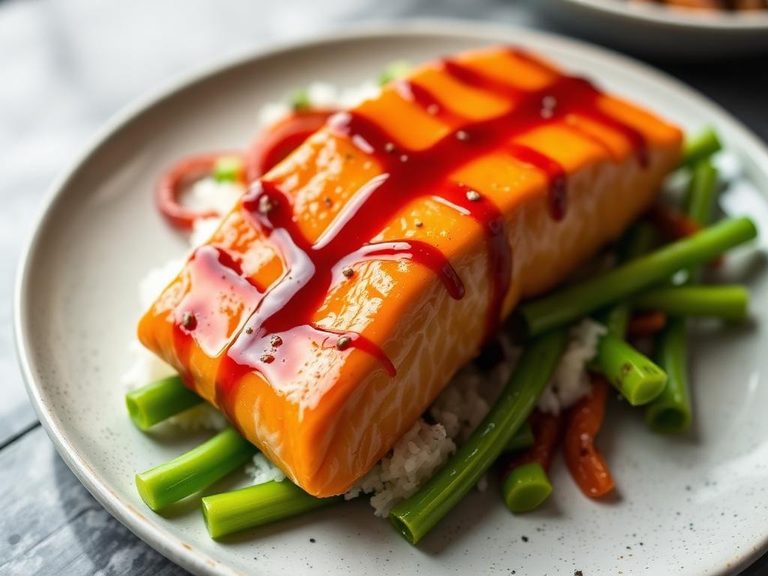
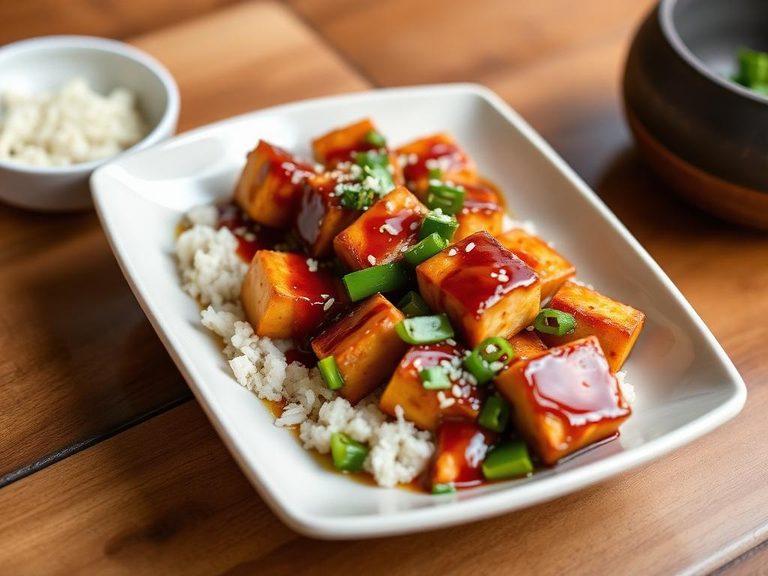
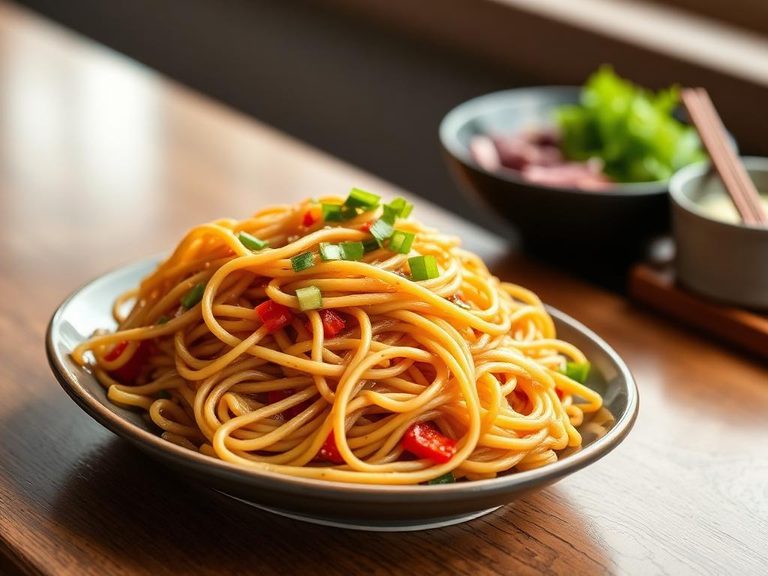
People love it for its magical ability to transform simple proteins and vegetables with a glossy, sweet-savory glaze in seconds. It's a cornerstone of Japanese-inspired home cooking, offering a familiar, crowd-pleasing flavor.
⚠️ Watch-outs & how to enjoy it better
The high sugar content (over 14g per 100g) can cause rapid blood-sugar spikes, making it a concern for diabetics or those monitoring glycemic load. To counteract this, use it sparingly as a finishing glaze rather than a cooking sauce, and pair it with fiber-rich vegetables and a lean protein to slow sugar absorption.
Key benefits
- Adds instant umami depth to dishes
- Convenient ready-to-use format
- Lower sodium than traditional teriyaki
- Fat-free flavor enhancer
- Glazes and caramelizes beautifully
🍽️ Popular dishes
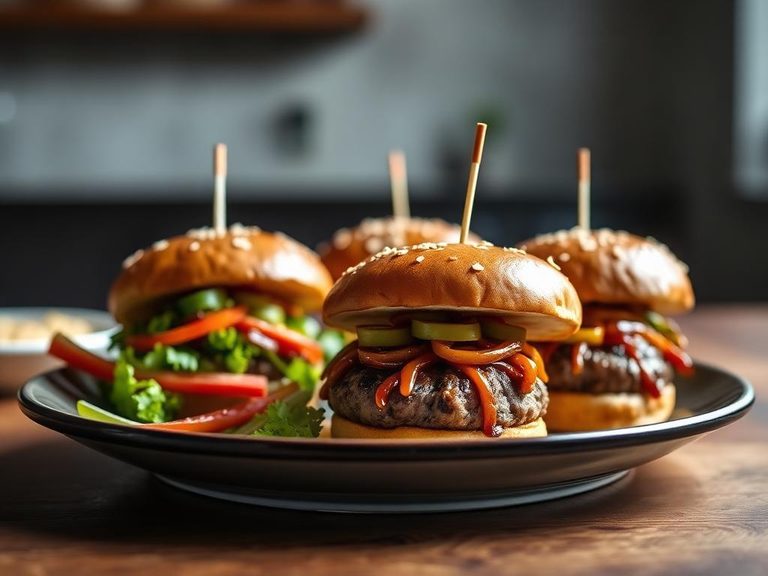
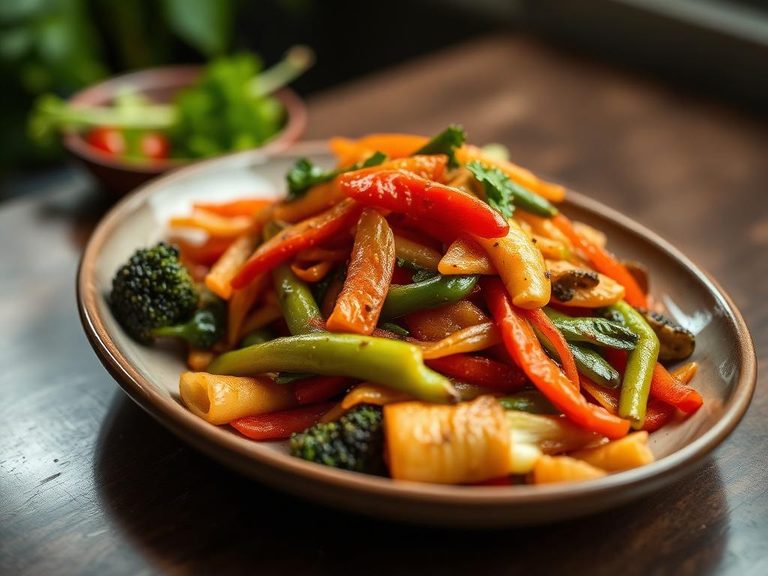
🌍 Where it's eaten
💡 Did you know?
Authentic Japanese 'teriyaki' is a cooking technique (teri = shine, yaki = grill/broil) where a simple sauce is brushed on during the final minutes of cooking; most bottled versions are much sweeter and thicker than traditional preparations.
Full nutrition (USDA data · scales with serving)
| Water | 69.7 g |
| Energy | 89.0 kcal |
| Energy | 372 kj |
| Protein | 5.9 g |
| Total lipid (fat) | 0.02 g |
| Ash | 8.4 g |
| Carbohydrate, by difference | 15.6 g |
| Fiber, total dietary | 0.10 g |
| Total Sugars | 14.1 g |
| Calcium, Ca | 25.0 mg |
| Iron, Fe | 1.7 mg |
| Magnesium, Mg | 61.0 mg |
| Phosphorus, P | 154 mg |
| Potassium, K | 225 mg |
| Sodium, Na | 1778 mg |
| Zinc, Zn | 0.10 mg |
| Copper, Cu | 0.10 mg |
| Selenium, Se | 0.80 ug |
| Vitamin C, total ascorbic acid | 0.00 mg |
| Thiamin | 0.03 mg |
| Riboflavin | 0.07 mg |
| Niacin | 1.3 mg |
| Vitamin B-6 | 0.10 mg |
| Folate, total | 8.0 ug |
| Folic acid | 0.00 ug |
| Folate, food | 8.0 ug |
| Folate, DFE | 8.0 ug |
| Choline, total | 19.5 mg |
| Vitamin B-12 | 0.00 ug |
| Vitamin B-12, added | 0.00 ug |
| Vitamin A, RAE | 0.00 ug |
| Retinol | 0.00 ug |
| Carotene, beta | 0.00 ug |
| Carotene, alpha | 0.00 ug |
| Cryptoxanthin, beta | 0.00 ug |
| Vitamin A, IU | 1.0 iu |
| Lycopene | 0.00 ug |
| Lutein + zeaxanthin | 0.00 ug |
| Vitamin E (alpha-tocopherol) | 0.00 mg |
| Vitamin E, added | 0.00 mg |
| Tocopherol, beta | 0.00 mg |
| Vitamin D (D2 + D3), International Units | 0.00 iu |
| Vitamin D (D2 + D3) | 0.00 ug |
| Vitamin K (phylloquinone) | 0.00 ug |
| Alcohol, ethyl | 0.00 g |
| Caffeine | 0.00 mg |
| Theobromine | 0.00 mg |
Fat & fatty acid profile (per 100g)
| Fatty acids, total saturated | 0.00 g |
| SFA 4:0 | 0.00 g |
| SFA 6:0 | 0.00 g |
| SFA 8:0 | 0.00 g |
| SFA 10:0 | 0.00 g |
| SFA 12:0 | 0.00 g |
| SFA 14:0 | 0.00 g |
| SFA 16:0 | 0.00 g |
| SFA 18:0 | 0.00 g |
| Fatty acids, total monounsaturated | 0.00 g |
| MUFA 16:1 | 0.00 g |
| MUFA 18:1 | 0.00 g |
| MUFA 20:1 | 0.00 g |
| MUFA 22:1 | 0.00 g |
| Fatty acids, total polyunsaturated | 0.00 g |
| PUFA 18:2 | 0.00 g |
| PUFA 18:3 | 0.00 g |
| PUFA 18:4 | 0.00 g |
| PUFA 20:4 | 0.00 g |
| PUFA 20:5 n-3 (EPA) | 0.00 g |
| PUFA 22:5 n-3 (DPA) | 0.00 g |
| PUFA 22:6 n-3 (DHA) | 0.00 g |
| Fatty acids, total trans | 0.00 g |
| Cholesterol | 0.00 mg |
Amino acid profile (per 100g)
Estimated from Sauce, homemade, white, medium — USDA does not publish this profile for Sauce.
| Tryptophan | 0.04 g |
| Threonine | 0.14 g |
| Isoleucine | 0.19 g |
| Leucine | 0.30 g |
| Lysine | 0.24 g |
| Methionine | 0.08 g |
| Cystine | 0.03 g |
| Phenylalanine | 0.15 g |
| Tyrosine | 0.15 g |
| Valine | 0.20 g |
| Arginine | 0.11 g |
| Histidine | 0.08 g |
| Alanine | 0.10 g |
| Aspartic acid | 0.23 g |
| Glutamic acid | 0.64 g |
| Glycine | 0.07 g |
| Proline | 0.30 g |
| Serine | 0.17 g |
FAQ
Is reduced-sodium teriyaki sauce actually healthy?
It's a better choice for blood pressure management than regular teriyaki, but it remains high in sugar. It's best viewed as a flavorful condiment to be used in moderation, not a health food.
Can I use this as a marinade?
Yes, but its high sugar content means it can burn easily over high heat. For marinating, use it for a shorter time (30 mins) and cook with indirect heat or finish under a broiler briefly.
What's the difference between this and regular teriyaki sauce?
This version has significantly less sodium. The taste may be slightly less salty, allowing the sweetness and other flavors to come forward more prominently.
Nutrient density (calculated · NRF9.3)
Nutrient Rich Foods index: beneficial nutrients (protein, fiber, vitamins, minerals) minus saturated fat, added sugar & sodium, per 100 kcal.
NRF9.3 index — Fulgoni, Keast & Drewnowski, 2009. Computed from USDA nutrients.
Weight-loss friendliness (composite index)
Energy density 0.89 kcal/g · 27% calories from protein · 0.1 g fiber · 14.1 g sugar per 100 g.
Composite of energy density (Rolls et al., 1999), protein & fiber satiety, minus sugar. A calculated heuristic — ranks satiety-per-calorie, not a clinical measure.
Dietary load (calculated from USDA values)
Potential renal acid load. Positive = acid-forming, negative = alkaline-forming.
Sodium-to-potassium ratio: 7.90 (lower is better — aim for ≤ 1)
Sodium:potassium per WHO potassium guidance. Computed from USDA nutrients.