

Salad dressing, french dressing, reduced fat
Whole food · Fats and Oils

Photo: Wikipedia
This is a lighter take on the classic, vibrant orange-red French dressing, known for its smooth, pourable consistency and a sweet-tangy flavor profile. It delivers a bold, zesty punch with a noticeable sweetness from its sugar content, making it a staple for quickly dressing up crisp salads. Compared to regular versions, it cuts the fat significantly while retaining that signature bright color and creamy mouthfeel.
Calorie split: 1% protein · 54% carbs · 45% fat
↓ Full nutrition💚 Why it's loved
People love it for its nostalgic, sweet-and-sour flavor that instantly livens up a simple garden salad or coleslaw. Its versatility extends beyond salads, making it a popular dip for chicken fingers, fries, and a key ingredient in classic party snacks like marinated vegetable trays.
⚠️ Watch-outs & how to enjoy it better
The high sugar content can lead to blood-sugar spikes, and it often contains sodium and preservatives. To counteract this, use it sparingly as a flavor accent rather than a drenching sauce, and pair your salad with a lean protein (like grilled chicken) and healthy fats (like avocado or nuts) to create a more balanced, blood-sugar-stable meal.
Key benefits
- Significantly lower in fat than regular French dressing
- Provides a quick source of energy from carbohydrates
- Adds flavor and moisture to salads without excessive calories
- A convenient way to encourage vegetable consumption
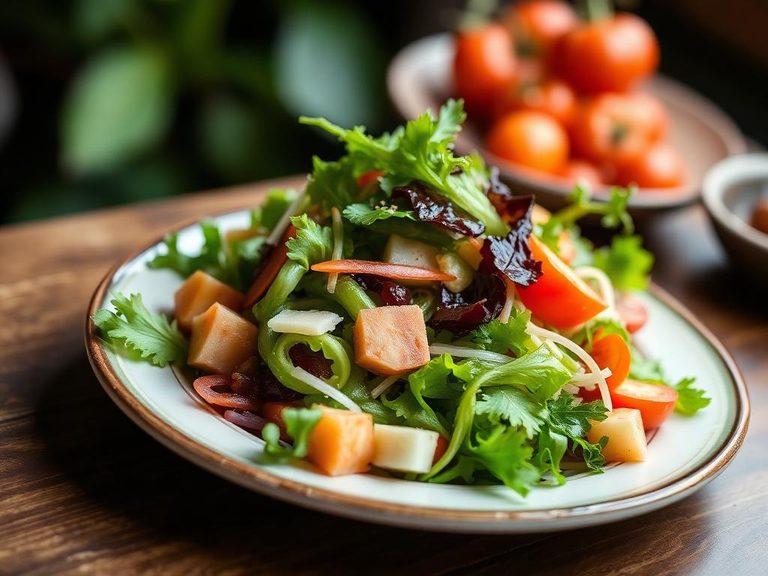
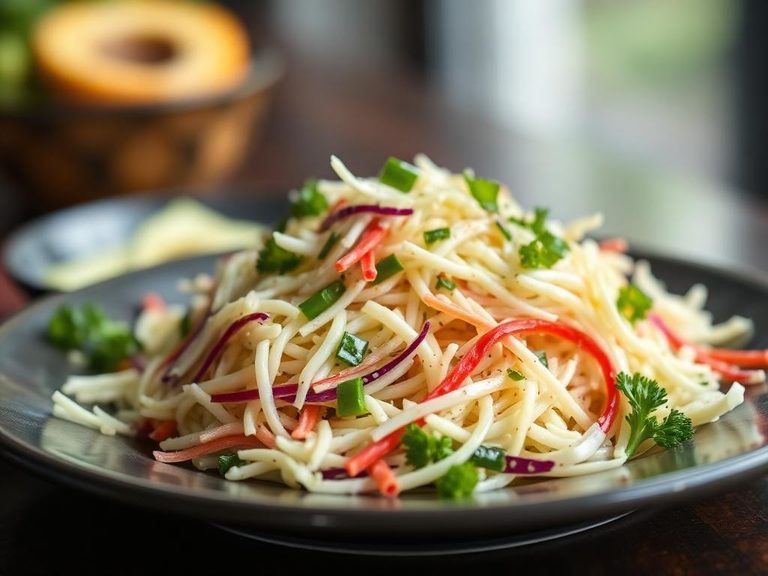
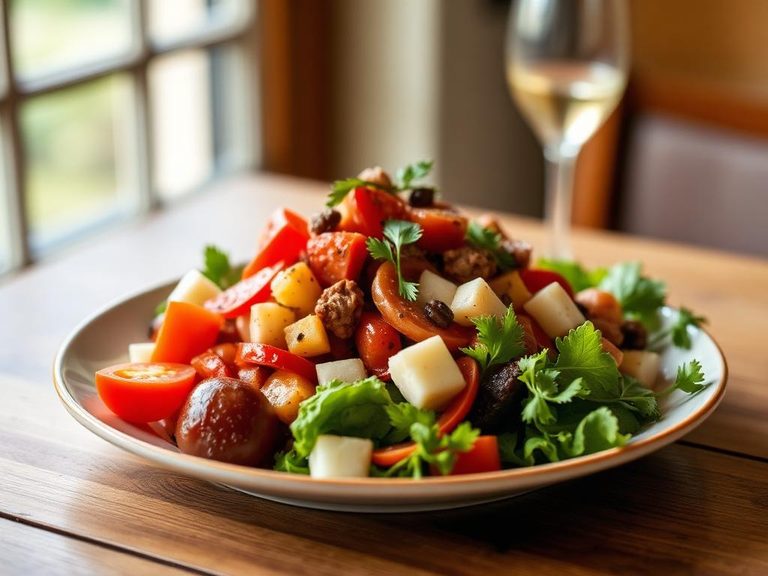
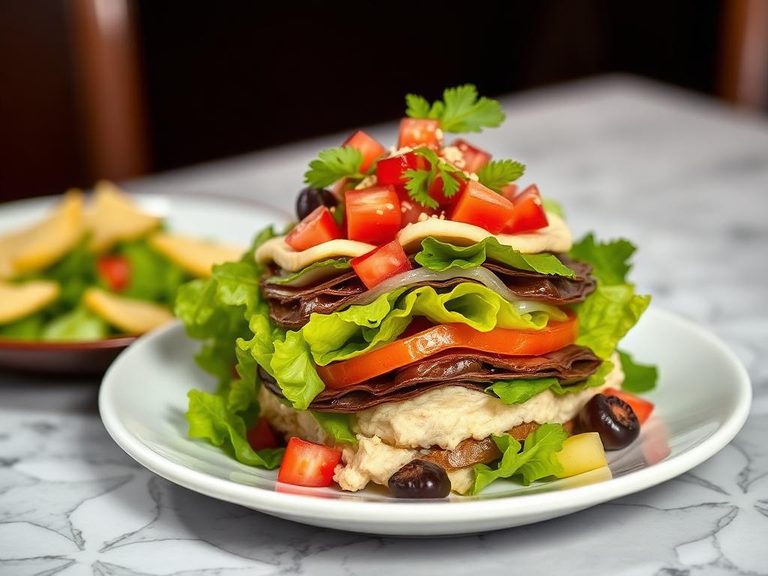
🍽️ Popular dishes


🌍 Where it's eaten
💡 Did you know?
Despite its name, French dressing as Americans know it—with its sweet, ketchup-based profile—is largely an American invention, not traditional French cuisine. The original French dressing was likely a simple vinaigrette.
Full nutrition (USDA data · scales with serving)
| Water | 54.3 g |
| Energy | 222 kcal |
| Energy | 928 kj |
| Protein | 0.58 g |
| Total lipid (fat) | 11.5 g |
| Ash | 2.4 g |
| Carbohydrate, by difference | 31.2 g |
| Fiber, total dietary | 1.5 g |
| Total Sugars | 16.9 g |
| Calcium, Ca | 11.0 mg |
| Iron, Fe | 0.73 mg |
| Magnesium, Mg | 8.0 mg |
| Phosphorus, P | 16.0 mg |
| Potassium, K | 107 mg |
| Sodium, Na | 838 mg |
| Zinc, Zn | 0.20 mg |
| Copper, Cu | 0.16 mg |
| Manganese, Mn | 0.11 mg |
| Selenium, Se | 1.6 ug |
| Fluoride, F | 18.1 ug |
| Vitamin C, total ascorbic acid | 4.8 mg |
| Thiamin | 0.02 mg |
| Riboflavin | 0.05 mg |
| Niacin | 0.47 mg |
| Pantothenic acid | 0.00 mg |
| Vitamin B-6 | 0.06 mg |
| Folate, total | 2.0 ug |
| Folic acid | 0.00 ug |
| Folate, food | 2.0 ug |
| Folate, DFE | 2.0 ug |
| Choline, total | 4.0 mg |
| Vitamin B-12 | 0.00 ug |
| Vitamin B-12, added | 0.00 ug |
| Vitamin A, RAE | 27.0 ug |
| Retinol | 0.00 ug |
| Carotene, beta | 289 ug |
| Carotene, alpha | 0.00 ug |
| Cryptoxanthin, beta | 70.0 ug |
| Vitamin A, IU | 541 iu |
| Lycopene | 2530 ug |
| Lutein + zeaxanthin | 124 ug |
| Vitamin E (alpha-tocopherol) | 1.0 mg |
| Vitamin E, added | 0.00 mg |
| Vitamin D (D2 + D3), International Units | 0.00 iu |
| Vitamin D (D2 + D3) | 0.00 ug |
| Vitamin K (phylloquinone) | 17.8 ug |
| Alcohol, ethyl | 0.00 g |
| Caffeine | 0.00 mg |
| Theobromine | 0.00 mg |
Fat & fatty acid profile (per 100g)
| Fatty acids, total saturated | 0.84 g |
| SFA 4:0 | 0.00 g |
| SFA 6:0 | 0.00 g |
| SFA 8:0 | 0.00 g |
| SFA 10:0 | 0.00 g |
| SFA 12:0 | 0.00 g |
| SFA 14:0 | 0.00 g |
| SFA 16:0 | 0.61 g |
| SFA 18:0 | 0.23 g |
| Fatty acids, total monounsaturated | 4.5 g |
| MUFA 16:1 | 0.00 g |
| MUFA 18:1 | 4.4 g |
| MUFA 20:1 | 0.11 g |
| MUFA 22:1 | 0.00 g |
| Fatty acids, total polyunsaturated | 3.9 g |
| PUFA 18:2 | 3.0 g |
| PUFA 18:3 | 0.90 g |
| PUFA 18:4 | 0.00 g |
| PUFA 20:4 | 0.00 g |
| PUFA 20:5 n-3 (EPA) | 0.00 g |
| PUFA 22:5 n-3 (DPA) | 0.00 g |
| PUFA 22:6 n-3 (DHA) | 0.00 g |
| Cholesterol | 0.00 mg |
Amino acid profile (per 100g)
| Tryptophan | 0.00 g |
| Threonine | 0.01 g |
| Isoleucine | 0.01 g |
| Leucine | 0.01 g |
| Lysine | 0.02 g |
| Methionine | 0.00 g |
| Cystine | 0.00 g |
| Phenylalanine | 0.02 g |
| Tyrosine | 0.01 g |
| Valine | 0.01 g |
| Arginine | 0.01 g |
| Histidine | 0.01 g |
| Alanine | 0.03 g |
| Aspartic acid | 0.09 g |
| Glutamic acid | 0.25 g |
| Glycine | 0.01 g |
| Proline | 0.01 g |
| Serine | 0.01 g |
FAQ
How is reduced-fat French dressing made?
It's typically made by reducing the amount of oil and sometimes using thickeners or emulsifiers to maintain a creamy texture. The sugar content often remains high to preserve flavor.
Can I use it in cooking or just for salads?
It's most common as a cold dressing or dip, but it can be used as a marinade for chicken or pork before grilling, or as a tangy base for a quick barbecue sauce.
Is it gluten-free?
Most commercial brands are, but you must check the label. Some may contain malt vinegar or other additives derived from gluten-containing grains.
Nutrient density (calculated · NRF9.3)
Nutrient Rich Foods index: beneficial nutrients (protein, fiber, vitamins, minerals) minus saturated fat, added sugar & sodium, per 100 kcal.
NRF9.3 index — Fulgoni, Keast & Drewnowski, 2009. Computed from USDA nutrients.
Weight-loss friendliness (composite index)
Energy density 2.22 kcal/g · 1% calories from protein · 1.5 g fiber · 16.9 g sugar per 100 g.
Composite of energy density (Rolls et al., 1999), protein & fiber satiety, minus sugar. A calculated heuristic — ranks satiety-per-calorie, not a clinical measure.
Dietary load (calculated from USDA values)
Potential renal acid load. Positive = acid-forming, negative = alkaline-forming.
Sodium-to-potassium ratio: 7.83 (lower is better — aim for ≤ 1)
Sodium:potassium per WHO potassium guidance. Computed from USDA nutrients.