

Salad dressing, french dressing, reduced calorie
Whole food · Fats and Oils

Photo: Wikipedia
Reduced-calorie French dressing is a vibrant, orange-hued, emulsified condiment that offers a tangy, sweet, and slightly savory flavor profile with a smooth, pourable consistency. It provides a lighter alternative to traditional French dressing, cutting calories and fat while retaining its characteristic zesty kick. Its nutrition is dominated by carbohydrates, specifically added sugars, with minimal protein or fiber.
Calorie split: 1% protein · 48% carbs · 52% fat
↓ Full nutrition💚 Why it's loved
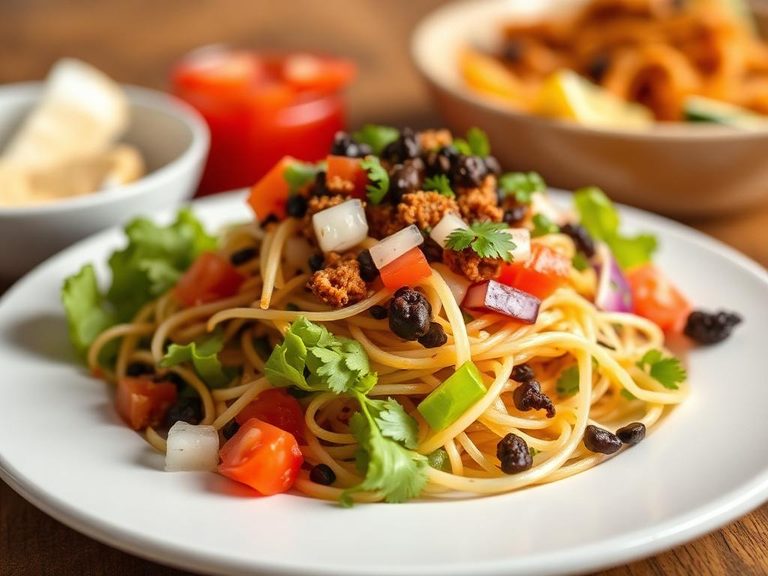
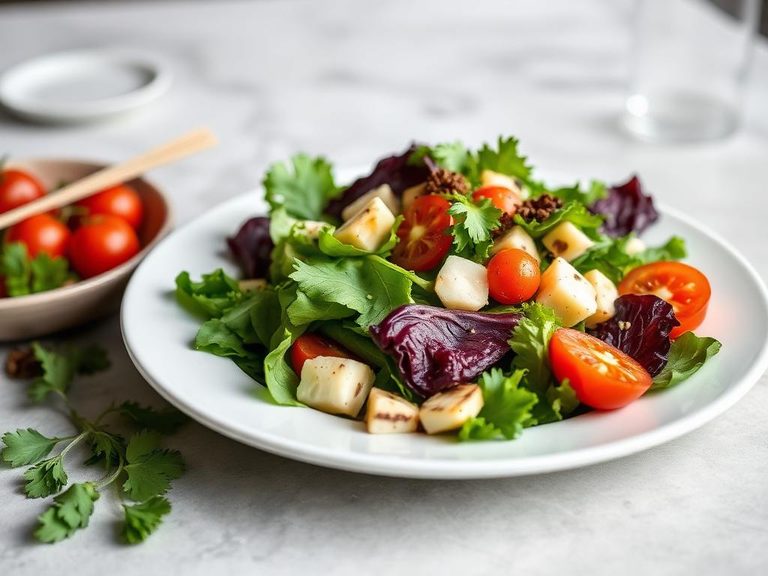
People love it for its nostalgic, sweet-tangy flavor that can elevate a simple green salad or a plate of raw vegetables. Its versatility makes it a go-to dressing for everything from taco salads to coleslaw, and it holds a special place in American diner and home cooking culture.
⚠️ Watch-outs & how to enjoy it better
The high sugar content (nearly 26g per 100g) can cause rapid blood-sugar spikes, which is a concern for individuals managing diabetes or insulin resistance. To mitigate this, pair it with a high-fiber salad (like kale or broccoli) and a source of protein or healthy fat (like grilled chicken or avocado) to slow sugar absorption. Also, be mindful of portion size; using a measured tablespoon or two instead of a free pour can significantly reduce sugar intake.
Key benefits
- Lower in calories and fat than regular French dressing
- Adds significant flavor to salads without excessive fat
- Provides a quick source of energy from carbohydrates
- Convenient and shelf-stable for easy meal preparation
🍽️ Popular dishes



🌍 Where it's eaten
💡 Did you know?
Despite its name, French dressing in the United States is not from France; it's an American invention, likely inspired by French vinaigrettes but made sweeter and more emulsified, and it was famously popularized in the mid-20th century by brands like Kraft.
Full nutrition (USDA data · scales with serving)
| Water | 59.0 g |
| Energy | 227 kcal |
| Energy | 948 kj |
| Protein | 0.40 g |
| Total lipid (fat) | 13.0 g |
| Ash | 2.4 g |
| Carbohydrate, by difference | 27.0 g |
| Fiber, total dietary | 0.00 g |
| Total Sugars | 25.9 g |
| Calcium, Ca | 11.0 mg |
| Iron, Fe | 0.40 mg |
| Magnesium, Mg | 9.0 mg |
| Phosphorus, P | 14.0 mg |
| Potassium, K | 79.0 mg |
| Sodium, Na | 804 mg |
| Zinc, Zn | 0.18 mg |
| Copper, Cu | 0.01 mg |
| Manganese, Mn | 0.07 mg |
| Selenium, Se | 1.6 ug |
| Vitamin C, total ascorbic acid | 0.00 mg |
| Thiamin | 0.00 mg |
| Riboflavin | 0.00 mg |
| Niacin | 0.00 mg |
| Pantothenic acid | 0.03 mg |
| Vitamin B-6 | 0.00 mg |
| Folate, total | 2.0 ug |
| Folic acid | 0.00 ug |
| Folate, food | 2.0 ug |
| Folate, DFE | 2.0 ug |
| Choline, total | 4.6 mg |
| Vitamin B-12 | 0.00 ug |
| Vitamin B-12, added | 0.00 ug |
| Vitamin A, RAE | 10.0 ug |
| Retinol | 0.00 ug |
| Carotene, beta | 120 ug |
| Carotene, alpha | 4.0 ug |
| Cryptoxanthin, beta | 0.00 ug |
| Vitamin A, IU | 204 iu |
| Lycopene | 3843 ug |
| Lutein + zeaxanthin | 0.00 ug |
| Vitamin E (alpha-tocopherol) | 2.9 mg |
| Vitamin E, added | 0.00 mg |
| Vitamin D (D2 + D3), International Units | 0.00 iu |
| Vitamin D (D2 + D3) | 0.00 ug |
| Vitamin K (phylloquinone) | 4.8 ug |
| Alcohol, ethyl | 0.00 g |
| Caffeine | 0.00 mg |
| Theobromine | 0.00 mg |
Fat & fatty acid profile (per 100g)
| Fatty acids, total saturated | 1.9 g |
| SFA 4:0 | 0.00 g |
| SFA 6:0 | 0.00 g |
| SFA 8:0 | 0.00 g |
| SFA 10:0 | 0.00 g |
| SFA 12:0 | 0.00 g |
| SFA 14:0 | 0.01 g |
| SFA 16:0 | 1.3 g |
| SFA 18:0 | 0.49 g |
| Fatty acids, total monounsaturated | 3.0 g |
| MUFA 16:1 | 0.03 g |
| MUFA 18:1 | 3.0 g |
| MUFA 20:1 | 0.03 g |
| MUFA 22:1 | 0.00 g |
| Fatty acids, total polyunsaturated | 7.5 g |
| PUFA 18:2 | 6.6 g |
| PUFA 18:3 | 0.88 g |
| PUFA 18:4 | 0.00 g |
| PUFA 20:4 | 0.00 g |
| PUFA 20:5 n-3 (EPA) | 0.00 g |
| PUFA 22:5 n-3 (DPA) | 0.00 g |
| PUFA 22:6 n-3 (DHA) | 0.00 g |
| Cholesterol | 0.00 mg |
Amino acid profile (per 100g)
Estimated from Salad dressing, sesame seed dressing, regular — USDA does not publish this profile for Salad dressing.
| Tryptophan | 0.05 g |
| Threonine | 0.05 g |
| Isoleucine | 0.05 g |
| Leucine | 0.08 g |
| Lysine | 0.14 g |
| Methionine | 0.03 g |
| Cystine | 0.00 g |
| Phenylalanine | 0.09 g |
| Tyrosine | 0.10 g |
| Valine | 0.07 g |
| Arginine | 0.40 g |
| Histidine | 0.03 g |
| Alanine | 0.00 g |
| Aspartic acid | 0.00 g |
| Glutamic acid | 0.46 g |
| Glycine | 0.00 g |
| Proline | 0.00 g |
| Serine | 0.00 g |
FAQ
How does reduced-calorie French dressing differ from regular French dressing?
Reduced-calorie versions typically use less oil and sugar, often substituting with water, thickeners like xanthan gum, or artificial sweeteners. This results in fewer calories and less fat per serving compared to the traditional, oil-heavy dressing.
Is reduced-calorie French dressing suitable for a low-carb diet?
Generally, no. With about 27g of carbohydrates per 100g, mostly from sugar, it is high in carbs and not ideal for strict low-carb or ketogenic diets. It's better suited for moderate-carb meal plans.
Can I use this dressing as a marinade?
Yes, it can be used as a marinade for chicken, pork, or vegetables. Its acidity and sweetness help tenderize and flavor proteins, but be aware that the sugar content can cause quicker browning or charring during cooking.
Nutrient density (calculated · NRF9.3)
Nutrient Rich Foods index: beneficial nutrients (protein, fiber, vitamins, minerals) minus saturated fat, added sugar & sodium, per 100 kcal.
NRF9.3 index — Fulgoni, Keast & Drewnowski, 2009. Computed from USDA nutrients.
Weight-loss friendliness (composite index)
Energy density 2.27 kcal/g · 1% calories from protein · 0.0 g fiber · 25.9 g sugar per 100 g.
Composite of energy density (Rolls et al., 1999), protein & fiber satiety, minus sugar. A calculated heuristic — ranks satiety-per-calorie, not a clinical measure.
Dietary load (calculated from USDA values)
Potential renal acid load. Positive = acid-forming, negative = alkaline-forming.
Sodium-to-potassium ratio: 10.18 (lower is better — aim for ≤ 1)
Sodium:potassium per WHO potassium guidance. Computed from USDA nutrients.