

Rice, white, with corn, no added fat
Common food
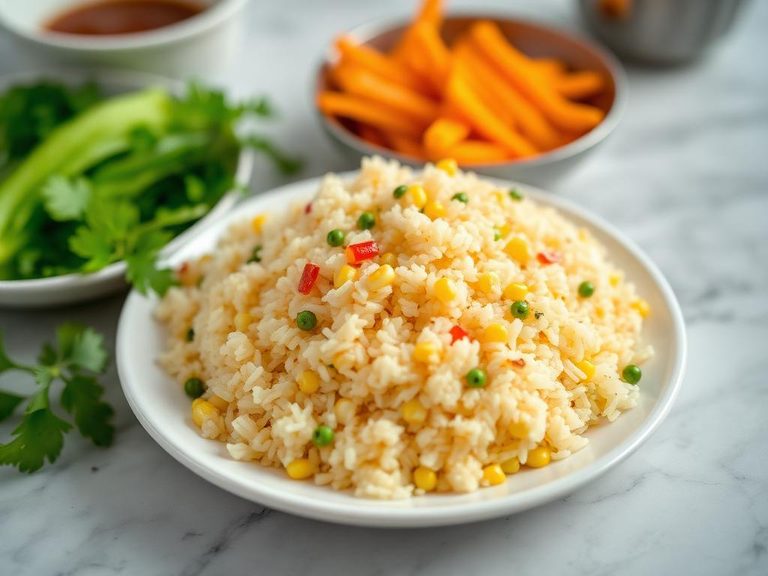
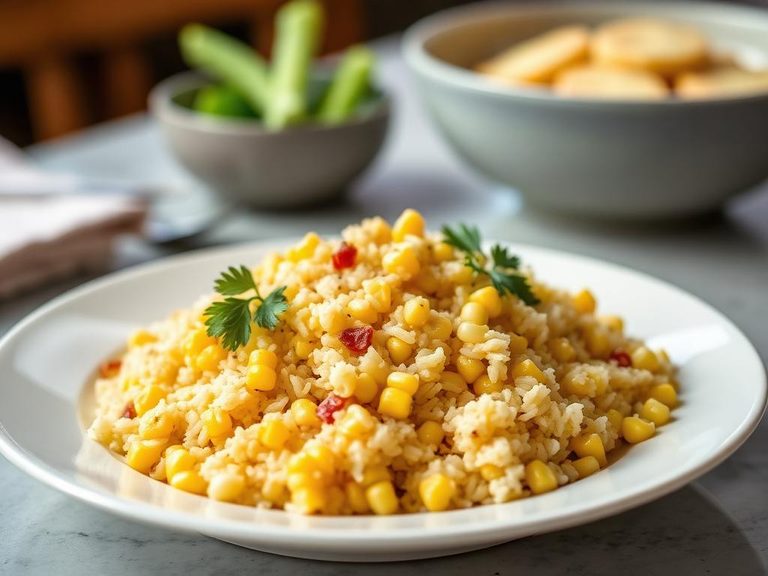
A comforting staple of fluffy white rice studded with sweet, golden corn kernels, offering a light, slightly chewy texture with pops of juicy sweetness. It's a low-fat, energy-dense side that provides quick-release carbohydrates for fuel. The simple combination creates a naturally sweet, mild flavor profile.
Calorie split: 9% protein · 88% carbs · 3% fat
↓ Full nutrition💚 Why it's loved
People love it for its comforting, mildly sweet taste and the satisfying textural contrast between tender rice and crisp-tender corn. It's a beloved, simple side dish that evokes home cooking across many cultures.
⚠️ Watch-outs & how to enjoy it better
The high glycemic load can cause rapid blood-sugar spikes, making it less ideal for diabetics or those managing insulin resistance. To counteract this, pair it with a source of protein (like beans or chicken) or healthy fat (like avocado) to slow digestion, and practice portion control.
Key benefits
- Excellent source of quick energy from complex carbs
- Very low in fat (0.38g per 100g)
- Provides dietary fiber (0.9g) from corn and rice
- Naturally gluten-free and low in sodium
- Versatile base for countless global cuisines
🍽️ Popular dishes
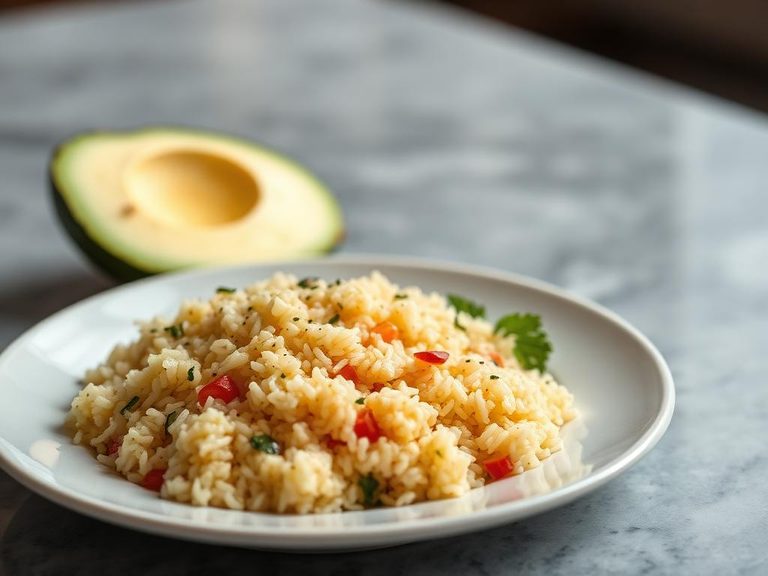
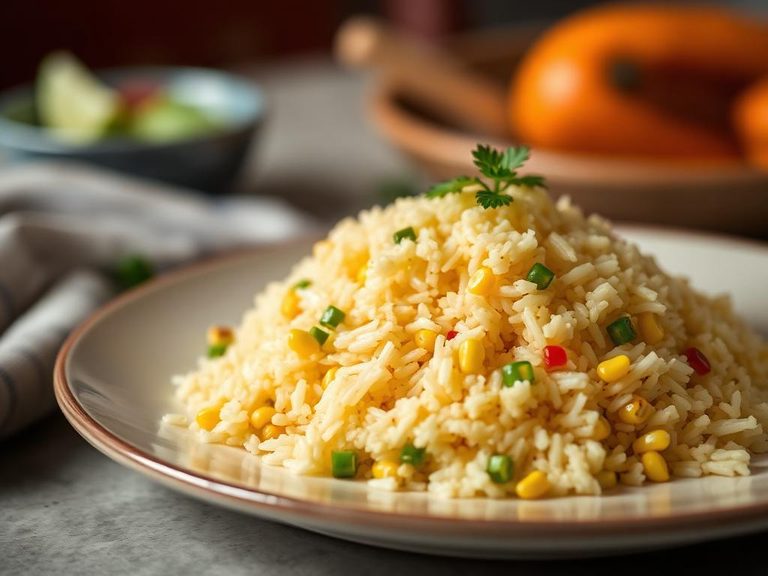
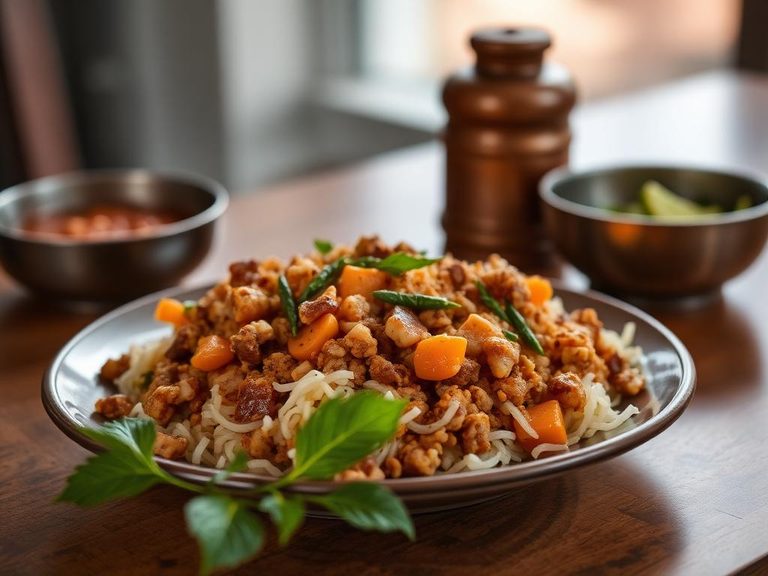
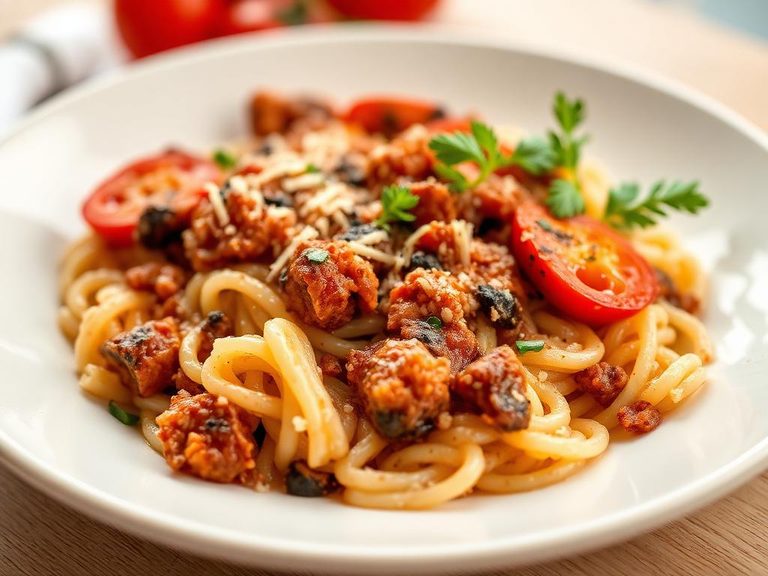
🌍 Where it's eaten
💡 Did you know?
While often seen as a simple side, in parts of Colombia, 'Arroz con Maíz' is a celebratory dish traditionally served at weddings and large family gatherings.
Full nutrition (USDA data · scales with serving)
| Water | 70.3 g |
| Energy | 117 kcal |
| Protein | 2.6 g |
| Total lipid (fat) | 0.38 g |
| Carbohydrate, by difference | 25.8 g |
| Fiber, total dietary | 0.90 g |
| Total Sugars | 0.83 g |
| Calcium, Ca | 8.0 mg |
| Iron, Fe | 1.0 mg |
| Magnesium, Mg | 16.0 mg |
| Phosphorus, P | 52.0 mg |
| Potassium, K | 86.0 mg |
| Sodium, Na | 182 mg |
| Zinc, Zn | 0.52 mg |
| Copper, Cu | 0.06 mg |
| Selenium, Se | 5.7 ug |
| Vitamin C, total ascorbic acid | 0.90 mg |
| Thiamin | 0.13 mg |
| Riboflavin | 0.03 mg |
| Niacin | 1.4 mg |
| Vitamin B-6 | 0.09 mg |
| Folate, total | 52.0 ug |
| Folic acid | 41.0 ug |
| Folate, food | 11.0 ug |
| Folate, DFE | 81.0 ug |
| Choline, total | 7.2 mg |
| Vitamin B-12 | 0.00 ug |
| Vitamin B-12, added | 0.00 ug |
| Vitamin A, RAE | 3.0 ug |
| Retinol | 0.00 ug |
| Carotene, beta | 13.0 ug |
| Carotene, alpha | 4.0 ug |
| Cryptoxanthin, beta | 31.0 ug |
| Lycopene | 0.00 ug |
| Lutein + zeaxanthin | 176 ug |
| Vitamin E (alpha-tocopherol) | 0.05 mg |
| Vitamin E, added | 0.00 mg |
| Vitamin D (D2 + D3) | 0.00 ug |
| Vitamin K (phylloquinone) | 0.10 ug |
| Alcohol, ethyl | 0.00 g |
| Caffeine | 0.00 mg |
| Theobromine | 0.00 mg |
Fat & fatty acid profile (per 100g)
| Fatty acids, total saturated | 0.08 g |
| SFA 4:0 | 0.00 g |
| SFA 6:0 | 0.00 g |
| SFA 8:0 | 0.00 g |
| SFA 10:0 | 0.00 g |
| SFA 12:0 | 0.00 g |
| SFA 14:0 | 0.00 g |
| SFA 16:0 | 0.08 g |
| SFA 18:0 | 0.01 g |
| Fatty acids, total monounsaturated | 0.12 g |
| MUFA 16:1 | 0.00 g |
| MUFA 18:1 | 0.12 g |
| MUFA 20:1 | 0.00 g |
| MUFA 22:1 | 0.00 g |
| Fatty acids, total polyunsaturated | 0.14 g |
| PUFA 18:2 | 0.13 g |
| PUFA 18:3 | 0.01 g |
| PUFA 18:4 | 0.00 g |
| PUFA 20:4 | 0.00 g |
| PUFA 20:5 n-3 (EPA) | 0.00 g |
| PUFA 22:5 n-3 (DPA) | 0.00 g |
| PUFA 22:6 n-3 (DHA) | 0.00 g |
| Cholesterol | 0.00 mg |
Amino acid profile (per 100g)
Estimated from Snacks, rice cakes, brown rice, sesame seed — USDA does not publish this profile for Rice.
| Tryptophan | 0.10 g |
| Threonine | 0.28 g |
| Isoleucine | 0.32 g |
| Leucine | 0.63 g |
| Lysine | 0.29 g |
| Methionine | 0.17 g |
| Cystine | 0.09 g |
| Phenylalanine | 0.39 g |
| Tyrosine | 0.29 g |
| Valine | 0.44 g |
| Arginine | 0.59 g |
| Histidine | 0.19 g |
| Alanine | 0.44 g |
| Aspartic acid | 0.71 g |
| Glutamic acid | 1.6 g |
| Glycine | 0.38 g |
| Proline | 0.35 g |
| Serine | 0.39 g |
FAQ
Is this the same as 'corn rice'?
Yes, the terms are often used interchangeably. 'Corn rice' specifically refers to rice cooked with corn kernels, which matches this description perfectly.
Can I use canned or frozen corn for this?
Absolutely. Frozen corn is ideal as it retains a firm texture. If using canned, drain it well and add it towards the end of cooking to prevent it from becoming mushy.
How can I add more protein to this dish?
Stir in black beans, shredded chicken, or diced tofu during cooking. Serving it alongside grilled fish, beans, or a fried egg are also excellent ways to boost the protein content.
Nutrient density (calculated · NRF9.3)
Nutrient Rich Foods index: beneficial nutrients (protein, fiber, vitamins, minerals) minus saturated fat, added sugar & sodium, per 100 kcal.
NRF9.3 index — Fulgoni, Keast & Drewnowski, 2009. Computed from USDA nutrients.
Weight-loss friendliness (composite index)
Energy density 1.17 kcal/g · 9% calories from protein · 0.9 g fiber · 0.8 g sugar per 100 g.
Composite of energy density (Rolls et al., 1999), protein & fiber satiety, minus sugar. A calculated heuristic — ranks satiety-per-calorie, not a clinical measure.
Dietary load (calculated from USDA values)
Potential renal acid load. Positive = acid-forming, negative = alkaline-forming.
Sodium-to-potassium ratio: 2.12 (lower is better — aim for ≤ 1)
Sodium:potassium per WHO potassium guidance. Computed from USDA nutrients.