

Potato, boiled, from fresh, peel eaten, NS as to fat
Common food

Photo: Wikipedia
A simple boiled potato with its skin on is a humble yet deeply satisfying staple, offering a fluffy, starchy interior with a slightly earthy, nutty flavor from the peel. Its texture is tender and comforting, making it a blank canvas for countless seasonings. Nutritionally, it's a solid source of energy-dense carbohydrates and provides a good dose of potassium and vitamin C, especially when the skin is retained.
Calorie split: 7% protein · 63% carbs · 30% fat
↓ Full nutrition💚 Why it's loved
People cherish boiled potatoes for their comforting, mild flavor and incredible versatility—they can be dressed up with herbs, butter, or sour cream, or simply enjoyed plain as a wholesome side. Their ability to absorb other flavors while providing a satisfying, filling base makes them a universal comfort food.
⚠️ Watch-outs & how to enjoy it better
Boiled potatoes have a high glycemic index, which can cause rapid blood sugar spikes, making portion control important for those managing diabetes. To mitigate this, pair them with a source of protein (like fish or legumes) or healthy fat (like olive oil or avocado) to slow digestion, or cool them after cooking to increase resistant starch content. Also, ensure they are well-cooked to reduce naturally occurring solanine.
Key benefits
- Rich in potassium, supporting heart and muscle function.
- Good source of vitamin C, an antioxidant that aids immunity.
- Provides resistant starch when cooled, which can benefit gut health.
- The skin adds significant dietary fiber, aiding digestion.
- Naturally gluten-free and a versatile staple food.
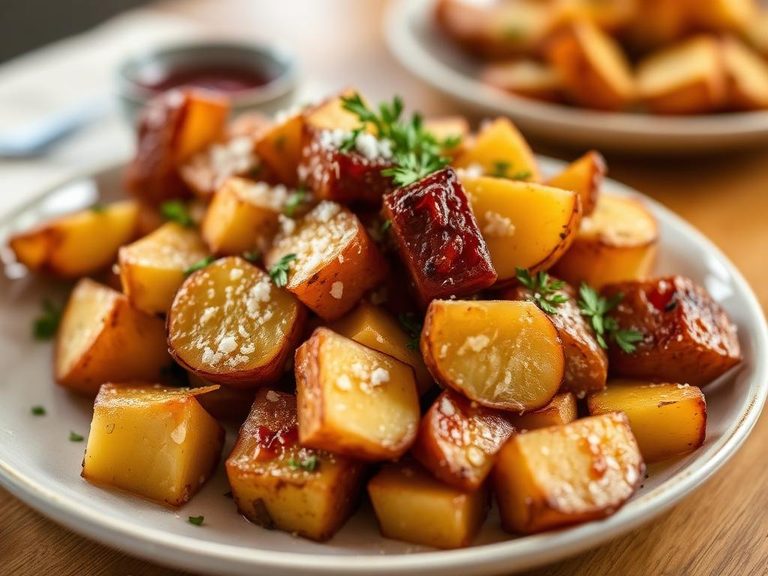
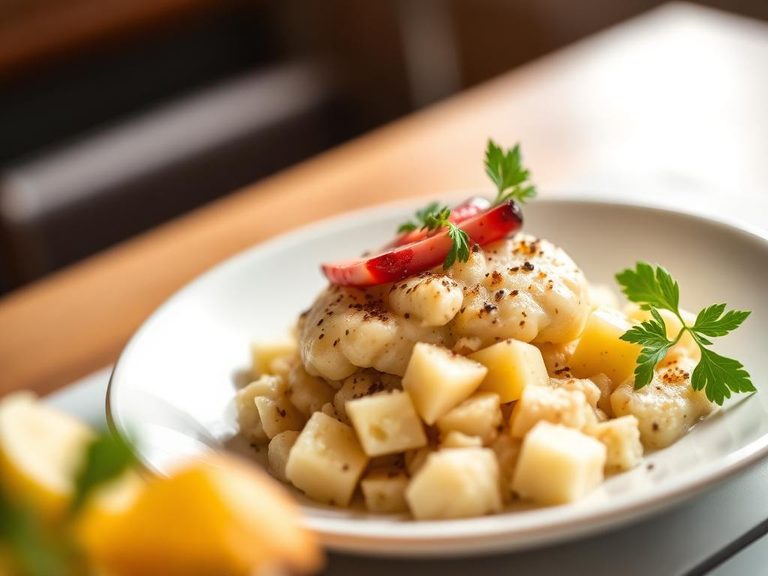
🍽️ Popular dishes
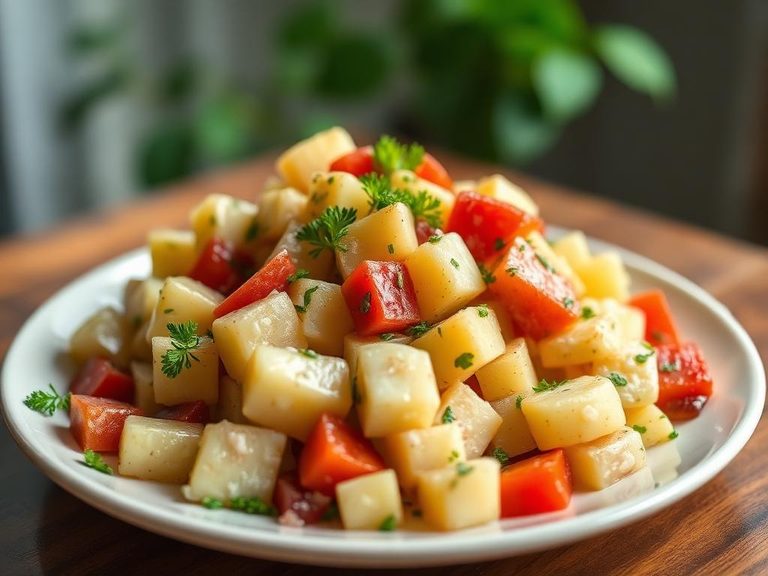
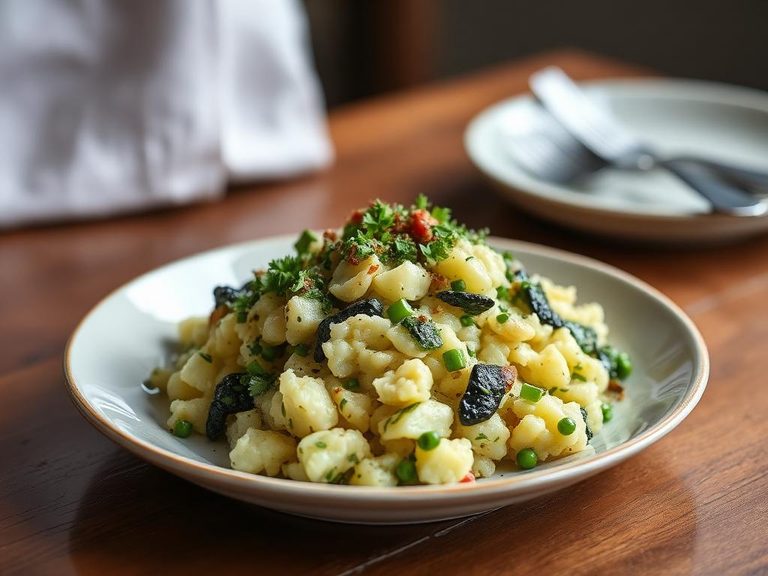
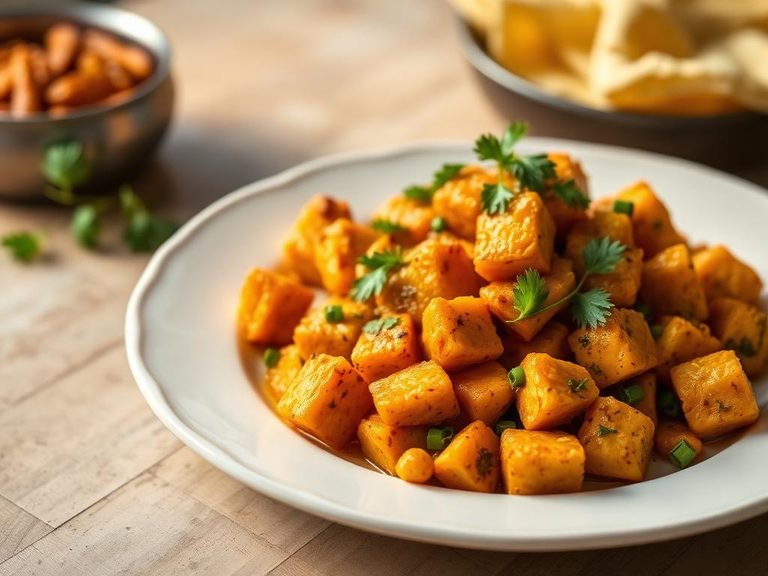
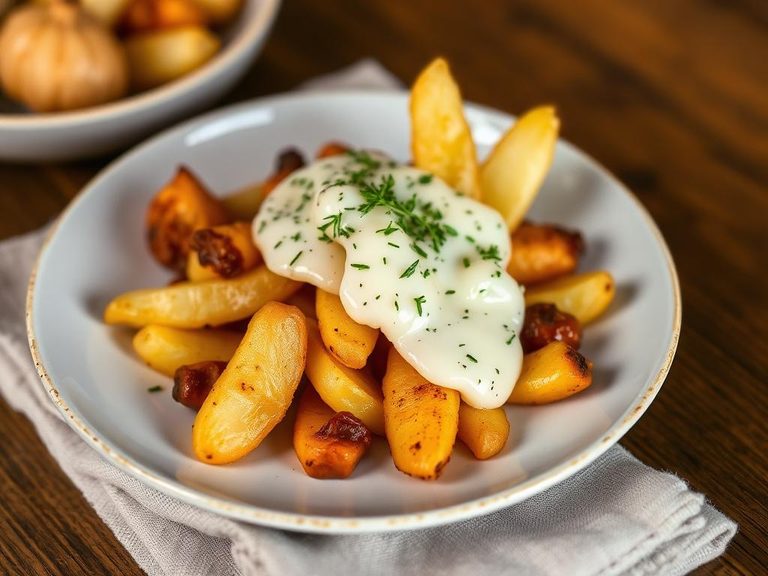
🌍 Where it's eaten
💡 Did you know?
The world record for the largest potato ever grown was set in 2011 by a UK gardener, weighing in at a staggering 11 pounds (5 kg).
Full nutrition (USDA data · scales with serving)
| Water | 71.6 g |
| Energy | 126 kcal |
| Protein | 2.4 g |
| Total lipid (fat) | 4.3 g |
| Carbohydrate, by difference | 20.1 g |
| Fiber, total dietary | 2.1 g |
| Total Sugars | 1.1 g |
| Calcium, Ca | 15.0 mg |
| Iron, Fe | 1.0 mg |
| Magnesium, Mg | 27.0 mg |
| Phosphorus, P | 67.0 mg |
| Potassium, K | 508 mg |
| Sodium, Na | 170 mg |
| Zinc, Zn | 0.34 mg |
| Copper, Cu | 0.11 mg |
| Selenium, Se | 0.40 ug |
| Vitamin C, total ascorbic acid | 9.1 mg |
| Thiamin | 0.06 mg |
| Riboflavin | 0.05 mg |
| Niacin | 1.3 mg |
| Vitamin B-6 | 0.32 mg |
| Folate, total | 27.0 ug |
| Folic acid | 0.00 ug |
| Folate, food | 27.0 ug |
| Folate, DFE | 27.0 ug |
| Choline, total | 14.4 mg |
| Vitamin B-12 | 0.00 ug |
| Vitamin B-12, added | 0.00 ug |
| Vitamin A, RAE | 20.0 ug |
| Retinol | 18.0 ug |
| Carotene, beta | 14.0 ug |
| Carotene, alpha | 0.00 ug |
| Cryptoxanthin, beta | 0.00 ug |
| Lycopene | 0.00 ug |
| Lutein + zeaxanthin | 28.0 ug |
| Vitamin E (alpha-tocopherol) | 0.66 mg |
| Vitamin E, added | 0.00 mg |
| Vitamin D (D2 + D3) | 0.00 ug |
| Vitamin K (phylloquinone) | 5.3 ug |
| Alcohol, ethyl | 0.00 g |
| Caffeine | 0.00 mg |
| Theobromine | 0.00 mg |
Fat & fatty acid profile (per 100g)
| Fatty acids, total saturated | 1.1 g |
| SFA 4:0 | 0.03 g |
| SFA 6:0 | 0.02 g |
| SFA 8:0 | 0.01 g |
| SFA 10:0 | 0.03 g |
| SFA 12:0 | 0.04 g |
| SFA 14:0 | 0.10 g |
| SFA 16:0 | 0.61 g |
| SFA 18:0 | 0.23 g |
| Fatty acids, total monounsaturated | 1.5 g |
| MUFA 16:1 | 0.02 g |
| MUFA 18:1 | 1.4 g |
| MUFA 20:1 | 0.02 g |
| MUFA 22:1 | 0.00 g |
| Fatty acids, total polyunsaturated | 1.2 g |
| PUFA 18:2 | 1.1 g |
| PUFA 18:3 | 0.14 g |
| PUFA 18:4 | 0.00 g |
| PUFA 20:4 | 0.00 g |
| PUFA 20:5 n-3 (EPA) | 0.00 g |
| PUFA 22:5 n-3 (DPA) | 0.00 g |
| PUFA 22:6 n-3 (DHA) | 0.00 g |
| Cholesterol | 3.0 mg |
Amino acid profile (per 100g)
Estimated from Snacks, potato chips, made from dried potatoes, reduced fat — USDA does not publish this profile for Potato.
| Tryptophan | 0.04 g |
| Threonine | 0.24 g |
| Isoleucine | 0.25 g |
| Leucine | 0.37 g |
| Lysine | 0.35 g |
| Methionine | 0.07 g |
| Cystine | 0.07 g |
| Phenylalanine | 0.26 g |
| Tyrosine | 0.22 g |
| Valine | 0.33 g |
| Arginine | 0.27 g |
| Histidine | 0.13 g |
| Alanine | 0.20 g |
| Aspartic acid | 1.1 g |
| Glutamic acid | 0.94 g |
| Glycine | 0.19 g |
| Proline | 0.20 g |
| Serine | 0.23 g |
FAQ
Is it healthier to eat the potato skin?
Yes, the skin contains a significant portion of the potato's fiber, iron, and potassium. Eating it maximizes the nutritional benefit.
How can I prevent boiled potatoes from falling apart?
Start them in cold, salted water and bring to a gentle simmer, not a rolling boil. Use waxy potato varieties like Red or Yukon Gold for better structural integrity than starchy Russets.
Why do boiled potatoes sometimes turn a blue or green color?
This is a harmless reaction between the potato's phenolic compounds and iron in the cooking water, often occurring in acidic conditions. It's safe to eat.
Nutrient density (calculated · NRF9.3)
Nutrient Rich Foods index: beneficial nutrients (protein, fiber, vitamins, minerals) minus saturated fat, added sugar & sodium, per 100 kcal.
NRF9.3 index — Fulgoni, Keast & Drewnowski, 2009. Computed from USDA nutrients.
Weight-loss friendliness (composite index)
Energy density 1.26 kcal/g · 8% calories from protein · 2.1 g fiber · 1.1 g sugar per 100 g.
Composite of energy density (Rolls et al., 1999), protein & fiber satiety, minus sugar. A calculated heuristic — ranks satiety-per-calorie, not a clinical measure.
Dietary load (calculated from USDA values)
Potential renal acid load. Positive = acid-forming, negative = alkaline-forming.
Sodium-to-potassium ratio: 0.33 (lower is better — aim for ≤ 1)
Sodium:potassium per WHO potassium guidance. Computed from USDA nutrients.