

Potato, boiled, from fresh, peel eaten, fat added, NS as to fat type
Common food

Photo: Wikipedia
This is a humble, boiled potato with its earthy skin left on, offering a comforting, starchy bite with a fluffy interior. The added fat, whether butter or oil, enriches its mouthfeel and adds a savory depth to its mild, slightly sweet flavor. Nutritionally, it's a solid source of energy-providing carbs and fiber, with a notable boost in healthy fats from the preparation.
Calorie split: 7% protein · 63% carbs · 30% fat
↓ Full nutrition💚 Why it's loved
People love it for its comforting, neutral flavor that acts as a perfect canvas for countless seasonings and sauces. Its satisfying texture, from fluffy to creamy, makes it a beloved, hearty staple in cuisines worldwide.
⚠️ Watch-outs & how to enjoy it better
As a high-carbohydrate food, it can cause rapid blood-sugar spikes, especially for those with insulin sensitivity. To mitigate this, pair it with a protein (like beans or chicken) or healthy fat (like olive oil or avocado) to slow digestion. Keeping the skin on also helps increase fiber intake.
Key benefits
- Excellent source of energy from complex carbohydrates.
- Skin-on preparation provides dietary fiber for digestive health.
- Contains potassium, an essential mineral for fluid balance.
- The added fat increases satiety and helps absorb fat-soluble vitamins.
- A versatile, naturally gluten-free staple food.
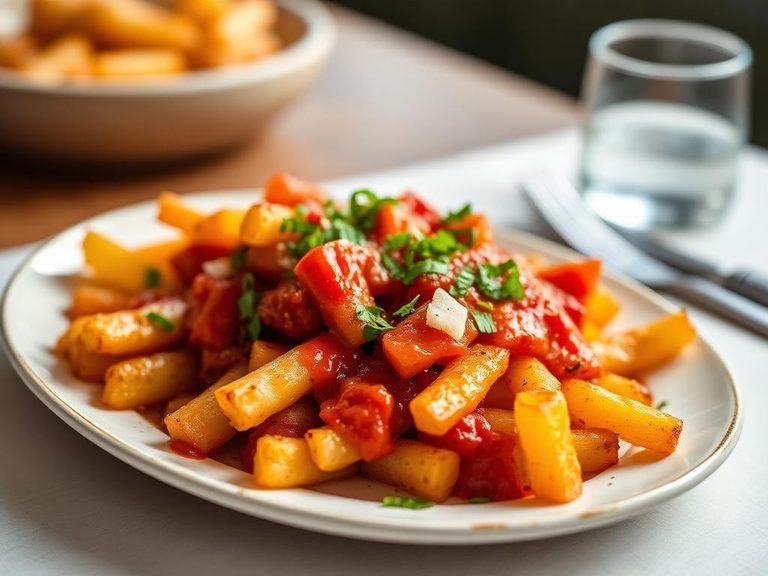
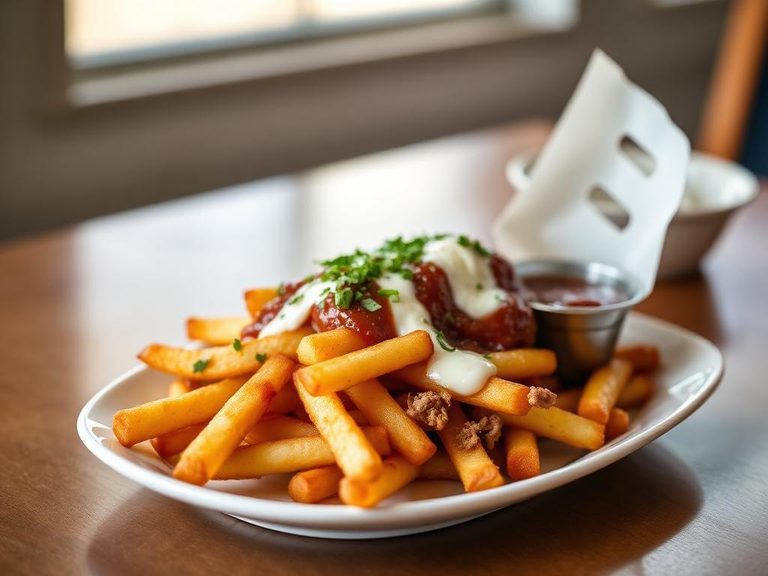
🍽️ Popular dishes
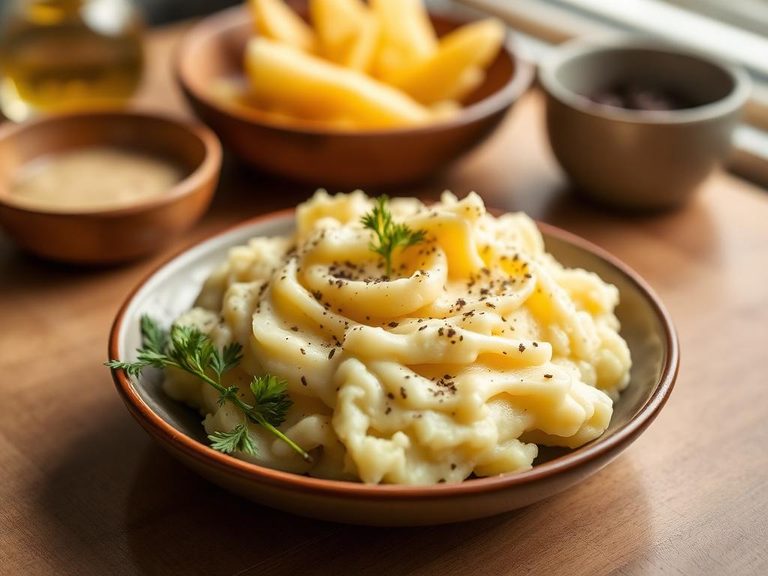
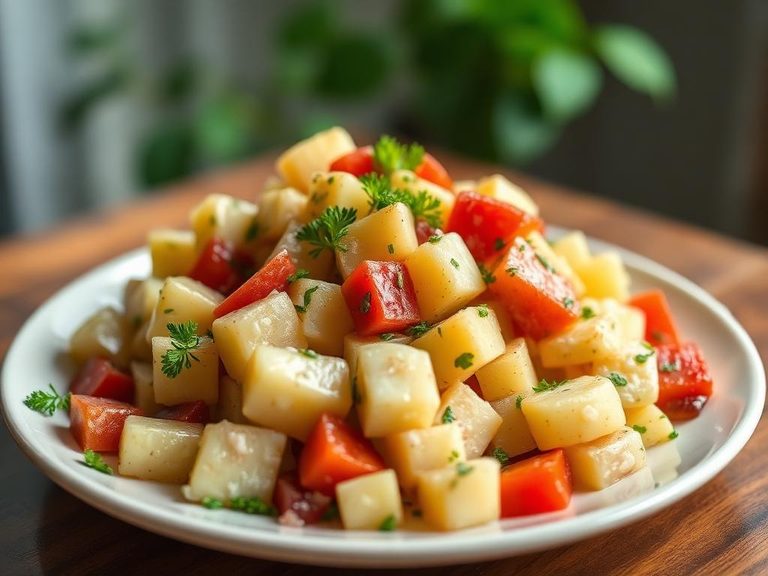
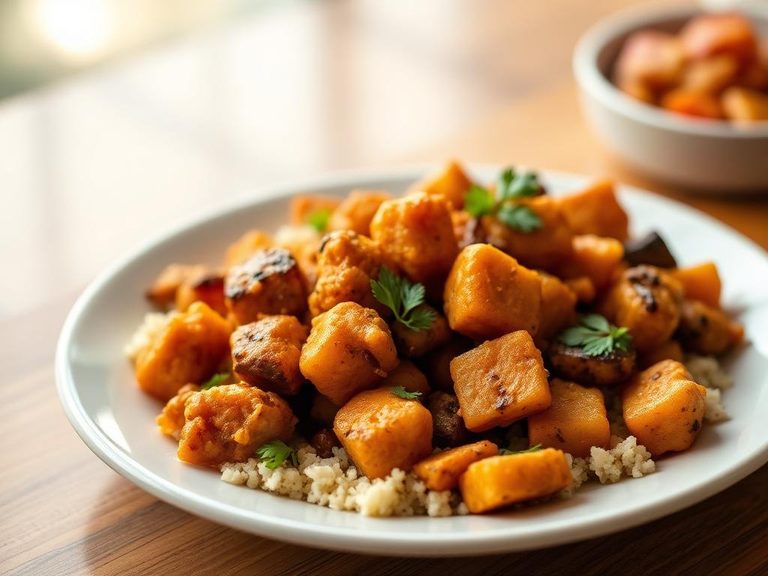
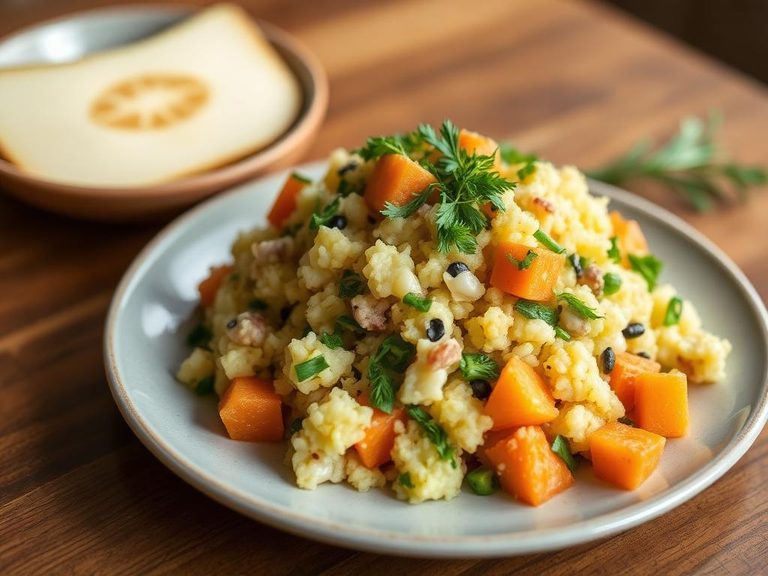
🌍 Where it's eaten
💡 Did you know?
The potato was first domesticated in the Andes mountains of South America over 7,000 years ago, and its journey to Europe was so transformative it's credited with fueling population growth during the Industrial Revolution.
Full nutrition (USDA data · scales with serving)
| Water | 71.6 g |
| Energy | 126 kcal |
| Protein | 2.4 g |
| Total lipid (fat) | 4.3 g |
| Carbohydrate, by difference | 20.1 g |
| Fiber, total dietary | 2.1 g |
| Total Sugars | 1.1 g |
| Calcium, Ca | 15.0 mg |
| Iron, Fe | 1.0 mg |
| Magnesium, Mg | 27.0 mg |
| Phosphorus, P | 67.0 mg |
| Potassium, K | 508 mg |
| Sodium, Na | 170 mg |
| Zinc, Zn | 0.34 mg |
| Copper, Cu | 0.11 mg |
| Selenium, Se | 0.40 ug |
| Vitamin C, total ascorbic acid | 9.1 mg |
| Thiamin | 0.06 mg |
| Riboflavin | 0.05 mg |
| Niacin | 1.3 mg |
| Vitamin B-6 | 0.32 mg |
| Folate, total | 27.0 ug |
| Folic acid | 0.00 ug |
| Folate, food | 27.0 ug |
| Folate, DFE | 27.0 ug |
| Choline, total | 14.4 mg |
| Vitamin B-12 | 0.00 ug |
| Vitamin B-12, added | 0.00 ug |
| Vitamin A, RAE | 20.0 ug |
| Retinol | 18.0 ug |
| Carotene, beta | 14.0 ug |
| Carotene, alpha | 0.00 ug |
| Cryptoxanthin, beta | 0.00 ug |
| Lycopene | 0.00 ug |
| Lutein + zeaxanthin | 28.0 ug |
| Vitamin E (alpha-tocopherol) | 0.66 mg |
| Vitamin E, added | 0.00 mg |
| Vitamin D (D2 + D3) | 0.00 ug |
| Vitamin K (phylloquinone) | 5.3 ug |
| Alcohol, ethyl | 0.00 g |
| Caffeine | 0.00 mg |
| Theobromine | 0.00 mg |
Fat & fatty acid profile (per 100g)
| Fatty acids, total saturated | 1.1 g |
| SFA 4:0 | 0.03 g |
| SFA 6:0 | 0.02 g |
| SFA 8:0 | 0.01 g |
| SFA 10:0 | 0.03 g |
| SFA 12:0 | 0.04 g |
| SFA 14:0 | 0.10 g |
| SFA 16:0 | 0.61 g |
| SFA 18:0 | 0.23 g |
| Fatty acids, total monounsaturated | 1.5 g |
| MUFA 16:1 | 0.02 g |
| MUFA 18:1 | 1.4 g |
| MUFA 20:1 | 0.02 g |
| MUFA 22:1 | 0.00 g |
| Fatty acids, total polyunsaturated | 1.2 g |
| PUFA 18:2 | 1.1 g |
| PUFA 18:3 | 0.14 g |
| PUFA 18:4 | 0.00 g |
| PUFA 20:4 | 0.00 g |
| PUFA 20:5 n-3 (EPA) | 0.00 g |
| PUFA 22:5 n-3 (DPA) | 0.00 g |
| PUFA 22:6 n-3 (DHA) | 0.00 g |
| Cholesterol | 3.0 mg |
Amino acid profile (per 100g)
Estimated from Snacks, potato chips, made from dried potatoes, reduced fat — USDA does not publish this profile for Potato.
| Tryptophan | 0.04 g |
| Threonine | 0.24 g |
| Isoleucine | 0.25 g |
| Leucine | 0.37 g |
| Lysine | 0.35 g |
| Methionine | 0.07 g |
| Cystine | 0.07 g |
| Phenylalanine | 0.26 g |
| Tyrosine | 0.22 g |
| Valine | 0.33 g |
| Arginine | 0.27 g |
| Histidine | 0.13 g |
| Alanine | 0.20 g |
| Aspartic acid | 1.1 g |
| Glutamic acid | 0.94 g |
| Glycine | 0.19 g |
| Proline | 0.20 g |
| Serine | 0.23 g |
FAQ
Why is the potato's skin so important nutritionally?
The skin contains a significant portion of the potato's total fiber, potassium, and other nutrients. Eating it peeled can reduce the overall nutritional value of the dish.
Does boiling a potato make it less healthy?
Boiling is a low-fat cooking method that preserves water-soluble vitamins like vitamin C better than frying. The primary health consideration is what you add to it (like excessive butter or salt) and whether you eat the skin.
How does the added fat change the nutrition profile?
The fat (e.g., butter, oil) significantly increases the calorie and fat content, making it more energy-dense. This can enhance satiety and flavor but should be considered in the context of a balanced diet.
Nutrient density (calculated · NRF9.3)
Nutrient Rich Foods index: beneficial nutrients (protein, fiber, vitamins, minerals) minus saturated fat, added sugar & sodium, per 100 kcal.
NRF9.3 index — Fulgoni, Keast & Drewnowski, 2009. Computed from USDA nutrients.
Weight-loss friendliness (composite index)
Energy density 1.26 kcal/g · 8% calories from protein · 2.1 g fiber · 1.1 g sugar per 100 g.
Composite of energy density (Rolls et al., 1999), protein & fiber satiety, minus sugar. A calculated heuristic — ranks satiety-per-calorie, not a clinical measure.
Dietary load (calculated from USDA values)
Potential renal acid load. Positive = acid-forming, negative = alkaline-forming.
Sodium-to-potassium ratio: 0.33 (lower is better — aim for ≤ 1)
Sodium:potassium per WHO potassium guidance. Computed from USDA nutrients.