

Pork, cracklings
Common food

Photo: Wikipedia
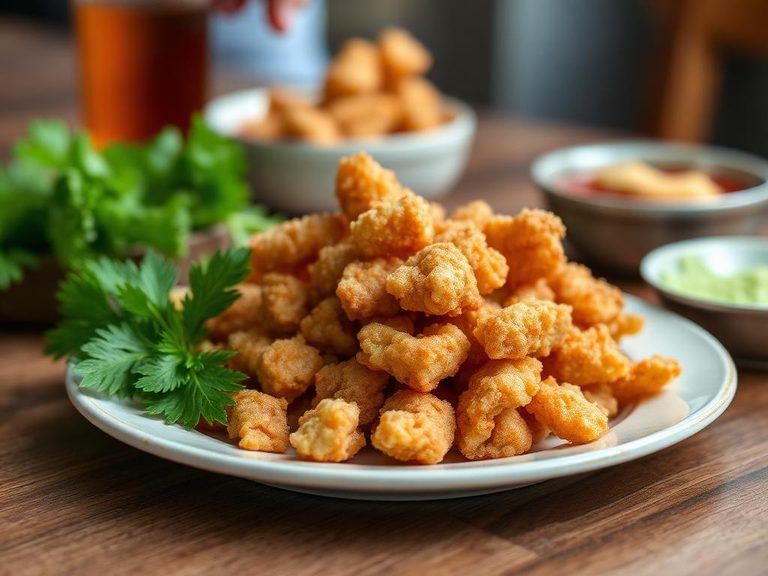
Pork cracklings, also known as chicharrones or grinds, are pieces of pork skin or fat that have been deep-fried or roasted until they achieve a light, airy, and intensely crunchy texture. They offer a savory, salty, and deeply umami-rich flavor profile, often with a hint of rendered pork fat. Nutritionally, they are a high-calorie, high-protein, and zero-carb food, making them a staple for low-carb and ketogenic diets.
Calorie split: 32% protein · 0% carbs · 68% fat
↓ Full nutrition💚 Why it's loved
People love pork cracklings for their irresistible, shattering crunch and intensely savory, salty flavor that satisfies deep cravings. They are also cherished for their versatility, serving as a standalone snack, a topping for salads and soups, or a crunchy element in countless global cuisines.
⚠️ Watch-outs & how to enjoy it better
The high fat and calorie content (569 kcal per 100g) can be a concern for those monitoring caloric intake or managing cholesterol. Additionally, they are often high in sodium, which can contribute to water retention. To counteract this, practice strict portion control (limit to a small handful) and pair them with fiber-rich vegetables or a balanced meal to slow digestion and mitigate the impact of the fat and salt.
Key benefits
- Extremely high in protein (45g per 100g)
- Contains zero carbohydrates, sugar, and fiber
- Rich source of collagen and gelatin for skin and joint health
- Provides a dense source of energy from fat and protein
- Naturally gluten-free and low-carb friendly
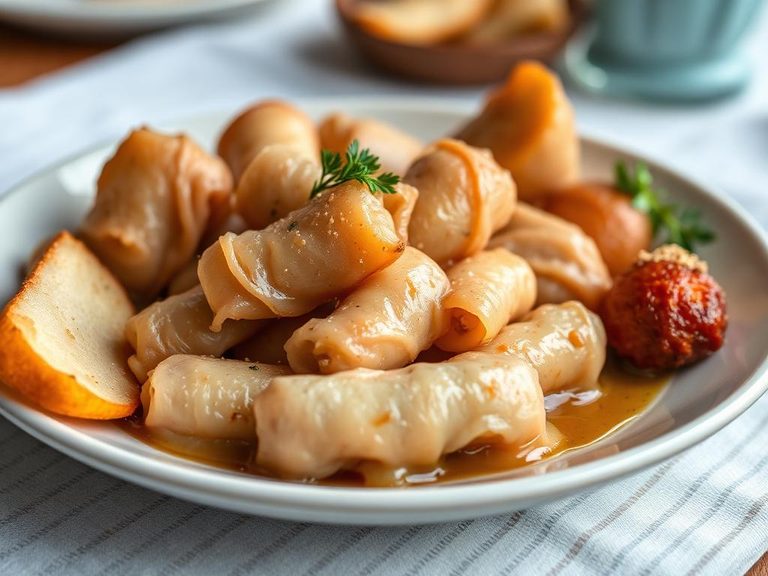
🍽️ Popular dishes
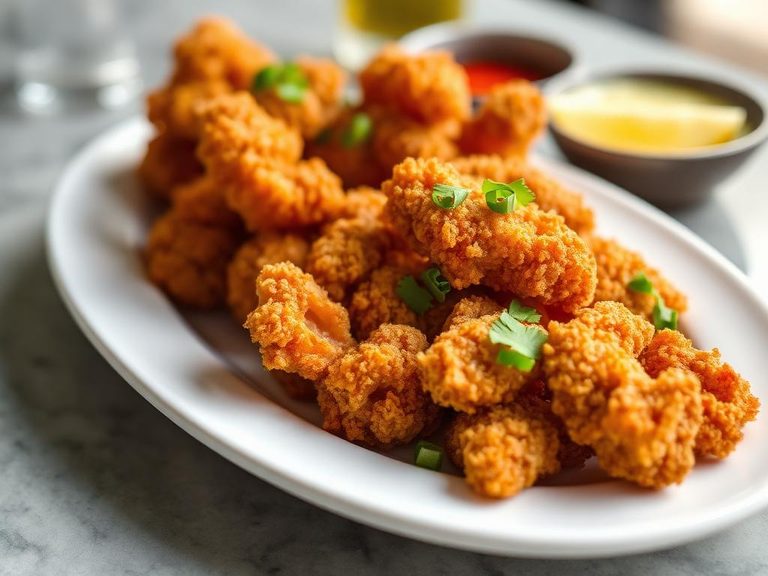
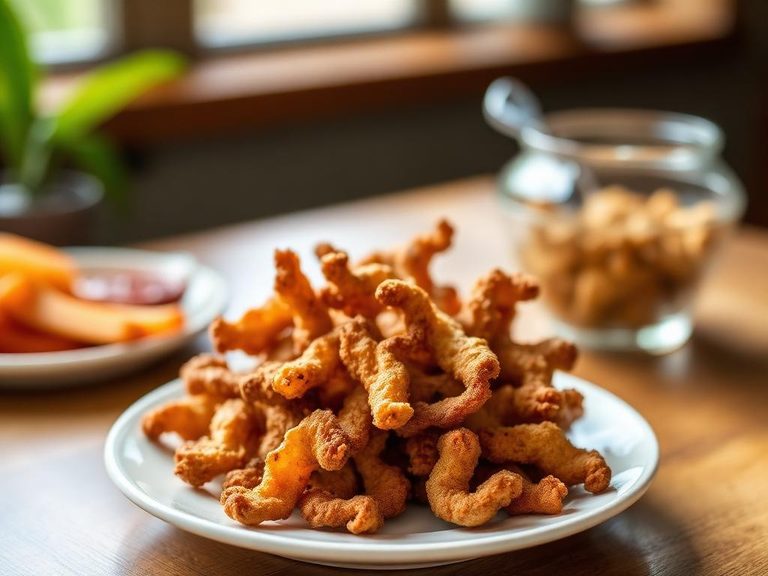
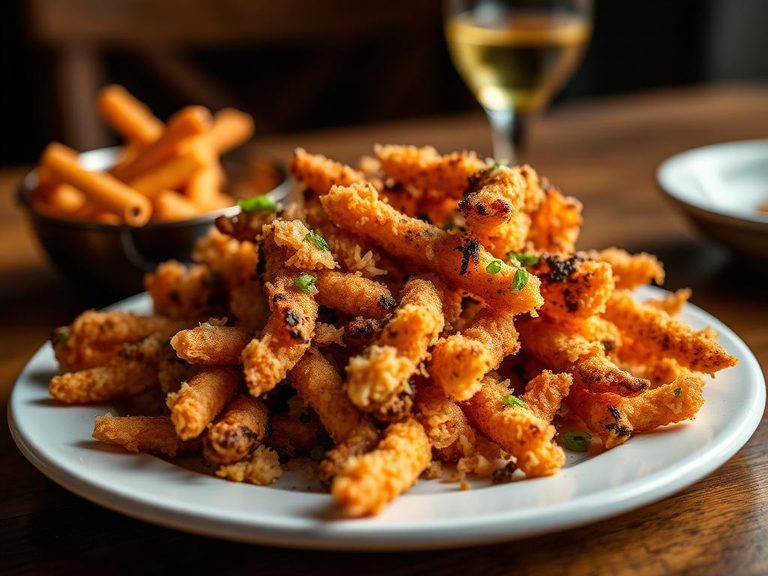
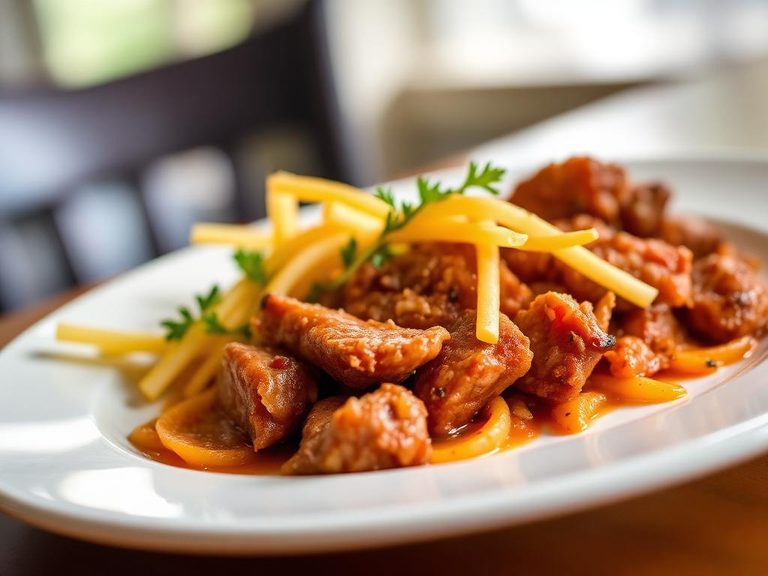
🌍 Where it's eaten
💡 Did you know?
In the United States, pork rinds are one of the most popular snack foods in the Southern states, and they are often sold in gas stations and convenience stores as a go-to high-protein, low-carb snack.
Full nutrition (USDA data · scales with serving)
| Water | 9.1 g |
| Energy | 569 kcal |
| Protein | 45.0 g |
| Total lipid (fat) | 41.7 g |
| Carbohydrate, by difference | 0.00 g |
| Fiber, total dietary | 0.00 g |
| Total Sugars | 0.00 g |
| Calcium, Ca | 28.0 mg |
| Iron, Fe | 0.75 mg |
| Magnesium, Mg | 10.0 mg |
| Phosphorus, P | 92.0 mg |
| Potassium, K | 126 mg |
| Sodium, Na | 1289 mg |
| Zinc, Zn | 0.62 mg |
| Copper, Cu | 0.09 mg |
| Selenium, Se | 32.2 ug |
| Vitamin C, total ascorbic acid | 0.40 mg |
| Thiamin | 0.13 mg |
| Riboflavin | 0.26 mg |
| Niacin | 2.0 mg |
| Vitamin B-6 | 0.07 mg |
| Folate, total | 0.00 ug |
| Folic acid | 0.00 ug |
| Folate, food | 0.00 ug |
| Folate, DFE | 0.00 ug |
| Choline, total | 125 mg |
| Vitamin B-12 | 0.61 ug |
| Vitamin B-12, added | 0.00 ug |
| Vitamin A, RAE | 16.0 ug |
| Retinol | 16.0 ug |
| Carotene, beta | 0.00 ug |
| Carotene, alpha | 0.00 ug |
| Cryptoxanthin, beta | 0.00 ug |
| Lycopene | 0.00 ug |
| Lutein + zeaxanthin | 0.00 ug |
| Vitamin E (alpha-tocopherol) | 0.37 mg |
| Vitamin E, added | 0.00 mg |
| Vitamin D (D2 + D3) | 0.50 ug |
| Vitamin K (phylloquinone) | 0.00 ug |
| Alcohol, ethyl | 0.00 g |
| Caffeine | 0.00 mg |
| Theobromine | 0.00 mg |
Fat & fatty acid profile (per 100g)
| Fatty acids, total saturated | 15.1 g |
| SFA 4:0 | 0.00 g |
| SFA 6:0 | 0.00 g |
| SFA 8:0 | 0.00 g |
| SFA 10:0 | 0.03 g |
| SFA 12:0 | 0.07 g |
| SFA 14:0 | 0.54 g |
| SFA 16:0 | 9.3 g |
| SFA 18:0 | 5.1 g |
| Fatty acids, total monounsaturated | 19.0 g |
| MUFA 16:1 | 1.1 g |
| MUFA 18:1 | 17.6 g |
| MUFA 20:1 | 0.33 g |
| MUFA 22:1 | 0.00 g |
| Fatty acids, total polyunsaturated | 6.0 g |
| PUFA 18:2 | 5.5 g |
| PUFA 18:3 | 0.31 g |
| PUFA 18:4 | 0.00 g |
| PUFA 20:4 | 0.07 g |
| PUFA 20:5 n-3 (EPA) | 0.00 g |
| PUFA 22:5 n-3 (DPA) | 0.01 g |
| PUFA 22:6 n-3 (DHA) | 0.01 g |
| Cholesterol | 90.0 mg |
Amino acid profile (per 100g)
Estimated from Pork, cured, salt pork, raw — USDA does not publish this profile for Pork.
| Tryptophan | 0.02 g |
| Threonine | 0.17 g |
| Isoleucine | 0.13 g |
| Leucine | 0.35 g |
| Lysine | 0.42 g |
| Methionine | 0.07 g |
| Cystine | 0.04 g |
| Phenylalanine | 0.19 g |
| Tyrosine | 0.08 g |
| Valine | 0.24 g |
| Arginine | 0.52 g |
| Histidine | 0.06 g |
| Alanine | 0.28 g |
| Aspartic acid | 0.42 g |
| Glutamic acid | 0.69 g |
| Glycine | 0.36 g |
| Proline | 0.27 g |
| Serine | 0.19 g |
FAQ
Are pork cracklings the same as pork rinds?
Yes, they are essentially the same thing. 'Pork rinds' is the common American term for the puffed, fried pork skin, while 'cracklings' can sometimes refer to pieces that still have some fat attached, making them denser and less airy.
Are pork cracklings a good source of protein?
Yes, they are an excellent source of protein, providing about 45 grams per 100 grams. This makes them a popular choice for high-protein and low-carb diets like keto.
Can I eat pork cracklings on a keto diet?
Absolutely. Pork cracklings are a keto-friendly snack because they contain zero carbohydrates and are high in fat and protein, which aligns perfectly with the macronutrient goals of a ketogenic diet.
Nutrient density (calculated · NRF9.3)
Nutrient Rich Foods index: beneficial nutrients (protein, fiber, vitamins, minerals) minus saturated fat, added sugar & sodium, per 100 kcal.
NRF9.3 index — Fulgoni, Keast & Drewnowski, 2009. Computed from USDA nutrients.
Weight-loss friendliness (composite index)
Energy density 5.69 kcal/g · 32% calories from protein · 0.0 g fiber · 0.0 g sugar per 100 g.
Composite of energy density (Rolls et al., 1999), protein & fiber satiety, minus sugar. A calculated heuristic — ranks satiety-per-calorie, not a clinical measure.
Dietary load (calculated from USDA values)
Potential renal acid load. Positive = acid-forming, negative = alkaline-forming.
Sodium-to-potassium ratio: 10.23 (lower is better — aim for ≤ 1)
Sodium:potassium per WHO potassium guidance. Computed from USDA nutrients.