

Pork bacon, NS as to fresh, smoked or cured, cooked
Common food
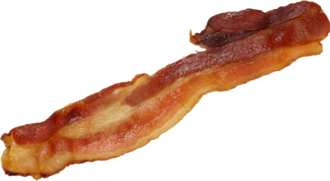
Photo: Wikipedia
Pork bacon is a cut of pork belly that has been cured, smoked, or both, then sliced and cooked until the fat renders and the edges crisp. It delivers a powerful trifecta of salty, smoky, and savory umami flavors with a satisfyingly crisp texture and a chewy, meaty center. Nutritionally, it is a calorie-dense, high-fat, high-protein food with negligible carbohydrates.
Calorie split: 31% protein · 2% carbs · 67% fat
↓ Full nutrition💚 Why it's loved
People love bacon for its intensely savory, smoky flavor and the satisfying contrast between its crisp fat and chewy meat. Its versatility makes it a beloved ingredient for breakfast, salads, burgers, and as a flavor-enhancing garnish for countless dishes.
⚠️ Watch-outs & how to enjoy it better
Bacon is high in saturated fat and sodium, which can be a concern for heart health and blood pressure. It is also a processed meat, which the WHO advises limiting. To counteract, use it as a flavorful accent rather than the main protein, pair it with high-fiber vegetables or whole grains, and choose lower-sodium brands when possible.
Key benefits
- Excellent source of complete protein for muscle maintenance.
- Provides B vitamins, especially thiamine (B1), niacin (B3), and B12.
- Rich in selenium, an important antioxidant mineral.
- Contains choline, essential for brain and liver function.
🍽️ Popular dishes
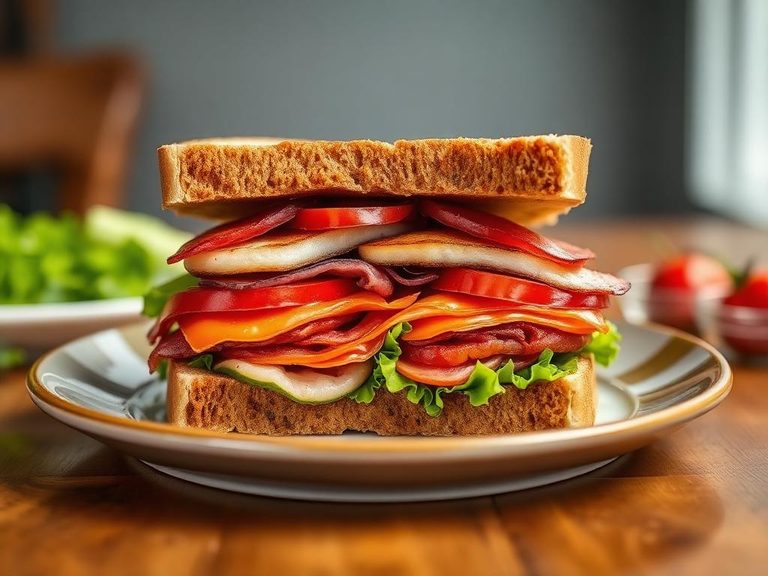
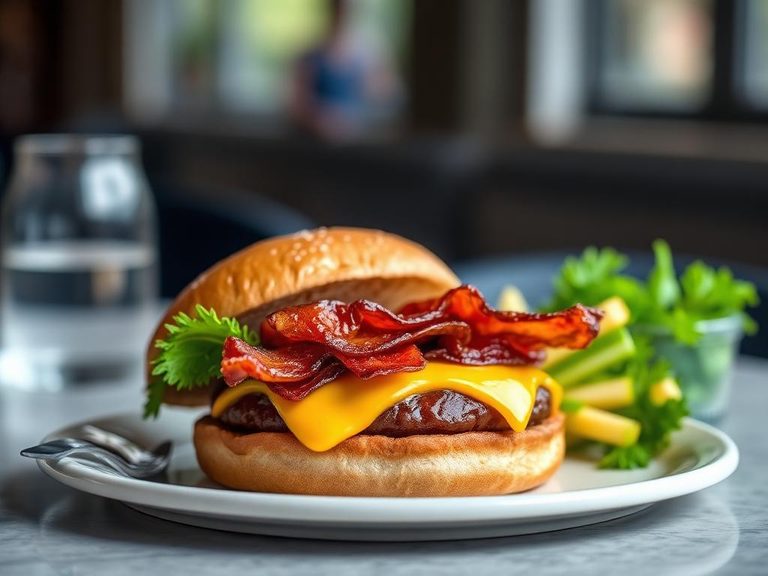

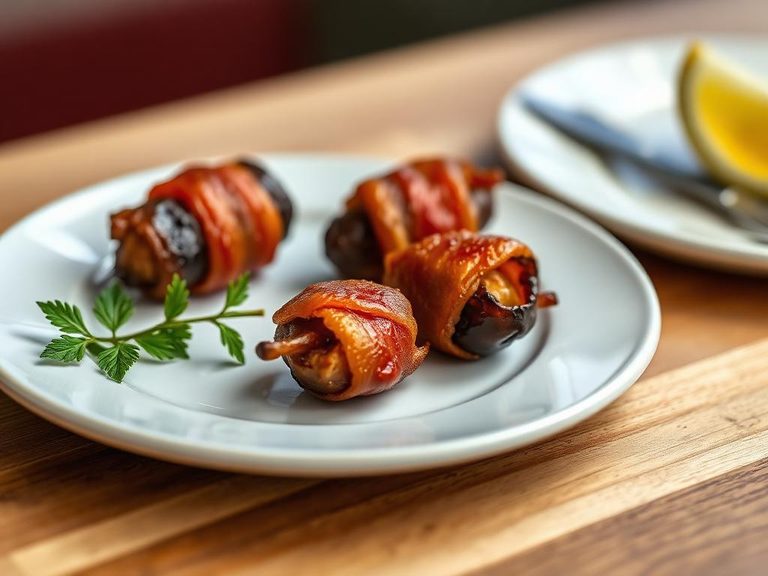
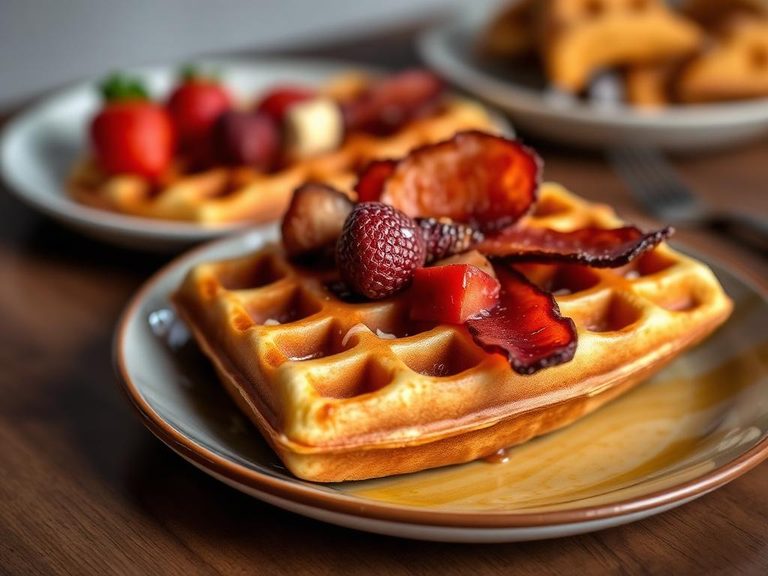
🌍 Where it's eaten
💡 Did you know?
The word 'bacon' comes from the Old High German 'bakko,' meaning 'back,' referring to the cut of meat from the pig's back or sides.
Full nutrition (USDA data · scales with serving)
| Water | 18.9 g |
| Energy | 484 kcal |
| Protein | 37.4 g |
| Total lipid (fat) | 35.8 g |
| Carbohydrate, by difference | 1.9 g |
| Fiber, total dietary | 0.00 g |
| Total Sugars | 1.6 g |
| Calcium, Ca | 12.0 mg |
| Iron, Fe | 1.1 mg |
| Magnesium, Mg | 34.0 mg |
| Phosphorus, P | 402 mg |
| Potassium, K | 528 mg |
| Sodium, Na | 1757 mg |
| Zinc, Zn | 3.3 mg |
| Copper, Cu | 0.12 mg |
| Selenium, Se | 50.7 ug |
| Vitamin C, total ascorbic acid | 0.00 mg |
| Thiamin | 0.56 mg |
| Riboflavin | 0.23 mg |
| Niacin | 10.5 mg |
| Vitamin B-6 | 0.54 mg |
| Folate, total | 0.00 ug |
| Folic acid | 0.00 ug |
| Folate, food | 0.00 ug |
| Folate, DFE | 0.00 ug |
| Choline, total | 89.5 mg |
| Vitamin B-12 | 1.1 ug |
| Vitamin B-12, added | 0.00 ug |
| Vitamin A, RAE | 11.0 ug |
| Retinol | 11.0 ug |
| Carotene, beta | 0.00 ug |
| Carotene, alpha | 0.00 ug |
| Cryptoxanthin, beta | 0.00 ug |
| Lycopene | 0.00 ug |
| Lutein + zeaxanthin | 0.00 ug |
| Vitamin E (alpha-tocopherol) | 0.42 mg |
| Vitamin E, added | 0.00 mg |
| Vitamin D (D2 + D3) | 0.40 ug |
| Vitamin K (phylloquinone) | 0.00 ug |
| Alcohol, ethyl | 0.00 g |
| Caffeine | 0.00 mg |
| Theobromine | 0.00 mg |
Fat & fatty acid profile (per 100g)
| Fatty acids, total saturated | 12.3 g |
| SFA 4:0 | 0.00 g |
| SFA 6:0 | 0.00 g |
| SFA 8:0 | 0.00 g |
| SFA 10:0 | 0.02 g |
| SFA 12:0 | 0.01 g |
| SFA 14:0 | 0.46 g |
| SFA 16:0 | 7.8 g |
| SFA 18:0 | 3.8 g |
| Fatty acids, total monounsaturated | 15.7 g |
| MUFA 16:1 | 0.81 g |
| MUFA 18:1 | 14.5 g |
| MUFA 20:1 | 0.29 g |
| MUFA 22:1 | 0.01 g |
| Fatty acids, total polyunsaturated | 6.1 g |
| PUFA 18:2 | 5.3 g |
| PUFA 18:3 | 0.23 g |
| PUFA 18:4 | 0.00 g |
| PUFA 20:4 | 0.16 g |
| PUFA 20:5 n-3 (EPA) | 0.00 g |
| PUFA 22:5 n-3 (DPA) | 0.03 g |
| PUFA 22:6 n-3 (DHA) | 0.01 g |
| Cholesterol | 99.0 mg |
Amino acid profile (per 100g)
Estimated from Pork, cured, bacon, cooked, broiled, pan-fried or roasted, reduced sodium — USDA does not publish this profile for Pork bacon.
| Tryptophan | 0.31 g |
| Threonine | 1.4 g |
| Isoleucine | 1.7 g |
| Leucine | 2.9 g |
| Lysine | 3.1 g |
| Methionine | 0.82 g |
| Cystine | 0.41 g |
| Phenylalanine | 1.5 g |
| Tyrosine | 1.2 g |
| Valine | 2.0 g |
| Arginine | 2.4 g |
| Histidine | 1.4 g |
| Alanine | 2.4 g |
| Aspartic acid | 3.5 g |
| Glutamic acid | 5.5 g |
| Glycine | 2.6 g |
| Proline | 2.0 g |
| Serine | 1.4 g |
| Hydroxyproline | 0.65 g |
FAQ
What's the difference between American and British bacon?
American bacon typically comes from the pork belly, has long strips of fat and meat, and is usually smoked. British bacon (back bacon) comes from the loin, is rounder, leaner, and includes a 'rash' of fat around the edge.
Is turkey bacon a healthier alternative?
Turkey bacon is lower in fat and calories but is still a processed meat and can be very high in sodium. It's not a whole-food alternative, but can be a occasional lower-fat option.
How should I store cooked bacon?
Cooked bacon can be stored in an airtight container in the refrigerator for up to 5 days, or frozen for up to a month. Re-crisp it in a skillet or microwave.
Nutrient density (calculated · NRF9.3)
Nutrient Rich Foods index: beneficial nutrients (protein, fiber, vitamins, minerals) minus saturated fat, added sugar & sodium, per 100 kcal.
NRF9.3 index — Fulgoni, Keast & Drewnowski, 2009. Computed from USDA nutrients.
Weight-loss friendliness (composite index)
Energy density 4.84 kcal/g · 31% calories from protein · 0.0 g fiber · 1.6 g sugar per 100 g.
Composite of energy density (Rolls et al., 1999), protein & fiber satiety, minus sugar. A calculated heuristic — ranks satiety-per-calorie, not a clinical measure.
Dietary load (calculated from USDA values)
Potential renal acid load. Positive = acid-forming, negative = alkaline-forming.
Sodium-to-potassium ratio: 3.33 (lower is better — aim for ≤ 1)
Sodium:potassium per WHO potassium guidance. Computed from USDA nutrients.