

Pizza with meat other than pepperoni, from restaurant or fast food, thin crust
Common food
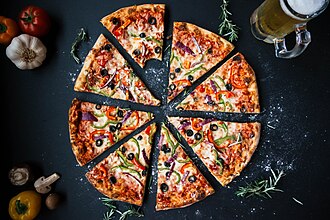
Photo: Wikipedia
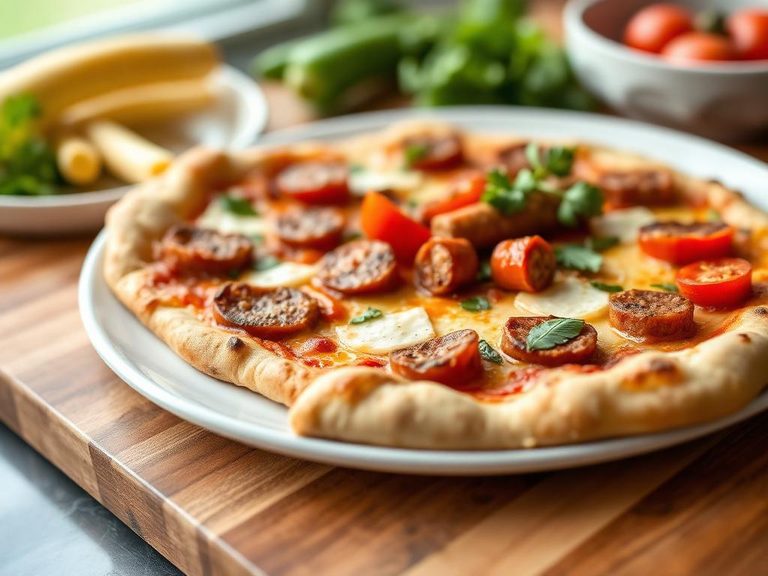
A thin, crispy base loaded with savory meat toppings like sausage, ham, or bacon, offering a satisfying crunch with every bite. The leaner meat profile keeps protein relatively high while the thin crust moderates carbohydrate load compared to deep-dish alternatives. It delivers a concentrated burst of umami and fat-soluble flavors without the heavy, doughy center of traditional pizza.
Calorie split: 16% protein · 44% carbs · 40% fat
↓ Full nutrition💚 Why it's loved
People love it for the perfect balance of crispy texture and savory meat toppings that deliver a rich, umami-packed flavor profile. It is a versatile crowd-pleaser that fits into casual dining, sports events, and quick meals while offering a more substantial protein boost than vegetarian options.
⚠️ Watch-outs & how to enjoy it better
The high sodium content from cured meats and cheese can cause water retention and blood pressure spikes, especially in sensitive individuals. To counteract this, pair with a potassium-rich side salad or roasted vegetables, and practice portion control by limiting intake to one or two slices. Additionally, the refined flour crust can cause rapid blood sugar spikes; pairing with fiber-rich vegetables or a small amount of healthy fat can slow absorption.
Key benefits
- Higher protein density due to meat toppings
- Lower carbohydrate load than thick or stuffed crusts
- Provides essential B vitamins from meat
- Convenient, calorie-controlled single-serve meal
- Satisfying crunch reduces portion size perception
🍽️ Popular dishes
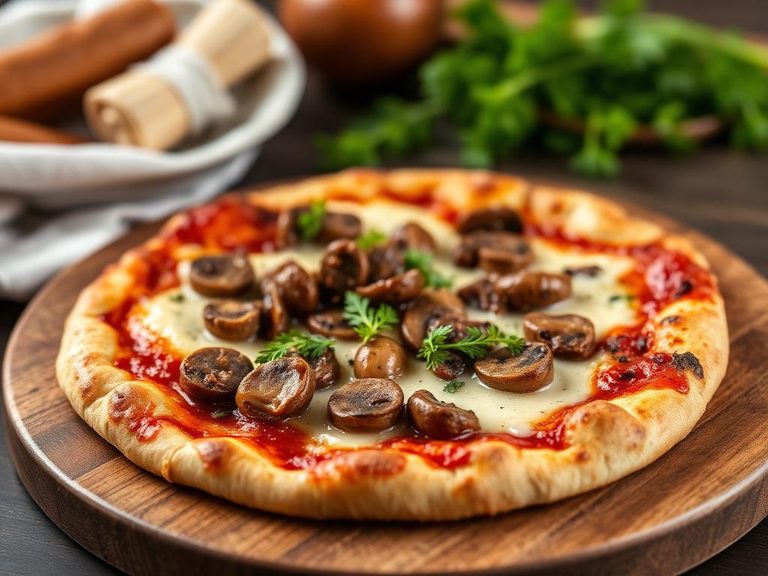
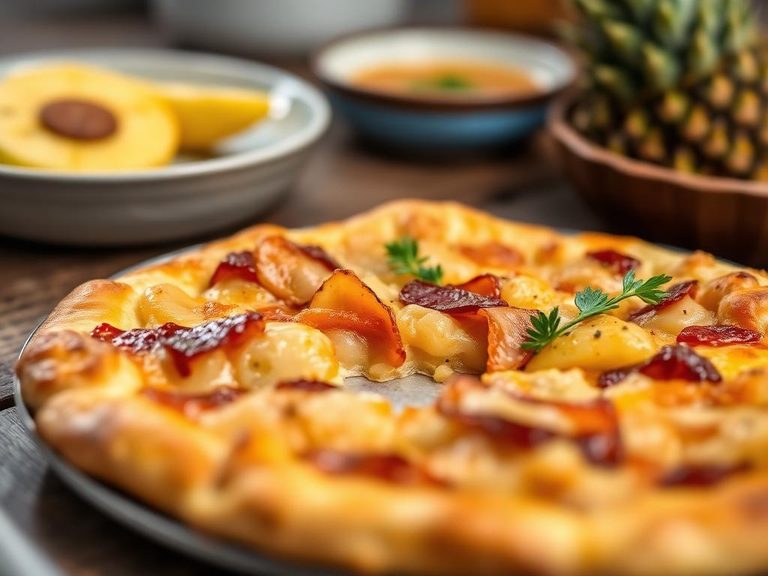
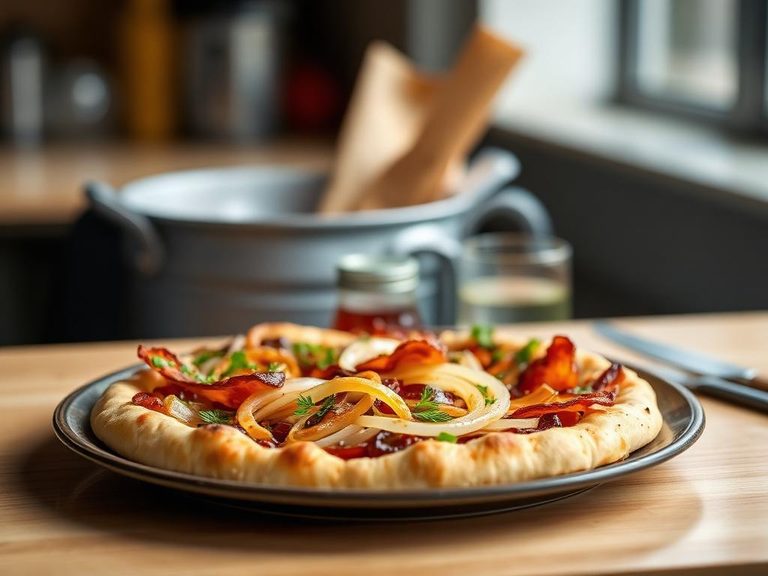
🌍 Where it's eaten
💡 Did you know?
The thin crust pizza style was originally developed in Naples as a quick, affordable street food for the working class, and it became the foundation for the modern pizza industry in the United States.
Full nutrition (USDA data · scales with serving)
| Water | 43.1 g |
| Energy | 280 kcal |
| Protein | 11.5 g |
| Total lipid (fat) | 12.3 g |
| Carbohydrate, by difference | 30.6 g |
| Fiber, total dietary | 2.3 g |
| Total Sugars | 3.3 g |
| Calcium, Ca | 144 mg |
| Iron, Fe | 2.4 mg |
| Magnesium, Mg | 24.0 mg |
| Phosphorus, P | 193 mg |
| Potassium, K | 197 mg |
| Sodium, Na | 570 mg |
| Zinc, Zn | 1.3 mg |
| Copper, Cu | 0.11 mg |
| Selenium, Se | 20.3 ug |
| Vitamin C, total ascorbic acid | 1.7 mg |
| Thiamin | 0.34 mg |
| Riboflavin | 0.19 mg |
| Niacin | 3.8 mg |
| Vitamin B-6 | 0.08 mg |
| Folate, total | 88.0 ug |
| Folic acid | 53.0 ug |
| Folate, food | 35.0 ug |
| Folate, DFE | 126 ug |
| Choline, total | 26.3 mg |
| Vitamin B-12 | 0.48 ug |
| Vitamin B-12, added | 0.00 ug |
| Vitamin A, RAE | 68.0 ug |
| Retinol | 60.0 ug |
| Carotene, beta | 91.0 ug |
| Carotene, alpha | 0.00 ug |
| Cryptoxanthin, beta | 0.00 ug |
| Lycopene | 1884 ug |
| Lutein + zeaxanthin | 23.0 ug |
| Vitamin E (alpha-tocopherol) | 0.91 mg |
| Vitamin E, added | 0.00 mg |
| Vitamin D (D2 + D3) | 0.00 ug |
| Vitamin K (phylloquinone) | 6.7 ug |
| Alcohol, ethyl | 0.00 g |
| Caffeine | 0.00 mg |
| Theobromine | 0.00 mg |
Fat & fatty acid profile (per 100g)
| Fatty acids, total saturated | 5.0 g |
| SFA 4:0 | 0.08 g |
| SFA 6:0 | 0.07 g |
| SFA 8:0 | 0.04 g |
| SFA 10:0 | 0.11 g |
| SFA 12:0 | 0.14 g |
| SFA 14:0 | 0.51 g |
| SFA 16:0 | 2.8 g |
| SFA 18:0 | 1.2 g |
| Fatty acids, total monounsaturated | 4.0 g |
| MUFA 16:1 | 0.19 g |
| MUFA 18:1 | 3.7 g |
| MUFA 20:1 | 0.07 g |
| MUFA 22:1 | 0.00 g |
| Fatty acids, total polyunsaturated | 2.4 g |
| PUFA 18:2 | 2.1 g |
| PUFA 18:3 | 0.19 g |
| PUFA 18:4 | 0.00 g |
| PUFA 20:4 | 0.03 g |
| PUFA 20:5 n-3 (EPA) | 0.00 g |
| PUFA 22:5 n-3 (DPA) | 0.01 g |
| PUFA 22:6 n-3 (DHA) | 0.00 g |
| Cholesterol | 23.0 mg |
Amino acid profile (per 100g)
Estimated from Fast Food, Pizza Chain, 14" pizza, meat and vegetable topping, regular crust — USDA does not publish this profile for Pizza with meat other than pepperoni.
| Tryptophan | 0.11 g |
| Threonine | 0.40 g |
| Isoleucine | 0.48 g |
| Leucine | 0.92 g |
| Lysine | 0.61 g |
| Methionine | 0.22 g |
| Cystine | 0.18 g |
| Phenylalanine | 0.55 g |
| Tyrosine | 0.39 g |
| Valine | 0.58 g |
| Arginine | 0.51 g |
| Histidine | 0.33 g |
| Alanine | 0.45 g |
| Aspartic acid | 0.86 g |
| Glutamic acid | 2.9 g |
| Glycine | 0.42 g |
| Proline | 1.1 g |
| Serine | 0.60 g |
| Hydroxyproline | 0.01 g |
FAQ
How does thin crust pizza compare nutritionally to regular crust?
Thin crust pizza typically has fewer calories and carbohydrates per slice, making it a lighter option that still provides protein and fat from toppings.
Can I make a healthier version at home?
Yes, use whole wheat or cauliflower crust, lean meats like turkey sausage, and load up on vegetables to boost fiber and reduce sodium.
Is thin crust pizza suitable for people with gluten sensitivities?
Traditional thin crust contains gluten, but many restaurants offer gluten-free thin crust options made from rice flour, almond flour, or cauliflower.
Nutrient density (calculated · NRF9.3)
Nutrient Rich Foods index: beneficial nutrients (protein, fiber, vitamins, minerals) minus saturated fat, added sugar & sodium, per 100 kcal.
NRF9.3 index — Fulgoni, Keast & Drewnowski, 2009. Computed from USDA nutrients.
Weight-loss friendliness (composite index)
Energy density 2.80 kcal/g · 16% calories from protein · 2.3 g fiber · 3.3 g sugar per 100 g.
Composite of energy density (Rolls et al., 1999), protein & fiber satiety, minus sugar. A calculated heuristic — ranks satiety-per-calorie, not a clinical measure.
Dietary load (calculated from USDA values)
Potential renal acid load. Positive = acid-forming, negative = alkaline-forming.
Sodium-to-potassium ratio: 2.89 (lower is better — aim for ≤ 1)
Sodium:potassium per WHO potassium guidance. Computed from USDA nutrients.