

Pickles, NFS
Common food
Pickles, NFS (Not Further Specified) are cucumbers preserved in a brine of vinegar, water, salt, and often dill or garlic, resulting in a crisp, tangy bite. They are exceptionally low in calories (14 kcal per 100g) and provide a satisfying crunch with virtually no fat. Their primary nutritional contribution is dietary fiber (1g per 100g) and a modest amount of natural sugars.
Calorie split: 14% protein · 58% carbs · 28% fat
↓ Full nutrition💚 Why it's loved
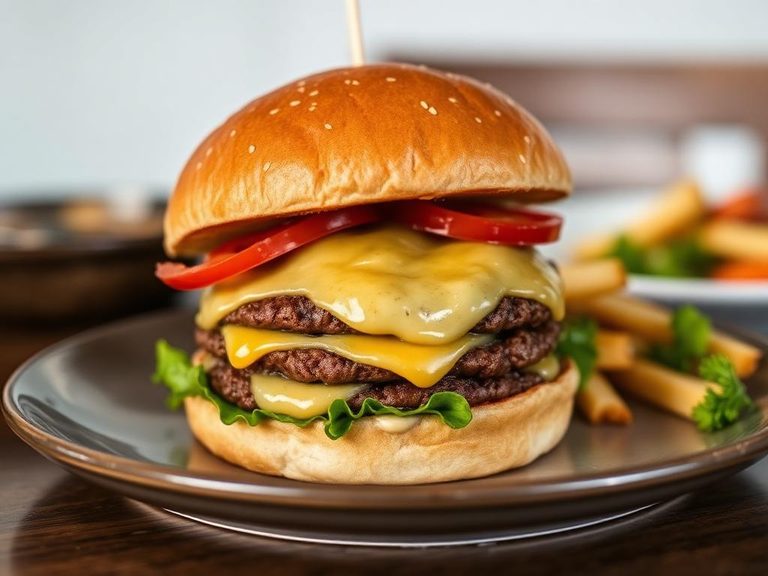
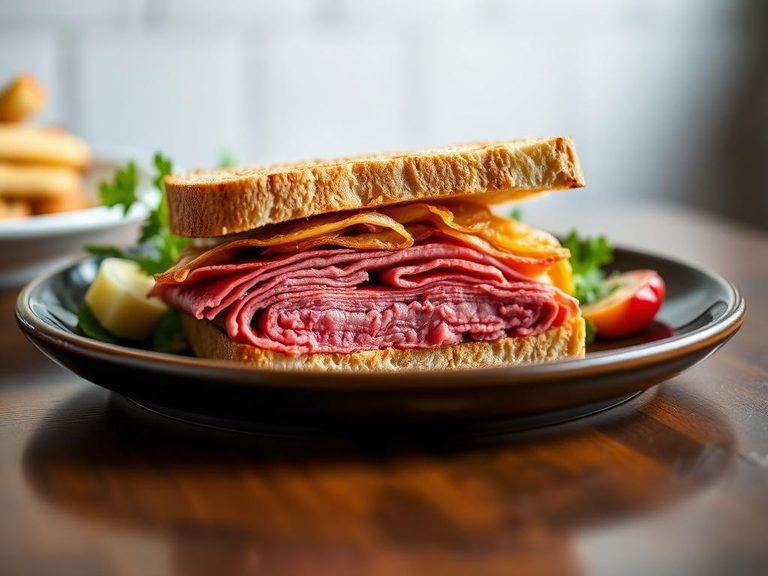
People love pickles for their intense, vinegary tang and satisfying crunch that can cut through rich, fatty foods. They are a versatile condiment, adding a zesty kick to sandwiches, burgers, salads, and charcuterie boards, deeply embedded in many culinary traditions.
⚠️ Watch-outs & how to enjoy it better
The high sodium content in most commercial pickles can be a concern for those managing blood pressure or fluid retention. The vinegar may also trigger heartburn or acid reflux in sensitive individuals. To mitigate, opt for low-sodium varieties, rinse slices before eating, and pair them with a source of protein or healthy fat (like cheese or nuts) to balance the meal.
Key benefits
- Very low calorie, aiding in weight management
- Good source of dietary fiber for digestive health
- Contains antioxidants from cucumbers and spices like dill
- Provides probiotics if naturally fermented (not vinegar-pickled)
- Adds flavor and crunch to meals with minimal calories
🍽️ Popular dishes
🌍 Where it's eaten
💡 Did you know?
During the California Gold Rush, pickles were highly prized by miners as a source of vitamin C to prevent scurvy, and a single barrel of pickles could be worth over $1,000 in today's money.
Full nutrition (USDA data · scales with serving)
| Water | 94.7 g |
| Energy | 14.0 kcal |
| Protein | 0.48 g |
| Total lipid (fat) | 0.43 g |
| Carbohydrate, by difference | 2.0 g |
| Fiber, total dietary | 1.0 g |
| Total Sugars | 1.3 g |
| Calcium, Ca | 54.0 mg |
| Iron, Fe | 0.23 mg |
| Magnesium, Mg | 7.0 mg |
| Phosphorus, P | 16.0 mg |
| Potassium, K | 112 mg |
| Sodium, Na | 808 mg |
| Zinc, Zn | 0.11 mg |
| Copper, Cu | 0.03 mg |
| Selenium, Se | 0.00 ug |
| Vitamin C, total ascorbic acid | 2.1 mg |
| Thiamin | 0.05 mg |
| Riboflavin | 0.06 mg |
| Niacin | 0.11 mg |
| Vitamin B-6 | 0.03 mg |
| Folate, total | 8.0 ug |
| Folic acid | 0.00 ug |
| Folate, food | 8.0 ug |
| Folate, DFE | 8.0 ug |
| Choline, total | 3.4 mg |
| Vitamin B-12 | 0.00 ug |
| Vitamin B-12, added | 0.00 ug |
| Vitamin A, RAE | 4.0 ug |
| Retinol | 0.00 ug |
| Carotene, beta | 45.0 ug |
| Carotene, alpha | 0.00 ug |
| Cryptoxanthin, beta | 1.0 ug |
| Lycopene | 0.00 ug |
| Lutein + zeaxanthin | 199 ug |
| Vitamin E (alpha-tocopherol) | 0.12 mg |
| Vitamin E, added | 0.00 mg |
| Vitamin D (D2 + D3) | 0.00 ug |
| Vitamin K (phylloquinone) | 16.8 ug |
| Alcohol, ethyl | 0.00 g |
| Caffeine | 0.00 mg |
| Theobromine | 0.00 mg |
Fat & fatty acid profile (per 100g)
| Fatty acids, total saturated | 0.08 g |
| SFA 4:0 | 0.00 g |
| SFA 6:0 | 0.00 g |
| SFA 8:0 | 0.00 g |
| SFA 10:0 | 0.00 g |
| SFA 12:0 | 0.00 g |
| SFA 14:0 | 0.00 g |
| SFA 16:0 | 0.07 g |
| SFA 18:0 | 0.01 g |
| Fatty acids, total monounsaturated | 0.01 g |
| MUFA 16:1 | 0.00 g |
| MUFA 18:1 | 0.01 g |
| MUFA 20:1 | 0.00 g |
| MUFA 22:1 | 0.00 g |
| Fatty acids, total polyunsaturated | 0.12 g |
| PUFA 18:2 | 0.05 g |
| PUFA 18:3 | 0.07 g |
| PUFA 18:4 | 0.00 g |
| PUFA 20:4 | 0.00 g |
| PUFA 20:5 n-3 (EPA) | 0.00 g |
| PUFA 22:5 n-3 (DPA) | 0.00 g |
| PUFA 22:6 n-3 (DHA) | 0.00 g |
| Cholesterol | 0.00 mg |
Amino acid profile (per 100g)
Estimated from Pickles, cucumber, sweet (includes bread and butter pickles) — USDA does not publish this profile for Pickles.
| Tryptophan | 0.01 g |
| Threonine | 0.02 g |
| Isoleucine | 0.02 g |
| Leucine | 0.03 g |
| Lysine | 0.03 g |
| Methionine | 0.01 g |
| Cystine | 0.01 g |
| Phenylalanine | 0.02 g |
| Tyrosine | 0.01 g |
| Valine | 0.02 g |
| Arginine | 0.03 g |
| Histidine | 0.01 g |
| Alanine | 0.03 g |
| Aspartic acid | 0.04 g |
| Glutamic acid | 0.17 g |
| Glycine | 0.03 g |
| Proline | 0.01 g |
| Serine | 0.03 g |
FAQ
Are all pickles made from cucumbers?
No. While cucumbers are the most common, the term 'pickle' can refer to any food preserved in brine or vinegar. Examples include pickled beets, onions, peppers, eggs, and even watermelon rind.
What's the difference between a dill pickle and a bread & butter pickle?
Dill pickles are flavored primarily with dill weed and garlic in a sour brine. Bread & butter pickles are sweeter, made with a spiced vinegar-sugar brine containing mustard seeds, celery seeds, and turmeric.
Do pickles have any probiotic benefits?
Only naturally fermented pickles (made in a salt brine without vinegar) contain live probiotic bacteria. Most shelf-stable pickles are pasteurized and use vinegar, which kills beneficial microbes.
Nutrient density (calculated · NRF9.3)
Nutrient Rich Foods index: beneficial nutrients (protein, fiber, vitamins, minerals) minus saturated fat, added sugar & sodium, per 100 kcal.
NRF9.3 index — Fulgoni, Keast & Drewnowski, 2009. Computed from USDA nutrients.
Weight-loss friendliness (composite index)
Energy density 0.14 kcal/g · 14% calories from protein · 1.0 g fiber · 1.3 g sugar per 100 g.
Composite of energy density (Rolls et al., 1999), protein & fiber satiety, minus sugar. A calculated heuristic — ranks satiety-per-calorie, not a clinical measure.
Dietary load (calculated from USDA values)
Potential renal acid load. Positive = acid-forming, negative = alkaline-forming.
Sodium-to-potassium ratio: 7.21 (lower is better — aim for ≤ 1)
Sodium:potassium per WHO potassium guidance. Computed from USDA nutrients.