

Peanut butter, reduced sodium
Whole food · Legumes and Legume Products
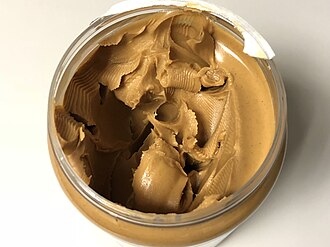
Photo: Wikipedia
Reduced-sodium peanut butter is a creamy or crunchy spread made from roasted peanuts, with about 25% less sodium than regular varieties. It offers a rich, nutty flavor with a satisfying, thick texture, and is a notable source of plant-based protein and healthy fats.
Calorie split: 15% protein · 14% carbs · 71% fat
↓ Full nutrition💚 Why it's loved
People adore it for its deeply savory, roasted peanut flavor and creamy mouthfeel, which makes it a satisfying staple. Its versatility is legendary—equally at home on toast, in sauces, or as a simple dip for fruit.
⚠️ Watch-outs & how to enjoy it better
It is calorie-dense, and overconsumption can contribute to weight gain. As a common allergen, it's unsafe for those with peanut allergies. To manage intake, practice strict portion control (e.g., 2 tablespoons) and pair it with high-fiber foods like apple slices to slow digestion.
Key benefits
- High in monounsaturated fats, which support heart health.
- Excellent source of plant-based protein (24g per 100g).
- Provides dietary fiber and essential minerals like magnesium.
- The reduced sodium content is better for blood pressure management.
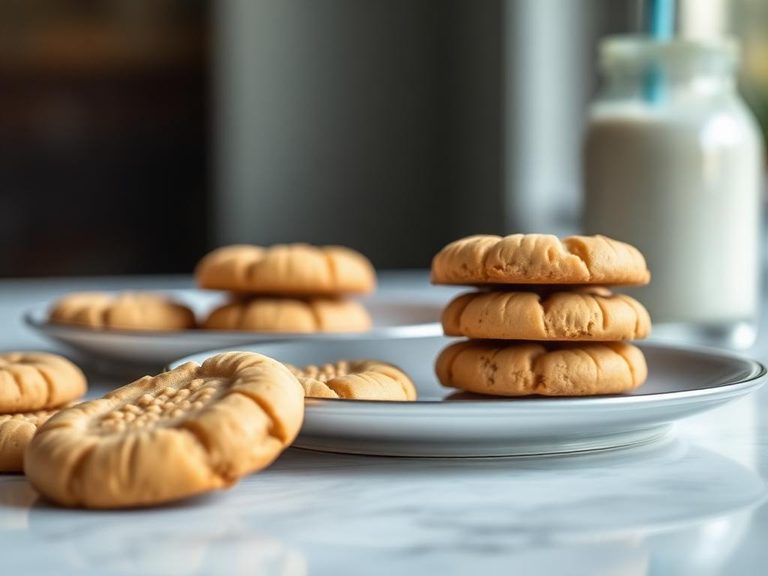
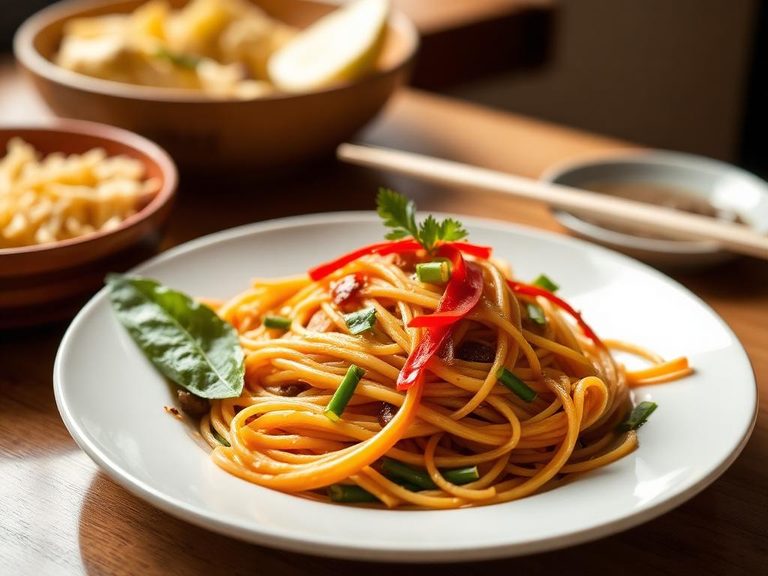
🍽️ Popular dishes
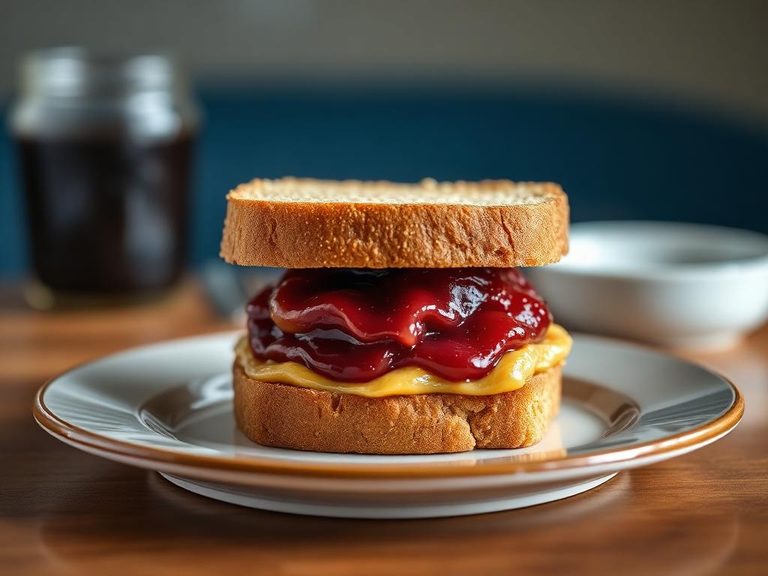
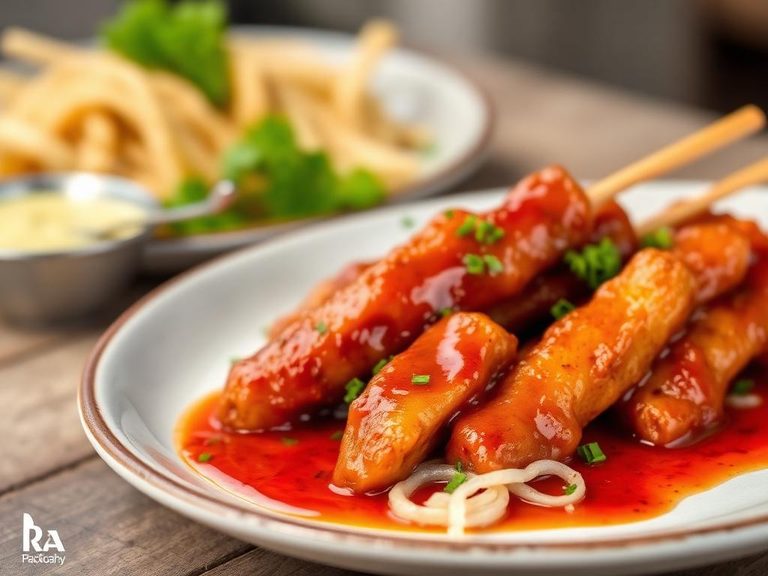
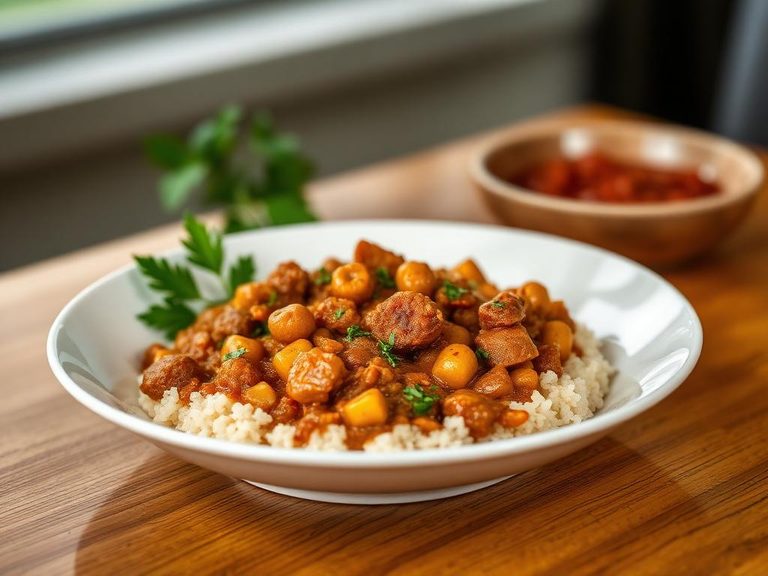
🌍 Where it's eaten
💡 Did you know?
It takes about 540 peanuts to make one 12-ounce jar of peanut butter.
Full nutrition (USDA data · scales with serving)
| Water | 1.1 g |
| Energy | 590 kcal |
| Energy | 2468 kj |
| Protein | 24.0 g |
| Total lipid (fat) | 49.9 g |
| Ash | 3.2 g |
| Carbohydrate, by difference | 21.8 g |
| Fiber, total dietary | 6.6 g |
| Total Sugars | 9.3 g |
| Calcium, Ca | 41.0 mg |
| Iron, Fe | 1.9 mg |
| Magnesium, Mg | 159 mg |
| Phosphorus, P | 317 mg |
| Potassium, K | 747 mg |
| Sodium, Na | 203 mg |
| Zinc, Zn | 2.8 mg |
| Copper, Cu | 0.52 mg |
| Selenium, Se | 7.5 ug |
| Vitamin C, total ascorbic acid | 0.00 mg |
| Thiamin | 0.12 mg |
| Riboflavin | 0.11 mg |
| Niacin | 13.7 mg |
| Vitamin B-6 | 0.45 mg |
| Folate, total | 92.0 ug |
| Folic acid | 0.00 ug |
| Folate, food | 92.0 ug |
| Folate, DFE | 92.0 ug |
| Choline, total | 63.5 mg |
| Vitamin B-12 | 0.00 ug |
| Vitamin B-12, added | 0.00 ug |
| Vitamin A, RAE | 0.00 ug |
| Retinol | 0.00 ug |
| Carotene, beta | 0.00 ug |
| Carotene, alpha | 0.00 ug |
| Cryptoxanthin, beta | 0.00 ug |
| Vitamin A, IU | 0.00 iu |
| Lycopene | 0.00 ug |
| Lutein + zeaxanthin | 0.00 ug |
| Vitamin E (alpha-tocopherol) | 9.1 mg |
| Vitamin E, added | 0.00 mg |
| Vitamin D (D2 + D3), International Units | 0.00 iu |
| Vitamin D (D2 + D3) | 0.00 ug |
| Vitamin K (phylloquinone) | 0.60 ug |
| Alcohol, ethyl | 0.00 g |
| Caffeine | 0.00 mg |
| Theobromine | 0.00 mg |
Fat & fatty acid profile (per 100g)
| Fatty acids, total saturated | 7.7 g |
| SFA 4:0 | 0.00 g |
| SFA 6:0 | 0.00 g |
| SFA 8:0 | 0.00 g |
| SFA 10:0 | 0.00 g |
| SFA 12:0 | 0.02 g |
| SFA 14:0 | 0.05 g |
| SFA 16:0 | 5.5 g |
| SFA 18:0 | 2.1 g |
| Fatty acids, total monounsaturated | 23.6 g |
| MUFA 16:1 | 0.00 g |
| MUFA 18:1 | 23.0 g |
| MUFA 20:1 | 0.62 g |
| MUFA 22:1 | 0.00 g |
| Fatty acids, total polyunsaturated | 14.4 g |
| PUFA 18:2 | 14.1 g |
| PUFA 18:3 | 0.08 g |
| PUFA 18:4 | 0.00 g |
| PUFA 20:4 | 0.19 g |
| PUFA 20:5 n-3 (EPA) | 0.00 g |
| PUFA 22:5 n-3 (DPA) | 0.00 g |
| PUFA 22:6 n-3 (DHA) | 0.00 g |
| Cholesterol | 0.00 mg |
Amino acid profile (per 100g)
Estimated from Peanut Butter, smooth (Includes foods for USDA's Food Distribution Program) — USDA does not publish this profile for Peanut butter.
| Tryptophan | 0.23 g |
| Threonine | 0.52 g |
| Isoleucine | 0.61 g |
| Leucine | 1.5 g |
| Lysine | 0.67 g |
| Methionine | 0.26 g |
| Cystine | 0.23 g |
| Phenylalanine | 1.2 g |
| Tyrosine | 0.82 g |
| Valine | 0.77 g |
| Arginine | 2.7 g |
| Histidine | 0.55 g |
| Alanine | 0.91 g |
| Aspartic acid | 3.0 g |
| Glutamic acid | 5.0 g |
| Glycine | 1.4 g |
| Proline | 1.4 g |
| Serine | 1.5 g |
FAQ
Is reduced-sodium peanut butter healthier?
Yes, it's a better choice for those monitoring sodium intake, as it contains about 25% less sodium than regular versions while offering the same protein and healthy fats.
Why does the oil separate in natural peanut butter?
In natural varieties without stabilizers, the heavier peanut solids sink while the lighter oil rises to the top. Stirring it well before use recombines the texture.
Can I use it in cooking and baking?
Absolutely. It's a key ingredient in sauces (like satay), dressings, and baked goods. For baking, it can often substitute for butter or oil, though it adds a distinct nutty flavor.
Nutrient density (calculated · NRF9.3)
Nutrient Rich Foods index: beneficial nutrients (protein, fiber, vitamins, minerals) minus saturated fat, added sugar & sodium, per 100 kcal.
NRF9.3 index — Fulgoni, Keast & Drewnowski, 2009. Computed from USDA nutrients.
Weight-loss friendliness (composite index)
Energy density 5.90 kcal/g · 16% calories from protein · 6.6 g fiber · 9.3 g sugar per 100 g.
Composite of energy density (Rolls et al., 1999), protein & fiber satiety, minus sugar. A calculated heuristic — ranks satiety-per-calorie, not a clinical measure.
Dietary load (calculated from USDA values)
Potential renal acid load. Positive = acid-forming, negative = alkaline-forming.
Sodium-to-potassium ratio: 0.27 (lower is better — aim for ≤ 1)
Sodium:potassium per WHO potassium guidance. Computed from USDA nutrients.