

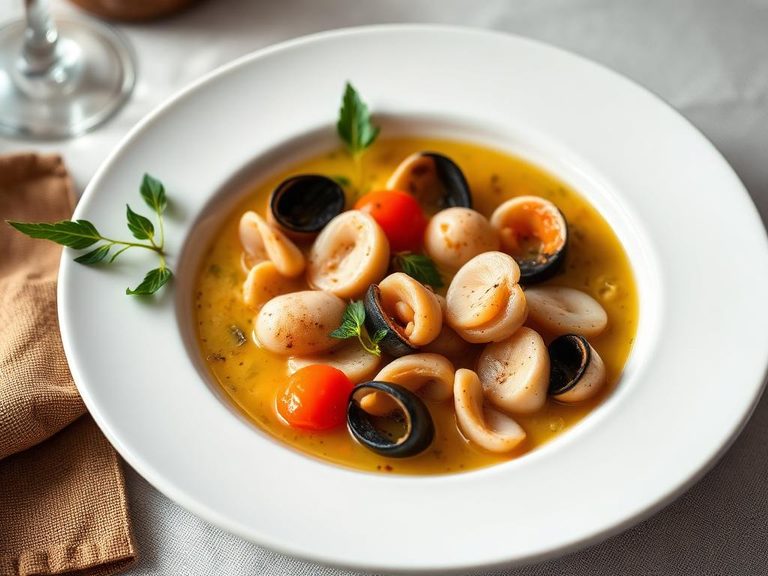
Pasta, whole grain, with tomato-based sauce and seafood, home recipe
Common food
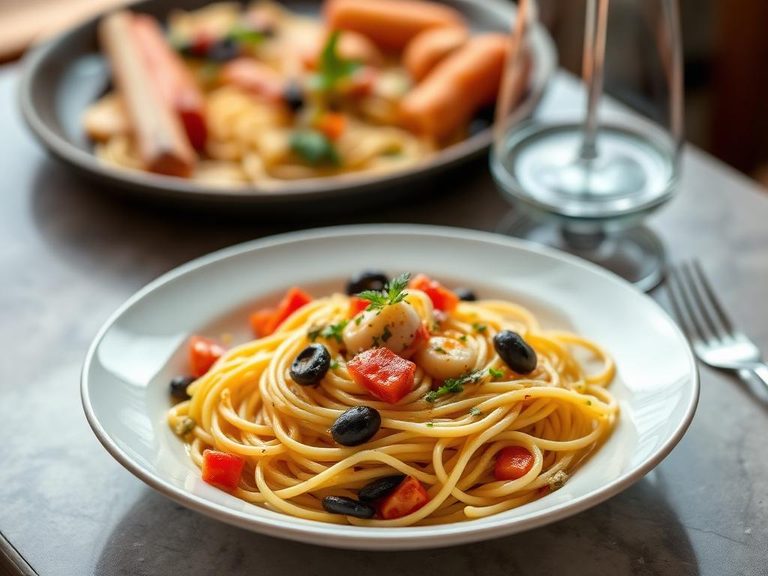
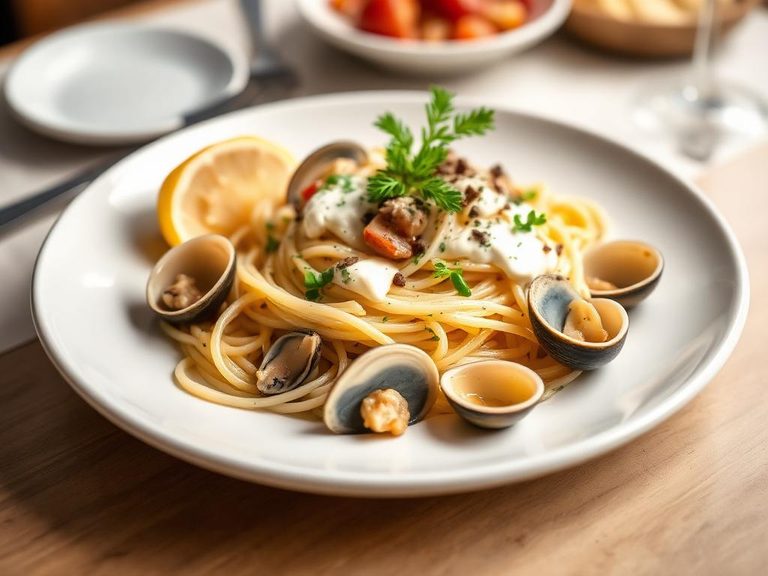
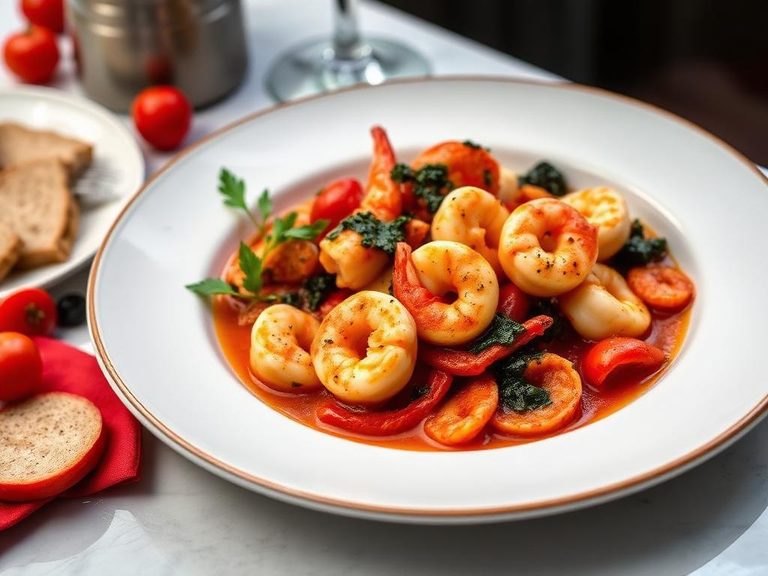
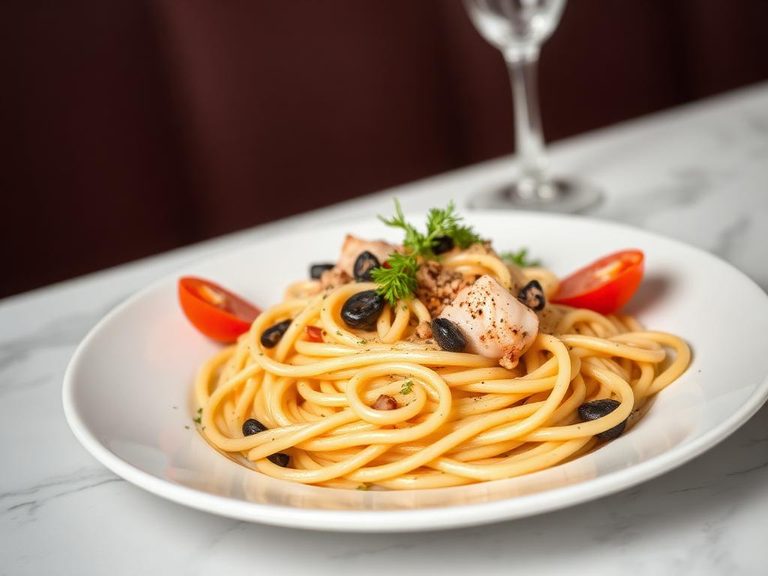
This is a hearty, home-style dish where nutty, chewy whole-grain pasta meets a vibrant, savory tomato sauce brimming with tender seafood like shrimp, mussels, or calamari. The texture is a satisfying contrast between the firm al dente pasta and the soft, ocean-fresh bites. It's a nutritionally balanced meal, offering substantial fiber and protein for a relatively low calorie count.
Calorie split: 20% protein · 67% carbs · 13% fat
↓ Full nutrition💚 Why it's loved
People adore it for the perfect marriage of land and sea—the earthy, whole-grain base complements the bright, briny sweetness of the seafood and the acidity of the tomato. It's a versatile one-pot wonder that feels both comforting and elegant, deeply rooted in Mediterranean coastal cooking traditions.
⚠️ Watch-outs & how to enjoy it better
The sodium content can be high depending on the sauce and seafood preparation, and the tomato sauce may be acidic for some. Those with shellfish allergies must avoid it, and the fiber in whole-grain pasta can cause digestive discomfort if you're not accustomed to it. To mitigate, choose low-sodium canned tomatoes, rinse canned seafood, and increase your fiber intake gradually while drinking plenty of water.
Key benefits
- High in dietary fiber for digestive health
- Good source of lean protein from seafood
- Rich in complex carbohydrates for sustained energy
- Contains lycopene from cooked tomatoes
- Lower in fat compared to cream-based sauces
🍽️ Popular dishes
🌍 Where it's eaten
💡 Did you know?
The traditional Italian 'Frutti di Mare' (fruits of the sea) topping often excludes any fish with bones, focusing purely on shellfish and cephalopods for a cleaner eating experience.
Full nutrition (USDA data · scales with serving)
| Water | 72.6 g |
| Energy | 108 kcal |
| Protein | 5.7 g |
| Total lipid (fat) | 1.6 g |
| Carbohydrate, by difference | 19.0 g |
| Fiber, total dietary | 2.7 g |
| Total Sugars | 2.5 g |
| Calcium, Ca | 27.0 mg |
| Iron, Fe | 1.4 mg |
| Magnesium, Mg | 38.0 mg |
| Phosphorus, P | 103 mg |
| Potassium, K | 207 mg |
| Sodium, Na | 210 mg |
| Zinc, Zn | 0.90 mg |
| Copper, Cu | 0.16 mg |
| Selenium, Se | 23.8 ug |
| Vitamin C, total ascorbic acid | 1.0 mg |
| Thiamin | 0.09 mg |
| Riboflavin | 0.08 mg |
| Niacin | 3.2 mg |
| Vitamin B-6 | 0.12 mg |
| Folate, total | 17.0 ug |
| Folic acid | 0.00 ug |
| Folate, food | 17.0 ug |
| Folate, DFE | 17.0 ug |
| Choline, total | 17.2 mg |
| Vitamin B-12 | 0.87 ug |
| Vitamin B-12, added | 0.00 ug |
| Vitamin A, RAE | 19.0 ug |
| Retinol | 7.0 ug |
| Carotene, beta | 154 ug |
| Carotene, alpha | 0.00 ug |
| Cryptoxanthin, beta | 0.00 ug |
| Lycopene | 4968 ug |
| Lutein + zeaxanthin | 123 ug |
| Vitamin E (alpha-tocopherol) | 1.2 mg |
| Vitamin E, added | 0.00 mg |
| Vitamin D (D2 + D3) | 0.00 ug |
| Vitamin K (phylloquinone) | 5.8 ug |
| Alcohol, ethyl | 0.00 g |
| Caffeine | 0.00 mg |
| Theobromine | 0.00 mg |
Fat & fatty acid profile (per 100g)
| Fatty acids, total saturated | 0.21 g |
| SFA 4:0 | 0.00 g |
| SFA 6:0 | 0.00 g |
| SFA 8:0 | 0.00 g |
| SFA 10:0 | 0.00 g |
| SFA 12:0 | 0.00 g |
| SFA 14:0 | 0.00 g |
| SFA 16:0 | 0.16 g |
| SFA 18:0 | 0.03 g |
| Fatty acids, total monounsaturated | 0.25 g |
| MUFA 16:1 | 0.00 g |
| MUFA 18:1 | 0.24 g |
| MUFA 20:1 | 0.01 g |
| MUFA 22:1 | 0.00 g |
| Fatty acids, total polyunsaturated | 0.54 g |
| PUFA 18:2 | 0.45 g |
| PUFA 18:3 | 0.05 g |
| PUFA 18:4 | 0.00 g |
| PUFA 20:4 | 0.00 g |
| PUFA 20:5 n-3 (EPA) | 0.02 g |
| PUFA 22:5 n-3 (DPA) | 0.00 g |
| PUFA 22:6 n-3 (DHA) | 0.02 g |
| Cholesterol | 14.0 mg |
Amino acid profile (per 100g)
Estimated from Restaurant, Italian, chicken parmesan without pasta — USDA does not publish this profile for Pasta.
| Tryptophan | 0.20 g |
| Threonine | 0.66 g |
| Isoleucine | 0.72 g |
| Leucine | 1.3 g |
| Lysine | 1.3 g |
| Methionine | 0.41 g |
| Cystine | 0.20 g |
| Phenylalanine | 1.1 g |
| Tyrosine | 0.53 g |
| Valine | 0.81 g |
| Arginine | 0.93 g |
| Histidine | 0.50 g |
| Alanine | 0.79 g |
| Aspartic acid | 1.4 g |
| Glutamic acid | 2.8 g |
| Glycine | 0.61 g |
| Proline | 1.3 g |
| Serine | 0.70 g |
| Hydroxyproline | 0.04 g |
FAQ
Can I use frozen seafood for this recipe?
Yes, frozen seafood is often flash-frozen at sea and can be excellent. Thaw it completely in the refrigerator before use, and pat it very dry with paper towels to prevent a watery sauce.
How do I prevent the whole-grain pasta from becoming mushy?
Cook it in a large pot of well-salted, boiling water for 1-2 minutes less than the package instructions suggest (al dente). It will finish cooking when tossed with the hot sauce.
What's the best way to build flavor in the tomato sauce?
Start by sautéing garlic and a pinch of red pepper flakes in olive oil, then add a splash of white wine to deglaze the pan before adding your tomatoes. A handful of fresh basil or parsley stirred in at the end brightens everything.
Nutrient density (calculated · NRF9.3)
Nutrient Rich Foods index: beneficial nutrients (protein, fiber, vitamins, minerals) minus saturated fat, added sugar & sodium, per 100 kcal.
NRF9.3 index — Fulgoni, Keast & Drewnowski, 2009. Computed from USDA nutrients.
Weight-loss friendliness (composite index)
Energy density 1.08 kcal/g · 21% calories from protein · 2.7 g fiber · 2.5 g sugar per 100 g.
Composite of energy density (Rolls et al., 1999), protein & fiber satiety, minus sugar. A calculated heuristic — ranks satiety-per-calorie, not a clinical measure.
Dietary load (calculated from USDA values)
Potential renal acid load. Positive = acid-forming, negative = alkaline-forming.
Sodium-to-potassium ratio: 1.01 (lower is better — aim for ≤ 1)
Sodium:potassium per WHO potassium guidance. Computed from USDA nutrients.