

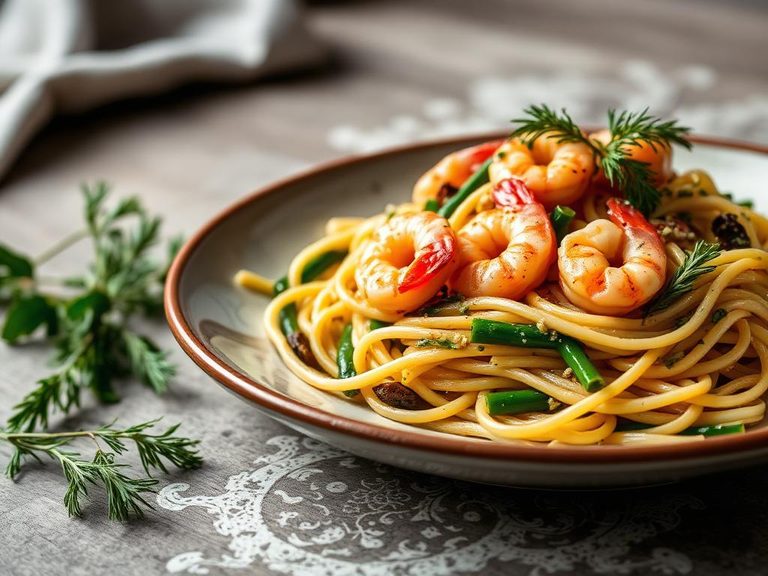
Pasta, whole grain, with tomato-based sauce, seafood, and added vegetables, home recipe
Common food
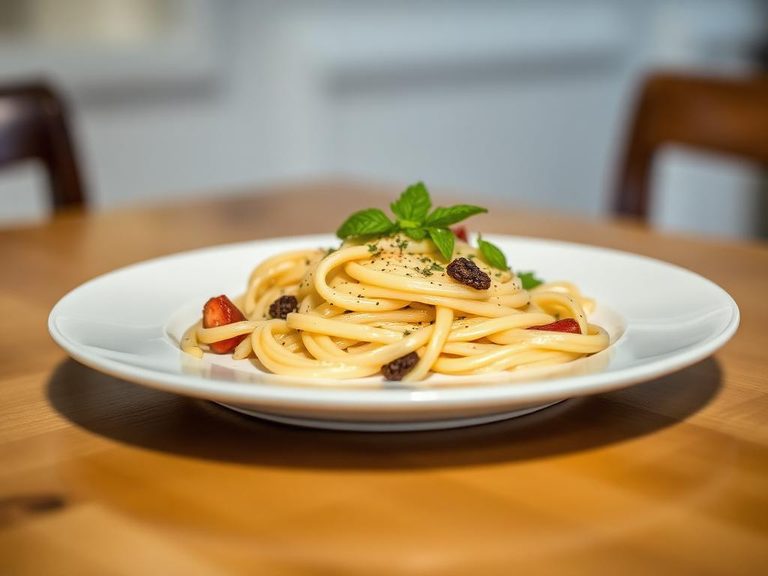
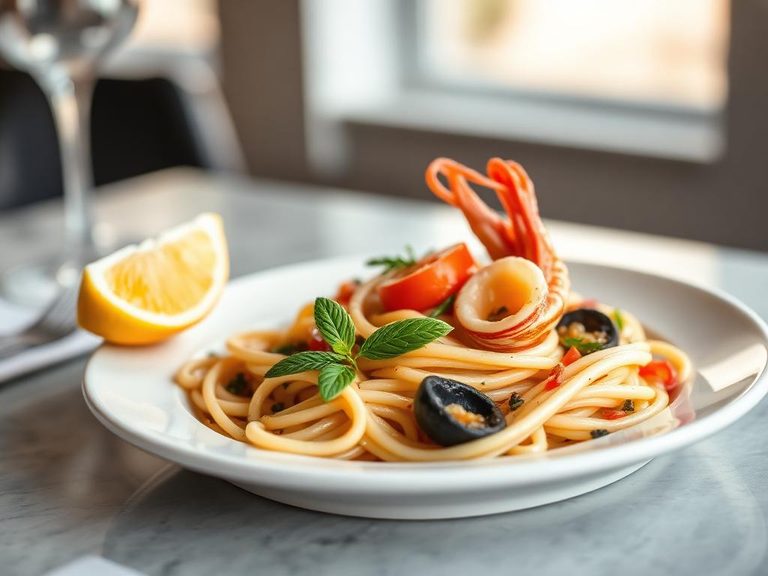
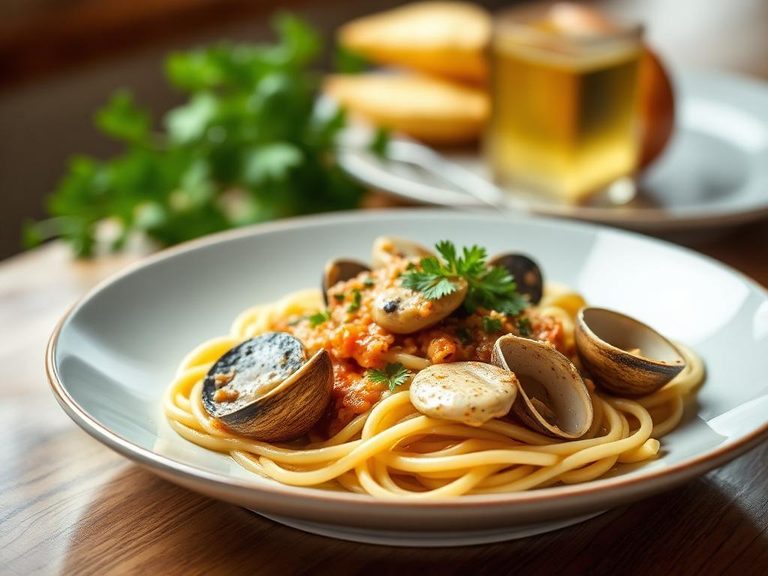
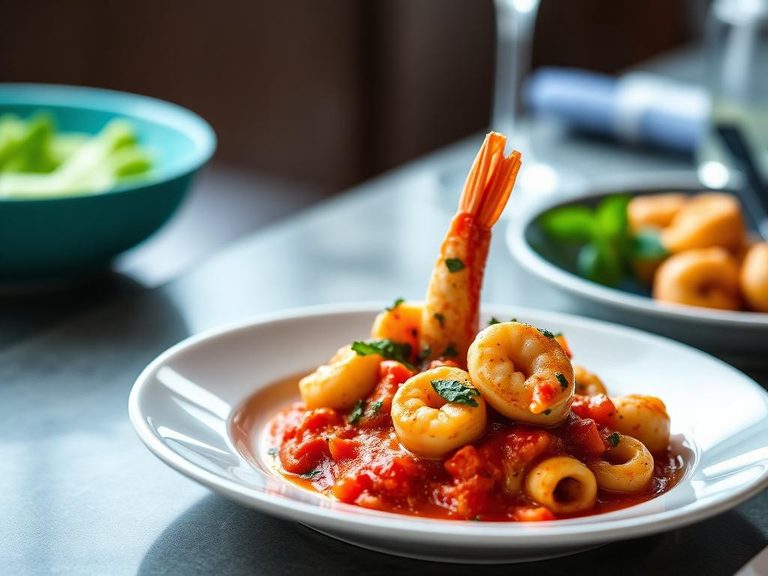
This is a hearty, home-style dish where whole grain pasta is tossed in a vibrant tomato-based sauce with tender seafood like shrimp or mussels, and studded with colorful vegetables like bell peppers and spinach. The texture is satisfyingly al dente with a slight chew from the whole grains, complemented by the soft seafood and the bright, savory sauce. Nutritionally, it's a lean, fiber-rich meal that packs a good protein punch from the seafood while keeping fat and calories remarkably low.
Calorie split: 21% protein · 67% carbs · 12% fat
↓ Full nutrition💚 Why it's loved
People love this dish for its deeply satisfying yet light combination of savory, briny seafood flavors with the sweet acidity of tomatoes, all in one comforting bowl. It's a versatile one-pot wonder that feels both nourishing and indulgent, embodying the Mediterranean principle of simple, high-quality ingredients coming together beautifully.
⚠️ Watch-outs & how to enjoy it better
The whole grain pasta can cause blood sugar to rise more slowly but may still be a concern for some diabetics if portions are large, and the tomato sauce can be high in sodium. To counteract this, pair the dish with a side of leafy greens or a drizzle of olive oil to further slow carb absorption, and choose low-sodium canned tomatoes or rinse them if making the sauce from scratch.
Key benefits
- High in dietary fiber from whole grain pasta, aiding digestion and satiety
- Excellent source of lean protein from seafood, supporting muscle maintenance
- Rich in lycopene from the cooked tomato sauce, a potent antioxidant
- Contains a variety of vitamins and minerals from the added vegetables
- Low in total fat and saturated fat, making it heart-healthy
🍽️ Popular dishes
🌍 Where it's eaten
💡 Did you know?
The combination of tomatoes and pasta is actually a relatively modern invention; tomatoes were brought to Italy from the Americas in the 16th century and were initially grown as ornamental plants before being embraced in the kitchen.
Full nutrition (USDA data · scales with serving)
| Water | 73.0 g |
| Energy | 106 kcal |
| Protein | 5.7 g |
| Total lipid (fat) | 1.5 g |
| Carbohydrate, by difference | 18.8 g |
| Fiber, total dietary | 2.7 g |
| Total Sugars | 2.3 g |
| Calcium, Ca | 25.0 mg |
| Iron, Fe | 1.4 mg |
| Magnesium, Mg | 38.0 mg |
| Phosphorus, P | 105 mg |
| Potassium, K | 206 mg |
| Sodium, Na | 172 mg |
| Zinc, Zn | 0.92 mg |
| Copper, Cu | 0.17 mg |
| Selenium, Se | 24.4 ug |
| Vitamin C, total ascorbic acid | 4.9 mg |
| Thiamin | 0.09 mg |
| Riboflavin | 0.09 mg |
| Niacin | 3.0 mg |
| Vitamin B-6 | 0.12 mg |
| Folate, total | 18.0 ug |
| Folic acid | 0.00 ug |
| Folate, food | 18.0 ug |
| Folate, DFE | 18.0 ug |
| Choline, total | 17.1 mg |
| Vitamin B-12 | 0.88 ug |
| Vitamin B-12, added | 0.00 ug |
| Vitamin A, RAE | 20.0 ug |
| Retinol | 7.0 ug |
| Carotene, beta | 154 ug |
| Carotene, alpha | 1.0 ug |
| Cryptoxanthin, beta | 9.0 ug |
| Lycopene | 3799 ug |
| Lutein + zeaxanthin | 153 ug |
| Vitamin E (alpha-tocopherol) | 0.98 mg |
| Vitamin E, added | 0.00 mg |
| Vitamin D (D2 + D3) | 0.00 ug |
| Vitamin K (phylloquinone) | 4.9 ug |
| Alcohol, ethyl | 0.00 g |
| Caffeine | 0.00 mg |
| Theobromine | 0.00 mg |
Fat & fatty acid profile (per 100g)
| Fatty acids, total saturated | 0.20 g |
| SFA 4:0 | 0.00 g |
| SFA 6:0 | 0.00 g |
| SFA 8:0 | 0.00 g |
| SFA 10:0 | 0.00 g |
| SFA 12:0 | 0.00 g |
| SFA 14:0 | 0.00 g |
| SFA 16:0 | 0.16 g |
| SFA 18:0 | 0.03 g |
| Fatty acids, total monounsaturated | 0.22 g |
| MUFA 16:1 | 0.00 g |
| MUFA 18:1 | 0.20 g |
| MUFA 20:1 | 0.01 g |
| MUFA 22:1 | 0.00 g |
| Fatty acids, total polyunsaturated | 0.51 g |
| PUFA 18:2 | 0.42 g |
| PUFA 18:3 | 0.05 g |
| PUFA 18:4 | 0.00 g |
| PUFA 20:4 | 0.00 g |
| PUFA 20:5 n-3 (EPA) | 0.02 g |
| PUFA 22:5 n-3 (DPA) | 0.00 g |
| PUFA 22:6 n-3 (DHA) | 0.02 g |
| Cholesterol | 14.0 mg |
Amino acid profile (per 100g)
Estimated from Restaurant, Italian, chicken parmesan without pasta — USDA does not publish this profile for Pasta.
| Tryptophan | 0.20 g |
| Threonine | 0.66 g |
| Isoleucine | 0.72 g |
| Leucine | 1.3 g |
| Lysine | 1.3 g |
| Methionine | 0.41 g |
| Cystine | 0.20 g |
| Phenylalanine | 1.1 g |
| Tyrosine | 0.53 g |
| Valine | 0.81 g |
| Arginine | 0.93 g |
| Histidine | 0.50 g |
| Alanine | 0.79 g |
| Aspartic acid | 1.4 g |
| Glutamic acid | 2.8 g |
| Glycine | 0.61 g |
| Proline | 1.3 g |
| Serine | 0.70 g |
| Hydroxyproline | 0.04 g |
FAQ
Is this dish gluten-free?
No, traditional pasta is made from wheat, which contains gluten. For a gluten-free version, you would need to substitute the whole grain pasta with a gluten-free alternative made from rice, corn, or legumes.
Can I use frozen seafood for this recipe?
Yes, frozen seafood is a convenient and often economical option. Thaw it properly in the refrigerator overnight or under cold running water before cooking to maintain texture and flavor.
How can I make the sauce richer without adding more fat?
You can deepen the flavor by slowly simmering the tomatoes to concentrate their natural sweetness, adding a splash of pasta cooking water to emulsify the sauce, or incorporating a small amount of umami-rich ingredients like a teaspoon of tomato paste or a sprinkle of nutritional yeast.
Nutrient density (calculated · NRF9.3)
Nutrient Rich Foods index: beneficial nutrients (protein, fiber, vitamins, minerals) minus saturated fat, added sugar & sodium, per 100 kcal.
NRF9.3 index — Fulgoni, Keast & Drewnowski, 2009. Computed from USDA nutrients.
Weight-loss friendliness (composite index)
Energy density 1.06 kcal/g · 22% calories from protein · 2.7 g fiber · 2.3 g sugar per 100 g.
Composite of energy density (Rolls et al., 1999), protein & fiber satiety, minus sugar. A calculated heuristic — ranks satiety-per-calorie, not a clinical measure.
Dietary load (calculated from USDA values)
Potential renal acid load. Positive = acid-forming, negative = alkaline-forming.
Sodium-to-potassium ratio: 0.83 (lower is better — aim for ≤ 1)
Sodium:potassium per WHO potassium guidance. Computed from USDA nutrients.