

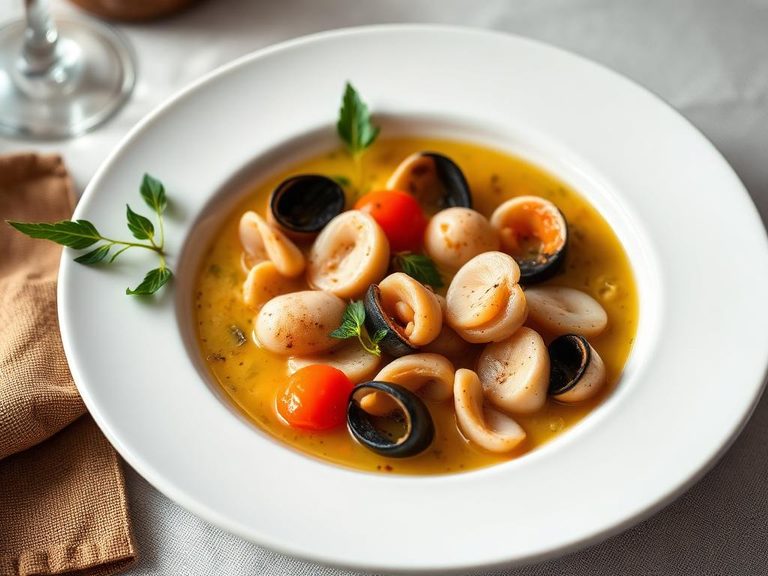
Pasta with tomato-based sauce, seafood, and added vegetables, home recipe
Common food
A vibrant, home-cooked pasta dish where al dente noodles are tossed in a bright, savory tomato sauce studded with tender seafood like shrimp or mussels and sweet, tender vegetables. It's a light yet deeply satisfying meal, offering a refreshing, umami-rich flavor profile with a satisfying chew. Nutritionally, it's a lean, high-carb option with minimal fat, making it a great source of energy.
Calorie split: 21% protein · 70% carbs · 9% fat
↓ Full nutrition💚 Why it's loved
People adore this dish for its harmonious blend of oceanic sweetness, tangy tomato, and garden-fresh vegetables, creating a complex yet comforting flavor. It's also incredibly versatile, easily adapted to whatever seafood or vegetables are on hand, making it a beloved staple in coastal cuisines.
⚠️ Watch-outs & how to enjoy it better
The high carbohydrate content can lead to blood sugar spikes, especially if portion control is poor. To counteract this, pair it with a side salad or extra vegetables to increase fiber and slow digestion. Additionally, some seafood can be high in sodium or contain common allergens like shellfish; choose low-sodium tomato sauce and be mindful of individual allergies.
Key benefits
- Lean source of protein from seafood
- Rich in complex carbohydrates for sustained energy
- Low in fat, supporting heart health
- Contains dietary fiber from vegetables and tomato sauce
- Provides vitamins and antioxidants from tomatoes and veggies
🍽️ Popular dishes
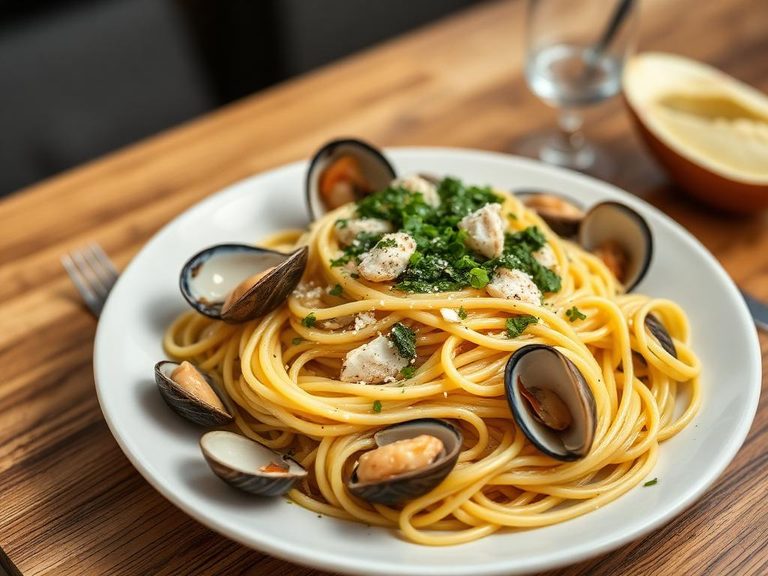
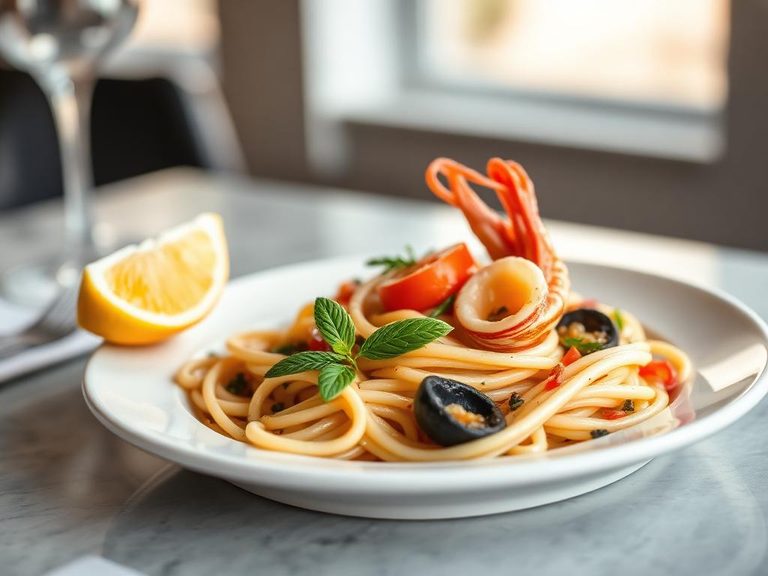
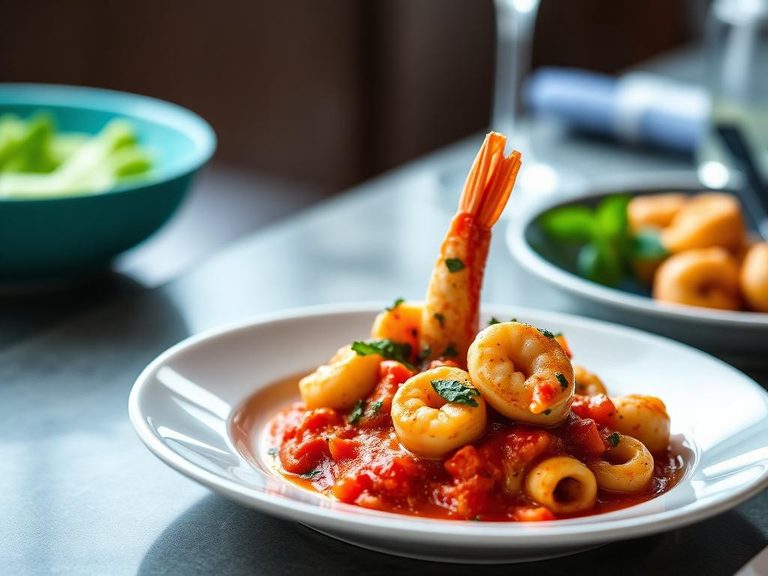
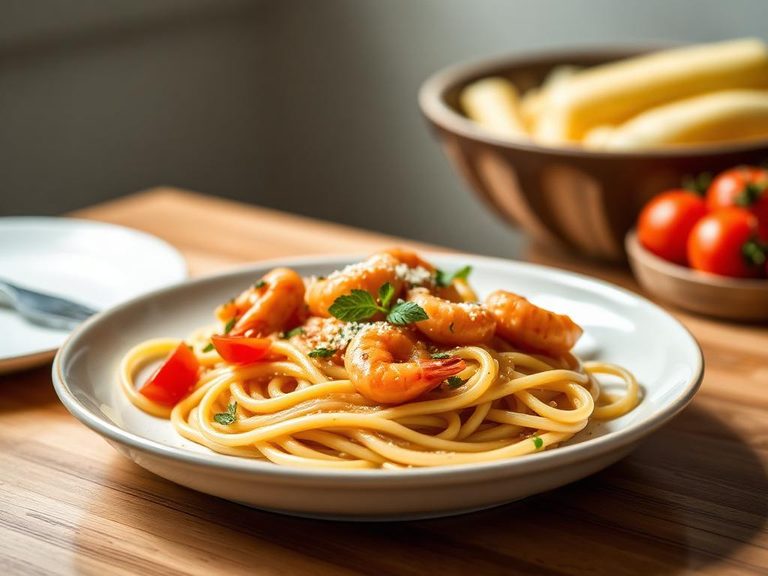
🌍 Where it's eaten
💡 Did you know?
The classic Italian dish 'Spaghetti alle Vongole' traditionally uses no cheese, as the briny flavor of the clams is meant to shine without being masked.
Full nutrition (USDA data · scales with serving)
| Water | 73.2 g |
| Energy | 111 kcal |
| Protein | 5.6 g |
| Total lipid (fat) | 1.1 g |
| Carbohydrate, by difference | 19.2 g |
| Fiber, total dietary | 1.6 g |
| Total Sugars | 2.2 g |
| Calcium, Ca | 22.0 mg |
| Iron, Fe | 1.1 mg |
| Magnesium, Mg | 19.0 mg |
| Phosphorus, P | 69.0 mg |
| Potassium, K | 179 mg |
| Sodium, Na | 171 mg |
| Zinc, Zn | 0.48 mg |
| Copper, Cu | 0.11 mg |
| Selenium, Se | 19.2 ug |
| Vitamin C, total ascorbic acid | 4.9 mg |
| Thiamin | 0.16 mg |
| Riboflavin | 0.11 mg |
| Niacin | 2.3 mg |
| Vitamin B-6 | 0.09 mg |
| Folate, total | 45.0 ug |
| Folic acid | 34.0 ug |
| Folate, food | 11.0 ug |
| Folate, DFE | 69.0 ug |
| Choline, total | 17.1 mg |
| Vitamin B-12 | 0.88 ug |
| Vitamin B-12, added | 0.00 ug |
| Vitamin A, RAE | 20.0 ug |
| Retinol | 7.0 ug |
| Carotene, beta | 153 ug |
| Carotene, alpha | 1.0 ug |
| Cryptoxanthin, beta | 9.0 ug |
| Lycopene | 3799 ug |
| Lutein + zeaxanthin | 108 ug |
| Vitamin E (alpha-tocopherol) | 0.89 mg |
| Vitamin E, added | 0.00 mg |
| Vitamin D (D2 + D3) | 0.00 ug |
| Vitamin K (phylloquinone) | 4.6 ug |
| Alcohol, ethyl | 0.00 g |
| Caffeine | 0.00 mg |
| Theobromine | 0.00 mg |
Fat & fatty acid profile (per 100g)
| Fatty acids, total saturated | 0.17 g |
| SFA 4:0 | 0.00 g |
| SFA 6:0 | 0.00 g |
| SFA 8:0 | 0.00 g |
| SFA 10:0 | 0.00 g |
| SFA 12:0 | 0.00 g |
| SFA 14:0 | 0.01 g |
| SFA 16:0 | 0.13 g |
| SFA 18:0 | 0.03 g |
| Fatty acids, total monounsaturated | 0.20 g |
| MUFA 16:1 | 0.00 g |
| MUFA 18:1 | 0.18 g |
| MUFA 20:1 | 0.00 g |
| MUFA 22:1 | 0.00 g |
| Fatty acids, total polyunsaturated | 0.38 g |
| PUFA 18:2 | 0.29 g |
| PUFA 18:3 | 0.04 g |
| PUFA 18:4 | 0.00 g |
| PUFA 20:4 | 0.00 g |
| PUFA 20:5 n-3 (EPA) | 0.02 g |
| PUFA 22:5 n-3 (DPA) | 0.00 g |
| PUFA 22:6 n-3 (DHA) | 0.02 g |
| Cholesterol | 14.0 mg |
FAQ
Is this dish gluten-free?
No, traditional pasta is made from wheat flour and contains gluten. For a gluten-free version, use pasta made from rice, corn, or legumes.
Can I make this dish vegan?
Yes, simply omit the seafood and add more vegetables like zucchini, eggplant, or chickpeas for protein. Use a plant-based pasta.
How can I reduce the sodium content?
Use low-sodium or no-salt-added tomato sauce, and avoid adding extra salt during cooking. Fresh herbs like basil and oregano can enhance flavor without salt.
Nutrient density (calculated · NRF9.3)
Nutrient Rich Foods index: beneficial nutrients (protein, fiber, vitamins, minerals) minus saturated fat, added sugar & sodium, per 100 kcal.
NRF9.3 index — Fulgoni, Keast & Drewnowski, 2009. Computed from USDA nutrients.
Weight-loss friendliness (composite index)
Energy density 1.11 kcal/g · 20% calories from protein · 1.6 g fiber · 2.2 g sugar per 100 g.
Composite of energy density (Rolls et al., 1999), protein & fiber satiety, minus sugar. A calculated heuristic — ranks satiety-per-calorie, not a clinical measure.
Dietary load (calculated from USDA values)
Potential renal acid load. Positive = acid-forming, negative = alkaline-forming.
Sodium-to-potassium ratio: 0.96 (lower is better — aim for ≤ 1)
Sodium:potassium per WHO potassium guidance. Computed from USDA nutrients.