

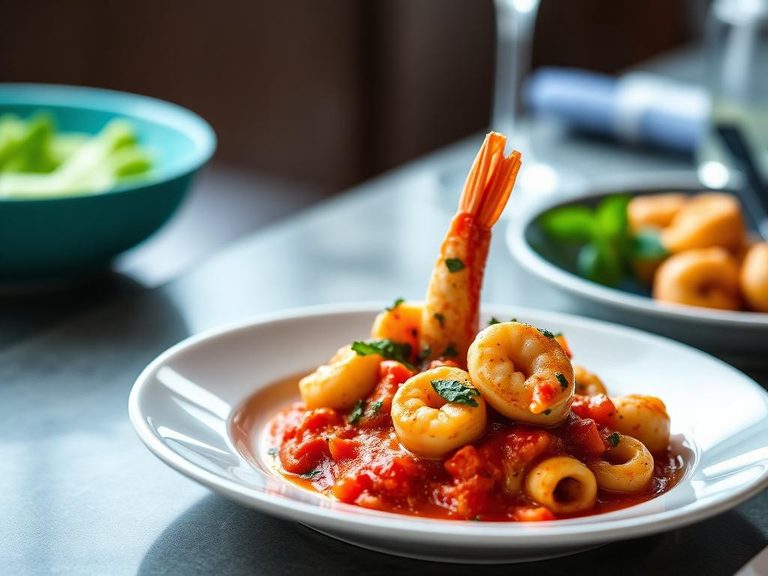
Pasta with tomato-based sauce and seafood, home recipe
Common food
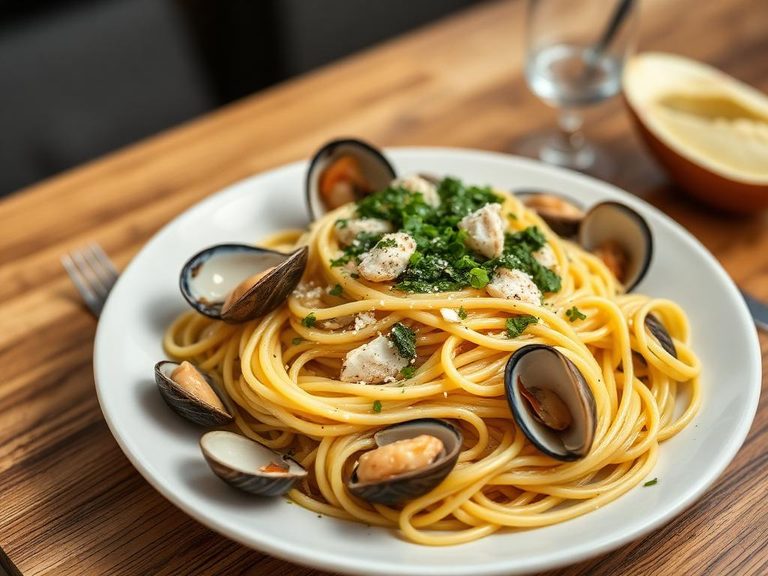
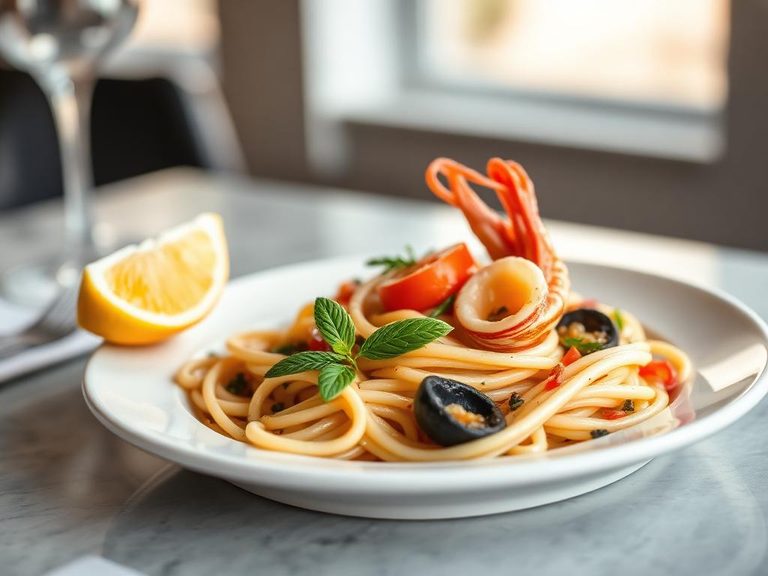
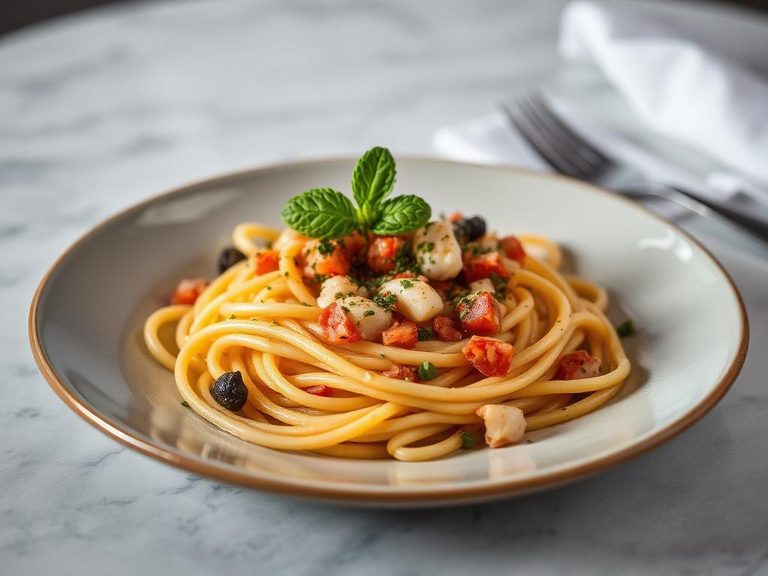
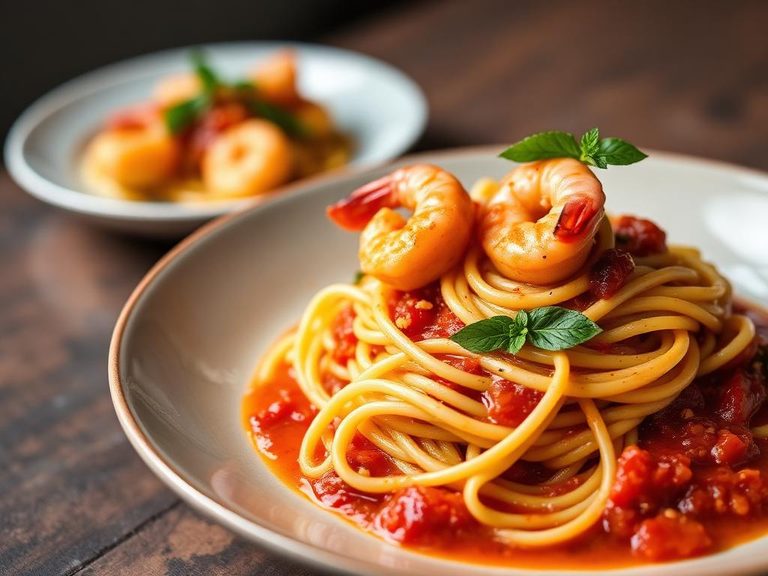
A vibrant Italian-inspired pasta dish where tender noodles are tossed in a bright, acidic tomato sauce studded with tender morsels of seafood like shrimp, clams, or squid. The texture is a satisfying contrast of al dente pasta and soft, briny seafood, with a sauce that is both sweet and savory. Nutritionally, it is a remarkably light yet protein-rich meal, low in fat and packed with fiber, making it an excellent choice for a balanced dinner.
Calorie split: 20% protein · 70% carbs · 10% fat
↓ Full nutrition💚 Why it's loved
People adore it for its harmonious blend of oceanic brininess and the sweet acidity of tomatoes, creating a deeply satisfying umami flavor. It is a versatile and elegant dish that feels special yet is simple enough for a weeknight, embodying the heart of coastal Italian home cooking.
⚠️ Watch-outs & how to enjoy it better
The dish can be high in sodium from canned tomatoes, seafood, or added salt, and the pasta may cause blood-sugar spikes for some. To counteract this, pair it with a side of leafy greens or a small salad to add volume and fiber, and consider using whole-wheat pasta for a slower glycemic response. Always check for common allergens like shellfish.
Key benefits
- High protein-to-calorie ratio from seafood
- Low in fat, especially saturated fat
- Good source of dietary fiber
- Rich in lycopene from tomatoes
- Provides essential minerals like iron and zinc
🍽️ Popular dishes
🌍 Where it's eaten
💡 Did you know?
The classic Italian dish 'Spaghetti ai Frutti di Mare' traditionally excludes tomatoes, as tomatoes were introduced to Italy from the Americas in the 16th century and were initially viewed with suspicion.
Full nutrition (USDA data · scales with serving)
| Water | 72.8 g |
| Energy | 113 kcal |
| Protein | 5.6 g |
| Total lipid (fat) | 1.2 g |
| Carbohydrate, by difference | 19.4 g |
| Fiber, total dietary | 1.6 g |
| Total Sugars | 2.4 g |
| Calcium, Ca | 24.0 mg |
| Iron, Fe | 1.2 mg |
| Magnesium, Mg | 19.0 mg |
| Phosphorus, P | 67.0 mg |
| Potassium, K | 180 mg |
| Sodium, Na | 209 mg |
| Zinc, Zn | 0.47 mg |
| Copper, Cu | 0.10 mg |
| Selenium, Se | 18.7 ug |
| Vitamin C, total ascorbic acid | 1.0 mg |
| Thiamin | 0.15 mg |
| Riboflavin | 0.10 mg |
| Niacin | 2.5 mg |
| Vitamin B-6 | 0.09 mg |
| Folate, total | 44.0 ug |
| Folic acid | 34.0 ug |
| Folate, food | 9.0 ug |
| Folate, DFE | 68.0 ug |
| Choline, total | 17.2 mg |
| Vitamin B-12 | 0.87 ug |
| Vitamin B-12, added | 0.00 ug |
| Vitamin A, RAE | 19.0 ug |
| Retinol | 7.0 ug |
| Carotene, beta | 153 ug |
| Carotene, alpha | 0.00 ug |
| Cryptoxanthin, beta | 0.00 ug |
| Lycopene | 4968 ug |
| Lutein + zeaxanthin | 78.0 ug |
| Vitamin E (alpha-tocopherol) | 1.1 mg |
| Vitamin E, added | 0.00 mg |
| Vitamin D (D2 + D3) | 0.00 ug |
| Vitamin K (phylloquinone) | 5.5 ug |
| Alcohol, ethyl | 0.00 g |
| Caffeine | 0.00 mg |
| Theobromine | 0.00 mg |
Fat & fatty acid profile (per 100g)
| Fatty acids, total saturated | 0.18 g |
| SFA 4:0 | 0.00 g |
| SFA 6:0 | 0.00 g |
| SFA 8:0 | 0.00 g |
| SFA 10:0 | 0.00 g |
| SFA 12:0 | 0.00 g |
| SFA 14:0 | 0.01 g |
| SFA 16:0 | 0.13 g |
| SFA 18:0 | 0.03 g |
| Fatty acids, total monounsaturated | 0.23 g |
| MUFA 16:1 | 0.00 g |
| MUFA 18:1 | 0.22 g |
| MUFA 20:1 | 0.00 g |
| MUFA 22:1 | 0.00 g |
| Fatty acids, total polyunsaturated | 0.41 g |
| PUFA 18:2 | 0.33 g |
| PUFA 18:3 | 0.04 g |
| PUFA 18:4 | 0.00 g |
| PUFA 20:4 | 0.00 g |
| PUFA 20:5 n-3 (EPA) | 0.02 g |
| PUFA 22:5 n-3 (DPA) | 0.00 g |
| PUFA 22:6 n-3 (DHA) | 0.02 g |
| Cholesterol | 14.0 mg |
FAQ
What type of seafood works best in this pasta?
Shrimp, clams, mussels, squid (calamari), and scallops are all excellent choices. A mix, known as 'frutti di mare,' is traditional and adds complexity.
Can I use frozen seafood?
Yes, high-quality frozen seafood is often flash-frozen at sea and is perfectly suitable. Ensure it is thawed properly in the refrigerator before cooking.
How can I make the sauce richer without adding fat?
Sauté garlic and onion in a small amount of olive oil, then deglaze the pan with a splash of white wine before adding the tomatoes. This builds a deep, flavorful base.
Is this dish gluten-free?
The traditional version is not, as it uses wheat pasta. However, you can easily substitute it with gluten-free pasta made from rice, corn, or legumes.
Nutrient density (calculated · NRF9.3)
Nutrient Rich Foods index: beneficial nutrients (protein, fiber, vitamins, minerals) minus saturated fat, added sugar & sodium, per 100 kcal.
NRF9.3 index — Fulgoni, Keast & Drewnowski, 2009. Computed from USDA nutrients.
Weight-loss friendliness (composite index)
Energy density 1.13 kcal/g · 20% calories from protein · 1.6 g fiber · 2.4 g sugar per 100 g.
Composite of energy density (Rolls et al., 1999), protein & fiber satiety, minus sugar. A calculated heuristic — ranks satiety-per-calorie, not a clinical measure.
Dietary load (calculated from USDA values)
Potential renal acid load. Positive = acid-forming, negative = alkaline-forming.
Sodium-to-potassium ratio: 1.16 (lower is better — aim for ≤ 1)
Sodium:potassium per WHO potassium guidance. Computed from USDA nutrients.