

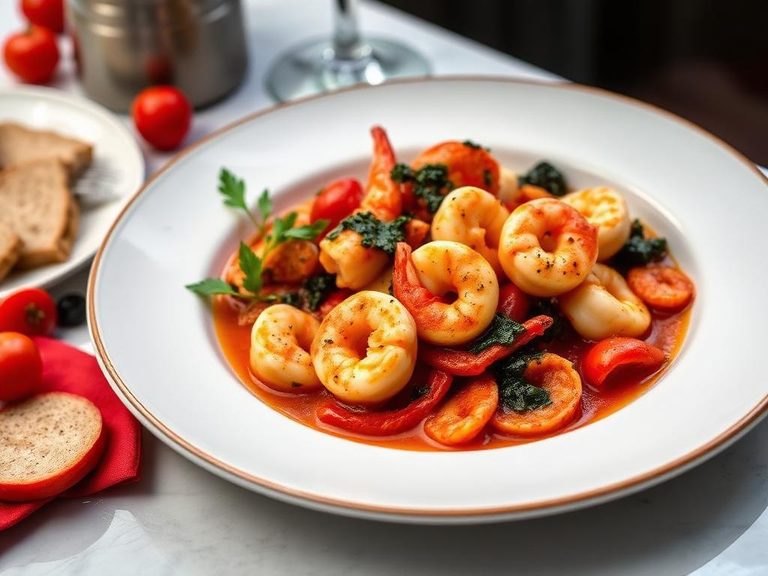
Pasta, whole grain, with tomato-based sauce, seafood, and added vegetables, restaurant
Common food
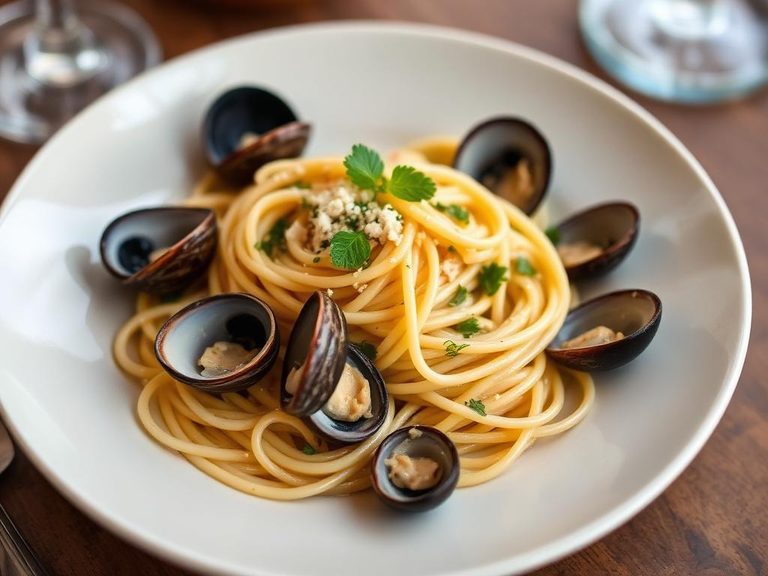
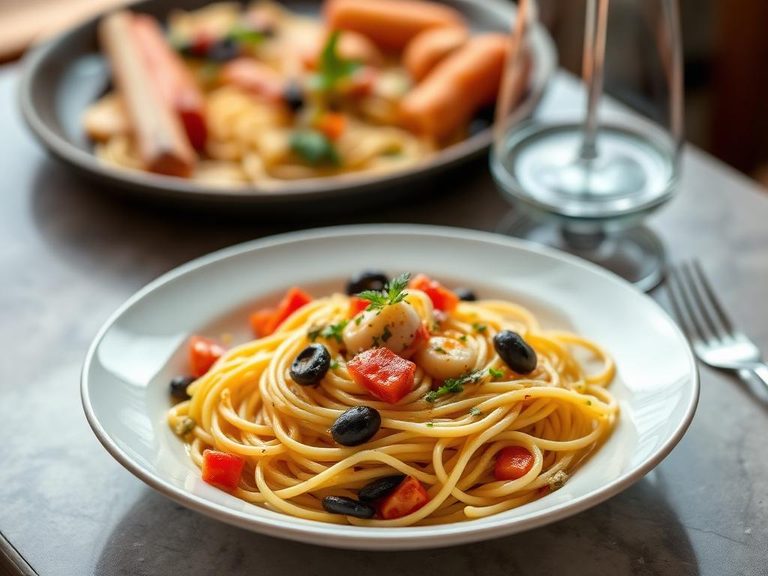
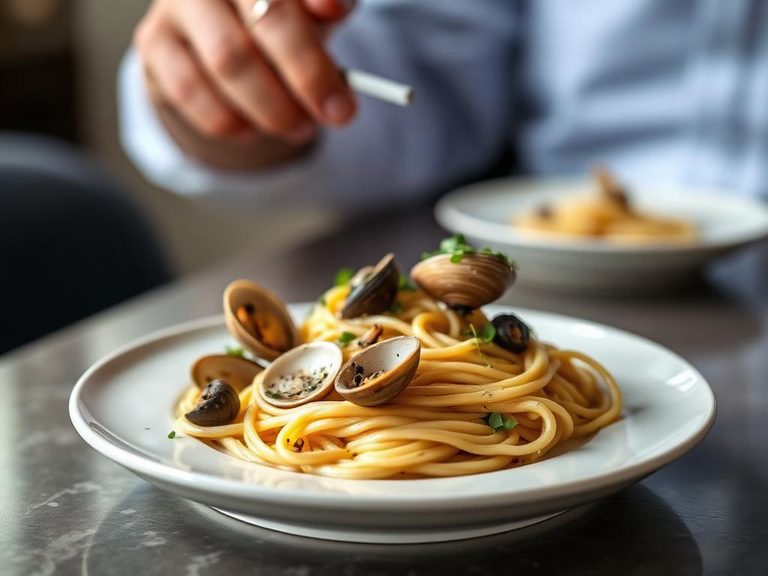
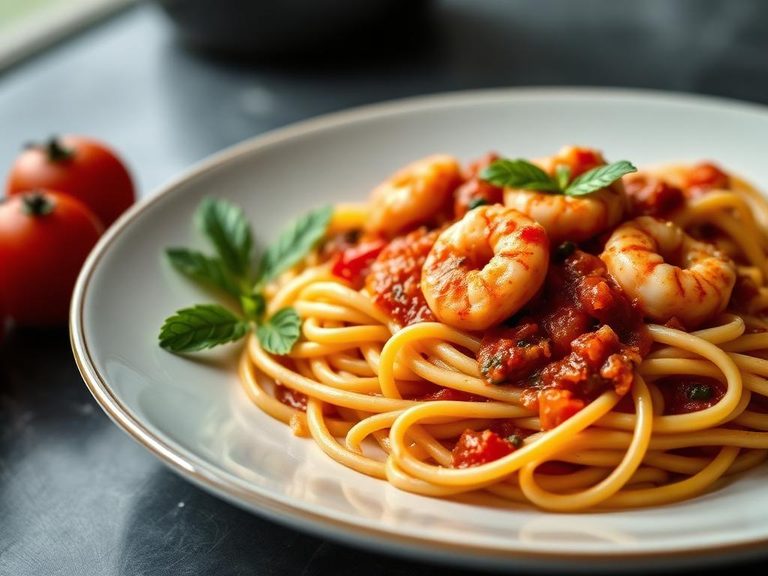
A hearty, satisfying plate of whole-grain pasta tossed in a vibrant tomato sauce, brimming with tender seafood like shrimp or mussels and colorful vegetables. The whole-grain pasta offers a nutty, chewy texture that contrasts beautifully with the sweet acidity of the tomato sauce and the briny, delicate flavor of the seafood. It's a nutritionally balanced meal, providing a good source of fiber and protein for sustained energy.
Calorie split: 13% protein · 42% carbs · 45% fat
↓ Full nutrition💚 Why it's loved
People love this dish for its comforting, familiar flavors that feel both indulgent and wholesome. The combination of savory seafood, tangy tomato, and hearty whole-grain pasta is a classic, versatile pairing that feels like a celebration of coastal cuisine.
⚠️ Watch-outs & how to enjoy it better
The dish can be high in sodium, especially in restaurant versions, which may concern those monitoring salt intake. To counteract this, ask for sauce on the side or choose a lower-sodium option, and pair it with a potassium-rich side like a simple green salad. Additionally, individuals with shellfish allergies must avoid this dish entirely.
Key benefits
- Provides sustained energy from complex carbohydrates and fiber
- Supports muscle maintenance with a good protein content from seafood
- Rich in antioxidants from the tomato-based sauce
- Offers a balanced macronutrient profile for a complete meal
🍽️ Popular dishes
🌍 Where it's eaten
💡 Did you know?
Whole-grain pasta retains the bran and germ of the wheat kernel, which can have up to three times more fiber than refined pasta, helping you feel full longer.
Full nutrition (USDA data · scales with serving)
| Water | 67.6 g |
| Energy | 160 kcal |
| Protein | 5.3 g |
| Total lipid (fat) | 8.2 g |
| Carbohydrate, by difference | 17.4 g |
| Fiber, total dietary | 2.5 g |
| Total Sugars | 2.2 g |
| Calcium, Ca | 24.0 mg |
| Iron, Fe | 1.3 mg |
| Magnesium, Mg | 35.0 mg |
| Phosphorus, P | 97.0 mg |
| Potassium, K | 190 mg |
| Sodium, Na | 359 mg |
| Zinc, Zn | 0.85 mg |
| Copper, Cu | 0.16 mg |
| Selenium, Se | 22.6 ug |
| Vitamin C, total ascorbic acid | 4.5 mg |
| Thiamin | 0.09 mg |
| Riboflavin | 0.09 mg |
| Niacin | 2.8 mg |
| Vitamin B-6 | 0.11 mg |
| Folate, total | 17.0 ug |
| Folic acid | 0.00 ug |
| Folate, food | 17.0 ug |
| Folate, DFE | 17.0 ug |
| Choline, total | 15.9 mg |
| Vitamin B-12 | 0.81 ug |
| Vitamin B-12, added | 0.00 ug |
| Vitamin A, RAE | 18.0 ug |
| Retinol | 6.0 ug |
| Carotene, beta | 143 ug |
| Carotene, alpha | 1.0 ug |
| Cryptoxanthin, beta | 8.0 ug |
| Lycopene | 3519 ug |
| Lutein + zeaxanthin | 141 ug |
| Vitamin E (alpha-tocopherol) | 2.2 mg |
| Vitamin E, added | 0.00 mg |
| Vitamin D (D2 + D3) | 0.00 ug |
| Vitamin K (phylloquinone) | 11.4 ug |
| Alcohol, ethyl | 0.00 g |
| Caffeine | 0.00 mg |
| Theobromine | 0.00 mg |
Fat & fatty acid profile (per 100g)
| Fatty acids, total saturated | 1.1 g |
| SFA 4:0 | 0.00 g |
| SFA 6:0 | 0.00 g |
| SFA 8:0 | 0.00 g |
| SFA 10:0 | 0.00 g |
| SFA 12:0 | 0.00 g |
| SFA 14:0 | 0.01 g |
| SFA 16:0 | 0.80 g |
| SFA 18:0 | 0.23 g |
| Fatty acids, total monounsaturated | 3.1 g |
| MUFA 16:1 | 0.03 g |
| MUFA 18:1 | 3.0 g |
| MUFA 20:1 | 0.05 g |
| MUFA 22:1 | 0.00 g |
| Fatty acids, total polyunsaturated | 3.1 g |
| PUFA 18:2 | 2.7 g |
| PUFA 18:3 | 0.34 g |
| PUFA 18:4 | 0.00 g |
| PUFA 20:4 | 0.00 g |
| PUFA 20:5 n-3 (EPA) | 0.01 g |
| PUFA 22:5 n-3 (DPA) | 0.00 g |
| PUFA 22:6 n-3 (DHA) | 0.01 g |
| Cholesterol | 13.0 mg |
Amino acid profile (per 100g)
Estimated from Restaurant, Italian, chicken parmesan without pasta — USDA does not publish this profile for Pasta.
| Tryptophan | 0.20 g |
| Threonine | 0.66 g |
| Isoleucine | 0.72 g |
| Leucine | 1.3 g |
| Lysine | 1.3 g |
| Methionine | 0.41 g |
| Cystine | 0.20 g |
| Phenylalanine | 1.1 g |
| Tyrosine | 0.53 g |
| Valine | 0.81 g |
| Arginine | 0.93 g |
| Histidine | 0.50 g |
| Alanine | 0.79 g |
| Aspartic acid | 1.4 g |
| Glutamic acid | 2.8 g |
| Glycine | 0.61 g |
| Proline | 1.3 g |
| Serine | 0.70 g |
| Hydroxyproline | 0.04 g |
FAQ
Is whole-grain pasta healthier than regular pasta?
Yes, whole-grain pasta is generally considered healthier because it contains more fiber, vitamins, and minerals than refined pasta, which can aid digestion and help regulate blood sugar levels.
What kind of seafood is typically used in this dish?
Common seafood includes shrimp, mussels, clams, squid, and sometimes fish like cod or salmon, depending on the regional variation and availability.
Can I make this dish at home with frozen seafood?
Absolutely, using frozen seafood is a convenient and cost-effective way to prepare this dish at home. Just ensure it's properly thawed and cooked through to maintain quality and safety.
Nutrient density (calculated · NRF9.3)
Nutrient Rich Foods index: beneficial nutrients (protein, fiber, vitamins, minerals) minus saturated fat, added sugar & sodium, per 100 kcal.
NRF9.3 index — Fulgoni, Keast & Drewnowski, 2009. Computed from USDA nutrients.
Weight-loss friendliness (composite index)
Energy density 1.60 kcal/g · 13% calories from protein · 2.5 g fiber · 2.2 g sugar per 100 g.
Composite of energy density (Rolls et al., 1999), protein & fiber satiety, minus sugar. A calculated heuristic — ranks satiety-per-calorie, not a clinical measure.
Dietary load (calculated from USDA values)
Potential renal acid load. Positive = acid-forming, negative = alkaline-forming.
Sodium-to-potassium ratio: 1.89 (lower is better — aim for ≤ 1)
Sodium:potassium per WHO potassium guidance. Computed from USDA nutrients.