

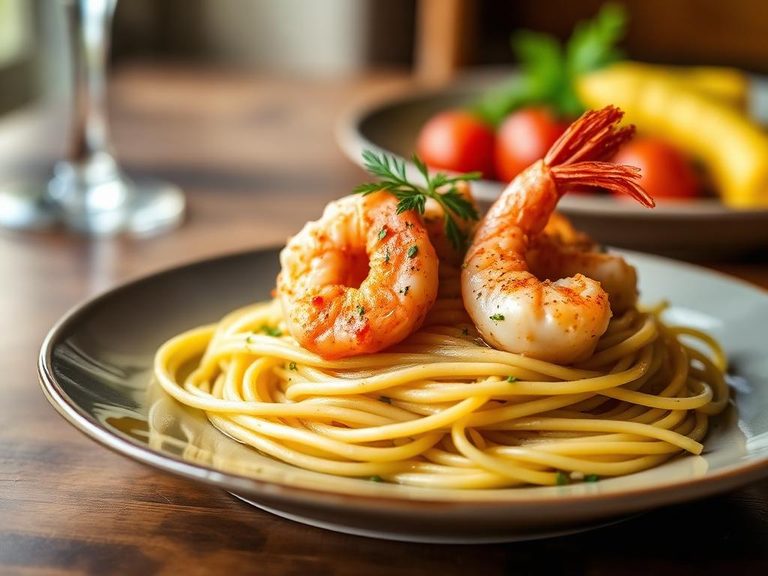
Pasta, whole grain, with tomato-based sauce and seafood, restaurant
Common food
A hearty plate of whole-grain pasta tossed in a vibrant tomato-based sauce with tender pieces of seafood like shrimp, mussels, or clams. The whole-wheat pasta offers a nutty, chewy texture that contrasts beautifully with the sweet, briny seafood and the bright, savory sauce. It's a nutritionally balanced meal, providing a good source of fiber and protein for sustained energy.
Calorie split: 13% protein · 42% carbs · 45% fat
↓ Full nutrition💚 Why it's loved
People love it for the satisfying combination of savory, umami-rich seafood and the comforting, hearty base of whole-grain pasta. It's a versatile dish that feels both nourishing and indulgent, often evoking coastal Mediterranean dining experiences.
⚠️ Watch-outs & how to enjoy it better
The dish can be high in sodium from the sauce and seafood, and the combination of refined carbs (if not whole-grain) and sugar in the sauce may cause blood-sugar spikes. Those with shellfish allergies must avoid it. To counteract, choose whole-grain pasta, ask for sauce on the side to control portion, and pair with extra vegetables.
Key benefits
- Good source of dietary fiber for digestive health
- Provides lean protein from seafood
- Contains complex carbohydrates for steady energy
- Rich in lycopene from the tomato sauce
- Whole grains support heart health
🍽️ Popular dishes
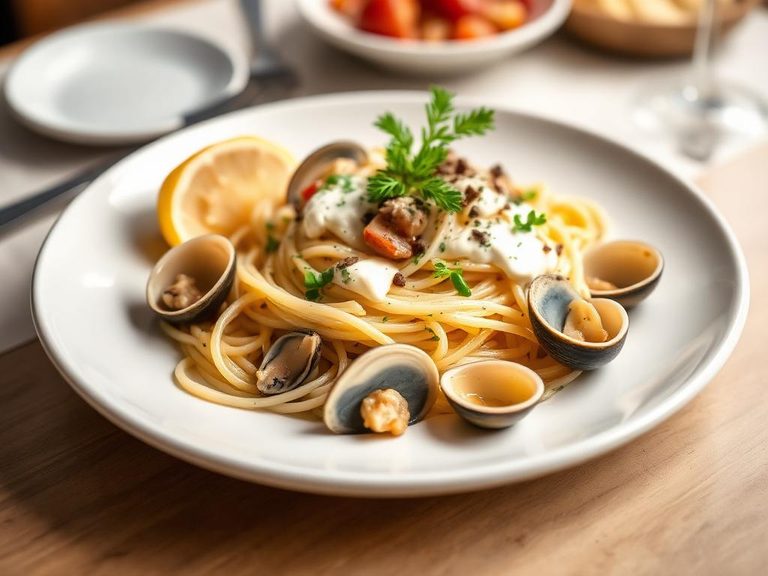
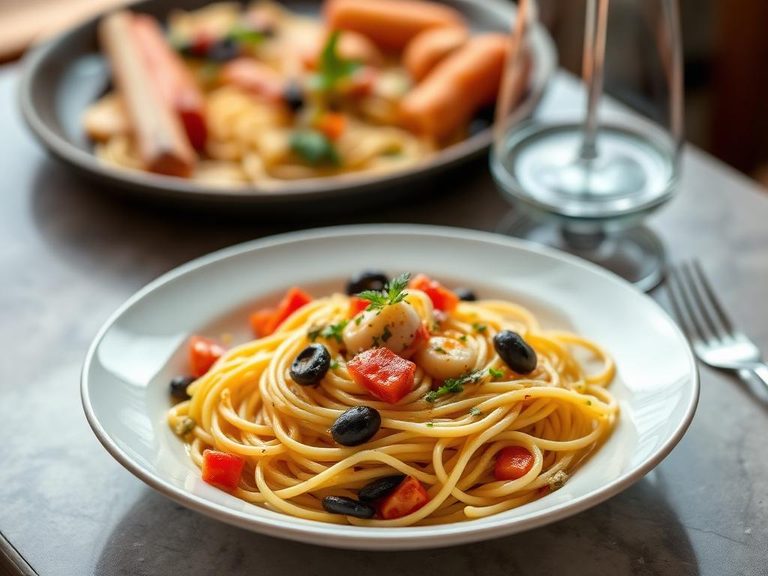
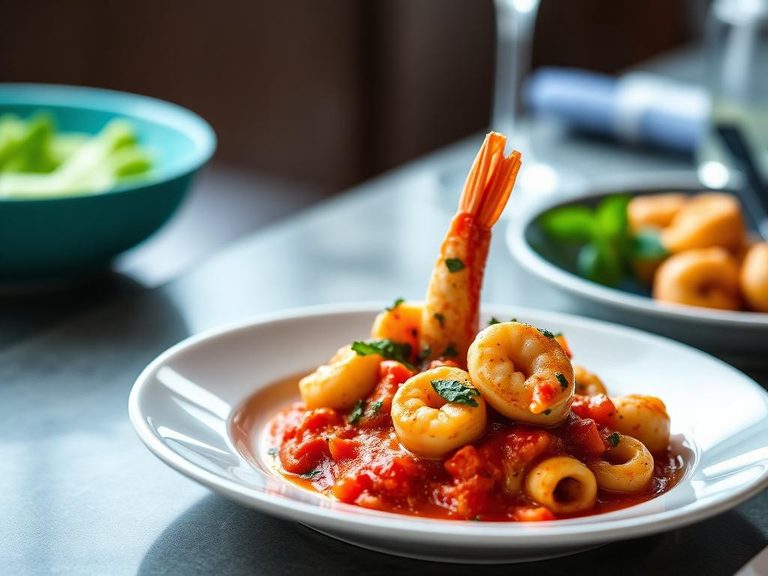
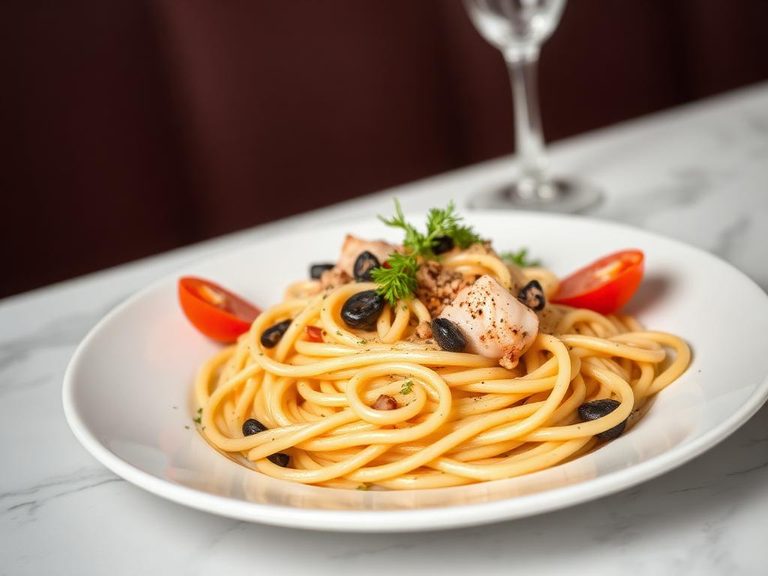
🌍 Where it's eaten
💡 Did you know?
The practice of pairing pasta with seafood is so iconic in Italy that the city of Vico Equense, near Naples, is considered the 'cradle of seafood pasta' and hosts an annual festival dedicated to it.
Full nutrition (USDA data · scales with serving)
| Water | 67.3 g |
| Energy | 162 kcal |
| Protein | 5.3 g |
| Total lipid (fat) | 8.3 g |
| Carbohydrate, by difference | 17.6 g |
| Fiber, total dietary | 2.5 g |
| Total Sugars | 2.4 g |
| Calcium, Ca | 25.0 mg |
| Iron, Fe | 1.3 mg |
| Magnesium, Mg | 35.0 mg |
| Phosphorus, P | 95.0 mg |
| Potassium, K | 191 mg |
| Sodium, Na | 394 mg |
| Zinc, Zn | 0.83 mg |
| Copper, Cu | 0.15 mg |
| Selenium, Se | 22.0 ug |
| Vitamin C, total ascorbic acid | 0.90 mg |
| Thiamin | 0.09 mg |
| Riboflavin | 0.07 mg |
| Niacin | 3.0 mg |
| Vitamin B-6 | 0.11 mg |
| Folate, total | 15.0 ug |
| Folic acid | 0.00 ug |
| Folate, food | 15.0 ug |
| Folate, DFE | 15.0 ug |
| Choline, total | 16.0 mg |
| Vitamin B-12 | 0.81 ug |
| Vitamin B-12, added | 0.00 ug |
| Vitamin A, RAE | 18.0 ug |
| Retinol | 6.0 ug |
| Carotene, beta | 142 ug |
| Carotene, alpha | 0.00 ug |
| Cryptoxanthin, beta | 0.00 ug |
| Lycopene | 4602 ug |
| Lutein + zeaxanthin | 114 ug |
| Vitamin E (alpha-tocopherol) | 2.4 mg |
| Vitamin E, added | 0.00 mg |
| Vitamin D (D2 + D3) | 0.00 ug |
| Vitamin K (phylloquinone) | 12.2 ug |
| Alcohol, ethyl | 0.00 g |
| Caffeine | 0.00 mg |
| Theobromine | 0.00 mg |
Fat & fatty acid profile (per 100g)
| Fatty acids, total saturated | 1.1 g |
| SFA 4:0 | 0.00 g |
| SFA 6:0 | 0.00 g |
| SFA 8:0 | 0.00 g |
| SFA 10:0 | 0.00 g |
| SFA 12:0 | 0.00 g |
| SFA 14:0 | 0.01 g |
| SFA 16:0 | 0.81 g |
| SFA 18:0 | 0.23 g |
| Fatty acids, total monounsaturated | 3.1 g |
| MUFA 16:1 | 0.03 g |
| MUFA 18:1 | 3.1 g |
| MUFA 20:1 | 0.05 g |
| MUFA 22:1 | 0.00 g |
| Fatty acids, total polyunsaturated | 3.1 g |
| PUFA 18:2 | 2.8 g |
| PUFA 18:3 | 0.35 g |
| PUFA 18:4 | 0.00 g |
| PUFA 20:4 | 0.00 g |
| PUFA 20:5 n-3 (EPA) | 0.01 g |
| PUFA 22:5 n-3 (DPA) | 0.00 g |
| PUFA 22:6 n-3 (DHA) | 0.01 g |
| Cholesterol | 13.0 mg |
Amino acid profile (per 100g)
Estimated from Restaurant, Italian, chicken parmesan without pasta — USDA does not publish this profile for Pasta.
| Tryptophan | 0.20 g |
| Threonine | 0.66 g |
| Isoleucine | 0.72 g |
| Leucine | 1.3 g |
| Lysine | 1.3 g |
| Methionine | 0.41 g |
| Cystine | 0.20 g |
| Phenylalanine | 1.1 g |
| Tyrosine | 0.53 g |
| Valine | 0.81 g |
| Arginine | 0.93 g |
| Histidine | 0.50 g |
| Alanine | 0.79 g |
| Aspartic acid | 1.4 g |
| Glutamic acid | 2.8 g |
| Glycine | 0.61 g |
| Proline | 1.3 g |
| Serine | 0.70 g |
| Hydroxyproline | 0.04 g |
FAQ
Is this dish gluten-free?
No, traditional pasta is made from wheat. However, gluten-free pasta alternatives made from rice, corn, or legumes are often available in restaurants.
What kind of seafood is typically used?
Common options include shrimp, mussels, clams, squid (calamari), and sometimes chunks of white fish or lobster, depending on the region and restaurant.
How can I make this dish healthier at home?
Use 100% whole-grain or legume-based pasta, load up on extra vegetables like spinach or bell peppers in the sauce, and use fresh or low-sodium canned tomatoes.
Nutrient density (calculated · NRF9.3)
Nutrient Rich Foods index: beneficial nutrients (protein, fiber, vitamins, minerals) minus saturated fat, added sugar & sodium, per 100 kcal.
NRF9.3 index — Fulgoni, Keast & Drewnowski, 2009. Computed from USDA nutrients.
Weight-loss friendliness (composite index)
Energy density 1.62 kcal/g · 13% calories from protein · 2.5 g fiber · 2.4 g sugar per 100 g.
Composite of energy density (Rolls et al., 1999), protein & fiber satiety, minus sugar. A calculated heuristic — ranks satiety-per-calorie, not a clinical measure.
Dietary load (calculated from USDA values)
Potential renal acid load. Positive = acid-forming, negative = alkaline-forming.
Sodium-to-potassium ratio: 2.06 (lower is better — aim for ≤ 1)
Sodium:potassium per WHO potassium guidance. Computed from USDA nutrients.