

Mustard greens, cooked, boiled, drained, with salt
Whole food · Vegetables and Vegetable Products

Photo: Wikipedia
Cooked mustard greens are tender, leafy greens with a distinct peppery, slightly bitter flavor that mellows with boiling. Their texture becomes silky and delicate, similar to cooked spinach but with more body. At just 26 kcal per 100g, they are a nutrient-dense, low-calorie source of fiber and plant-based protein.
Calorie split: 31% protein · 55% carbs · 13% fat
↓ Full nutrition💚 Why it's loved
People love mustard greens for their bold, peppery kick that adds depth and complexity to dishes, cutting through rich or fatty flavors. They are a versatile staple in many cuisines, easily incorporated into stir-fries, soups, and braises.
⚠️ Watch-outs & how to enjoy it better
The pronounced bitterness can be off-putting to some palates, and the high vitamin K content requires caution for individuals on blood-thinning medications. To mellow the flavor, a quick blanch and drain before final cooking can reduce bitterness; pairing with a fat like sesame oil or a protein can also balance the taste.
Key benefits
- Excellent source of vitamin K for bone health
- Rich in antioxidants like beta-carotene and flavonoids
- Provides dietary fiber for digestive health
- Low in calories and carbohydrates
- Contains glucosinolates, compounds studied for their protective properties
🍽️ Popular dishes
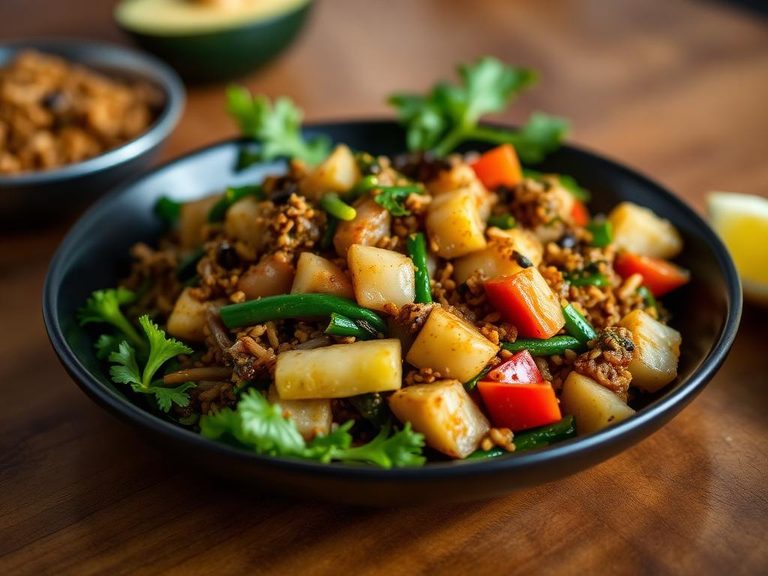
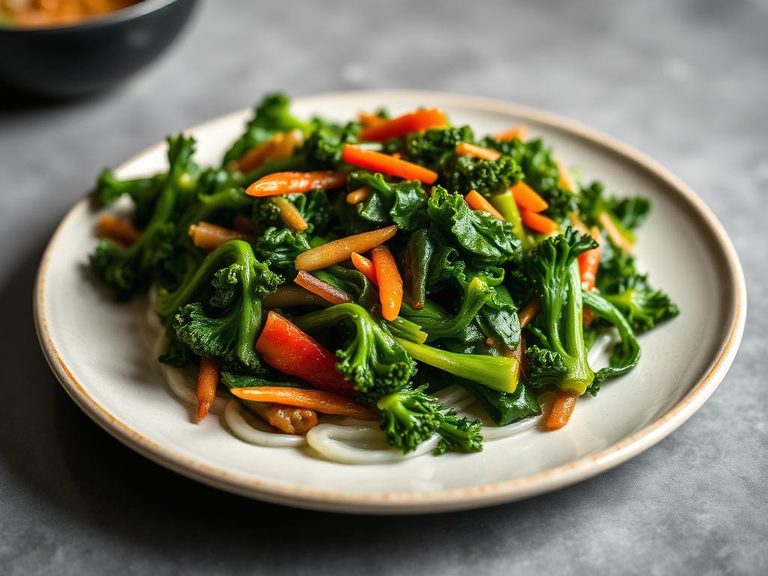
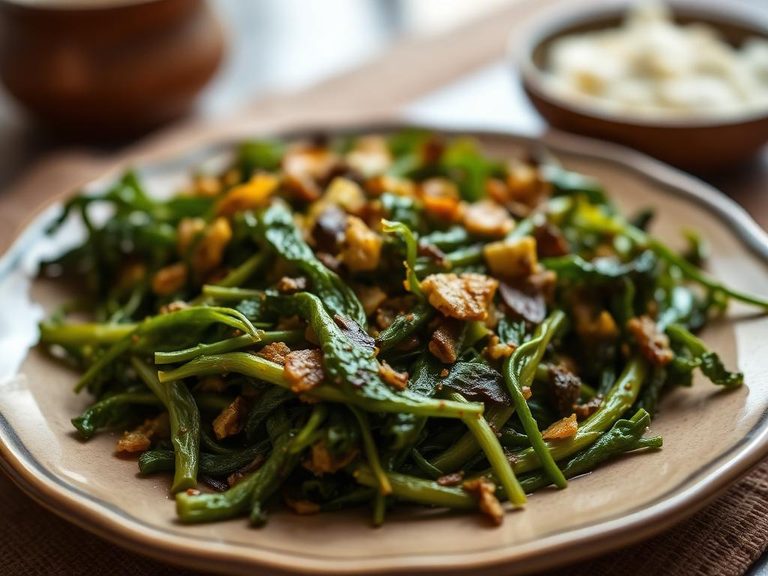
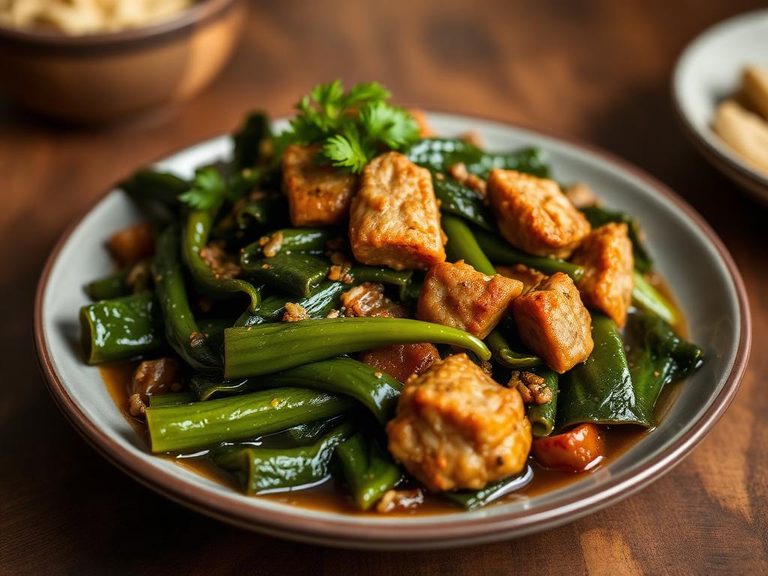
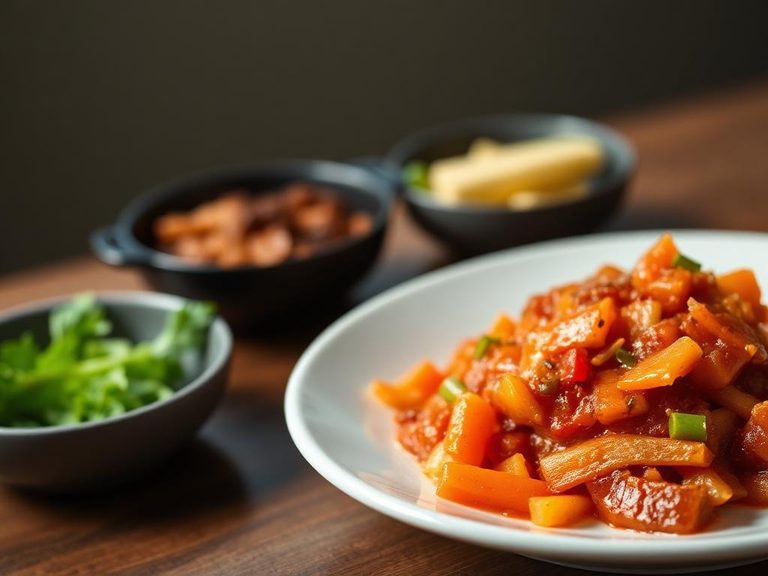
🌍 Where it's eaten
💡 Did you know?
The seeds of the mustard plant, which give the greens their name, are the source of prepared mustard condiment.
Full nutrition (USDA data · scales with serving)
| Water | 91.8 g |
| Energy | 26.0 kcal |
| Energy | 110 kj |
| Protein | 2.6 g |
| Total lipid (fat) | 0.47 g |
| Ash | 0.69 g |
| Carbohydrate, by difference | 4.5 g |
| Fiber, total dietary | 2.0 g |
| Total Sugars | 1.4 g |
| Calcium, Ca | 118 mg |
| Iron, Fe | 0.87 mg |
| Magnesium, Mg | 13.0 mg |
| Phosphorus, P | 42.0 mg |
| Potassium, K | 162 mg |
| Sodium, Na | 252 mg |
| Zinc, Zn | 0.15 mg |
| Copper, Cu | 0.10 mg |
| Selenium, Se | 0.60 ug |
| Vitamin C, total ascorbic acid | 25.3 mg |
| Thiamin | 0.04 mg |
| Riboflavin | 0.06 mg |
| Niacin | 0.43 mg |
| Pantothenic acid | 0.12 mg |
| Vitamin B-6 | 0.10 mg |
| Folate, total | 9.0 ug |
| Folic acid | 0.00 ug |
| Folate, food | 9.0 ug |
| Folate, DFE | 9.0 ug |
| Choline, total | 0.30 mg |
| Betaine | 0.20 mg |
| Vitamin B-12 | 0.00 ug |
| Vitamin B-12, added | 0.00 ug |
| Vitamin A, RAE | 527 ug |
| Retinol | 0.00 ug |
| Carotene, beta | 6300 ug |
| Carotene, alpha | 9.0 ug |
| Cryptoxanthin, beta | 35.0 ug |
| Vitamin A, IU | 10537 iu |
| Lycopene | 0.00 ug |
| Lutein + zeaxanthin | 9900 ug |
| Vitamin E (alpha-tocopherol) | 1.8 mg |
| Vitamin E, added | 0.00 mg |
| Vitamin D (D2 + D3), International Units | 0.00 iu |
| Vitamin D (D2 + D3) | 0.00 ug |
| Vitamin K (phylloquinone) | 593 ug |
| Alcohol, ethyl | 0.00 g |
| Caffeine | 0.00 mg |
| Theobromine | 0.00 mg |
Fat & fatty acid profile (per 100g)
| Fatty acids, total saturated | 0.01 g |
| SFA 4:0 | 0.00 g |
| SFA 6:0 | 0.00 g |
| SFA 8:0 | 0.00 g |
| SFA 10:0 | 0.00 g |
| SFA 12:0 | 0.00 g |
| SFA 14:0 | 0.00 g |
| SFA 16:0 | 0.01 g |
| SFA 18:0 | 0.00 g |
| Fatty acids, total monounsaturated | 0.11 g |
| MUFA 16:1 | 0.00 g |
| MUFA 18:1 | 0.02 g |
| MUFA 20:1 | 0.02 g |
| MUFA 22:1 | 0.07 g |
| Fatty acids, total polyunsaturated | 0.05 g |
| PUFA 18:2 | 0.02 g |
| PUFA 18:3 | 0.02 g |
| PUFA 18:4 | 0.00 g |
| PUFA 20:4 | 0.00 g |
| PUFA 20:5 n-3 (EPA) | 0.00 g |
| PUFA 22:5 n-3 (DPA) | 0.00 g |
| PUFA 22:6 n-3 (DHA) | 0.00 g |
| Fatty acids, total trans | 0.00 g |
| Cholesterol | 0.00 mg |
Amino acid profile (per 100g)
Estimated from Mustard greens, frozen, unprepared — USDA does not publish this profile for Mustard greens.
| Tryptophan | 0.03 g |
| Threonine | 0.07 g |
| Isoleucine | 0.09 g |
| Leucine | 0.08 g |
| Lysine | 0.11 g |
| Methionine | 0.02 g |
| Cystine | 0.04 g |
| Phenylalanine | 0.07 g |
| Tyrosine | 0.13 g |
| Valine | 0.10 g |
| Arginine | 0.18 g |
| Histidine | 0.04 g |
FAQ
Are cooked mustard greens the same as kale or collard greens?
No. While they are all leafy greens in the Brassica family, mustard greens have a distinct peppery, spicy flavor not found in the milder kale or the earthier collard greens.
How do I reduce the bitterness when cooking?
Blanching the greens in boiling water for 1-2 minutes, then draining and rinsing, can significantly reduce bitterness. Cooking them with a splash of acid (like vinegar) or a sweet ingredient can also help balance the flavor.
Is the sodium content a concern with this prepared food?
The nutritional data specifies 'with salt,' so the sodium level will vary based on how much salt was added during cooking. If you are monitoring sodium intake, you can cook them yourself without added salt or rinse them briefly after boiling.
Nutrient density (calculated · NRF9.3)
Nutrient Rich Foods index: beneficial nutrients (protein, fiber, vitamins, minerals) minus saturated fat, added sugar & sodium, per 100 kcal.
NRF9.3 index — Fulgoni, Keast & Drewnowski, 2009. Computed from USDA nutrients.
Weight-loss friendliness (composite index)
Energy density 0.26 kcal/g · 39% calories from protein · 2.0 g fiber · 1.4 g sugar per 100 g.
Composite of energy density (Rolls et al., 1999), protein & fiber satiety, minus sugar. A calculated heuristic — ranks satiety-per-calorie, not a clinical measure.
Dietary load (calculated from USDA values)
Potential renal acid load. Positive = acid-forming, negative = alkaline-forming.
Sodium-to-potassium ratio: 1.56 (lower is better — aim for ≤ 1)
Sodium:potassium per WHO potassium guidance. Computed from USDA nutrients.