

Haak
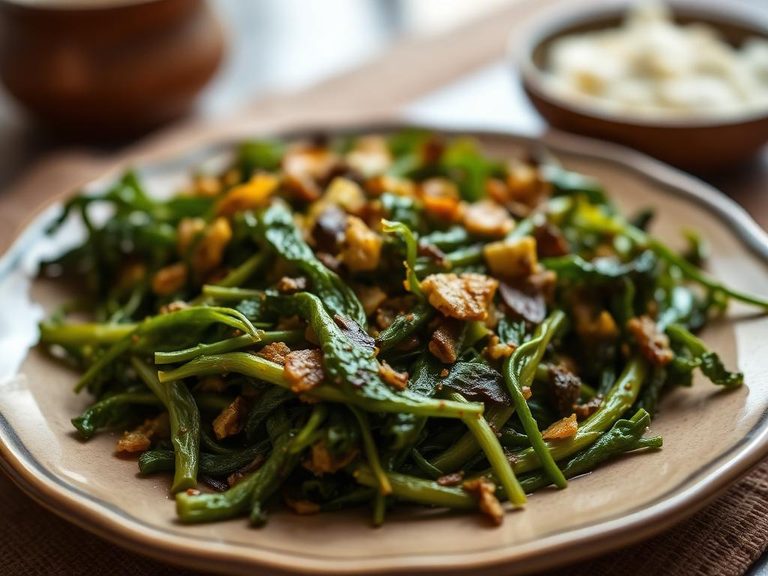
Haak is a traditional Kashmiri dish made from mustard greens, typically cooked with minimal spices like garlic, fennel, and a pinch of asafoetida to let the greens' natural flavor shine. It's a staple in Kashmiri homes, often served with rice or flatbreads, and reflects the region's love for simple, earthy vegetable preparations.
🍽️ Nutrition at a glance
Haak is low in calories, high in fiber, and rich in vitamins A, C, and K, along with minerals like iron and calcium, making it a nutrient-dense, plant-based side. A typical serving (about 1 cup) has roughly 50-80 calories, with minimal fat or protein since it's primarily vegetable-focused.
Nutrition breakdown
| Calories | 70 kcal |
| Protein | 4.5 g |
| Carbs | 8 g |
| Fat | 2.5 g |
| Fiber | 3 g |
| Sugar | 2 g |
| Sodium | 450 mg |
| Vitamin A | 9000 IU |
| Vitamin C | 45 mg |
| Vitamin K | 300 mcg |
| Folate | 120 mcg |
| Calcium | 180 mg |
| Iron | 2.5 mg |
| Magnesium | 40 mg |
| Potassium | 550 mg |
Per 1 cup (240 g) · estimated, varies by recipe
💡 What's interesting
Culturally, Haak is part of Kashmir's 'Wazwan' feast tradition, symbolizing the region's agrarian roots and seasonal eating. Nutritionally, mustard greens are a powerhouse for antioxidants and may support bone health due to their high vitamin K content, which is often overlooked in everyday diets.
AI estimate may be inaccurate · Terms