

Mushrooms, NS as to form, cooked
Common food
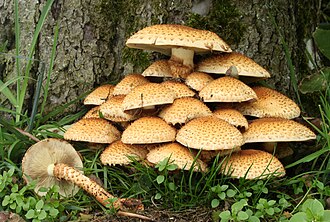
Photo: Wikipedia
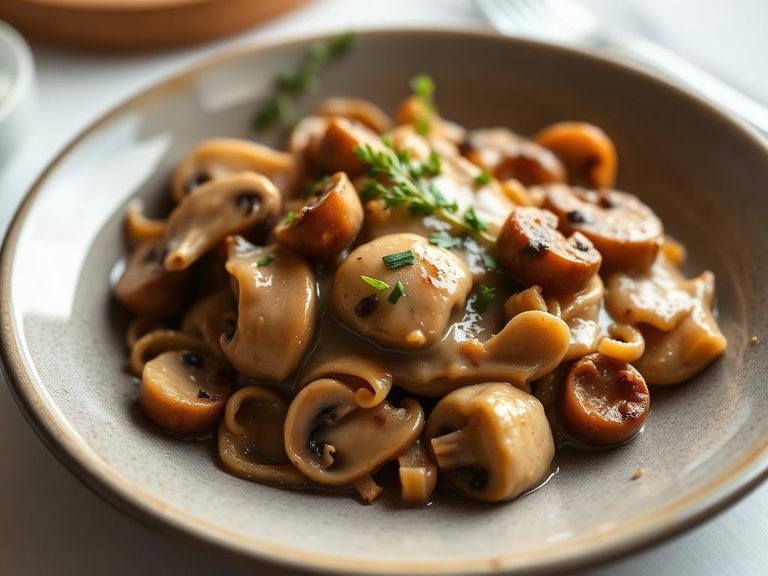
Cooked mushrooms (NS as to form) are a savory, umami-rich ingredient with a tender, slightly chewy texture that absorbs flavors beautifully. At just 66 kcal per 100g, they are a low-calorie source of protein and dietary fiber, making them a nutrient-dense addition to meals. Their natural savoriness intensifies with cooking, creating a deep, earthy flavor profile.
Calorie split: 21% protein · 30% carbs · 49% fat
↓ Full nutrition💚 Why it's loved
People love cooked mushrooms for their rich, meaty umami flavor and ability to absorb sauces and seasonings, making them a flavorful substitute in many dishes. They are celebrated in global cuisines for their versatility, from simple sautés to complex stews.
⚠️ Watch-outs & how to enjoy it better
Some individuals may experience digestive discomfort due to the naturally occurring sugar alcohol mannitol, which can cause bloating or gas in sensitive people. To minimize this, start with smaller portions and cook them thoroughly, as heat helps break down some of these compounds.
Key benefits
- Low in calories and high in dietary fiber
- Good source of plant-based protein
- Naturally low in sugar and sodium
- Contains B vitamins and essential minerals like selenium
- Versatile ingredient for enhancing flavor in dishes
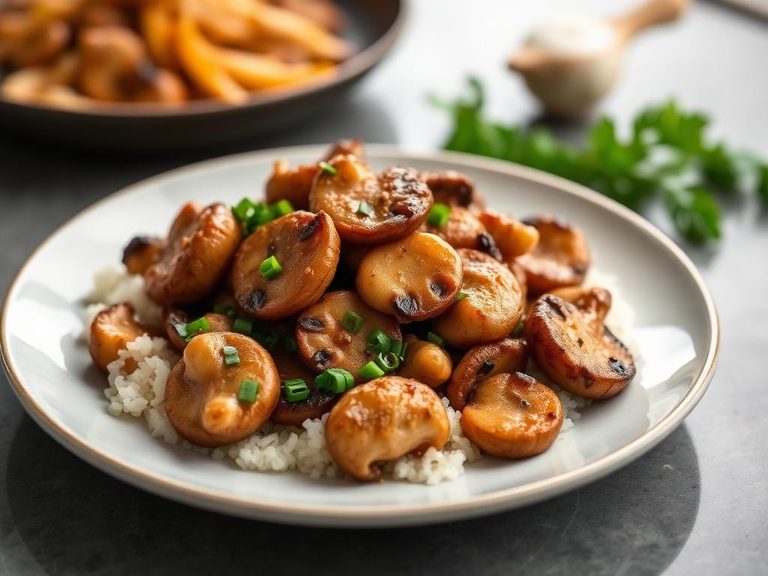
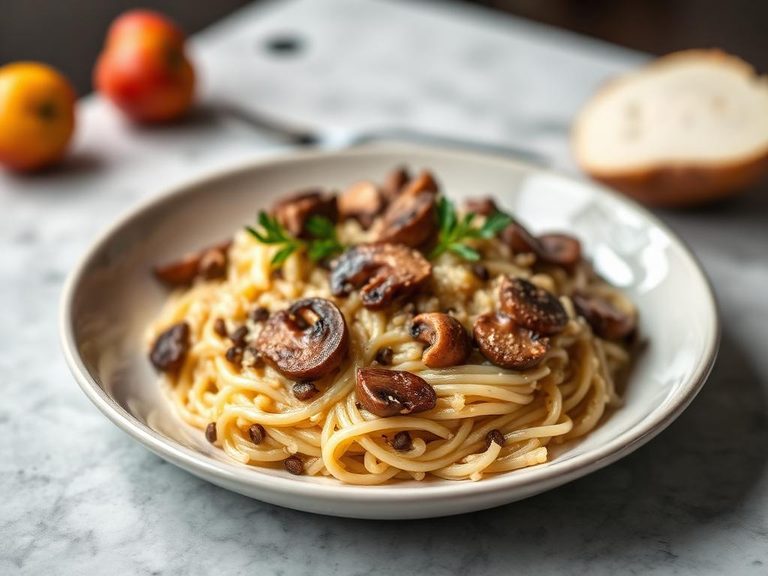
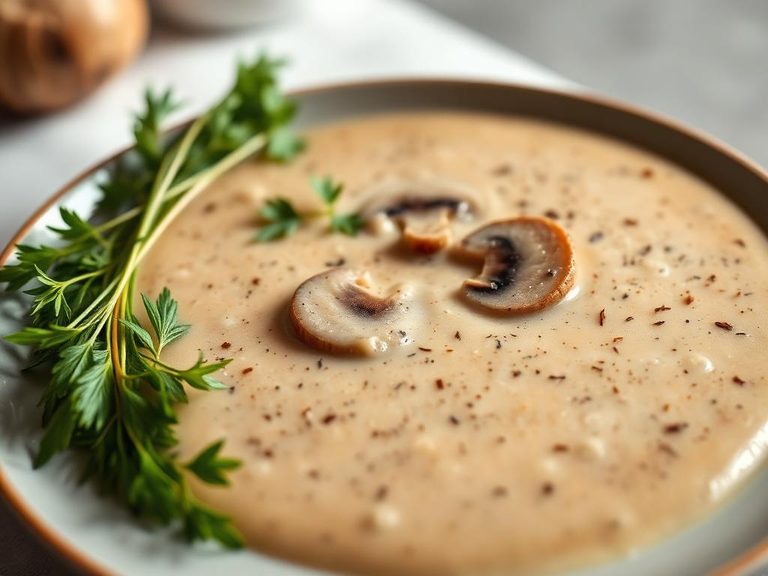
🍽️ Popular dishes

🌍 Where it's eaten
💡 Did you know?
Mushrooms are not plants but belong to the fungi kingdom, and when cooked, they release a natural glutamate that creates the savory 'umami' taste, which is why they are often used to deepen the flavor of vegetarian dishes.
Full nutrition (USDA data · scales with serving)
| Water | 86.5 g |
| Energy | 66.0 kcal |
| Protein | 3.5 g |
| Total lipid (fat) | 3.6 g |
| Carbohydrate, by difference | 5.0 g |
| Fiber, total dietary | 2.1 g |
| Total Sugars | 2.4 g |
| Calcium, Ca | 6.0 mg |
| Iron, Fe | 0.28 mg |
| Magnesium, Mg | 12.0 mg |
| Phosphorus, P | 113 mg |
| Potassium, K | 450 mg |
| Sodium, Na | 158 mg |
| Zinc, Zn | 0.60 mg |
| Copper, Cu | 0.44 mg |
| Selenium, Se | 23.0 ug |
| Vitamin C, total ascorbic acid | 2.2 mg |
| Thiamin | 0.06 mg |
| Riboflavin | 0.52 mg |
| Niacin | 4.5 mg |
| Vitamin B-6 | 0.11 mg |
| Folate, total | 36.0 ug |
| Folic acid | 0.00 ug |
| Folate, food | 36.0 ug |
| Folate, DFE | 36.0 ug |
| Choline, total | 21.2 mg |
| Vitamin B-12 | 0.05 ug |
| Vitamin B-12, added | 0.00 ug |
| Vitamin A, RAE | 14.0 ug |
| Retinol | 14.0 ug |
| Carotene, beta | 6.0 ug |
| Carotene, alpha | 0.00 ug |
| Cryptoxanthin, beta | 0.00 ug |
| Lycopene | 0.00 ug |
| Lutein + zeaxanthin | 0.00 ug |
| Vitamin E (alpha-tocopherol) | 0.49 mg |
| Vitamin E, added | 0.00 mg |
| Vitamin D (D2 + D3) | 0.00 ug |
| Vitamin K (phylloquinone) | 2.6 ug |
| Alcohol, ethyl | 0.00 g |
| Caffeine | 0.00 mg |
| Theobromine | 0.00 mg |
Fat & fatty acid profile (per 100g)
| Fatty acids, total saturated | 0.89 g |
| SFA 4:0 | 0.02 g |
| SFA 6:0 | 0.02 g |
| SFA 8:0 | 0.01 g |
| SFA 10:0 | 0.02 g |
| SFA 12:0 | 0.03 g |
| SFA 14:0 | 0.08 g |
| SFA 16:0 | 0.50 g |
| SFA 18:0 | 0.18 g |
| Fatty acids, total monounsaturated | 1.1 g |
| MUFA 16:1 | 0.02 g |
| MUFA 18:1 | 1.1 g |
| MUFA 20:1 | 0.01 g |
| MUFA 22:1 | 0.00 g |
| Fatty acids, total polyunsaturated | 1.1 g |
| PUFA 18:2 | 1.0 g |
| PUFA 18:3 | 0.10 g |
| PUFA 18:4 | 0.00 g |
| PUFA 20:4 | 0.00 g |
| PUFA 20:5 n-3 (EPA) | 0.00 g |
| PUFA 22:5 n-3 (DPA) | 0.00 g |
| PUFA 22:6 n-3 (DHA) | 0.00 g |
| Cholesterol | 3.0 mg |
Amino acid profile (per 100g)
Estimated from Mushrooms, portabella, exposed to ultraviolet light, raw — USDA does not publish this profile for Mushrooms.
| Tryptophan | 0.06 g |
| Threonine | 0.11 g |
| Isoleucine | 0.10 g |
| Leucine | 0.15 g |
| Lysine | 0.25 g |
| Methionine | 0.05 g |
| Cystine | 0.01 g |
| Phenylalanine | 0.10 g |
| Tyrosine | 0.05 g |
| Valine | 0.12 g |
| Arginine | 0.12 g |
| Histidine | 0.07 g |
| Alanine | 0.19 g |
| Aspartic acid | 0.23 g |
| Glutamic acid | 0.43 g |
| Glycine | 0.11 g |
| Proline | 0.18 g |
| Serine | 0.13 g |
FAQ
Are cooked mushrooms a good source of protein?
Yes, they provide about 3.52g of protein per 100g, which is notable for a vegetable, making them a valuable addition to plant-based diets.
How should I store cooked mushrooms?
Store them in an airtight container in the refrigerator for up to 3-4 days. For longer storage, you can freeze them for up to a month, though the texture may become softer.
Can I eat mushrooms raw?
While some mushrooms are eaten raw, cooking is recommended for most varieties to break down tough cell walls, enhance digestibility, and develop their full umami flavor.
Nutrient density (calculated · NRF9.3)
Nutrient Rich Foods index: beneficial nutrients (protein, fiber, vitamins, minerals) minus saturated fat, added sugar & sodium, per 100 kcal.
NRF9.3 index — Fulgoni, Keast & Drewnowski, 2009. Computed from USDA nutrients.
Weight-loss friendliness (composite index)
Energy density 0.66 kcal/g · 21% calories from protein · 2.1 g fiber · 2.4 g sugar per 100 g.
Composite of energy density (Rolls et al., 1999), protein & fiber satiety, minus sugar. A calculated heuristic — ranks satiety-per-calorie, not a clinical measure.
Dietary load (calculated from USDA values)
Potential renal acid load. Positive = acid-forming, negative = alkaline-forming.
Sodium-to-potassium ratio: 0.35 (lower is better — aim for ≤ 1)
Sodium:potassium per WHO potassium guidance. Computed from USDA nutrients.