

Muffins, oat bran
Whole food · Baked Products

Photo: Wikipedia
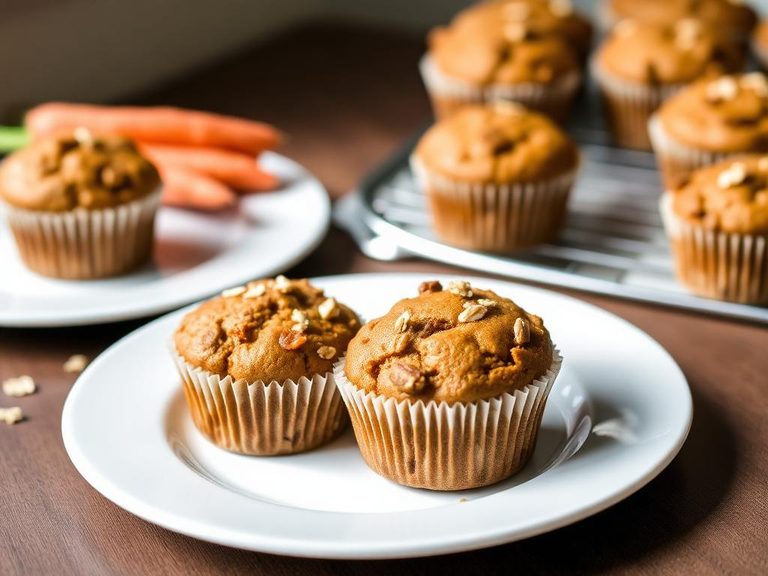
A hearty, moist muffin where the nutty, earthy flavor of oat bran takes center stage, offering a dense yet tender crumb that feels substantial without being heavy. With a solid 4.6g of fiber per 100g, it provides a satisfying, slow-release energy boost that distinguishes it from lighter, airier pastries. It is a comforting, wholesome treat that bridges the gap between a breakfast staple and a midday snack.
Calorie split: 10% protein · 67% carbs · 23% fat
↓ Full nutrition💚 Why it's loved
People love its rustic, wholesome flavor and the way it pairs perfectly with coffee or tea, offering a comforting, home-baked feel. Its versatility makes it a beloved choice for breakfast, a quick snack, or a healthy-ish dessert.
⚠️ Watch-outs & how to enjoy it better
The dense texture and high fiber content can be heavy for some, and the 8.22g of sugar per 100g may cause blood-sugar spikes if not paired with protein or fat. To counteract this, enjoy it with a side of Greek yogurt or a handful of nuts, and opt for a smaller portion to manage intake.
Key benefits
- Rich in dietary fiber for digestive health
- Provides a steady source of complex carbohydrates
- Moderate protein content for a baked good
- Lower in fat than many traditional muffins
- Satisfying texture that promotes satiety
🍽️ Popular dishes
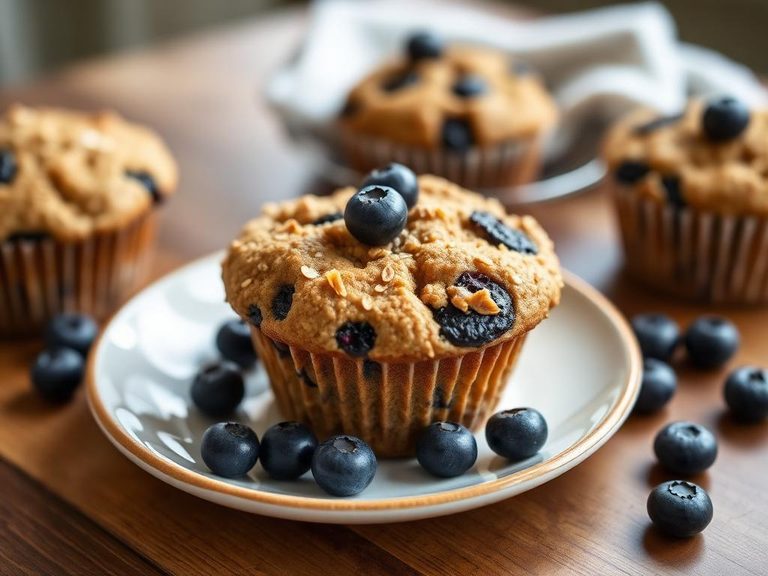
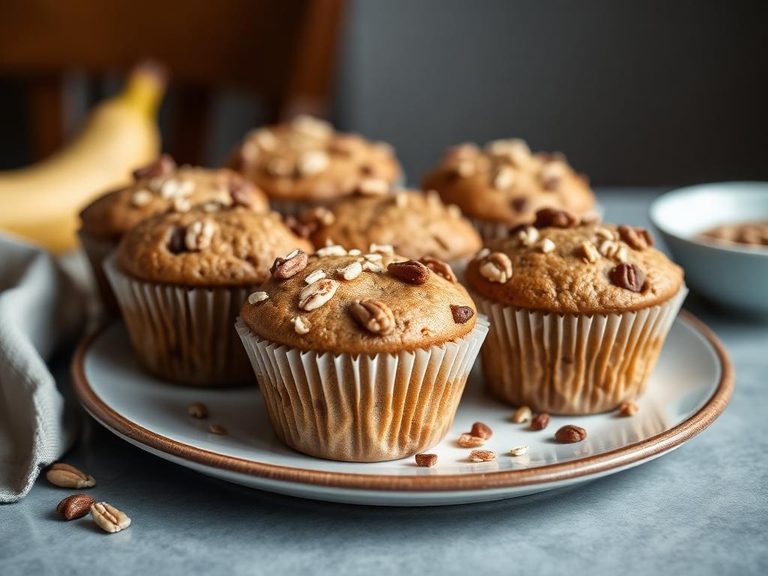
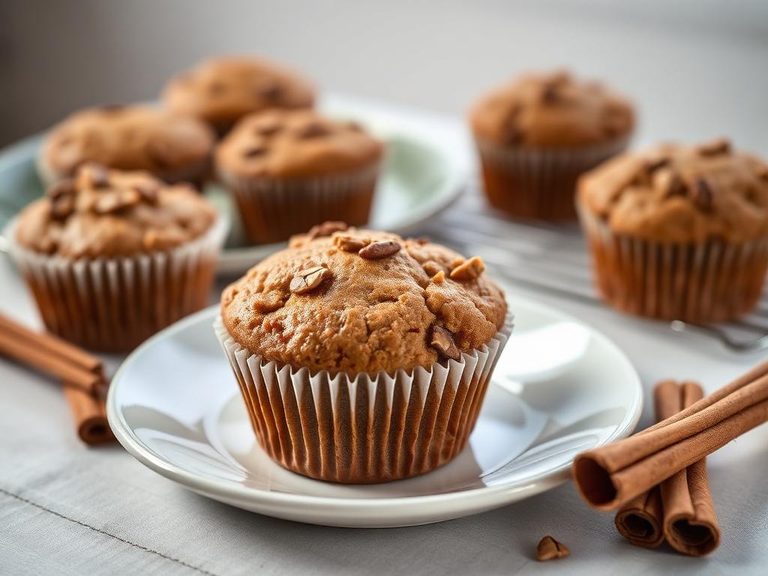
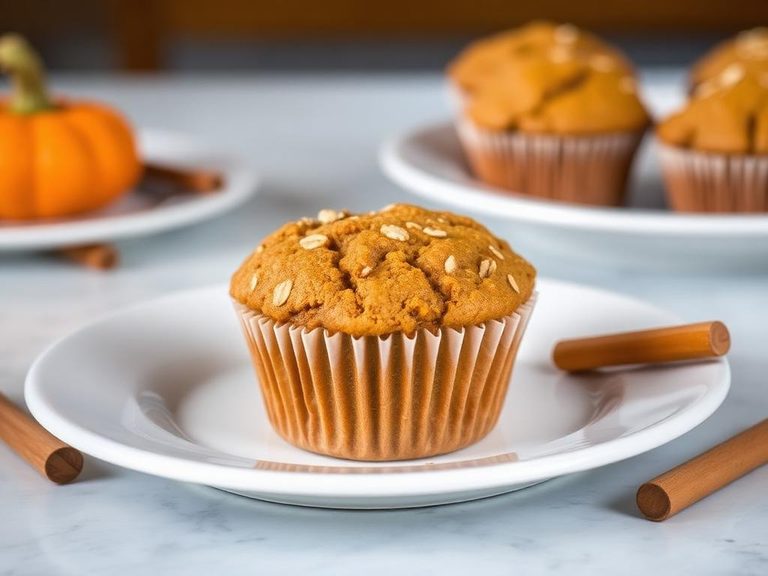
🌍 Where it's eaten
💡 Did you know?
Oat bran is the outer layer of the oat groat and is often considered a 'superfood' due to its high beta-glucan content, which is linked to cholesterol-lowering benefits.
Full nutrition (USDA data · scales with serving)
| Water | 35.0 g |
| Energy | 270 kcal |
| Energy | 1130 kj |
| Protein | 7.0 g |
| Total lipid (fat) | 7.4 g |
| Ash | 2.3 g |
| Carbohydrate, by difference | 48.3 g |
| Fiber, total dietary | 4.6 g |
| Total Sugars | 8.2 g |
| Calcium, Ca | 63.0 mg |
| Iron, Fe | 4.2 mg |
| Magnesium, Mg | 157 mg |
| Phosphorus, P | 376 mg |
| Potassium, K | 507 mg |
| Sodium, Na | 393 mg |
| Zinc, Zn | 1.8 mg |
| Copper, Cu | 0.33 mg |
| Manganese, Mn | 2.6 mg |
| Selenium, Se | 11.0 ug |
| Vitamin C, total ascorbic acid | 0.00 mg |
| Thiamin | 0.26 mg |
| Riboflavin | 0.10 mg |
| Niacin | 0.42 mg |
| Pantothenic acid | 1.0 mg |
| Vitamin B-6 | 0.16 mg |
| Folate, total | 89.0 ug |
| Folic acid | 71.0 ug |
| Folate, food | 18.0 ug |
| Folate, DFE | 139 ug |
| Choline, total | 6.6 mg |
| Vitamin B-12 | 0.01 ug |
| Vitamin B-12, added | 0.00 ug |
| Vitamin A, RAE | 0.00 ug |
| Retinol | 0.00 ug |
| Carotene, beta | 0.00 ug |
| Carotene, alpha | 0.00 ug |
| Cryptoxanthin, beta | 0.00 ug |
| Vitamin A, IU | 0.00 iu |
| Lycopene | 0.00 ug |
| Lutein + zeaxanthin | 13.0 ug |
| Vitamin E (alpha-tocopherol) | 0.66 mg |
| Vitamin E, added | 0.00 mg |
| Vitamin D (D2 + D3), International Units | 0.00 iu |
| Vitamin D (D2 + D3) | 0.00 ug |
| Vitamin K (phylloquinone) | 13.0 ug |
| Alcohol, ethyl | 0.00 g |
| Caffeine | 0.00 mg |
| Theobromine | 0.00 mg |
Fat & fatty acid profile (per 100g)
| Fatty acids, total saturated | 1.1 g |
| SFA 4:0 | 0.00 g |
| SFA 6:0 | 0.00 g |
| SFA 8:0 | 0.00 g |
| SFA 10:0 | 0.00 g |
| SFA 12:0 | 0.00 g |
| SFA 14:0 | 0.01 g |
| SFA 16:0 | 0.80 g |
| SFA 18:0 | 0.25 g |
| Fatty acids, total monounsaturated | 1.7 g |
| MUFA 16:1 | 0.02 g |
| MUFA 18:1 | 1.7 g |
| MUFA 20:1 | 0.01 g |
| MUFA 22:1 | 0.00 g |
| Fatty acids, total polyunsaturated | 4.1 g |
| PUFA 18:2 | 3.7 g |
| PUFA 18:3 | 0.46 g |
| PUFA 18:4 | 0.00 g |
| PUFA 20:4 | 0.00 g |
| PUFA 20:5 n-3 (EPA) | 0.00 g |
| PUFA 22:5 n-3 (DPA) | 0.00 g |
| PUFA 22:6 n-3 (DHA) | 0.00 g |
| Cholesterol | 0.00 mg |
Amino acid profile (per 100g)
| Tryptophan | 0.10 g |
| Threonine | 0.21 g |
| Isoleucine | 0.26 g |
| Leucine | 0.51 g |
| Lysine | 0.28 g |
| Methionine | 0.12 g |
| Cystine | 0.18 g |
| Phenylalanine | 0.35 g |
| Tyrosine | 0.23 g |
| Valine | 0.36 g |
| Arginine | 0.47 g |
| Histidine | 0.16 g |
| Alanine | 0.34 g |
| Aspartic acid | 0.58 g |
| Glutamic acid | 1.4 g |
| Glycine | 0.34 g |
| Proline | 0.36 g |
| Serine | 0.31 g |
FAQ
Is oat bran muffin healthy?
It can be a healthy option due to its high fiber and moderate protein content, but it's important to watch portion sizes and added sugars.
Can I freeze oat bran muffins?
Yes, they freeze well. Wrap them individually in plastic wrap and store in a freezer-safe bag for up to 3 months.
What is the difference between oat bran and oatmeal?
Oat bran is the outer layer of the oat grain, while oatmeal is made from the whole oat groat. Oat bran is higher in fiber and protein.
Nutrient density (calculated · NRF9.3)
Nutrient Rich Foods index: beneficial nutrients (protein, fiber, vitamins, minerals) minus saturated fat, added sugar & sodium, per 100 kcal.
NRF9.3 index — Fulgoni, Keast & Drewnowski, 2009. Computed from USDA nutrients.
Weight-loss friendliness (composite index)
Energy density 2.70 kcal/g · 10% calories from protein · 4.6 g fiber · 8.2 g sugar per 100 g.
Composite of energy density (Rolls et al., 1999), protein & fiber satiety, minus sugar. A calculated heuristic — ranks satiety-per-calorie, not a clinical measure.
Dietary load (calculated from USDA values)
Potential renal acid load. Positive = acid-forming, negative = alkaline-forming.
Sodium-to-potassium ratio: 0.78 (lower is better — aim for ≤ 1)
Sodium:potassium per WHO potassium guidance. Computed from USDA nutrients.