

Millet, puffed
Whole food · Breakfast Cereals

Photo: Wikipedia
Puffed millet is a light, airy, and crunchy cereal grain made by heating millet kernels under pressure until they pop, similar to popcorn. It has a mild, slightly nutty flavor and a satisfying, delicate texture that provides a satisfying crunch without being heavy. Nutritionally, it's a high-carb, low-fat energy source with a notable 13g of protein per 100g for a puffed grain.
Calorie split: 13% protein · 79% carbs · 8% fat
↓ Full nutrition💚 Why it's loved
People love puffed millet for its light, crispy texture that adds a delightful crunch to breakfast bowls and snacks. Its mild, neutral flavor makes it incredibly versatile, easily pairing with sweet fruits or savory seasonings across many culinary traditions.
⚠️ Watch-outs & how to enjoy it better
As a high-carb, low-fat, and low-protein food, it can cause rapid blood-sugar spikes if eaten alone in large portions. To counteract this, pair it with protein (like yogurt or nuts) and healthy fats (like seeds or nut butter) to slow digestion and create a more balanced meal. Also, check labels for added sodium in pre-packaged versions.
Key benefits
- Excellent source of quick-release energy from complex carbohydrates
- Provides plant-based protein, uncommon for a puffed cereal
- Naturally low in fat and contains no added sugar
- Good source of dietary fiber for digestive health
- Gluten-free and suitable for celiac diets
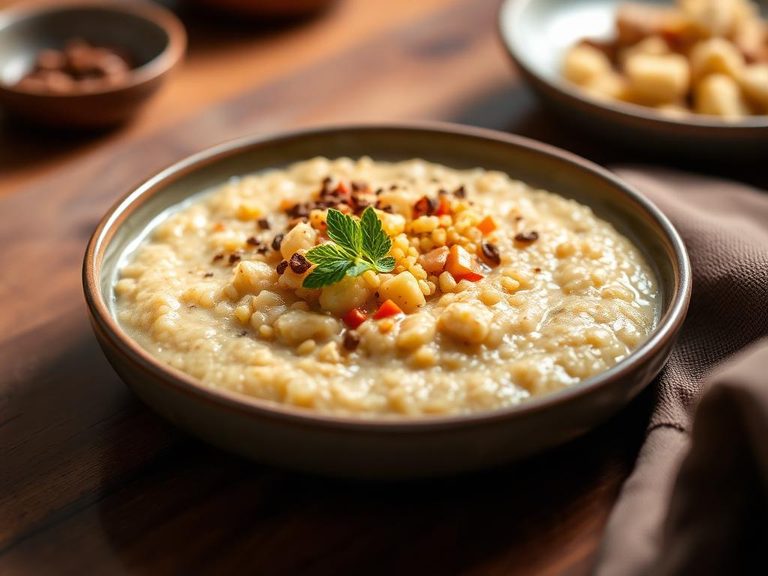
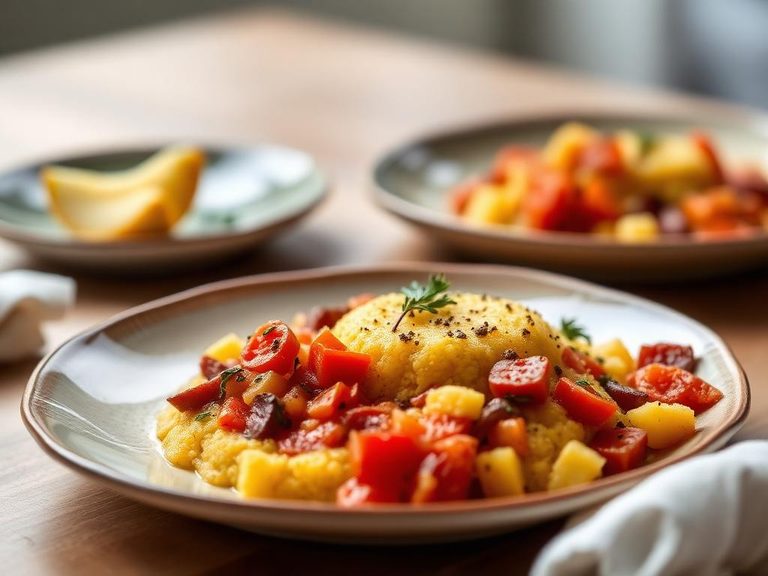
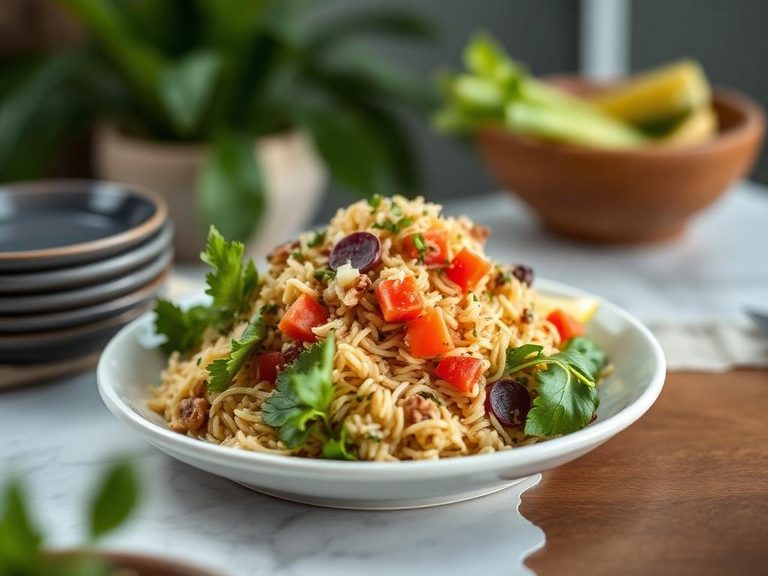
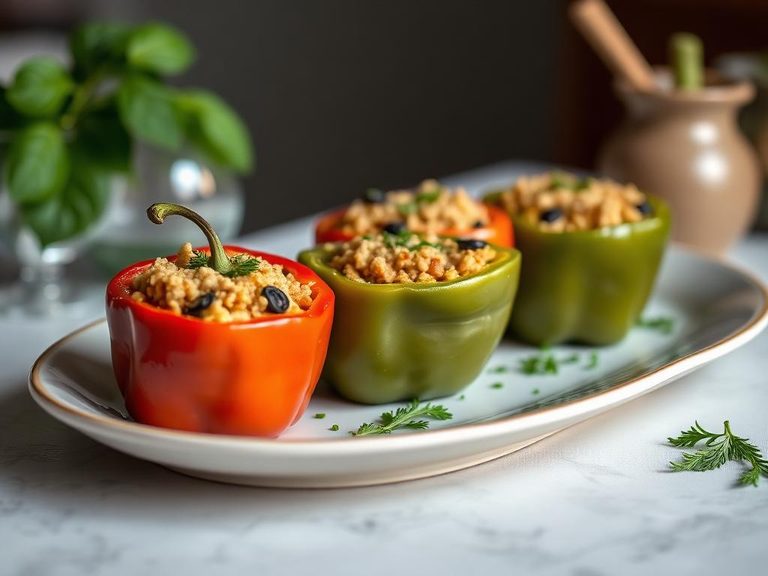
🍽️ Popular dishes
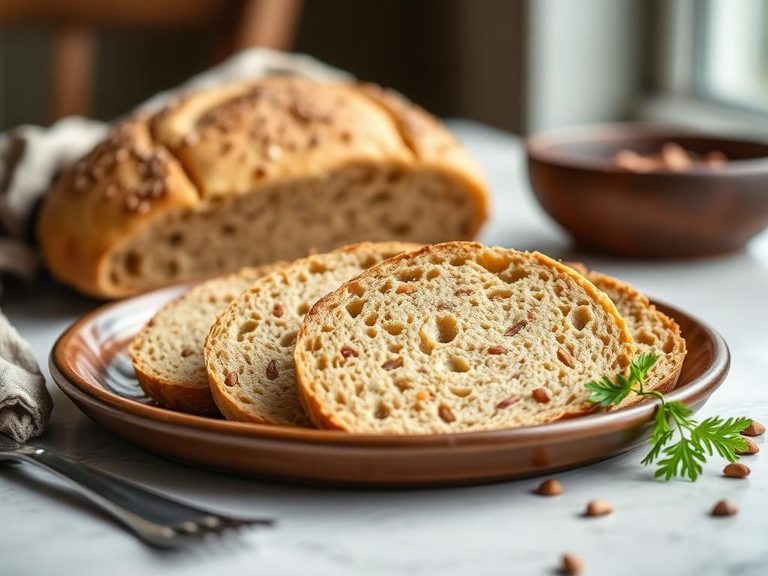
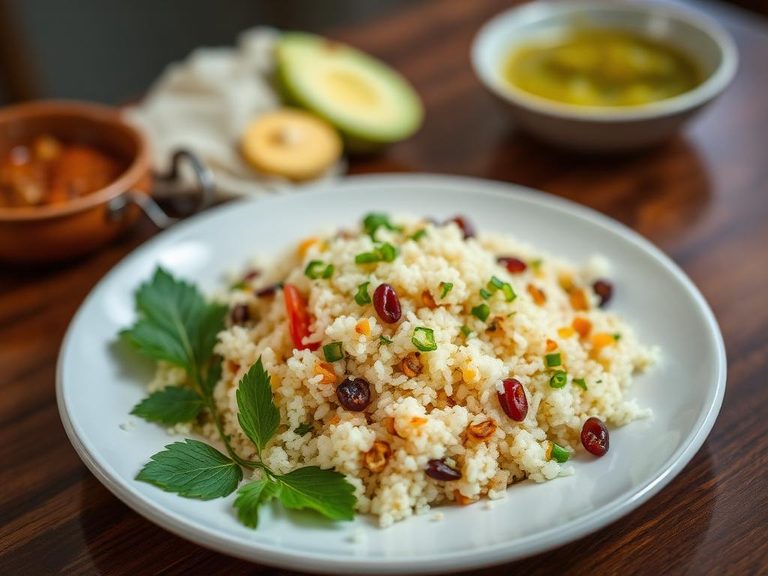
🌍 Where it's eaten
💡 Did you know?
Puffed millet was a key survival food for some Native American tribes, who would parch the grains in hot sand and then winnow them to create a lightweight, nutritious, and long-lasting trail food.
Full nutrition (USDA data · scales with serving)
| Water | 2.5 g |
| Energy | 354 kcal |
| Energy | 1481 kj |
| Protein | 13.0 g |
| Total lipid (fat) | 3.4 g |
| Ash | 1.6 g |
| Carbohydrate, by difference | 80.0 g |
| Fiber, total dietary | 2.7 g |
| Total Sugars | 0.55 g |
| Calcium, Ca | 8.0 mg |
| Iron, Fe | 2.8 mg |
| Magnesium, Mg | 106 mg |
| Phosphorus, P | 266 mg |
| Potassium, K | 40.0 mg |
| Sodium, Na | 5.0 mg |
| Zinc, Zn | 1.6 mg |
| Copper, Cu | 0.70 mg |
| Selenium, Se | 2.9 ug |
| Vitamin C, total ascorbic acid | 0.00 mg |
| Thiamin | 0.39 mg |
| Riboflavin | 0.27 mg |
| Niacin | 4.4 mg |
| Vitamin B-6 | 0.36 mg |
| Folate, total | 79.0 ug |
| Folic acid | 0.00 ug |
| Folate, food | 79.0 ug |
| Folate, DFE | 79.0 ug |
| Choline, total | 23.1 mg |
| Vitamin B-12 | 0.00 ug |
| Vitamin B-12, added | 0.00 ug |
| Vitamin A, RAE | 0.00 ug |
| Retinol | 0.00 ug |
| Carotene, beta | 0.00 ug |
| Carotene, alpha | 0.00 ug |
| Cryptoxanthin, beta | 0.00 ug |
| Vitamin A, IU | 0.00 iu |
| Lycopene | 0.00 ug |
| Lutein + zeaxanthin | 0.00 ug |
| Vitamin E (alpha-tocopherol) | 0.66 mg |
| Vitamin E, added | 0.00 mg |
| Vitamin D (D2 + D3), International Units | 0.00 iu |
| Vitamin D (D2 + D3) | 0.00 ug |
| Vitamin K (phylloquinone) | 1.4 ug |
| Alcohol, ethyl | 0.00 g |
| Caffeine | 0.00 mg |
| Theobromine | 0.00 mg |
Fat & fatty acid profile (per 100g)
| Fatty acids, total saturated | 0.67 g |
| SFA 4:0 | 0.00 g |
| SFA 6:0 | 0.00 g |
| SFA 8:0 | 0.00 g |
| SFA 10:0 | 0.00 g |
| SFA 12:0 | 0.00 g |
| SFA 14:0 | 0.00 g |
| SFA 16:0 | 0.49 g |
| SFA 18:0 | 0.14 g |
| Fatty acids, total monounsaturated | 0.72 g |
| MUFA 16:1 | 0.01 g |
| MUFA 18:1 | 0.69 g |
| MUFA 20:1 | 0.02 g |
| MUFA 22:1 | 0.00 g |
| Fatty acids, total polyunsaturated | 2.0 g |
| PUFA 18:2 | 1.9 g |
| PUFA 18:3 | 0.11 g |
| PUFA 18:4 | 0.00 g |
| PUFA 20:4 | 0.00 g |
| PUFA 20:5 n-3 (EPA) | 0.00 g |
| PUFA 22:5 n-3 (DPA) | 0.00 g |
| PUFA 22:6 n-3 (DHA) | 0.00 g |
| Cholesterol | 0.00 mg |
Amino acid profile (per 100g)
Estimated from Millet, cooked — USDA does not publish this profile for Millet.
| Tryptophan | 0.04 g |
| Threonine | 0.11 g |
| Isoleucine | 0.15 g |
| Leucine | 0.45 g |
| Lysine | 0.07 g |
| Methionine | 0.07 g |
| Cystine | 0.07 g |
| Phenylalanine | 0.18 g |
| Tyrosine | 0.11 g |
| Valine | 0.18 g |
| Arginine | 0.12 g |
| Histidine | 0.07 g |
| Alanine | 0.31 g |
| Aspartic acid | 0.23 g |
| Glutamic acid | 0.76 g |
| Glycine | 0.09 g |
| Proline | 0.28 g |
| Serine | 0.20 g |
FAQ
Is puffed millet the same as millet flakes?
No. Puffed millet is made by popping whole grains, resulting in a light, airy, ball-like shape. Millet flakes are made by rolling and flattening the grain, similar to rolled oats, and have a denser, flatter texture.
Can I make puffed millet at home?
Yes. The most common method is to use a hot, dry skillet. Add a small amount of dry millet to a very hot pan, cover, and shake until the grains pop. It requires practice to prevent burning.
Is puffed millet a good food for weight loss?
It can be part of a weight-loss diet due to its low fat and high fiber content, which promote fullness. However, it is calorie-dense (354 kcal per 100g) and high in carbs, so portion control is essential.
Nutrient density (calculated · NRF9.3)
Nutrient Rich Foods index: beneficial nutrients (protein, fiber, vitamins, minerals) minus saturated fat, added sugar & sodium, per 100 kcal.
NRF9.3 index — Fulgoni, Keast & Drewnowski, 2009. Computed from USDA nutrients.
Weight-loss friendliness (composite index)
Energy density 3.54 kcal/g · 15% calories from protein · 2.7 g fiber · 0.6 g sugar per 100 g.
Composite of energy density (Rolls et al., 1999), protein & fiber satiety, minus sugar. A calculated heuristic — ranks satiety-per-calorie, not a clinical measure.
Dietary load (calculated from USDA values)
Potential renal acid load. Positive = acid-forming, negative = alkaline-forming.
Sodium-to-potassium ratio: 0.13 (lower is better — aim for ≤ 1)
Sodium:potassium per WHO potassium guidance. Computed from USDA nutrients.