

Meat loaf made with beef and pork
Common food
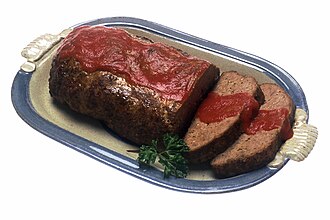
Photo: Wikipedia
A savory, baked loaf of ground beef and pork, seasoned and bound with eggs and breadcrumbs, offering a hearty, meaty texture with a rich, umami flavor. Its nutrition profile is notably high in protein, providing over 17g per 100g, making it a substantial, satisfying main course. The balance of beef's depth and pork's subtle sweetness creates a classic comfort food staple.
Calorie split: 36% protein · 15% carbs · 49% fat
↓ Full nutrition💚 Why it's loved
People love it for its deep, savory comfort and nostalgic appeal, often evoking memories of home cooking. Its versatility allows for endless customization with glazes, spices, and mix-ins, making it a reliable crowd-pleaser for family dinners.
⚠️ Watch-outs & how to enjoy it better
The combination of ground meats can be high in saturated fat and sodium, especially with certain seasonings or processed breadcrumbs. To mitigate this, choose leaner meat blends, use low-sodium broth or seasonings, and pair the slice with a large portion of non-starchy vegetables like roasted broccoli or a crisp salad to add fiber and balance the meal.
Key benefits
- Excellent source of complete protein for muscle maintenance
- Provides essential minerals like iron, zinc, and B12
- Can be a budget-friendly way to serve a nutritious meal
- Highly adaptable to different flavor profiles and ingredients
🍽️ Popular dishes
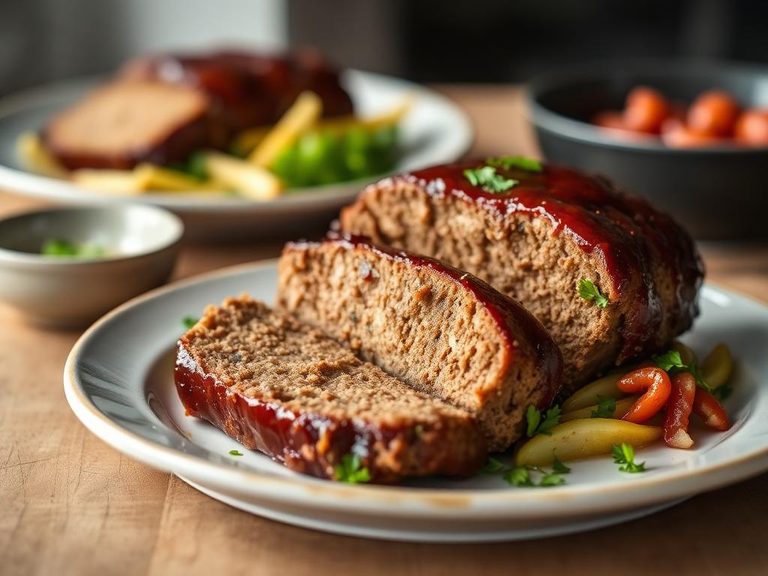

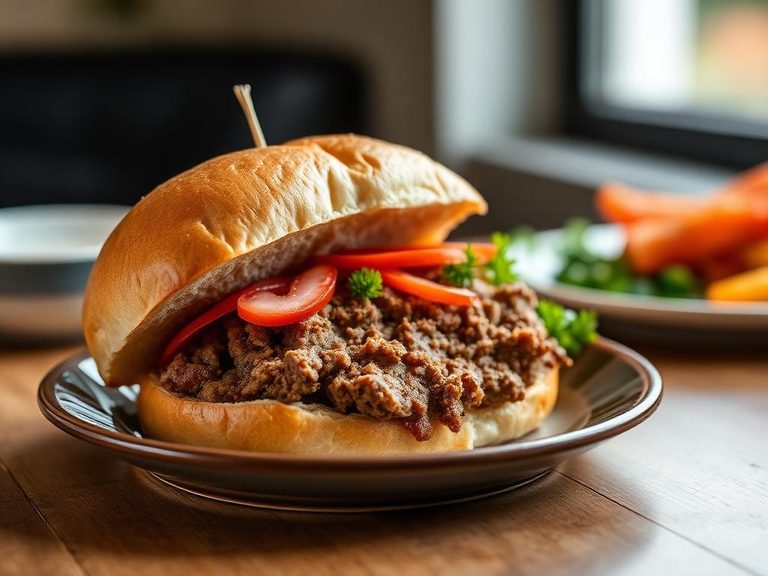
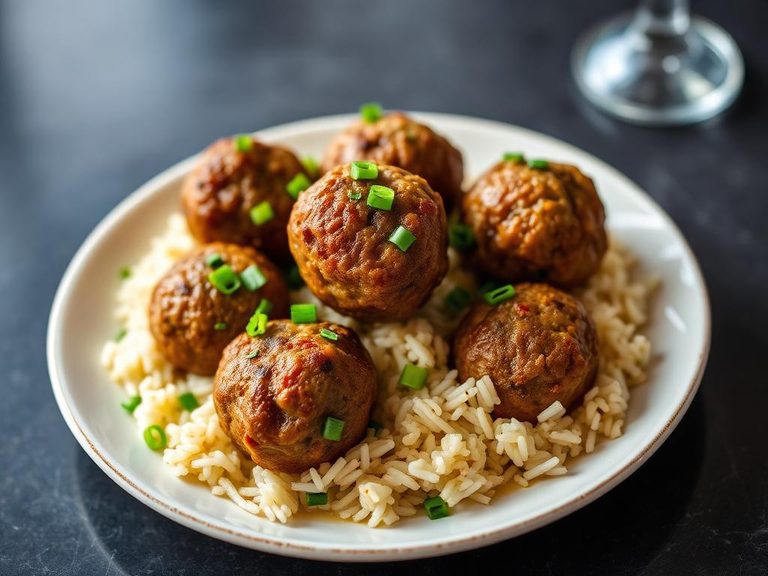
🌍 Where it's eaten
💡 Did you know?
The term 'meatloaf' appears in print as early as the 1870s, but the dish as a comfort food icon really took off in the 1950s, partly due to the rise of convenient ground meat and commercial ketchup glazes.
Full nutrition (USDA data · scales with serving)
| Water | 63.3 g |
| Energy | 196 kcal |
| Protein | 17.3 g |
| Total lipid (fat) | 10.5 g |
| Carbohydrate, by difference | 7.2 g |
| Fiber, total dietary | 0.40 g |
| Total Sugars | 1.8 g |
| Calcium, Ca | 63.0 mg |
| Iron, Fe | 1.9 mg |
| Magnesium, Mg | 19.0 mg |
| Phosphorus, P | 169 mg |
| Potassium, K | 269 mg |
| Sodium, Na | 412 mg |
| Zinc, Zn | 3.5 mg |
| Copper, Cu | 0.07 mg |
| Selenium, Se | 19.2 ug |
| Vitamin C, total ascorbic acid | 0.70 mg |
| Thiamin | 0.17 mg |
| Riboflavin | 0.21 mg |
| Niacin | 3.5 mg |
| Vitamin B-6 | 0.25 mg |
| Folate, total | 19.0 ug |
| Folic acid | 7.0 ug |
| Folate, food | 12.0 ug |
| Folate, DFE | 23.0 ug |
| Choline, total | 69.2 mg |
| Vitamin B-12 | 1.4 ug |
| Vitamin B-12, added | 0.00 ug |
| Vitamin A, RAE | 22.0 ug |
| Retinol | 22.0 ug |
| Carotene, beta | 1.0 ug |
| Carotene, alpha | 0.00 ug |
| Cryptoxanthin, beta | 1.0 ug |
| Lycopene | 0.00 ug |
| Lutein + zeaxanthin | 38.0 ug |
| Vitamin E (alpha-tocopherol) | 0.19 mg |
| Vitamin E, added | 0.00 mg |
| Vitamin D (D2 + D3) | 0.50 ug |
| Vitamin K (phylloquinone) | 0.90 ug |
| Alcohol, ethyl | 0.00 g |
| Caffeine | 0.00 mg |
| Theobromine | 0.00 mg |
Fat & fatty acid profile (per 100g)
| Fatty acids, total saturated | 3.9 g |
| SFA 4:0 | 0.01 g |
| SFA 6:0 | 0.01 g |
| SFA 8:0 | 0.00 g |
| SFA 10:0 | 0.01 g |
| SFA 12:0 | 0.02 g |
| SFA 14:0 | 0.24 g |
| SFA 16:0 | 2.1 g |
| SFA 18:0 | 1.4 g |
| Fatty acids, total monounsaturated | 4.4 g |
| MUFA 16:1 | 0.33 g |
| MUFA 18:1 | 3.8 g |
| MUFA 20:1 | 0.04 g |
| MUFA 22:1 | 0.00 g |
| Fatty acids, total polyunsaturated | 0.72 g |
| PUFA 18:2 | 0.62 g |
| PUFA 18:3 | 0.03 g |
| PUFA 18:4 | 0.00 g |
| PUFA 20:4 | 0.03 g |
| PUFA 20:5 n-3 (EPA) | 0.00 g |
| PUFA 22:5 n-3 (DPA) | 0.00 g |
| PUFA 22:6 n-3 (DHA) | 0.00 g |
| Cholesterol | 78.0 mg |
Amino acid profile (per 100g)
Estimated from Beef, ground, 70% lean meat / 30% fat, loaf, cooked, baked — USDA does not publish this profile for Meat loaf made with beef and pork.
| Tryptophan | 0.12 g |
| Threonine | 0.92 g |
| Isoleucine | 1.1 g |
| Leucine | 1.9 g |
| Lysine | 2.0 g |
| Methionine | 0.61 g |
| Cystine | 0.25 g |
| Phenylalanine | 0.93 g |
| Tyrosine | 0.73 g |
| Valine | 1.2 g |
| Arginine | 1.6 g |
| Histidine | 0.78 g |
| Alanine | 1.5 g |
| Aspartic acid | 2.1 g |
| Glutamic acid | 3.6 g |
| Glycine | 1.6 g |
| Proline | 1.2 g |
| Serine | 0.95 g |
FAQ
How do I keep my meatloaf from being dry?
Avoid overmixing the meat, don't overcook it (use a meat thermometer to check for 160°F/71°C), and include moistening ingredients like milk-soaked breadcrumbs, grated onion, or a bit of tomato sauce in the mix.
Can I make meatloaf ahead of time?
Yes, you can assemble the raw loaf, cover, and refrigerate for up to 24 hours before baking. You can also bake it fully, cool it, and reheat slices. It often tastes even better the next day as the flavors meld.
What's the best way to get a good glaze?
Apply a glaze (like ketchup, brown sugar, and mustard) during the last 15-20 minutes of baking. This prevents the sugars in the glaze from burning while still allowing it to caramelize into a sticky, flavorful coating.
Nutrient density (calculated · NRF9.3)
Nutrient Rich Foods index: beneficial nutrients (protein, fiber, vitamins, minerals) minus saturated fat, added sugar & sodium, per 100 kcal.
NRF9.3 index — Fulgoni, Keast & Drewnowski, 2009. Computed from USDA nutrients.
Weight-loss friendliness (composite index)
Energy density 1.96 kcal/g · 35% calories from protein · 0.4 g fiber · 1.8 g sugar per 100 g.
Composite of energy density (Rolls et al., 1999), protein & fiber satiety, minus sugar. A calculated heuristic — ranks satiety-per-calorie, not a clinical measure.
Dietary load (calculated from USDA values)
Potential renal acid load. Positive = acid-forming, negative = alkaline-forming.
Sodium-to-potassium ratio: 1.53 (lower is better — aim for ≤ 1)
Sodium:potassium per WHO potassium guidance. Computed from USDA nutrients.