

Macaroni, vegetable, enriched, cooked
Whole food · Cereal Grains and Pasta

Photo: Wikipedia
Enriched macaroni, once cooked, transforms into plump, tender tubes with a mild, wheaty flavor that readily absorbs sauces and seasonings. This particular vegetable-infused variety offers a subtle, earthy undertone and a soft yet slightly chewy texture. It's a low-fat, fiber-enhanced carbohydrate source, providing sustained energy with a modest calorie count.
Calorie split: 14% protein · 85% carbs · 1% fat
↓ Full nutrition💚 Why it's loved
People love it for its comforting, neutral taste and satisfying texture that acts as a perfect canvas for bold sauces, from classic tomato ragù to creamy cheese. Its familiar shape and quick cooking time make it a beloved, nostalgic staple for quick weeknight dinners and kid-friendly meals across cultures.
⚠️ Watch-outs & how to enjoy it better
As a refined carbohydrate, it can cause rapid blood-sugar spikes, especially when eaten alone. To counteract this, pair it with protein (like lean meat or beans) and healthy fats (like olive oil or cheese) to slow digestion. Its enriched flour may contain gluten, a common allergen, and it's often cooked in salted water, increasing sodium content; using less salt in the cooking water or rinsing lightly can help reduce this.
Key benefits
- Good source of complex carbohydrates for steady energy
- Contains added B vitamins and iron from enrichment
- Provides dietary fiber to support digestive health
- Low in fat and naturally cholesterol-free
- Versatile base for balanced, nutrient-dense meals
🍽️ Popular dishes
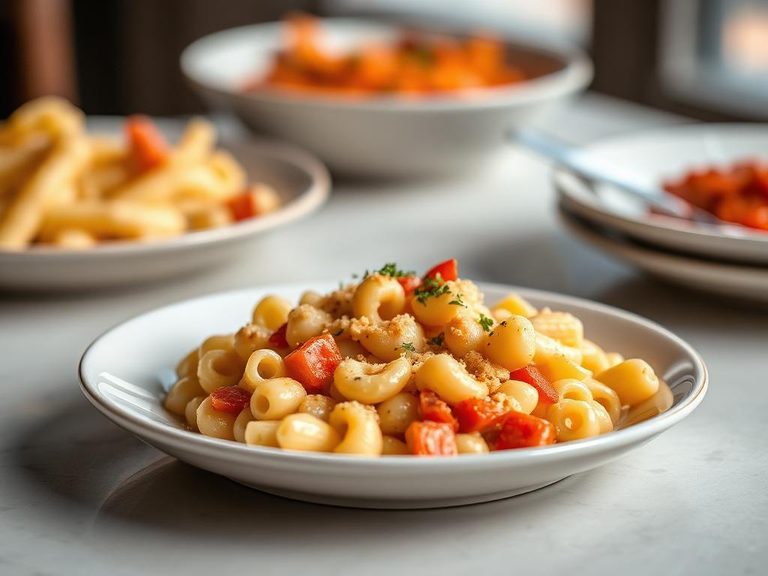
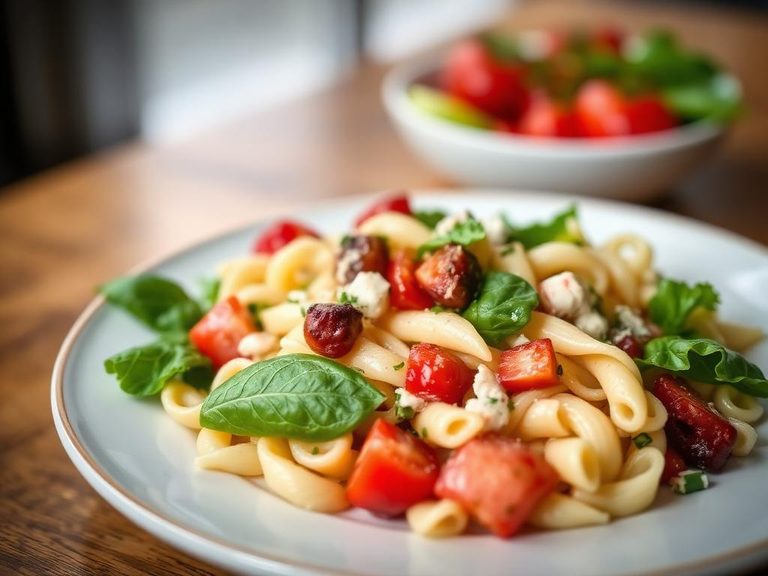

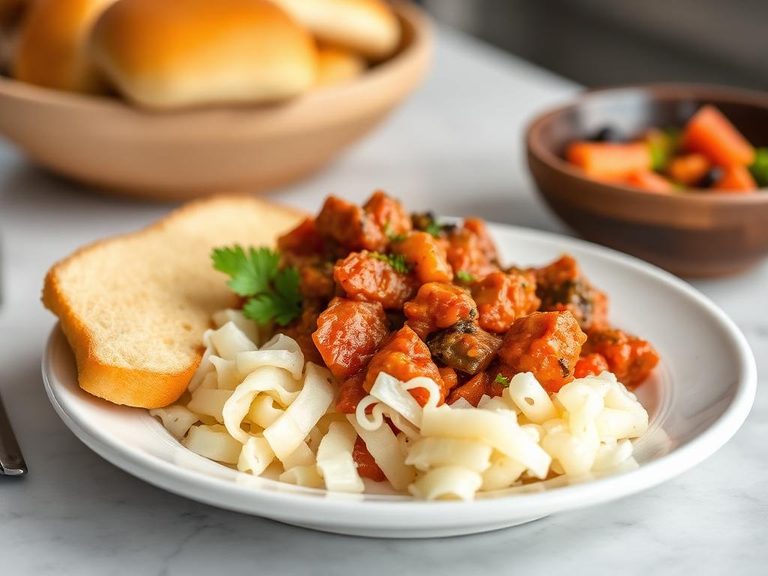
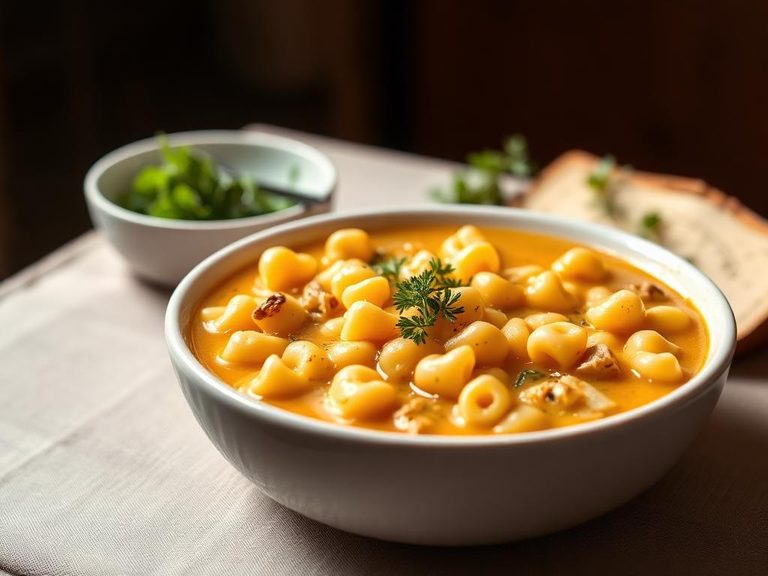
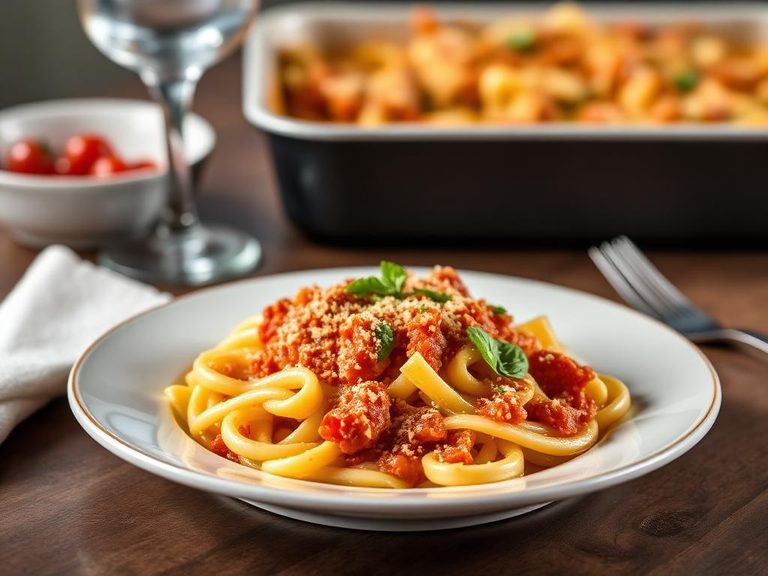
🌍 Where it's eaten
💡 Did you know?
The term 'macaroni' in the 18th century didn't just refer to the pasta shape; it described a young Englishman who had traveled to Italy on a 'Grand Tour' and returned with affected, Continental tastes and manners.
Full nutrition (USDA data · scales with serving)
| Water | 68.4 g |
| Energy | 128 kcal |
| Energy | 536 kj |
| Protein | 4.5 g |
| Total lipid (fat) | 0.11 g |
| Ash | 0.38 g |
| Carbohydrate, by difference | 26.6 g |
| Fiber, total dietary | 4.3 g |
| Total Sugars | 1.1 g |
| Calcium, Ca | 11.0 mg |
| Iron, Fe | 0.49 mg |
| Magnesium, Mg | 19.0 mg |
| Phosphorus, P | 50.0 mg |
| Potassium, K | 31.0 mg |
| Sodium, Na | 6.0 mg |
| Zinc, Zn | 0.44 mg |
| Copper, Cu | 0.09 mg |
| Manganese, Mn | 0.99 mg |
| Selenium, Se | 19.8 ug |
| Vitamin C, total ascorbic acid | 0.00 mg |
| Thiamin | 0.11 mg |
| Riboflavin | 0.06 mg |
| Niacin | 1.1 mg |
| Pantothenic acid | 0.35 mg |
| Vitamin B-6 | 0.02 mg |
| Folate, total | 65.0 ug |
| Folic acid | 59.0 ug |
| Folate, food | 6.0 ug |
| Folate, DFE | 106 ug |
| Choline, total | 5.0 mg |
| Vitamin B-12 | 0.00 ug |
| Vitamin B-12, added | 0.00 ug |
| Vitamin A, RAE | 5.0 ug |
| Retinol | 0.00 ug |
| Carotene, beta | 55.0 ug |
| Carotene, alpha | 0.00 ug |
| Cryptoxanthin, beta | 0.00 ug |
| Vitamin A, IU | 92.0 iu |
| Lycopene | 245 ug |
| Lutein + zeaxanthin | 13.0 ug |
| Vitamin E (alpha-tocopherol) | 0.21 mg |
| Vitamin E, added | 0.00 mg |
| Vitamin D (D2 + D3), International Units | 0.00 iu |
| Vitamin D (D2 + D3) | 0.00 ug |
| Vitamin K (phylloquinone) | 0.30 ug |
| Alcohol, ethyl | 0.00 g |
| Caffeine | 0.00 mg |
| Theobromine | 0.00 mg |
Fat & fatty acid profile (per 100g)
| Fatty acids, total saturated | 0.02 g |
| SFA 4:0 | 0.00 g |
| SFA 6:0 | 0.00 g |
| SFA 8:0 | 0.00 g |
| SFA 10:0 | 0.00 g |
| SFA 12:0 | 0.00 g |
| SFA 14:0 | 0.00 g |
| SFA 16:0 | 0.01 g |
| SFA 18:0 | 0.00 g |
| Fatty acids, total monounsaturated | 0.01 g |
| MUFA 16:1 | 0.00 g |
| MUFA 18:1 | 0.01 g |
| MUFA 20:1 | 0.00 g |
| MUFA 22:1 | 0.00 g |
| Fatty acids, total polyunsaturated | 0.04 g |
| PUFA 18:2 | 0.04 g |
| PUFA 18:3 | 0.01 g |
| PUFA 18:4 | 0.00 g |
| PUFA 20:4 | 0.00 g |
| PUFA 20:5 n-3 (EPA) | 0.00 g |
| PUFA 22:5 n-3 (DPA) | 0.00 g |
| PUFA 22:6 n-3 (DHA) | 0.00 g |
| Cholesterol | 0.00 mg |
Amino acid profile (per 100g)
| Tryptophan | 0.06 g |
| Threonine | 0.12 g |
| Isoleucine | 0.17 g |
| Leucine | 0.31 g |
| Lysine | 0.09 g |
| Methionine | 0.07 g |
| Cystine | 0.13 g |
| Phenylalanine | 0.22 g |
| Tyrosine | 0.12 g |
| Valine | 0.19 g |
| Arginine | 0.17 g |
| Histidine | 0.09 g |
| Alanine | 0.14 g |
| Aspartic acid | 0.20 g |
| Glutamic acid | 1.6 g |
| Glycine | 0.14 g |
| Proline | 0.48 g |
| Serine | 0.21 g |
FAQ
What does 'enriched' mean for this macaroni?
Enrichment means that after processing, certain nutrients lost from the wheat germ and bran—typically B vitamins (like thiamin, riboflavin, niacin, folic acid) and iron—are added back in, boosting its nutritional profile.
How is vegetable macaroni different from regular?
Vegetable macaroni has finely pureed or powdered vegetables (like tomato, spinach, or carrot) incorporated into the dough, which can add subtle color, flavor, and a small amount of extra fiber and micronutrients.
Is this a good food for managing weight?
It can be part of a weight-management plan due to its relatively low calorie density and fiber content, which promote fullness. The key is portion control and pairing it with plenty of vegetables and lean protein rather than high-fat sauces.
Nutrient density (calculated · NRF9.3)
Nutrient Rich Foods index: beneficial nutrients (protein, fiber, vitamins, minerals) minus saturated fat, added sugar & sodium, per 100 kcal.
NRF9.3 index — Fulgoni, Keast & Drewnowski, 2009. Computed from USDA nutrients.
Weight-loss friendliness (composite index)
Energy density 1.28 kcal/g · 14% calories from protein · 4.3 g fiber · 1.1 g sugar per 100 g.
Composite of energy density (Rolls et al., 1999), protein & fiber satiety, minus sugar. A calculated heuristic — ranks satiety-per-calorie, not a clinical measure.
Dietary load (calculated from USDA values)
Potential renal acid load. Positive = acid-forming, negative = alkaline-forming.
Sodium-to-potassium ratio: 0.19 (lower is better — aim for ≤ 1)
Sodium:potassium per WHO potassium guidance. Computed from USDA nutrients.