

Hummus, plain
Common food

Photo: Wikipedia
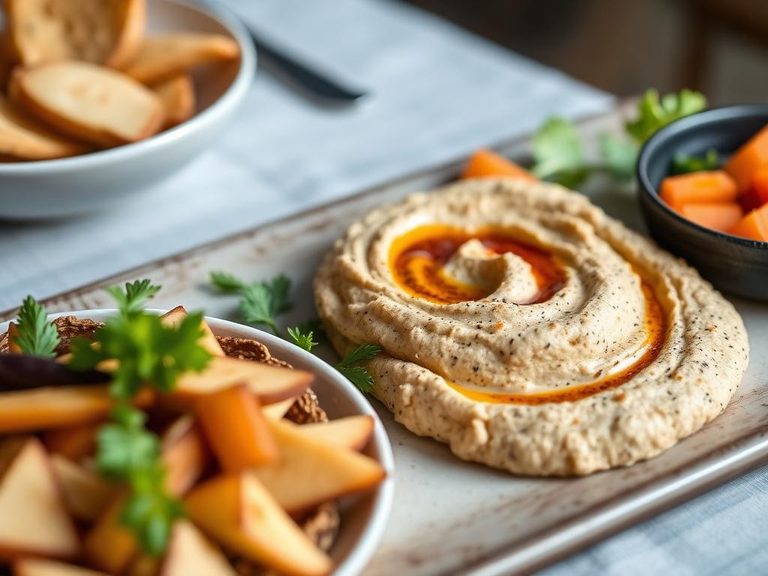
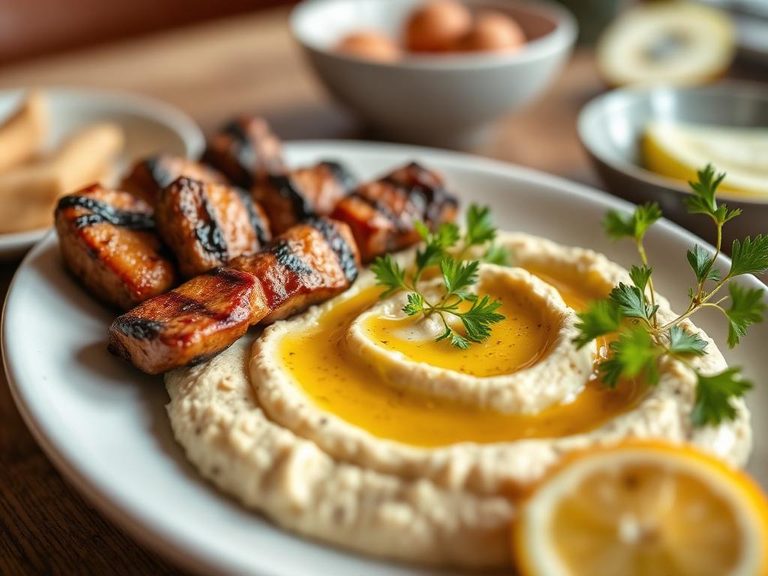
Hummus is a velvety, rich dip made from mashed chickpeas, tahini, lemon juice, and garlic, offering a creamy texture with a nutty, earthy flavor. It stands out nutritionally for its high fiber content (5.4g per 100g) and balanced plant-based protein (7.35g per 100g). Its smooth, savory profile makes it a staple for dipping, spreading, and enhancing a wide variety of dishes.
Calorie split: 12% protein · 25% carbs · 63% fat
↓ Full nutrition💚 Why it's loved
People love hummus for its creamy, savory flavor and its incredible versatility as a dip, spread, or sauce. It is deeply rooted in Middle Eastern and Mediterranean culinary traditions, offering a comforting, wholesome taste that pairs well with vegetables, bread, and more.
⚠️ Watch-outs & how to enjoy it better
Some may find hummus high in calories or fat (17.1g per 100g), which could be a concern for those monitoring intake. To counteract this, pair it with fresh vegetables instead of bread, practice portion control, and choose low-sodium versions to reduce salt intake. Additionally, chickpeas contain oxalates, which may be a concern for individuals prone to kidney stones, so moderation and adequate hydration are recommended.
Key benefits
- High in dietary fiber for digestive health and satiety
- Provides plant-based protein from chickpeas and tahini
- Rich in healthy fats from olive oil and tahini
- Low in sugar (0.34g per 100g)
- Versatile ingredient for meals and snacks
🍽️ Popular dishes
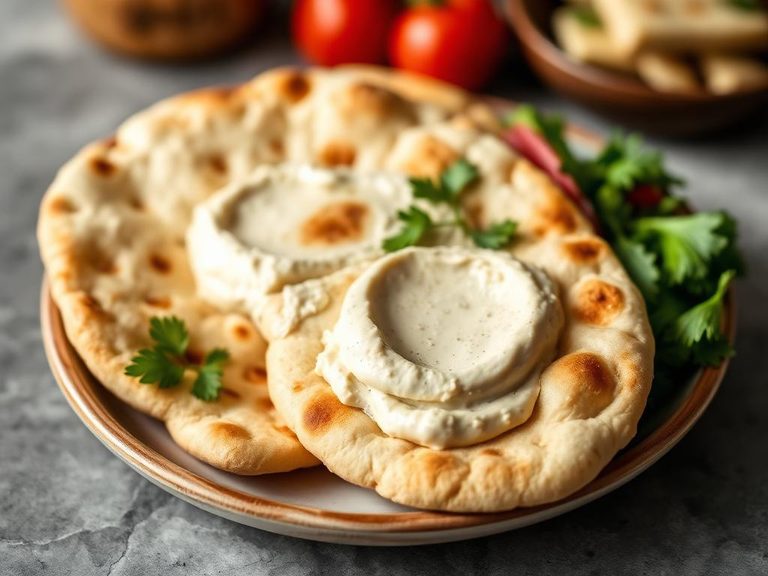
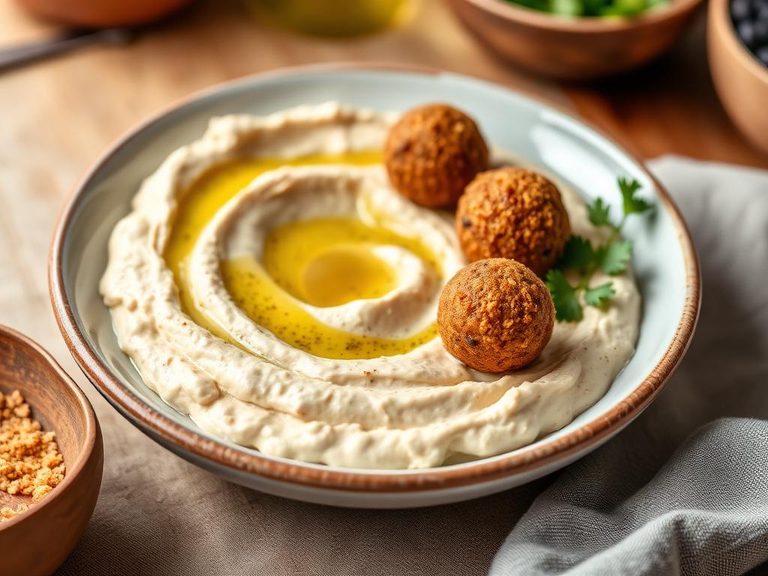
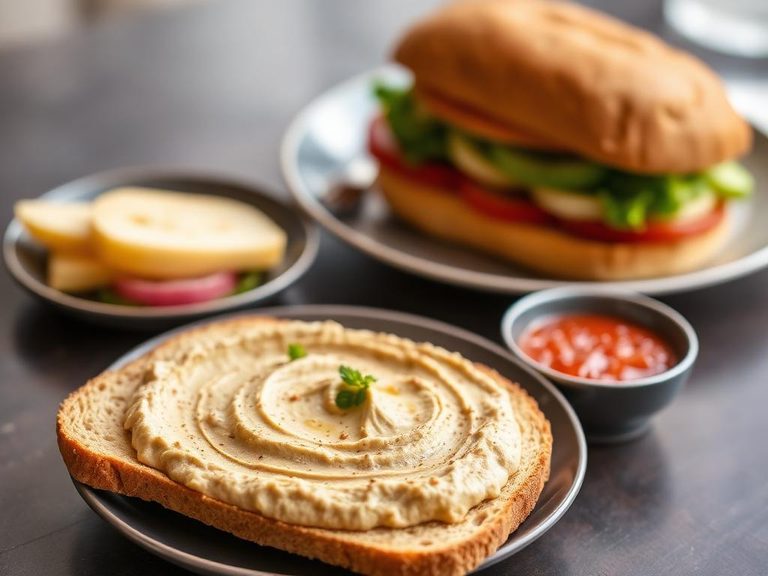
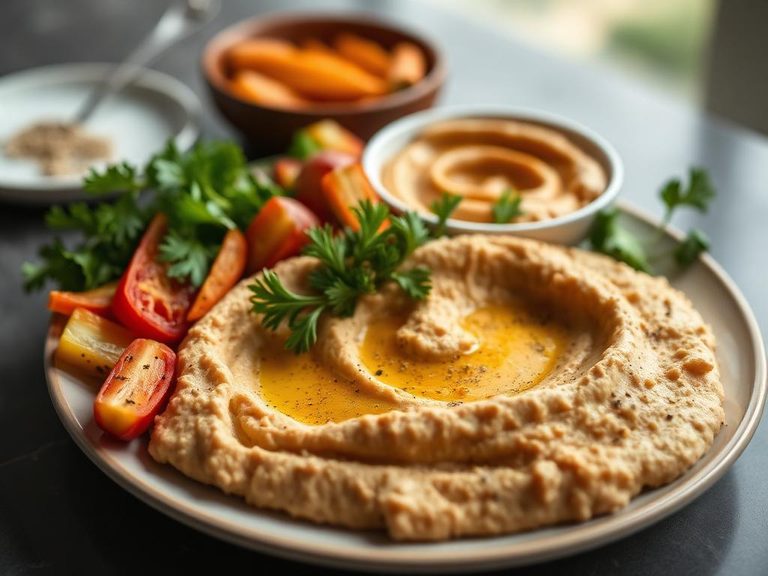
🌍 Where it's eaten
💡 Did you know?
The world's largest hummus dish was made in Lebanon in 2010, weighing over 2,000 pounds (about 1,000 kg), according to Guinness World Records.
Full nutrition (USDA data · scales with serving)
| Water | 58.7 g |
| Energy | 243 kcal |
| Protein | 7.3 g |
| Total lipid (fat) | 17.1 g |
| Carbohydrate, by difference | 14.9 g |
| Fiber, total dietary | 5.4 g |
| Total Sugars | 0.34 g |
| Calcium, Ca | 41.0 mg |
| Iron, Fe | 2.4 mg |
| Magnesium, Mg | 71.0 mg |
| Phosphorus, P | 166 mg |
| Potassium, K | 289 mg |
| Sodium, Na | 438 mg |
| Zinc, Zn | 1.4 mg |
| Copper, Cu | 0.35 mg |
| Selenium, Se | 16.2 ug |
| Vitamin C, total ascorbic acid | 0.00 mg |
| Thiamin | 0.15 mg |
| Riboflavin | 0.12 mg |
| Niacin | 0.95 mg |
| Vitamin B-6 | 0.14 mg |
| Folate, total | 36.0 ug |
| Folic acid | 0.00 ug |
| Folate, food | 36.0 ug |
| Folate, DFE | 36.0 ug |
| Choline, total | 46.6 mg |
| Vitamin B-12 | 0.00 ug |
| Vitamin B-12, added | 0.00 ug |
| Vitamin A, RAE | 1.0 ug |
| Retinol | 0.00 ug |
| Carotene, beta | 12.0 ug |
| Carotene, alpha | 0.00 ug |
| Cryptoxanthin, beta | 3.0 ug |
| Lycopene | 0.00 ug |
| Lutein + zeaxanthin | 258 ug |
| Vitamin E (alpha-tocopherol) | 1.7 mg |
| Vitamin E, added | 0.00 mg |
| Vitamin D (D2 + D3) | 0.00 ug |
| Vitamin K (phylloquinone) | 17.2 ug |
| Alcohol, ethyl | 0.00 g |
| Caffeine | 0.00 mg |
| Theobromine | 0.00 mg |
Fat & fatty acid profile (per 100g)
| Fatty acids, total saturated | 2.2 g |
| SFA 4:0 | 0.00 g |
| SFA 6:0 | 0.00 g |
| SFA 8:0 | 0.00 g |
| SFA 10:0 | 0.00 g |
| SFA 12:0 | 0.00 g |
| SFA 14:0 | 0.01 g |
| SFA 16:0 | 1.4 g |
| SFA 18:0 | 0.63 g |
| Fatty acids, total monounsaturated | 6.4 g |
| MUFA 16:1 | 0.02 g |
| MUFA 18:1 | 6.3 g |
| MUFA 20:1 | 0.08 g |
| MUFA 22:1 | 0.00 g |
| Fatty acids, total polyunsaturated | 7.5 g |
| PUFA 18:2 | 6.8 g |
| PUFA 18:3 | 0.66 g |
| PUFA 18:4 | 0.00 g |
| PUFA 20:4 | 0.01 g |
| PUFA 20:5 n-3 (EPA) | 0.00 g |
| PUFA 22:5 n-3 (DPA) | 0.00 g |
| PUFA 22:6 n-3 (DHA) | 0.00 g |
| Cholesterol | 0.00 mg |
Amino acid profile (per 100g)
Estimated from Hummus, home prepared — USDA does not publish this profile for Hummus.
| Tryptophan | 0.06 g |
| Threonine | 0.18 g |
| Isoleucine | 0.21 g |
| Leucine | 0.35 g |
| Lysine | 0.29 g |
| Methionine | 0.08 g |
| Cystine | 0.07 g |
| Phenylalanine | 0.26 g |
| Tyrosine | 0.13 g |
| Valine | 0.21 g |
| Arginine | 0.50 g |
| Histidine | 0.13 g |
| Alanine | 0.21 g |
| Aspartic acid | 0.54 g |
| Glutamic acid | 0.88 g |
| Glycine | 0.22 g |
| Proline | 0.20 g |
| Serine | 0.24 g |
FAQ
Is hummus healthy?
Yes, hummus is generally considered healthy due to its high fiber, protein, and healthy fats from chickpeas, tahini, and olive oil. However, it can be calorie-dense, so portion control is important.
Can hummus be part of a weight-loss diet?
Yes, hummus can be part of a weight-loss diet when consumed in moderation, as it provides satiety from fiber and protein. Pair it with low-calorie vegetables like cucumber or carrots instead of high-calorie bread or chips.
Is hummus suitable for vegans?
Yes, traditional hummus is vegan, as it is made from chickpeas, tahini, lemon juice, and garlic, with no animal products. However, always check labels for any added ingredients that might not be vegan.
How should hummus be stored?
Hummus should be stored in an airtight container in the refrigerator and consumed within 4-7 days. For longer storage, it can be frozen for up to 4 months, though the texture may change slightly.
Nutrient density (calculated · NRF9.3)
Nutrient Rich Foods index: beneficial nutrients (protein, fiber, vitamins, minerals) minus saturated fat, added sugar & sodium, per 100 kcal.
NRF9.3 index — Fulgoni, Keast & Drewnowski, 2009. Computed from USDA nutrients.
Weight-loss friendliness (composite index)
Energy density 2.43 kcal/g · 12% calories from protein · 5.4 g fiber · 0.3 g sugar per 100 g.
Composite of energy density (Rolls et al., 1999), protein & fiber satiety, minus sugar. A calculated heuristic — ranks satiety-per-calorie, not a clinical measure.
Dietary load (calculated from USDA values)
Potential renal acid load. Positive = acid-forming, negative = alkaline-forming.
Sodium-to-potassium ratio: 1.52 (lower is better — aim for ≤ 1)
Sodium:potassium per WHO potassium guidance. Computed from USDA nutrients.