

Hummus, flavored
Common food

Photo: Wikipedia
Flavored hummus is a creamy, savory spread made from blended chickpeas, tahini, lemon juice, and garlic, infused with ingredients like roasted red pepper, garlic, or herbs. It has a smooth, rich texture with a nutty, earthy base and a bright, aromatic finish. Nutritionally, it's a balanced source of plant-based protein, healthy fats, and fiber, making it more calorie-dense than plain hummus.
Calorie split: 12% protein · 24% carbs · 64% fat
↓ Full nutrition💚 Why it's loved
People love flavored hummus for its ability to transform simple snacks and meals with complex, savory notes and a luxuriously creamy mouthfeel. It's a beloved staple in mezze platters and a go-to dip that bridges healthy eating with indulgent flavor.
⚠️ Watch-outs & how to enjoy it better
Some flavored varieties can be high in sodium from added seasonings or preservatives, and tahini is a common allergen. To counteract, look for low-sodium versions or make it at home, and always pair with crunchy vegetables or whole-grain crackers to balance the meal and slow sugar absorption.
Key benefits
- Provides plant-based protein from chickpeas and tahini
- Rich in dietary fiber for digestive health
- Contains healthy monounsaturated fats from tahini and olive oil
- Offers iron, folate, and magnesium from legumes
- Versatile for adding flavor and nutrients to meals
🍽️ Popular dishes
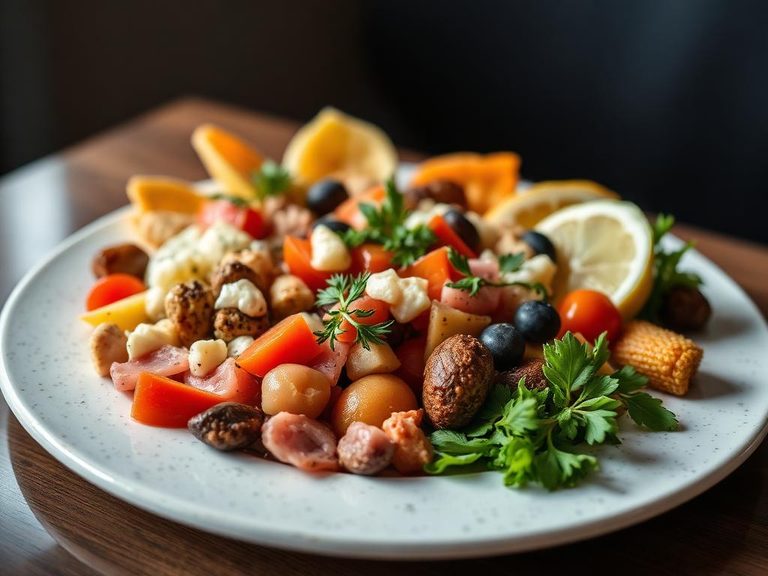
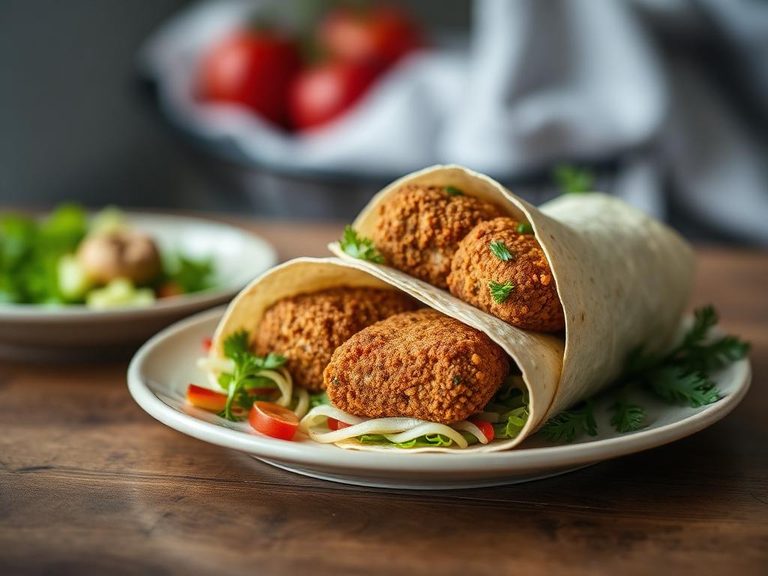
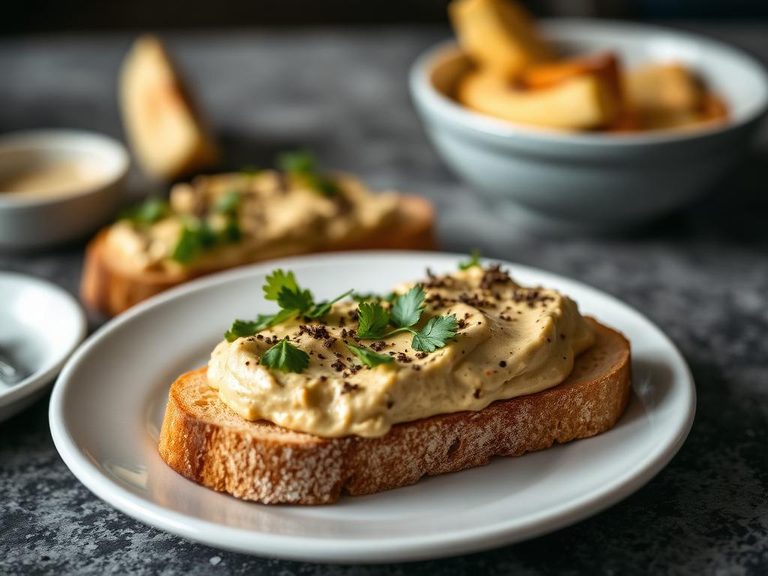


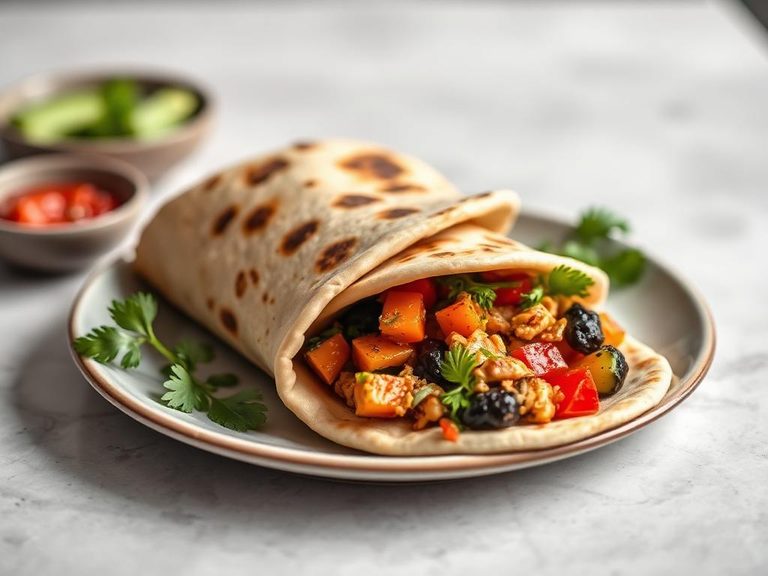
🌍 Where it's eaten
💡 Did you know?
While traditional hummus is ancient, the flavored varieties like 'roasted red pepper' or 'garlic' became massively popular in the U.S. in the early 2000s, helping to triple the country's chickpea consumption in a decade.
Full nutrition (USDA data · scales with serving)
| Water | 59.1 g |
| Energy | 241 kcal |
| Protein | 7.2 g |
| Total lipid (fat) | 17.1 g |
| Carbohydrate, by difference | 14.6 g |
| Fiber, total dietary | 5.3 g |
| Total Sugars | 0.49 g |
| Calcium, Ca | 40.0 mg |
| Iron, Fe | 2.4 mg |
| Magnesium, Mg | 71.0 mg |
| Phosphorus, P | 166 mg |
| Potassium, K | 290 mg |
| Sodium, Na | 420 mg |
| Zinc, Zn | 1.4 mg |
| Copper, Cu | 0.35 mg |
| Selenium, Se | 15.6 ug |
| Vitamin C, total ascorbic acid | 4.3 mg |
| Thiamin | 0.15 mg |
| Riboflavin | 0.12 mg |
| Niacin | 0.98 mg |
| Vitamin B-6 | 0.15 mg |
| Folate, total | 36.0 ug |
| Folic acid | 0.00 ug |
| Folate, food | 36.0 ug |
| Folate, DFE | 36.0 ug |
| Choline, total | 45.5 mg |
| Vitamin B-12 | 0.00 ug |
| Vitamin B-12, added | 0.00 ug |
| Vitamin A, RAE | 6.0 ug |
| Retinol | 0.00 ug |
| Carotene, beta | 60.0 ug |
| Carotene, alpha | 1.0 ug |
| Cryptoxanthin, beta | 18.0 ug |
| Lycopene | 0.00 ug |
| Lutein + zeaxanthin | 249 ug |
| Vitamin E (alpha-tocopherol) | 1.8 mg |
| Vitamin E, added | 0.00 mg |
| Vitamin D (D2 + D3) | 0.00 ug |
| Vitamin K (phylloquinone) | 17.2 ug |
| Alcohol, ethyl | 0.00 g |
| Caffeine | 0.00 mg |
| Theobromine | 0.00 mg |
Fat & fatty acid profile (per 100g)
| Fatty acids, total saturated | 2.2 g |
| SFA 4:0 | 0.00 g |
| SFA 6:0 | 0.00 g |
| SFA 8:0 | 0.00 g |
| SFA 10:0 | 0.00 g |
| SFA 12:0 | 0.00 g |
| SFA 14:0 | 0.01 g |
| SFA 16:0 | 1.4 g |
| SFA 18:0 | 0.62 g |
| Fatty acids, total monounsaturated | 6.3 g |
| MUFA 16:1 | 0.02 g |
| MUFA 18:1 | 6.2 g |
| MUFA 20:1 | 0.09 g |
| MUFA 22:1 | 0.00 g |
| Fatty acids, total polyunsaturated | 7.5 g |
| PUFA 18:2 | 6.9 g |
| PUFA 18:3 | 0.63 g |
| PUFA 18:4 | 0.00 g |
| PUFA 20:4 | 0.01 g |
| PUFA 20:5 n-3 (EPA) | 0.00 g |
| PUFA 22:5 n-3 (DPA) | 0.00 g |
| PUFA 22:6 n-3 (DHA) | 0.00 g |
| Cholesterol | 0.00 mg |
Amino acid profile (per 100g)
Estimated from Hummus, home prepared — USDA does not publish this profile for Hummus.
| Tryptophan | 0.06 g |
| Threonine | 0.18 g |
| Isoleucine | 0.21 g |
| Leucine | 0.35 g |
| Lysine | 0.29 g |
| Methionine | 0.08 g |
| Cystine | 0.07 g |
| Phenylalanine | 0.26 g |
| Tyrosine | 0.13 g |
| Valine | 0.21 g |
| Arginine | 0.50 g |
| Histidine | 0.13 g |
| Alanine | 0.21 g |
| Aspartic acid | 0.54 g |
| Glutamic acid | 0.88 g |
| Glycine | 0.22 g |
| Proline | 0.20 g |
| Serine | 0.24 g |
FAQ
Is flavored hummus healthy?
Yes, it's generally a nutritious choice, offering protein, fiber, and healthy fats. However, check labels for added sugars, excessive sodium, or preservatives, and be mindful of portion sizes due to its calorie density.
How long does opened flavored hummus last?
Once opened, it should be stored in an airtight container in the refrigerator and consumed within 4 to 7 days for optimal freshness and safety.
Can I use flavored hummus as a cooking ingredient?
Absolutely! It's excellent as a creamy base for salad dressings, a flavorful spread on sandwiches, a sauce for roasted vegetables, or a binding agent in veggie burgers.
Nutrient density (calculated · NRF9.3)
Nutrient Rich Foods index: beneficial nutrients (protein, fiber, vitamins, minerals) minus saturated fat, added sugar & sodium, per 100 kcal.
NRF9.3 index — Fulgoni, Keast & Drewnowski, 2009. Computed from USDA nutrients.
Weight-loss friendliness (composite index)
Energy density 2.41 kcal/g · 12% calories from protein · 5.3 g fiber · 0.5 g sugar per 100 g.
Composite of energy density (Rolls et al., 1999), protein & fiber satiety, minus sugar. A calculated heuristic — ranks satiety-per-calorie, not a clinical measure.
Dietary load (calculated from USDA values)
Potential renal acid load. Positive = acid-forming, negative = alkaline-forming.
Sodium-to-potassium ratio: 1.45 (lower is better — aim for ≤ 1)
Sodium:potassium per WHO potassium guidance. Computed from USDA nutrients.