

Gefilte fish
Common food

Photo: Wikipedia
Gefilte fish is a traditional Ashkenazi Jewish dish made from a poached mixture of ground deboned fish (typically carp, whitefish, and pike), eggs, onions, and matzo meal or breadcrumbs. It has a soft, tender, slightly spongy texture and a mild, savory flavor, often served chilled in a slice or as a quenelle with a dollop of bright orange horseradish (chrain). Nutritionally, it is a lean protein source with minimal fat and carbohydrates.
Calorie split: 52% protein · 44% carbs · 5% fat
↓ Full nutrition💚 Why it's loved
People love gefilte fish for its deep cultural significance, especially during Jewish holidays like Passover and Rosh Hashanah, where it symbolizes prosperity and celebration. Its mild flavor and soft texture make it a comforting, versatile dish that can be enjoyed simply with horseradish or incorporated into other recipes.
⚠️ Watch-outs & how to enjoy it better
The primary concern is its potential for high sodium content, especially in commercial preparations or when served with salty broths and condiments, which can be an issue for those monitoring blood pressure. It is also a common fish allergen. To counteract sodium, opt for homemade versions with controlled salt, rinse store-bought slices, and balance the meal with potassium-rich vegetables like steamed carrots or leafy greens.
Key benefits
- High-quality, low-fat protein source
- Very low in fat (0.41g per 100g)
- Contains some dietary fiber
- Good source of B vitamins from fish and eggs
- Low in sugar
🍽️ Popular dishes
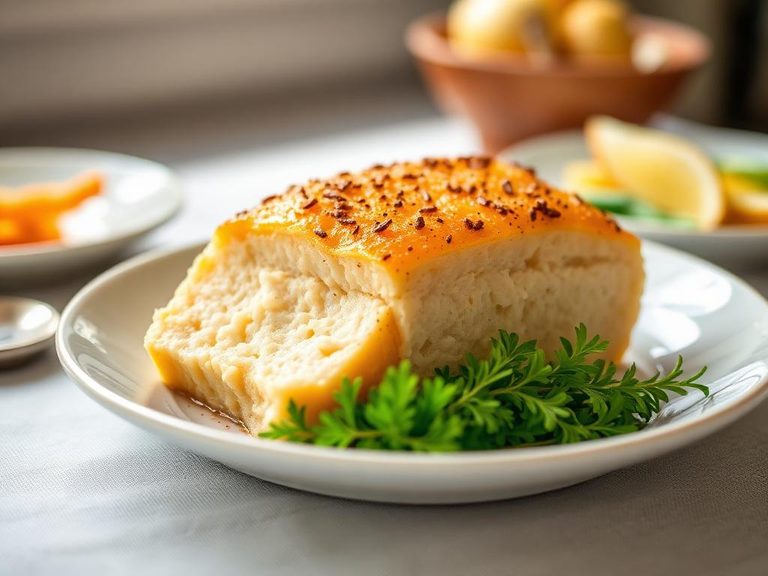
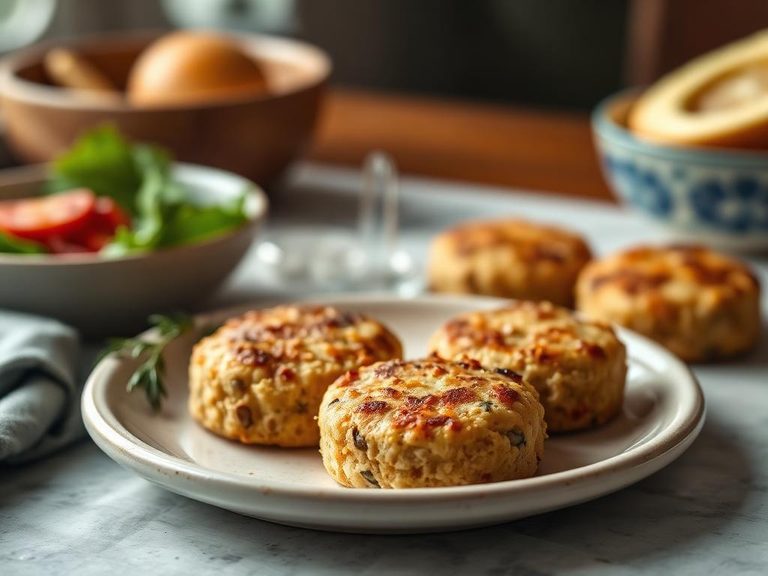
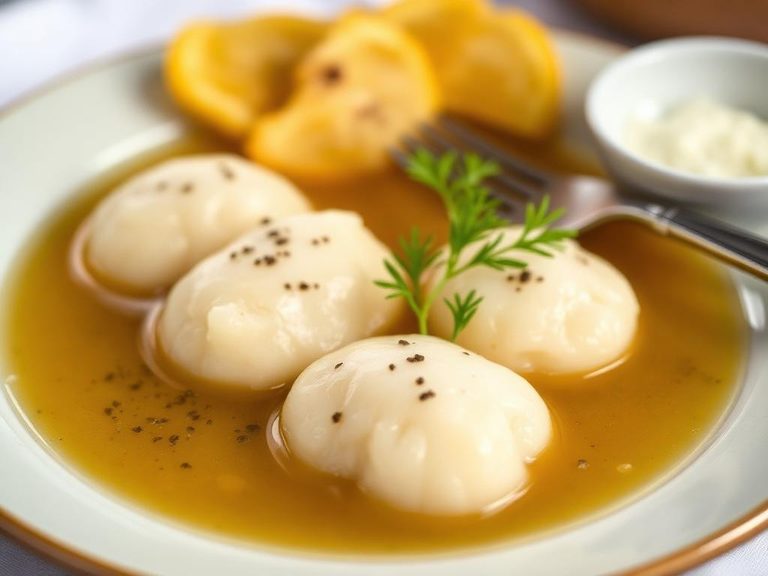
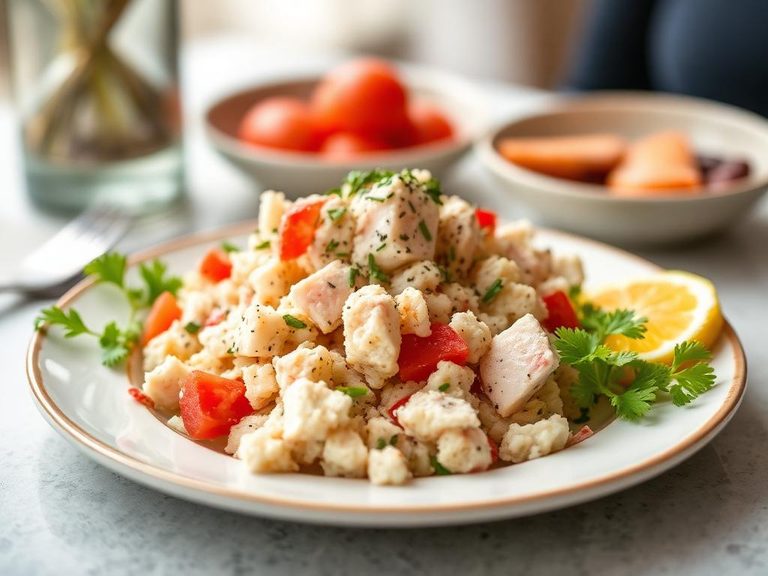
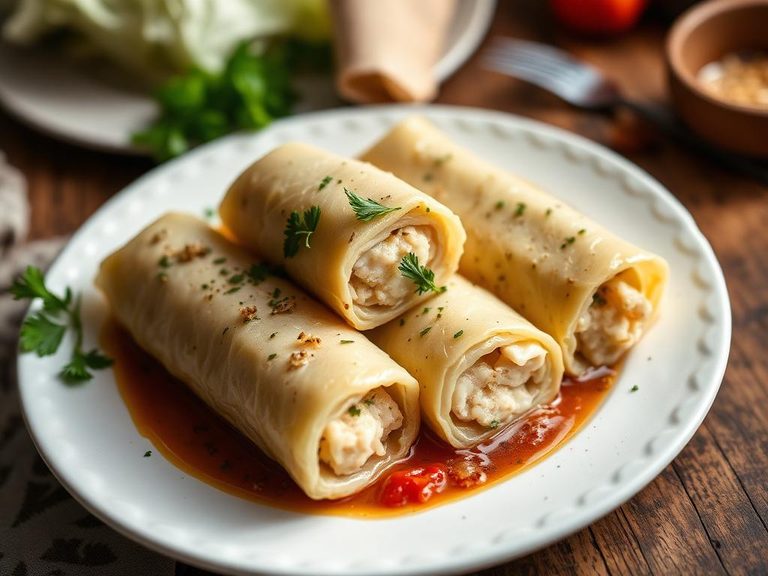
🌍 Where it's eaten
💡 Did you know?
The word 'gefilte' is Yiddish for 'stuffed,' referring to the original practice of stuffing the fish skin with the ground mixture, though modern recipes typically omit the skin.
Full nutrition (USDA data · scales with serving)
| Water | 79.1 g |
| Energy | 82.0 kcal |
| Protein | 10.4 g |
| Total lipid (fat) | 0.41 g |
| Carbohydrate, by difference | 8.7 g |
| Fiber, total dietary | 0.40 g |
| Total Sugars | 0.50 g |
| Calcium, Ca | 10.0 mg |
| Iron, Fe | 0.68 mg |
| Magnesium, Mg | 16.0 mg |
| Phosphorus, P | 183 mg |
| Potassium, K | 171 mg |
| Sodium, Na | 453 mg |
| Zinc, Zn | 0.28 mg |
| Copper, Cu | 0.04 mg |
| Selenium, Se | 15.4 ug |
| Vitamin C, total ascorbic acid | 0.50 mg |
| Thiamin | 0.12 mg |
| Riboflavin | 0.07 mg |
| Niacin | 1.3 mg |
| Vitamin B-6 | 0.08 mg |
| Folate, total | 21.0 ug |
| Folic acid | 14.0 ug |
| Folate, food | 8.0 ug |
| Folate, DFE | 31.0 ug |
| Choline, total | 40.7 mg |
| Vitamin B-12 | 1.1 ug |
| Vitamin B-12, added | 0.00 ug |
| Vitamin A, RAE | 1.0 ug |
| Retinol | 1.0 ug |
| Carotene, beta | 0.00 ug |
| Carotene, alpha | 0.00 ug |
| Cryptoxanthin, beta | 0.00 ug |
| Lycopene | 0.00 ug |
| Lutein + zeaxanthin | 2.0 ug |
| Vitamin E (alpha-tocopherol) | 0.33 mg |
| Vitamin E, added | 0.00 mg |
| Vitamin D (D2 + D3) | 0.30 ug |
| Vitamin K (phylloquinone) | 0.10 ug |
| Alcohol, ethyl | 0.00 g |
| Caffeine | 0.00 mg |
| Theobromine | 0.00 mg |
Fat & fatty acid profile (per 100g)
| Fatty acids, total saturated | 0.07 g |
| SFA 4:0 | 0.00 g |
| SFA 6:0 | 0.00 g |
| SFA 8:0 | 0.00 g |
| SFA 10:0 | 0.00 g |
| SFA 12:0 | 0.00 g |
| SFA 14:0 | 0.00 g |
| SFA 16:0 | 0.05 g |
| SFA 18:0 | 0.01 g |
| Fatty acids, total monounsaturated | 0.06 g |
| MUFA 16:1 | 0.00 g |
| MUFA 18:1 | 0.04 g |
| MUFA 20:1 | 0.00 g |
| MUFA 22:1 | 0.00 g |
| Fatty acids, total polyunsaturated | 0.15 g |
| PUFA 18:2 | 0.06 g |
| PUFA 18:3 | 0.00 g |
| PUFA 18:4 | 0.00 g |
| PUFA 20:4 | 0.01 g |
| PUFA 20:5 n-3 (EPA) | 0.02 g |
| PUFA 22:5 n-3 (DPA) | 0.00 g |
| PUFA 22:6 n-3 (DHA) | 0.06 g |
| Cholesterol | 28.0 mg |
Amino acid profile (per 100g)
Estimated from Fish, gefiltefish, commercial, sweet recipe — USDA does not publish this profile for Gefilte fish.
| Tryptophan | 0.09 g |
| Threonine | 0.49 g |
| Isoleucine | 0.49 g |
| Leucine | 0.81 g |
| Lysine | 0.84 g |
| Methionine | 0.26 g |
| Cystine | 0.11 g |
| Phenylalanine | 0.49 g |
| Tyrosine | 0.38 g |
| Valine | 0.55 g |
| Arginine | 0.59 g |
| Histidine | 0.26 g |
| Alanine | 0.55 g |
| Aspartic acid | 0.77 g |
| Glutamic acid | 1.8 g |
| Glycine | 0.40 g |
| Proline | 0.34 g |
| Serine | 0.47 g |
FAQ
Is gefilte fish healthy?
It can be a healthy choice as it's high in protein and very low in fat. However, watch for high sodium in store-bought versions and consider homemade preparations for better control over ingredients.
What does gefilte fish taste like?
It has a mild, savory, slightly sweet fish flavor with a soft, tender, and somewhat spongy texture. The taste is often complemented by the sharp heat of horseradish.
How is gefilte fish traditionally served?
Traditionally, it is served chilled in slices or as quenelles, often from a jellied broth, with a side of chrain (horseradish) and sometimes a carrot slice.
Nutrient density (calculated · NRF9.3)
Nutrient Rich Foods index: beneficial nutrients (protein, fiber, vitamins, minerals) minus saturated fat, added sugar & sodium, per 100 kcal.
NRF9.3 index — Fulgoni, Keast & Drewnowski, 2009. Computed from USDA nutrients.
Weight-loss friendliness (composite index)
Energy density 0.82 kcal/g · 51% calories from protein · 0.4 g fiber · 0.5 g sugar per 100 g.
Composite of energy density (Rolls et al., 1999), protein & fiber satiety, minus sugar. A calculated heuristic — ranks satiety-per-calorie, not a clinical measure.
Dietary load (calculated from USDA values)
Potential renal acid load. Positive = acid-forming, negative = alkaline-forming.
Sodium-to-potassium ratio: 2.65 (lower is better — aim for ≤ 1)
Sodium:potassium per WHO potassium guidance. Computed from USDA nutrients.