Gefilte fish-stuffed cabbage rolls
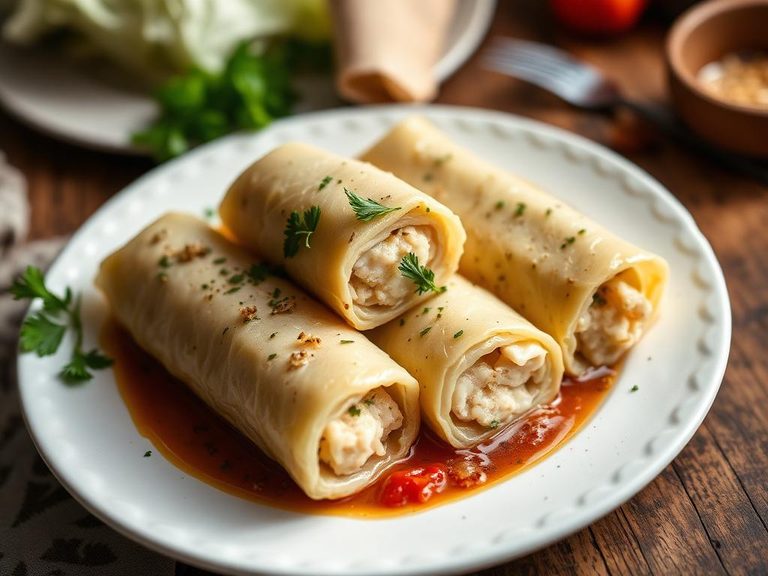
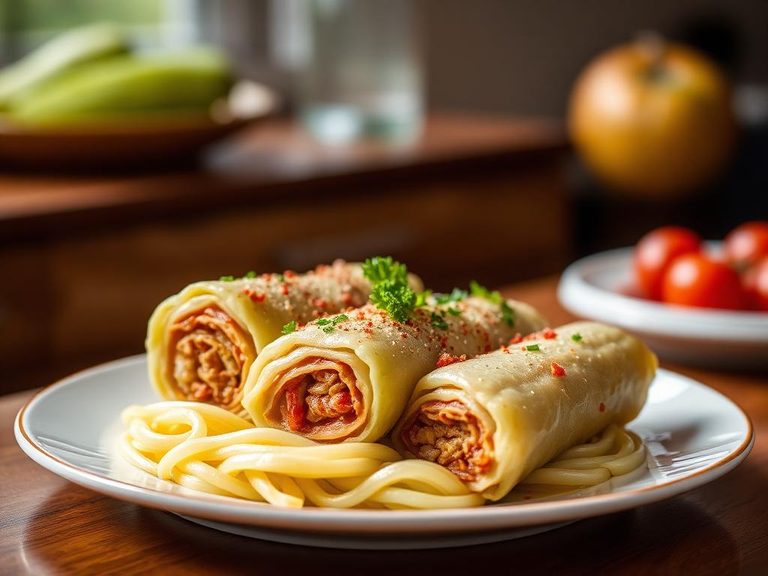
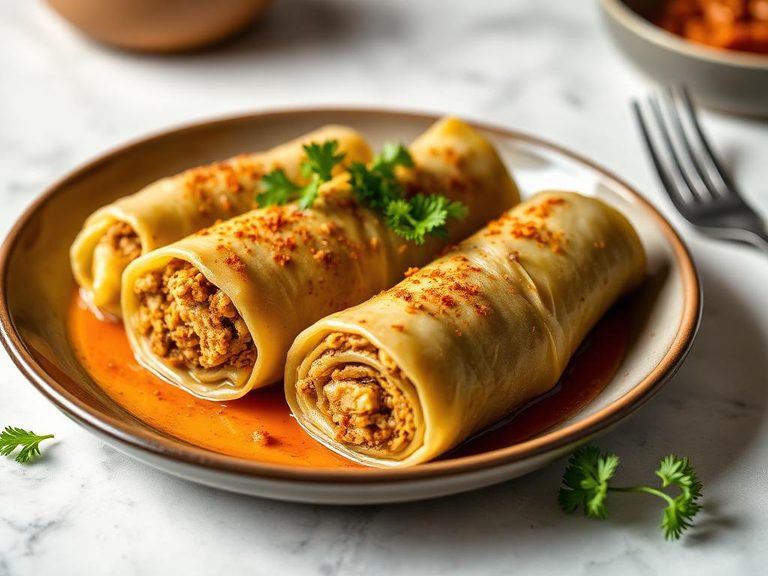
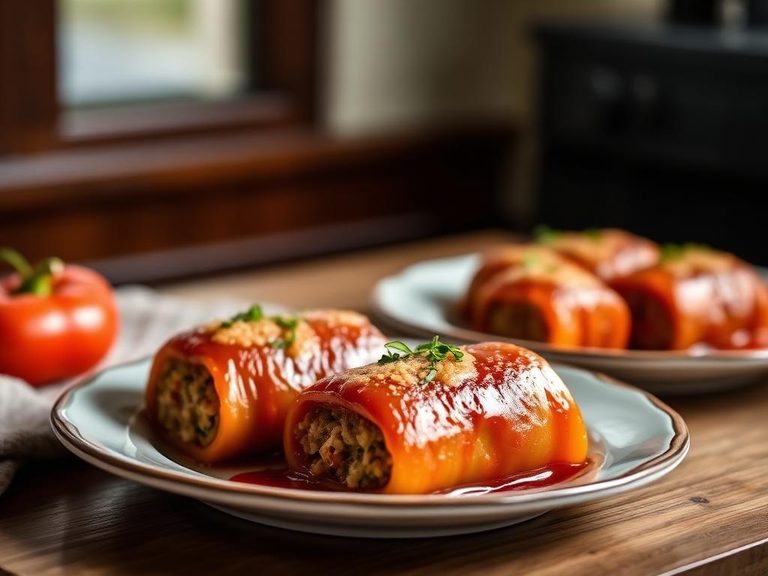
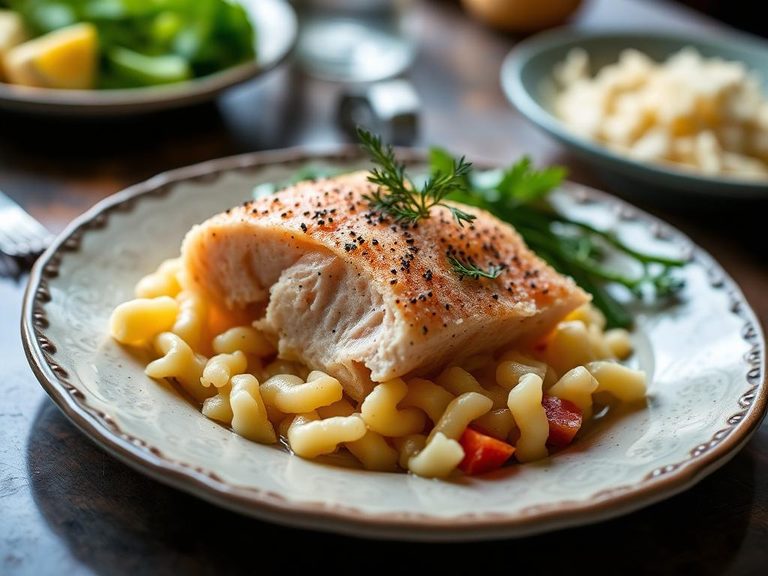
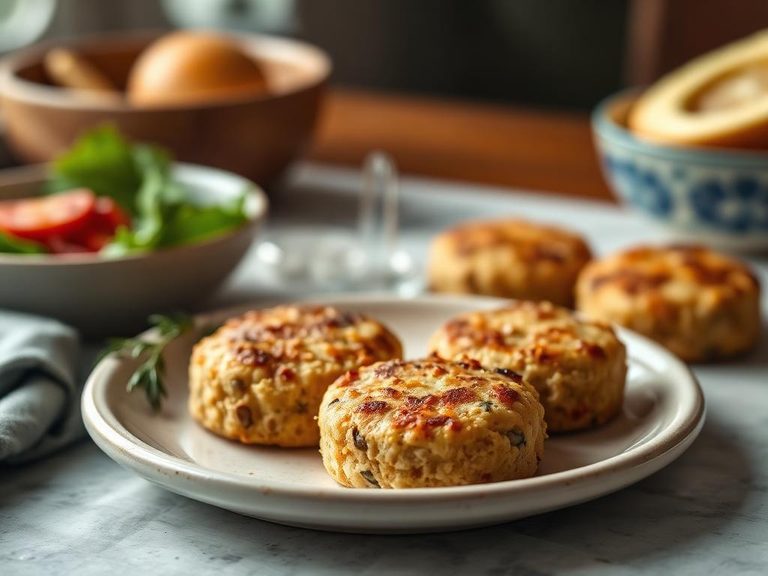
Gefilte fish-stuffed cabbage rolls are a creative fusion dish that combines the traditional Ashkenazi Jewish preparation of gefilte fish—a mixture of ground white fish, onions, and matzo meal—with the classic Eastern European technique of wrapping fillings in cabbage leaves. The rolls are typically simmered in a savory broth, often with carrots and onions, resulting in a tender, flavorful dish that bridges two culinary traditions.
🍽️ Nutrition at a glance
This dish is a good source of lean protein from the fish, with moderate carbohydrates from the cabbage and matzo meal, and relatively low fat. It provides key nutrients like B vitamins, selenium, and potassium, and a typical serving contains roughly 200-250 calories.
Nutrition breakdown
| Calories | 220 kcal |
| Protein | 18 g |
| Carbs | 22 g |
| Fat | 6 g |
| Fiber | 4 g |
| Sugar | 6 g |
| Sodium | 580 mg |
| Selenium | 22 mcg |
| Vitamin B12 | 1.8 mcg |
| Phosphorus | 210 mg |
| Potassium | 340 mg |
| Niacin (B3) | 3.2 mg |
| Vitamin C | 18 mg |
| Iron | 1.5 mg |
| Magnesium | 35 mg |
Per 2 medium cabbage rolls (approximately 240 g) · estimated, varies by recipe
💡 What's interesting
Culturally, this dish is a fascinating example of culinary adaptation within Jewish diaspora cuisine, merging the gefilte fish of Eastern European Jewish tables with the stuffed cabbage (holubtsi/golabki) traditions of neighboring regions. Nutritionally, the combination of fish and cabbage offers a balanced mix of high-quality protein and fiber-rich vegetables, making it a lighter alternative to meat-stuffed cabbage rolls.