

Fish, salmon, steamed
Common food

Photo: Wikipedia
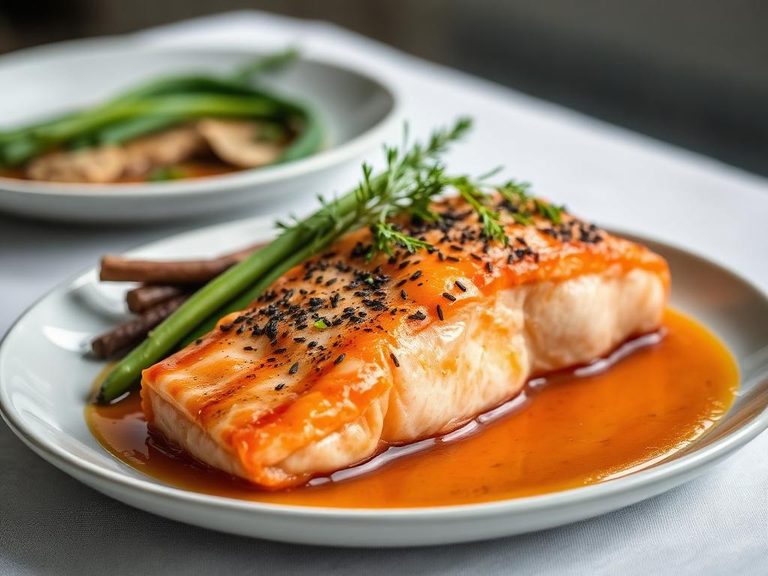
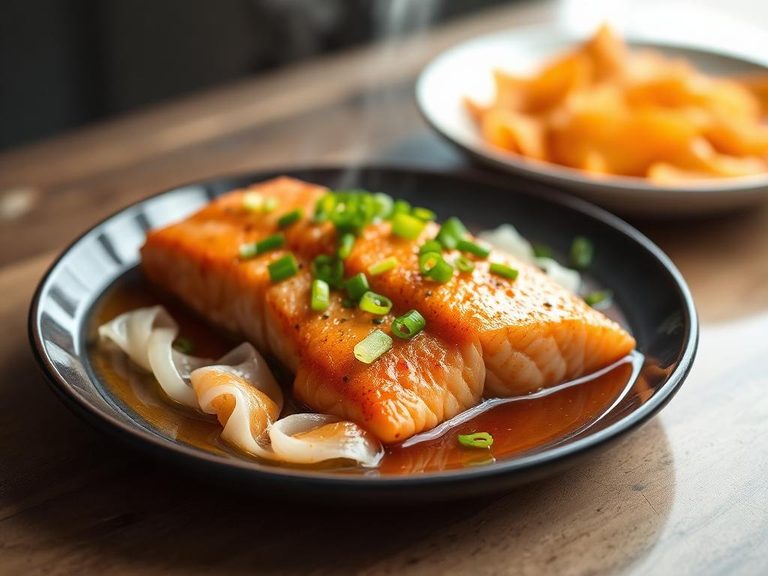
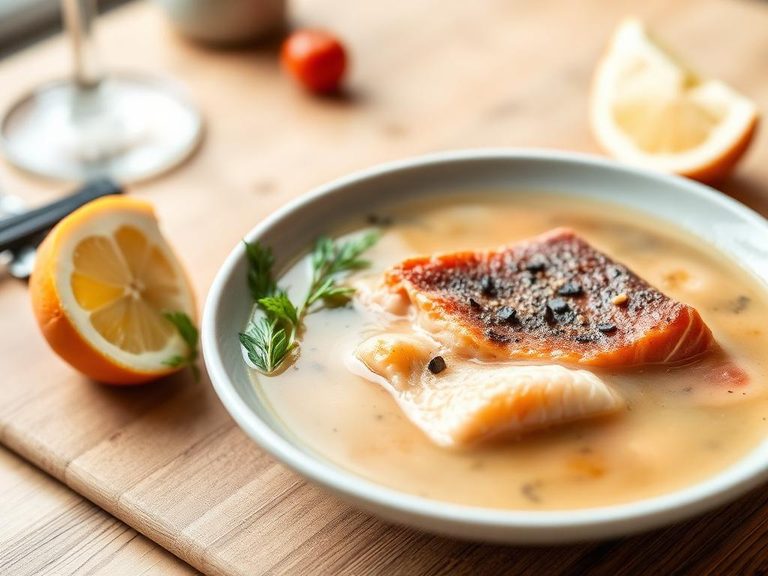
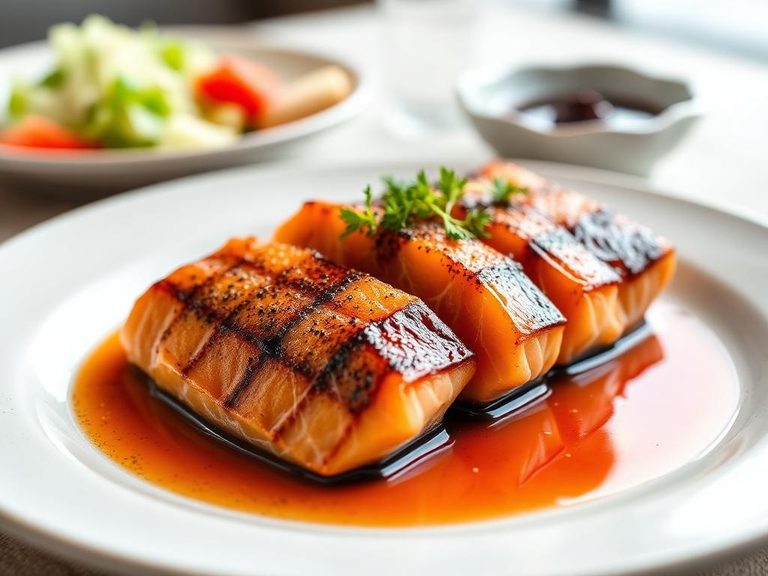
Steamed salmon is a delicate, moist preparation that highlights the fish's natural, buttery flavor and flaky, tender texture. This low-calorie, high-protein method preserves the salmon's rich omega-3 content without added fats, making it a clean and nourishing centerpiece. The result is a clean, pure taste of the ocean, often enhanced by simple aromatics.
Calorie split: 45% protein · 0% carbs · 55% fat
↓ Full nutrition💚 Why it's loved
People love steamed salmon for its clean, pure flavor that lets the quality of the fish shine, and for its incredibly tender, melt-in-your-mouth texture. It's a versatile, healthy staple in cuisines from Japan to Scandinavia, often served at celebrations and as a symbol of wholesome eating.
⚠️ Watch-outs & how to enjoy it better
Some may find the texture too soft or the flavor too mild without added sauces. As a common allergen, fish must be avoided by those with allergies. To counteract potential dryness, steam for a precise, short time (8-10 minutes per inch of thickness) and consider adding a splash of citrus or a light soy-based sauce at the table for brightness without heaviness.
Key benefits
- Excellent source of high-quality protein for muscle maintenance
- Rich in omega-3 fatty acids (EPA & DHA) for heart and brain health
- Naturally low in carbohydrates and sugars
- Provides essential nutrients like vitamin D and selenium
- Gentle cooking method preserves delicate nutrients
🍽️ Popular dishes
🌍 Where it's eaten
💡 Did you know?
The practice of steaming fish in paper or leaves, known as 'en papillote' in French, was historically a practical way to cook delicate fish over a campfire without it falling apart.
Full nutrition (USDA data · scales with serving)
| Water | 58.8 g |
| Energy | 237 kcal |
| Protein | 25.8 g |
| Total lipid (fat) | 14.1 g |
| Carbohydrate, by difference | 0.00 g |
| Fiber, total dietary | 0.00 g |
| Total Sugars | 0.00 g |
| Calcium, Ca | 11.0 mg |
| Iron, Fe | 0.44 mg |
| Magnesium, Mg | 34.0 mg |
| Phosphorus, P | 310 mg |
| Potassium, K | 460 mg |
| Sodium, Na | 177 mg |
| Zinc, Zn | 0.46 mg |
| Copper, Cu | 0.06 mg |
| Selenium, Se | 32.7 ug |
| Vitamin C, total ascorbic acid | 3.0 mg |
| Thiamin | 0.19 mg |
| Riboflavin | 0.17 mg |
| Niacin | 10.7 mg |
| Vitamin B-6 | 0.72 mg |
| Folate, total | 23.0 ug |
| Folic acid | 0.00 ug |
| Folate, food | 23.0 ug |
| Folate, DFE | 23.0 ug |
| Choline, total | 104 mg |
| Vitamin B-12 | 3.9 ug |
| Vitamin B-12, added | 0.00 ug |
| Vitamin A, RAE | 56.0 ug |
| Retinol | 56.0 ug |
| Carotene, beta | 0.00 ug |
| Carotene, alpha | 0.00 ug |
| Cryptoxanthin, beta | 0.00 ug |
| Lycopene | 0.00 ug |
| Lutein + zeaxanthin | 0.00 ug |
| Vitamin E (alpha-tocopherol) | 3.5 mg |
| Vitamin E, added | 0.00 mg |
| Vitamin D (D2 + D3) | 13.9 ug |
| Vitamin K (phylloquinone) | 0.60 ug |
| Alcohol, ethyl | 0.00 g |
| Caffeine | 0.00 mg |
| Theobromine | 0.00 mg |
Fat & fatty acid profile (per 100g)
| Fatty acids, total saturated | 3.1 g |
| SFA 4:0 | 0.00 g |
| SFA 6:0 | 0.00 g |
| SFA 8:0 | 0.00 g |
| SFA 10:0 | 0.00 g |
| SFA 12:0 | 0.00 g |
| SFA 14:0 | 0.59 g |
| SFA 16:0 | 1.9 g |
| SFA 18:0 | 0.50 g |
| Fatty acids, total monounsaturated | 4.0 g |
| MUFA 16:1 | 0.81 g |
| MUFA 18:1 | 2.8 g |
| MUFA 20:1 | 0.39 g |
| MUFA 22:1 | 0.01 g |
| Fatty acids, total polyunsaturated | 3.9 g |
| PUFA 18:2 | 0.88 g |
| PUFA 18:3 | 0.17 g |
| PUFA 18:4 | 0.14 g |
| PUFA 20:4 | 0.09 g |
| PUFA 20:5 n-3 (EPA) | 0.87 g |
| PUFA 22:5 n-3 (DPA) | 0.39 g |
| PUFA 22:6 n-3 (DHA) | 1.2 g |
| Cholesterol | 67.0 mg |
Amino acid profile (per 100g)
Estimated from Fish, fish sticks, frozen, prepared — USDA does not publish this profile for Fish.
| Tryptophan | 0.12 g |
| Threonine | 0.37 g |
| Isoleucine | 0.43 g |
| Leucine | 0.85 g |
| Lysine | 0.80 g |
| Methionine | 0.30 g |
| Phenylalanine | 0.47 g |
| Tyrosine | 0.29 g |
| Valine | 0.50 g |
| Arginine | 0.59 g |
| Histidine | 0.23 g |
| Alanine | 0.55 g |
| Aspartic acid | 0.82 g |
| Glutamic acid | 2.3 g |
| Glycine | 0.47 g |
| Proline | 0.78 g |
| Serine | 0.49 g |
| Hydroxyproline | 0.00 g |
FAQ
How do I know when steamed salmon is done?
It's done when the flesh turns from translucent to opaque pink and flakes easily with a fork. An internal temperature of 145°F (63°C) is the safe standard, but many prefer to pull it at 125-130°F for a more moist, medium finish.
What's the best way to prevent steamed salmon from sticking?
Use a non-stick steamer basket, parchment paper, or a bed of vegetables (like bok choy or cabbage) to create a barrier. Lightly oiling the salmon skin or the steamer surface also helps.
Can I use frozen salmon for steaming?
Yes, but for even cooking, it's best to thaw it completely in the refrigerator first. Pat it dry before seasoning and steaming to ensure the best texture.
Nutrient density (calculated · NRF9.3)
Nutrient Rich Foods index: beneficial nutrients (protein, fiber, vitamins, minerals) minus saturated fat, added sugar & sodium, per 100 kcal.
NRF9.3 index — Fulgoni, Keast & Drewnowski, 2009. Computed from USDA nutrients.
Weight-loss friendliness (composite index)
Energy density 2.37 kcal/g · 44% calories from protein · 0.0 g fiber · 0.0 g sugar per 100 g.
Composite of energy density (Rolls et al., 1999), protein & fiber satiety, minus sugar. A calculated heuristic — ranks satiety-per-calorie, not a clinical measure.
Dietary load (calculated from USDA values)
Potential renal acid load. Positive = acid-forming, negative = alkaline-forming.
Sodium-to-potassium ratio: 0.38 (lower is better — aim for ≤ 1)
Sodium:potassium per WHO potassium guidance. Computed from USDA nutrients.