Salmon Tataki
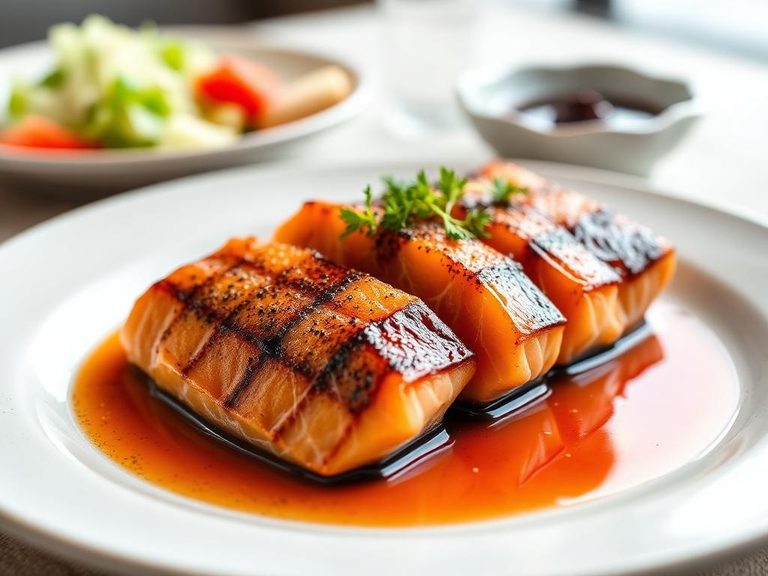
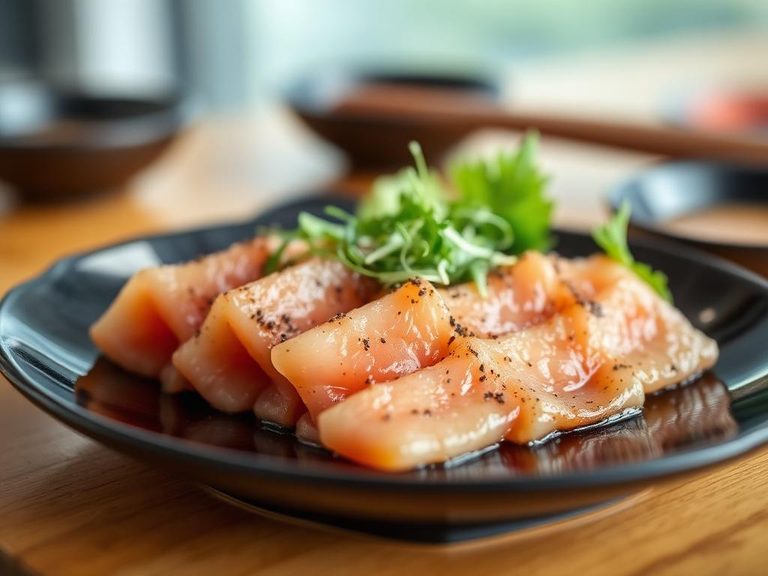
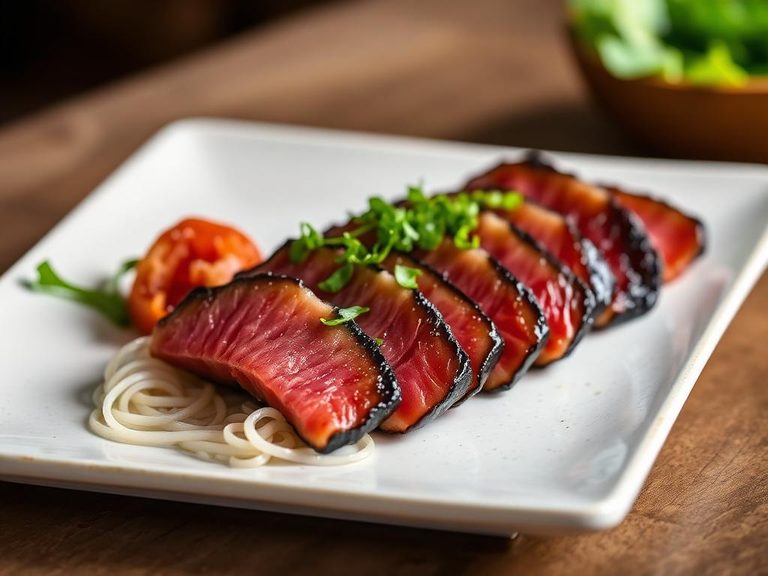
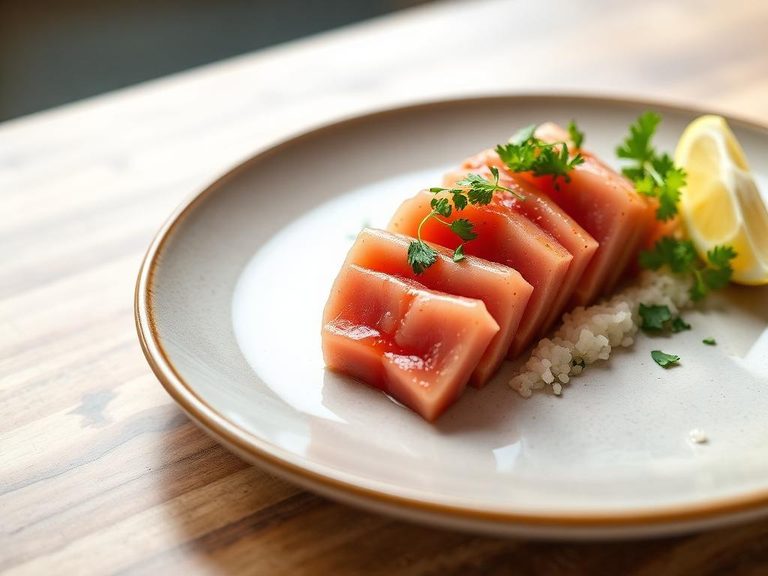
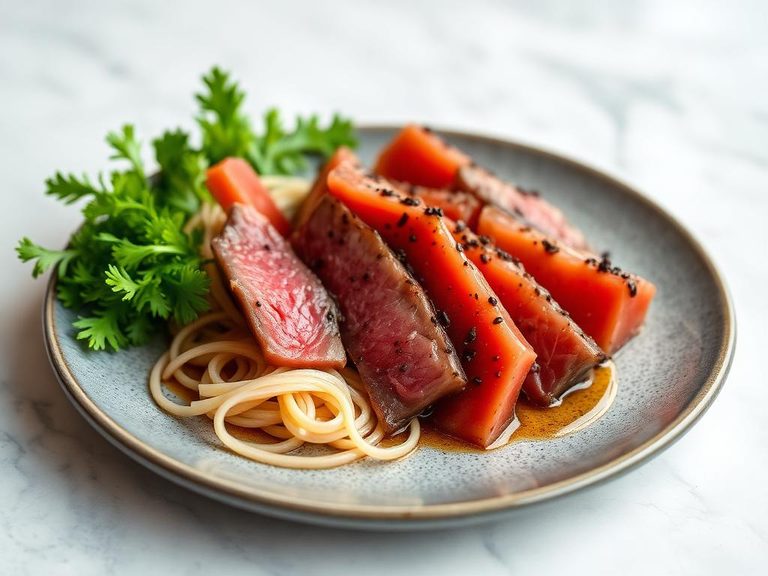
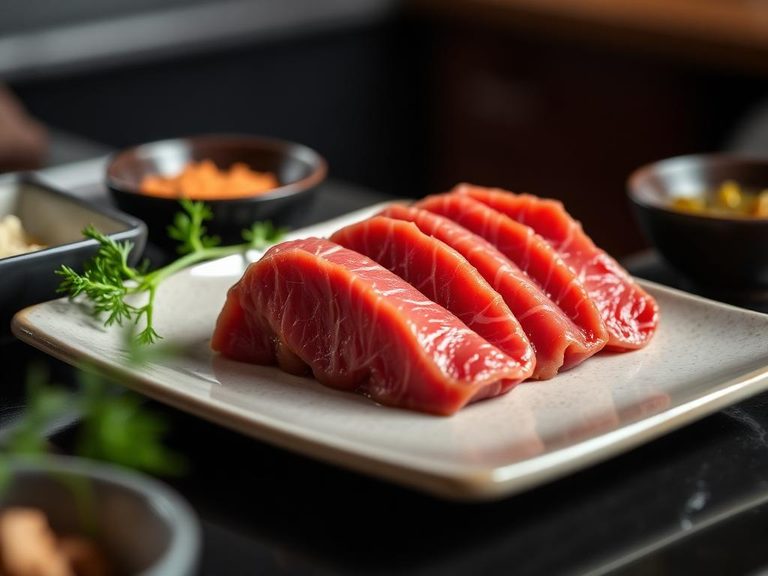
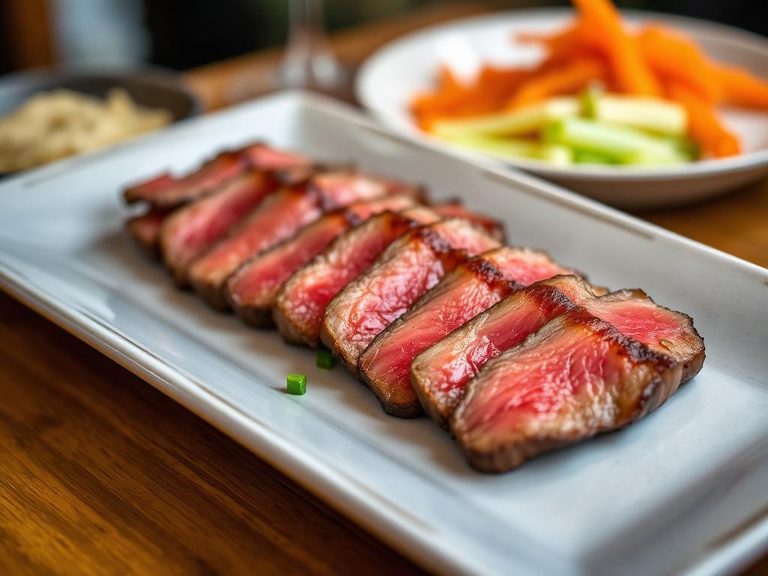
Salmon Tataki is a Japanese dish where salmon fillets are briefly seared at high heat, leaving the interior raw and tender, then sliced thin. It's typically served with ponzu sauce, grated ginger, and scallions, often as a light appetizer or sashimi-style dish. The technique originates from Japanese cuisine, emphasizing fresh, high-quality ingredients and minimal cooking to preserve texture and flavor.
🍽️ Nutrition at a glance
Salmon Tataki is high in protein and healthy fats, particularly omega-3 fatty acids, while being low in carbohydrates. A typical serving provides around 200-300 calories, along with essential nutrients like vitamin D, selenium, and B vitamins.
Nutrition breakdown
| Calories | 220 kcal |
| Protein | 26 g |
| Carbs | 1 g |
| Fat | 12 g |
| Fiber | 0 g |
| Sugar | 0 g |
| Sodium | 380 mg |
| Potassium | 450 mg |
| Vitamin D | 15 mcg |
| Vitamin B12 | 4.5 mcg |
| Niacin (B3) | 8.5 mg |
| Selenium | 35 mcg |
| Omega-3 (EPA+DHA) | 1.5 g |
| Phosphorus | 280 mg |
| Vitamin B6 | 0.6 mg |
Per 4 oz (113 g) · estimated, varies by recipe
💡 What's interesting
Culturally, tataki reflects the Japanese principle of 'umami' and balance, where the searing process enhances the fish's natural flavors without overpowering them. Nutritionally, it's a great source of anti-inflammatory omega-3s, which support heart and brain health, making it both a delicious and health-conscious choice.