

Fish, salmon, chinook, raw
Whole food · Finfish and Shellfish Products

Photo: Wikipedia
Chinook salmon, also known as King salmon, is the largest and most prized of the Pacific salmon species. Its raw flesh is a deep, vibrant orange-red with a rich, buttery flavor and a firm, melt-in-your-mouth texture. Nutritionally, it's a powerhouse of high-quality protein and heart-healthy omega-3 fats, containing virtually no carbohydrates.
Calorie split: 46% protein · 0% carbs · 54% fat
↓ Full nutrition💚 Why it's loved
People adore Chinook for its superior, luxurious flavor profile—often described as richer and more complex than other salmon—and its high fat content that keeps it incredibly moist and tender when cooked. Its versatility allows it to shine in everything from delicate sashimi to robust grilled fillets.
⚠️ Watch-outs & how to enjoy it better
As a top predator in the food chain, Chinook can accumulate higher levels of environmental contaminants like mercury and PCBs compared to smaller fish. To minimize risk, source from well-managed fisheries (like Alaska), vary your seafood choices, and trim any visible dark fat where contaminants concentrate. It is also a common fish allergen.
Key benefits
- Exceptionally high in complete protein for muscle repair and satiety.
- One of the richest dietary sources of long-chain omega-3 fatty acids (EPA & DHA).
- Provides significant amounts of vitamin D and selenium.
- Zero carbohydrates, making it ideal for low-carb and ketogenic diets.
🍽️ Popular dishes
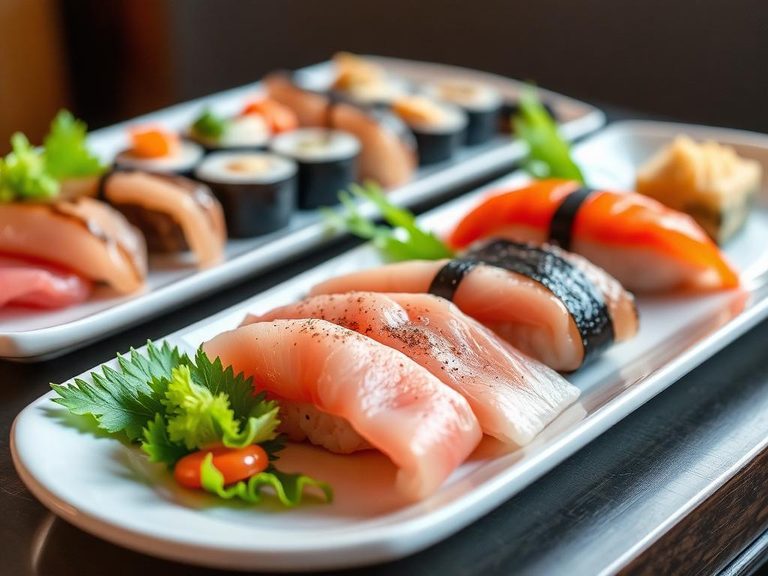
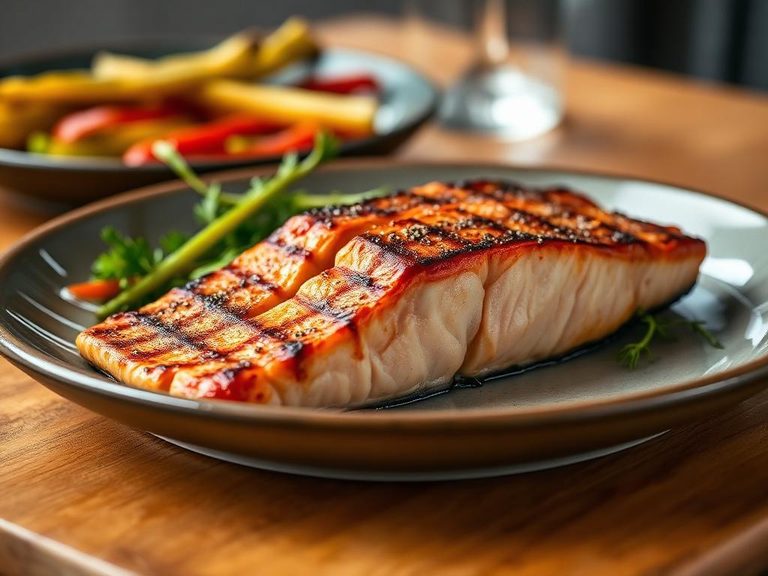
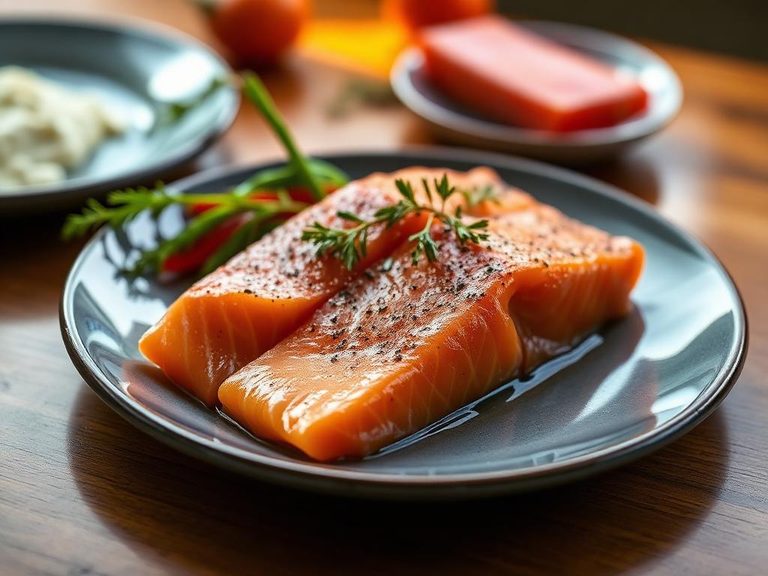
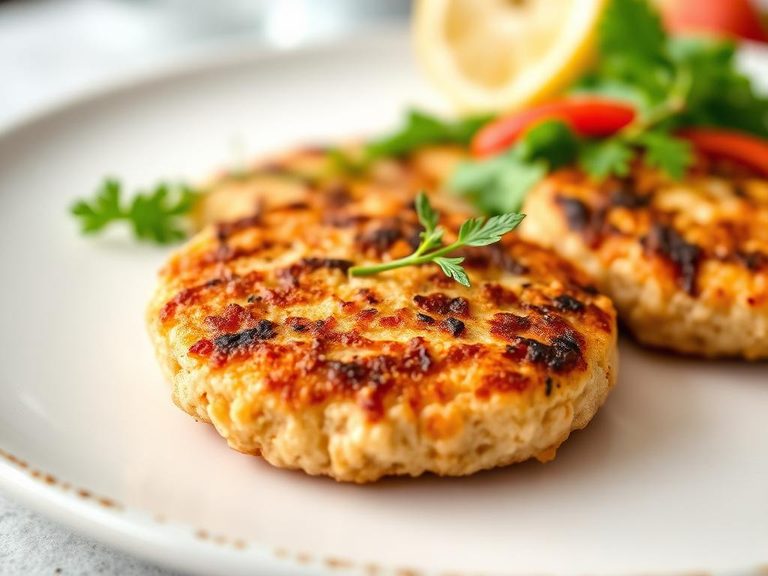
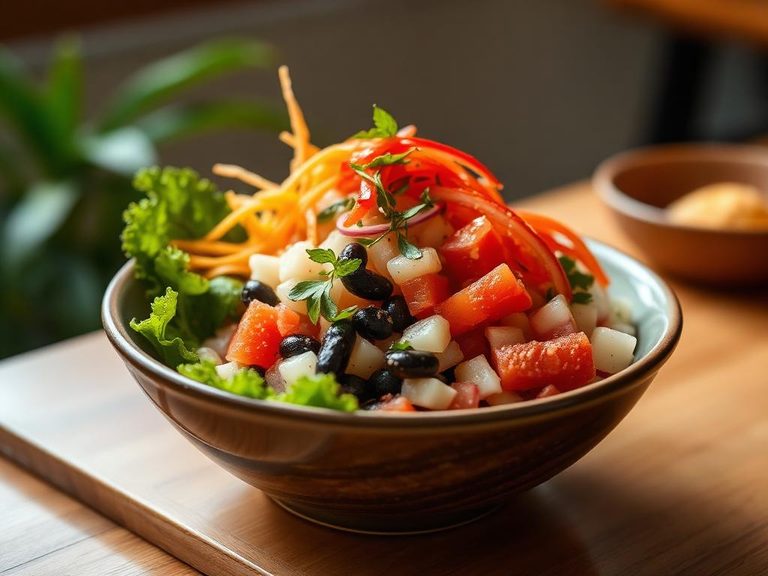
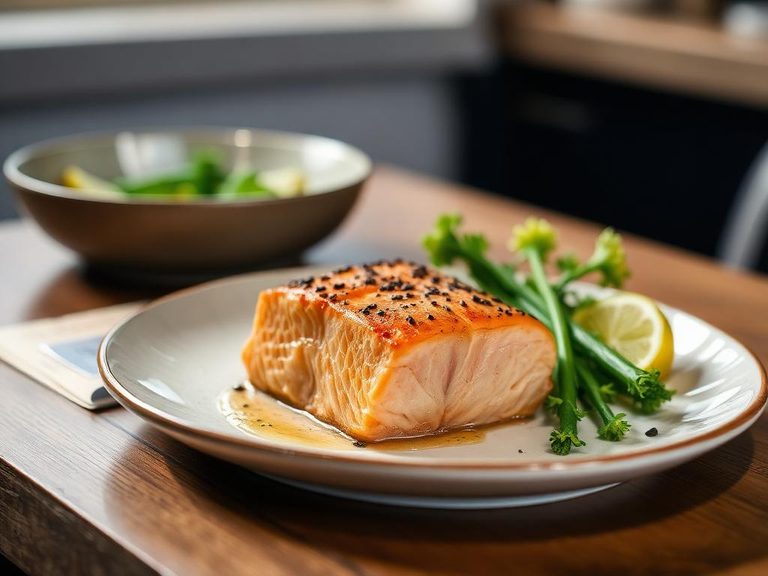
🌍 Where it's eaten
💡 Did you know?
Chinook salmon are anadromous, meaning they are born in freshwater, migrate to the ocean, and return to their exact natal stream to spawn—and they can grow to over 50 pounds (23 kg), earning them the 'King' moniker.
Full nutrition (USDA data · scales with serving)
| Water | 71.6 g |
| Energy | 179 kcal |
| Energy | 750 kj |
| Protein | 19.9 g |
| Total lipid (fat) | 10.4 g |
| Ash | 1.3 g |
| Carbohydrate, by difference | 0.00 g |
| Fiber, total dietary | 0.00 g |
| Total Sugars | 0.00 g |
| Calcium, Ca | 26.0 mg |
| Iron, Fe | 0.25 mg |
| Magnesium, Mg | 95.0 mg |
| Phosphorus, P | 289 mg |
| Potassium, K | 394 mg |
| Sodium, Na | 47.0 mg |
| Zinc, Zn | 0.44 mg |
| Copper, Cu | 0.04 mg |
| Manganese, Mn | 0.01 mg |
| Selenium, Se | 36.5 ug |
| Vitamin C, total ascorbic acid | 4.0 mg |
| Thiamin | 0.05 mg |
| Riboflavin | 0.11 mg |
| Niacin | 8.4 mg |
| Pantothenic acid | 0.75 mg |
| Vitamin B-6 | 0.40 mg |
| Folate, total | 30.0 ug |
| Folic acid | 0.00 ug |
| Folate, food | 30.0 ug |
| Folate, DFE | 30.0 ug |
| Vitamin B-12 | 1.3 ug |
| Vitamin A, RAE | 136 ug |
| Retinol | 136 ug |
| Carotene, beta | 0.00 ug |
| Carotene, alpha | 0.00 ug |
| Cryptoxanthin, beta | 0.00 ug |
| Vitamin A, IU | 453 iu |
| Lycopene | 0.00 ug |
| Lutein + zeaxanthin | 0.00 ug |
| Vitamin E (alpha-tocopherol) | 1.2 mg |
| Alcohol, ethyl | 0.00 g |
| Caffeine | 0.00 mg |
| Theobromine | 0.00 mg |
Fat & fatty acid profile (per 100g)
| Fatty acids, total saturated | 3.1 g |
| SFA 14:0 | 0.42 g |
| SFA 16:0 | 2.1 g |
| SFA 18:0 | 0.58 g |
| SFA 20:0 | 0.01 g |
| Fatty acids, total monounsaturated | 4.4 g |
| MUFA 16:1 | 0.91 g |
| MUFA 18:1 | 3.0 g |
| MUFA 20:1 | 0.34 g |
| MUFA 22:1 | 0.19 g |
| Fatty acids, total polyunsaturated | 2.8 g |
| PUFA 18:2 | 0.12 g |
| PUFA 18:3 | 0.09 g |
| PUFA 18:4 | 0.19 g |
| PUFA 20:4 | 0.15 g |
| PUFA 20:5 n-3 (EPA) | 1.0 g |
| PUFA 22:5 n-3 (DPA) | 0.30 g |
| PUFA 22:6 n-3 (DHA) | 0.94 g |
| Cholesterol | 50.0 mg |
Amino acid profile (per 100g)
| Tryptophan | 0.23 g |
| Threonine | 0.88 g |
| Isoleucine | 0.92 g |
| Leucine | 1.6 g |
| Lysine | 1.8 g |
| Methionine | 0.59 g |
| Cystine | 0.21 g |
| Phenylalanine | 0.78 g |
| Tyrosine | 0.68 g |
| Valine | 1.0 g |
| Arginine | 1.2 g |
| Histidine | 0.59 g |
| Alanine | 1.2 g |
| Aspartic acid | 2.1 g |
| Glutamic acid | 3.0 g |
| Glycine | 0.96 g |
| Proline | 0.71 g |
| Serine | 0.82 g |
FAQ
How is Chinook salmon different from other salmon?
Chinook (King) is the largest Pacific salmon, with the highest fat content, giving it a richer, buttery flavor and softer texture compared to the leaner, milder Sockeye (Red) or Coho (Silver).
Is raw Chinook salmon safe to eat?
When sourced from reputable suppliers and handled properly (kept cold, prepared hygienically), it is safe for dishes like sashimi. Freezing to specific temperatures also eliminates parasites.
What's the best way to cook it without drying it out?
Its high fat content makes it forgiving. Quick, high-heat methods like grilling, broiling, or pan-searing work well. Avoid overcooking; the internal temperature should reach 125°F (52°C) for medium-rare.
Nutrient density (calculated · NRF9.3)
Nutrient Rich Foods index: beneficial nutrients (protein, fiber, vitamins, minerals) minus saturated fat, added sugar & sodium, per 100 kcal.
NRF9.3 index — Fulgoni, Keast & Drewnowski, 2009. Computed from USDA nutrients.
Weight-loss friendliness (composite index)
Energy density 1.79 kcal/g · 45% calories from protein · 0.0 g fiber · 0.0 g sugar per 100 g.
Composite of energy density (Rolls et al., 1999), protein & fiber satiety, minus sugar. A calculated heuristic — ranks satiety-per-calorie, not a clinical measure.
Dietary load (calculated from USDA values)
Potential renal acid load. Positive = acid-forming, negative = alkaline-forming.
Sodium-to-potassium ratio: 0.12 (lower is better — aim for ≤ 1)
Sodium:potassium per WHO potassium guidance. Computed from USDA nutrients.