

Fish, salmon cake or patty
Common food

Photo: Wikipedia
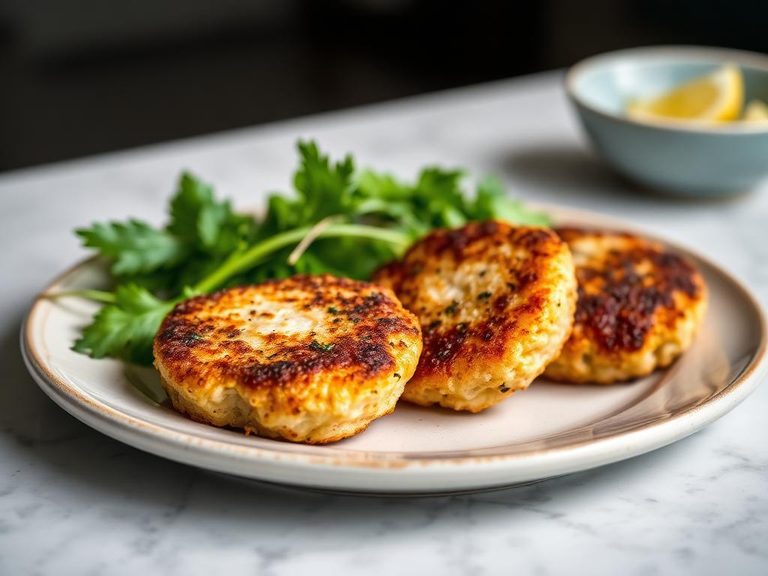
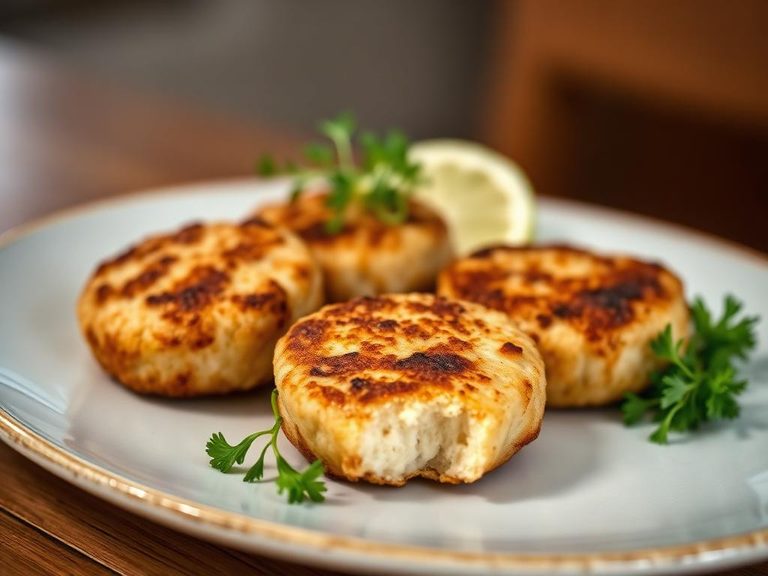
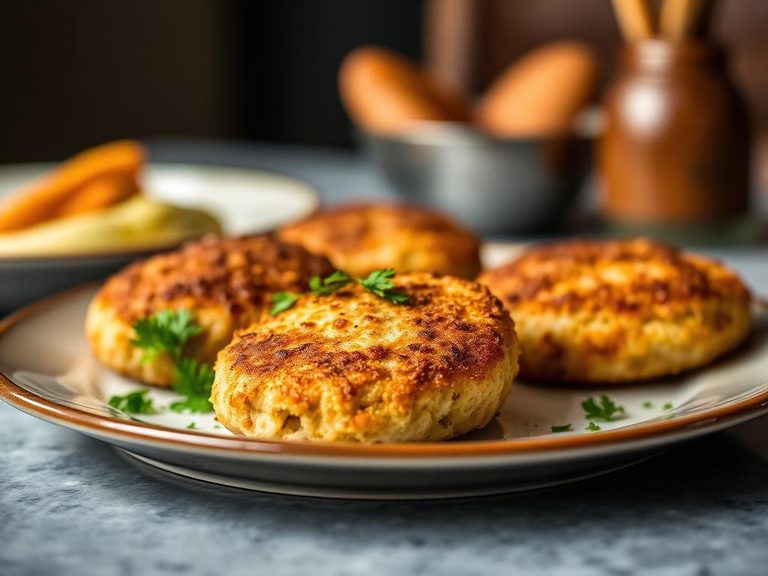
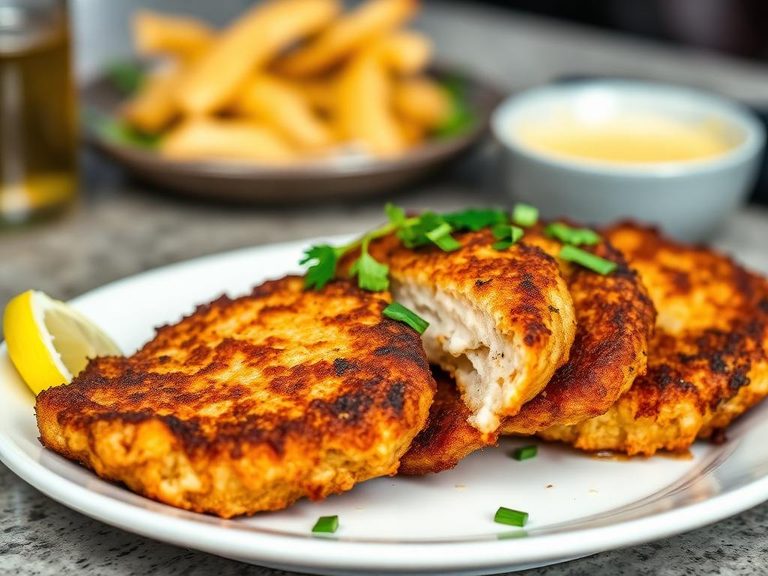
A salmon cake or patty is a savory, pan-fried or baked patty made from flaked salmon, often bound with breadcrumbs or egg. It boasts a crisp, golden-brown exterior giving way to a tender, flaky, and moist interior with a rich, savory seafood flavor. Nutritionally, it's a protein-packed powerhouse with a significant dose of healthy fats, particularly omega-3 fatty acids.
Calorie split: 23% protein · 6% carbs · 71% fat
↓ Full nutrition💚 Why it's loved
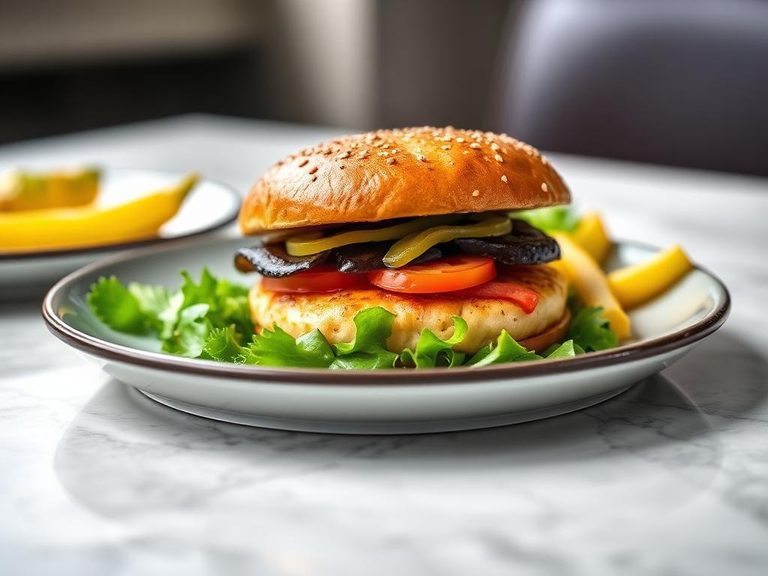
People love salmon cakes for their comforting, savory flavor and satisfying texture that's both crispy and tender. They are incredibly versatile, working as a quick weeknight dinner, elegant appetizer, or hearty sandwich filler.
⚠️ Watch-outs & how to enjoy it better
The primary downside is the potential for high sodium content, especially in pre-made or canned salmon varieties, which can be a concern for blood pressure management. To counteract this, opt for low-sodium canned salmon, rinse it before use, and season with herbs, lemon, and garlic instead of extra salt. Also, be mindful of added fillers (breadcrumbs, mayo) which can increase calories and refined carbs; choose whole-grain binders and bake instead of fry for a lighter option.
Key benefits
- Excellent source of high-quality protein for muscle maintenance.
- Rich in omega-3 fatty acids (EPA & DHA) for heart and brain health.
- Provides a good amount of vitamin D, especially if made with wild salmon.
- Contains selenium, an important antioxidant mineral.
- Offers a convenient way to increase fish intake.
🍽️ Popular dishes
🌍 Where it's eaten
💡 Did you know?
The practice of forming leftover cooked fish into patties or cakes is a centuries-old preservation and stretching technique found in cuisines worldwide, from British fish cakes to Japanese *salmon croquettes*.
Full nutrition (USDA data · scales with serving)
| Water | 55.7 g |
| Energy | 285 kcal |
| Protein | 16.1 g |
| Total lipid (fat) | 22.1 g |
| Carbohydrate, by difference | 4.5 g |
| Fiber, total dietary | 0.30 g |
| Total Sugars | 0.65 g |
| Calcium, Ca | 23.0 mg |
| Iron, Fe | 0.71 mg |
| Magnesium, Mg | 22.0 mg |
| Phosphorus, P | 198 mg |
| Potassium, K | 282 mg |
| Sodium, Na | 404 mg |
| Zinc, Zn | 0.48 mg |
| Copper, Cu | 0.05 mg |
| Selenium, Se | 22.3 ug |
| Vitamin C, total ascorbic acid | 1.9 mg |
| Thiamin | 0.17 mg |
| Riboflavin | 0.16 mg |
| Niacin | 6.1 mg |
| Vitamin B-6 | 0.41 mg |
| Folate, total | 27.0 ug |
| Folic acid | 4.0 ug |
| Folate, food | 23.0 ug |
| Folate, DFE | 30.0 ug |
| Choline, total | 95.7 mg |
| Vitamin B-12 | 2.2 ug |
| Vitamin B-12, added | 0.00 ug |
| Vitamin A, RAE | 51.0 ug |
| Retinol | 51.0 ug |
| Carotene, beta | 1.0 ug |
| Carotene, alpha | 0.00 ug |
| Cryptoxanthin, beta | 2.0 ug |
| Lycopene | 0.00 ug |
| Lutein + zeaxanthin | 54.0 ug |
| Vitamin E (alpha-tocopherol) | 3.4 mg |
| Vitamin E, added | 0.00 mg |
| Vitamin D (D2 + D3) | 7.7 ug |
| Vitamin K (phylloquinone) | 23.0 ug |
| Alcohol, ethyl | 0.00 g |
| Caffeine | 0.00 mg |
| Theobromine | 0.00 mg |
Fat & fatty acid profile (per 100g)
| Fatty acids, total saturated | 4.0 g |
| SFA 4:0 | 0.00 g |
| SFA 6:0 | 0.00 g |
| SFA 8:0 | 0.00 g |
| SFA 10:0 | 0.00 g |
| SFA 12:0 | 0.00 g |
| SFA 14:0 | 0.34 g |
| SFA 16:0 | 2.7 g |
| SFA 18:0 | 0.86 g |
| Fatty acids, total monounsaturated | 6.6 g |
| MUFA 16:1 | 0.49 g |
| MUFA 18:1 | 5.8 g |
| MUFA 20:1 | 0.27 g |
| MUFA 22:1 | 0.01 g |
| Fatty acids, total polyunsaturated | 9.1 g |
| PUFA 18:2 | 6.6 g |
| PUFA 18:3 | 0.91 g |
| PUFA 18:4 | 0.07 g |
| PUFA 20:4 | 0.06 g |
| PUFA 20:5 n-3 (EPA) | 0.48 g |
| PUFA 22:5 n-3 (DPA) | 0.21 g |
| PUFA 22:6 n-3 (DHA) | 0.63 g |
| Cholesterol | 83.0 mg |
Amino acid profile (per 100g)
Estimated from Fish, fish sticks, frozen, prepared — USDA does not publish this profile for Fish.
| Tryptophan | 0.12 g |
| Threonine | 0.37 g |
| Isoleucine | 0.43 g |
| Leucine | 0.85 g |
| Lysine | 0.80 g |
| Methionine | 0.30 g |
| Phenylalanine | 0.47 g |
| Tyrosine | 0.29 g |
| Valine | 0.50 g |
| Arginine | 0.59 g |
| Histidine | 0.23 g |
| Alanine | 0.55 g |
| Aspartic acid | 0.82 g |
| Glutamic acid | 2.3 g |
| Glycine | 0.47 g |
| Proline | 0.78 g |
| Serine | 0.49 g |
| Hydroxyproline | 0.00 g |
FAQ
Are salmon cakes healthy?
Yes, they can be very healthy. They are an excellent source of protein and omega-3 fatty acids. The overall healthiness depends on preparation: baking is healthier than frying, and using whole-grain binders and minimal added salt maximizes their nutritional benefits.
Can I use canned salmon for salmon cakes?
Absolutely. Canned salmon is a traditional, economical, and convenient base for salmon cakes. Be sure to drain it well and remove any skin or bones (the bones are soft and edible, providing calcium).
What is the best way to cook salmon cakes?
Pan-frying in a little oil gives the best crispy crust. Baking at 400°F (200°C) on a parchment-lined sheet is a healthier, hands-off method. You can also air-fry them for a crispy texture with less oil.
Nutrient density (calculated · NRF9.3)
Nutrient Rich Foods index: beneficial nutrients (protein, fiber, vitamins, minerals) minus saturated fat, added sugar & sodium, per 100 kcal.
NRF9.3 index — Fulgoni, Keast & Drewnowski, 2009. Computed from USDA nutrients.
Weight-loss friendliness (composite index)
Energy density 2.85 kcal/g · 23% calories from protein · 0.3 g fiber · 0.7 g sugar per 100 g.
Composite of energy density (Rolls et al., 1999), protein & fiber satiety, minus sugar. A calculated heuristic — ranks satiety-per-calorie, not a clinical measure.
Dietary load (calculated from USDA values)
Potential renal acid load. Positive = acid-forming, negative = alkaline-forming.
Sodium-to-potassium ratio: 1.43 (lower is better — aim for ≤ 1)
Sodium:potassium per WHO potassium guidance. Computed from USDA nutrients.