

Fish, cake or patty
Common food

Photo: Wikipedia
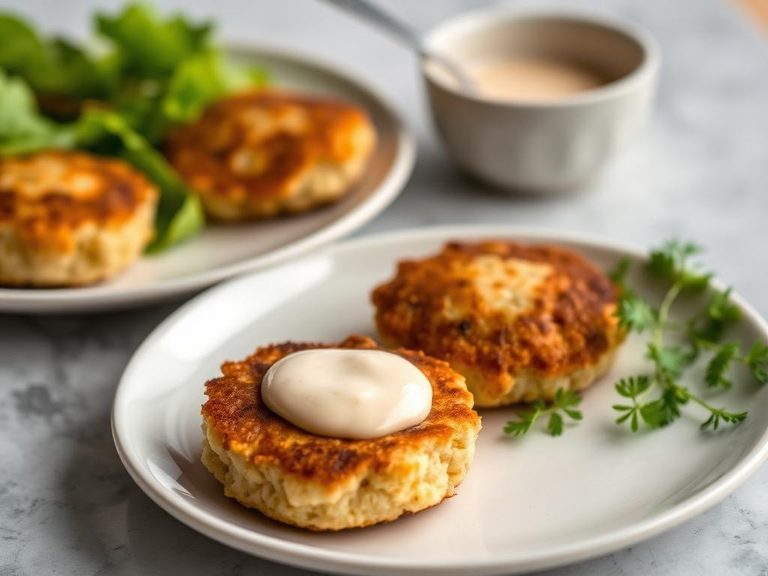
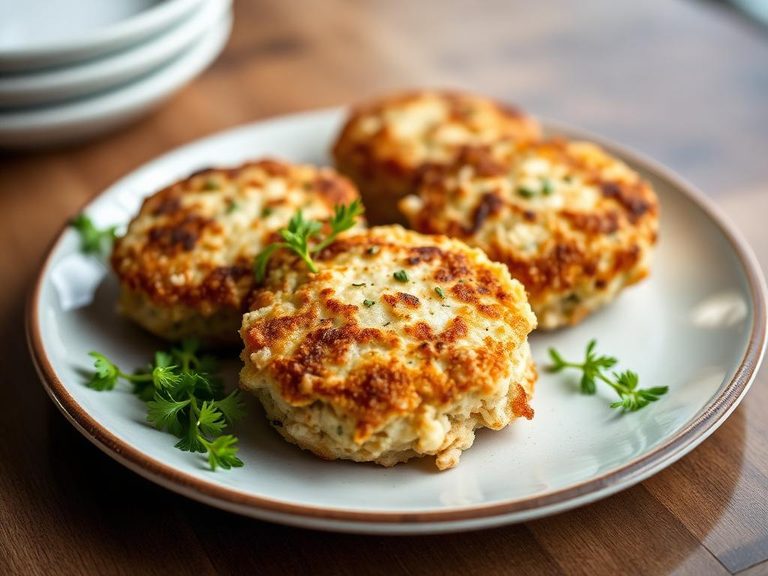
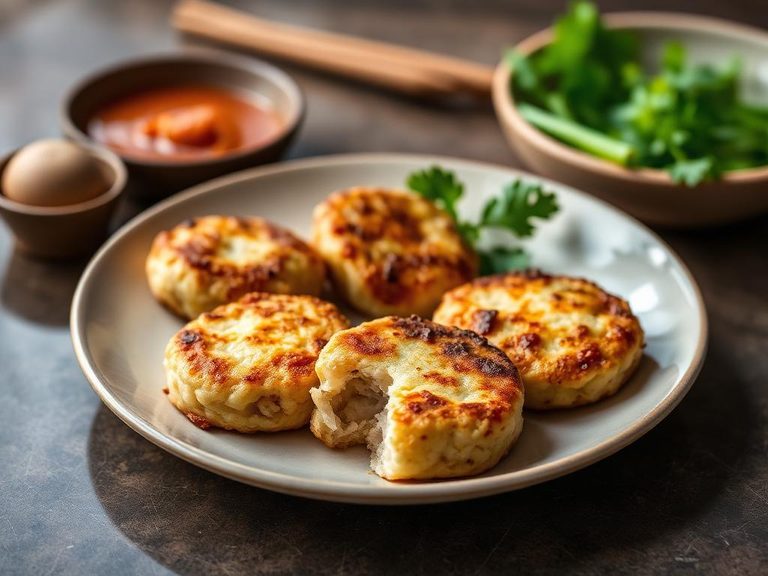
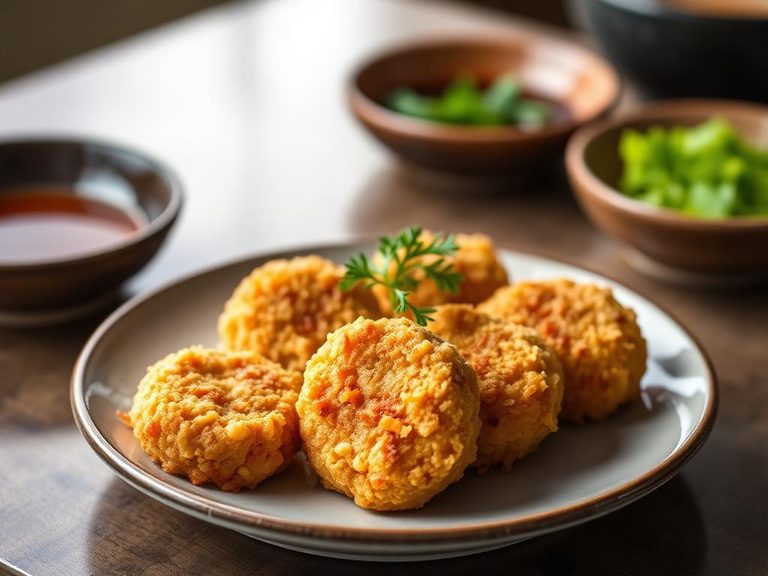
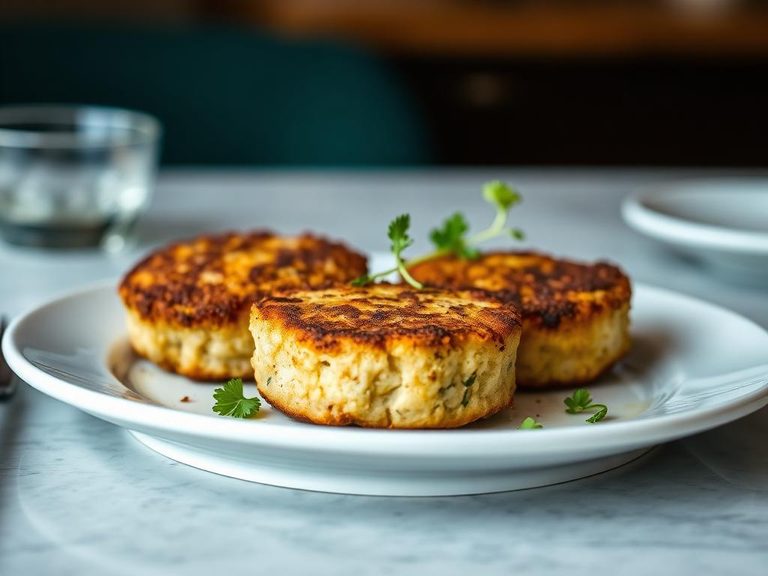
A golden, crispy fish cake or patty is a savory blend of flaked fish, potatoes, and seasonings, pan-fried to a satisfying crunch with a tender, flaky interior. It delivers a balanced nutritional profile with a notable protein punch and a moderate calorie count, making it a hearty yet approachable meal. The texture is a delightful contrast between the crunchy exterior and the soft, moist center, often enhanced by herbs like dill or parsley.
Calorie split: 26% protein · 20% carbs · 54% fat
↓ Full nutrition💚 Why it's loved
People adore fish cakes for their comforting, home-cooked appeal and the way they transform simple ingredients into a flavorful, crispy delight. They are incredibly versatile, easily paired with tartar sauce, remoulade, or a fresh salad, and hold a special place in many coastal and comfort food traditions.
⚠️ Watch-outs & how to enjoy it better
Some may be cautious due to potential sodium content from seasoning or binding agents, and the use of common allergens like fish, wheat, or eggs. To counteract, opt for homemade versions with reduced salt, use gluten-free breadcrumbs if needed, and pair with a side of steamed vegetables or a light salad to balance the meal and add fiber.
Key benefits
- Good source of protein for muscle maintenance
- Moderate calorie density for a satisfying meal
- Contains healthy fats from fish, supporting heart health
- Provides some dietary fiber from binding ingredients like potatoes or breadcrumbs
- Versatile base for various flavor profiles and cuisines
🍽️ Popular dishes
🌍 Where it's eaten
💡 Did you know?
The term 'fish cake' can refer to a wide variety of preparations, from the Japanese 'kamaboko' (a processed fish paste cake) to the Nordic 'fiskekaker,' which are often made with cod and potatoes and are a staple in Scandinavian cuisine.
Full nutrition (USDA data · scales with serving)
| Water | 61.7 g |
| Energy | 212 kcal |
| Protein | 13.6 g |
| Total lipid (fat) | 12.6 g |
| Carbohydrate, by difference | 10.4 g |
| Fiber, total dietary | 1.2 g |
| Total Sugars | 1.0 g |
| Calcium, Ca | 34.0 mg |
| Iron, Fe | 0.72 mg |
| Magnesium, Mg | 30.0 mg |
| Phosphorus, P | 179 mg |
| Potassium, K | 430 mg |
| Sodium, Na | 429 mg |
| Zinc, Zn | 0.56 mg |
| Copper, Cu | 0.03 mg |
| Selenium, Se | 22.0 ug |
| Vitamin C, total ascorbic acid | 0.50 mg |
| Thiamin | 0.12 mg |
| Riboflavin | 0.13 mg |
| Niacin | 2.0 mg |
| Vitamin B-6 | 0.19 mg |
| Folate, total | 14.0 ug |
| Folic acid | 4.0 ug |
| Folate, food | 11.0 ug |
| Folate, DFE | 17.0 ug |
| Choline, total | 68.3 mg |
| Vitamin B-12 | 0.64 ug |
| Vitamin B-12, added | 0.00 ug |
| Vitamin A, RAE | 47.0 ug |
| Retinol | 46.0 ug |
| Carotene, beta | 11.0 ug |
| Carotene, alpha | 0.00 ug |
| Cryptoxanthin, beta | 1.0 ug |
| Lycopene | 0.00 ug |
| Lutein + zeaxanthin | 32.0 ug |
| Vitamin E (alpha-tocopherol) | 1.2 mg |
| Vitamin E, added | 0.00 mg |
| Vitamin D (D2 + D3) | 0.80 ug |
| Vitamin K (phylloquinone) | 6.1 ug |
| Alcohol, ethyl | 0.00 g |
| Caffeine | 0.00 mg |
| Theobromine | 0.00 mg |
Fat & fatty acid profile (per 100g)
| Fatty acids, total saturated | 3.9 g |
| SFA 4:0 | 0.05 g |
| SFA 6:0 | 0.04 g |
| SFA 8:0 | 0.02 g |
| SFA 10:0 | 0.06 g |
| SFA 12:0 | 0.07 g |
| SFA 14:0 | 0.25 g |
| SFA 16:0 | 2.0 g |
| SFA 18:0 | 1.3 g |
| Fatty acids, total monounsaturated | 4.6 g |
| MUFA 16:1 | 0.07 g |
| MUFA 18:1 | 4.4 g |
| MUFA 20:1 | 0.02 g |
| MUFA 22:1 | 0.00 g |
| Fatty acids, total polyunsaturated | 3.1 g |
| PUFA 18:2 | 2.7 g |
| PUFA 18:3 | 0.22 g |
| PUFA 18:4 | 0.00 g |
| PUFA 20:4 | 0.02 g |
| PUFA 20:5 n-3 (EPA) | 0.00 g |
| PUFA 22:5 n-3 (DPA) | 0.01 g |
| PUFA 22:6 n-3 (DHA) | 0.08 g |
| Cholesterol | 60.0 mg |
Amino acid profile (per 100g)
Estimated from Fish, fish sticks, frozen, prepared — USDA does not publish this profile for Fish.
| Tryptophan | 0.12 g |
| Threonine | 0.37 g |
| Isoleucine | 0.43 g |
| Leucine | 0.85 g |
| Lysine | 0.80 g |
| Methionine | 0.30 g |
| Phenylalanine | 0.47 g |
| Tyrosine | 0.29 g |
| Valine | 0.50 g |
| Arginine | 0.59 g |
| Histidine | 0.23 g |
| Alanine | 0.55 g |
| Aspartic acid | 0.82 g |
| Glutamic acid | 2.3 g |
| Glycine | 0.47 g |
| Proline | 0.78 g |
| Serine | 0.49 g |
| Hydroxyproline | 0.00 g |
FAQ
Are fish cakes healthy?
Fish cakes can be a nutritious option, offering protein and healthy fats from fish, but their healthiness depends on preparation. Baked or pan-fried versions with minimal oil are healthier than deep-fried ones, and homemade recipes allow control over sodium and additives.
Can I freeze fish cakes?
Yes, fish cakes freeze well. Place them in a single layer on a baking sheet to freeze individually, then transfer to a freezer bag. They can be stored for up to 3 months and reheated in the oven or pan for best texture.
What fish is best for fish cakes?
White fish like cod, haddock, or pollock are traditional choices due to their mild flavor and flaky texture. Salmon or tuna can also be used for a richer taste, and mixing fish types can add complexity.
Nutrient density (calculated · NRF9.3)
Nutrient Rich Foods index: beneficial nutrients (protein, fiber, vitamins, minerals) minus saturated fat, added sugar & sodium, per 100 kcal.
NRF9.3 index — Fulgoni, Keast & Drewnowski, 2009. Computed from USDA nutrients.
Weight-loss friendliness (composite index)
Energy density 2.12 kcal/g · 26% calories from protein · 1.2 g fiber · 1.0 g sugar per 100 g.
Composite of energy density (Rolls et al., 1999), protein & fiber satiety, minus sugar. A calculated heuristic — ranks satiety-per-calorie, not a clinical measure.
Dietary load (calculated from USDA values)
Potential renal acid load. Positive = acid-forming, negative = alkaline-forming.
Sodium-to-potassium ratio: 1.00 (lower is better — aim for ≤ 1)
Sodium:potassium per WHO potassium guidance. Computed from USDA nutrients.