

Tuna cake or patty
Common food
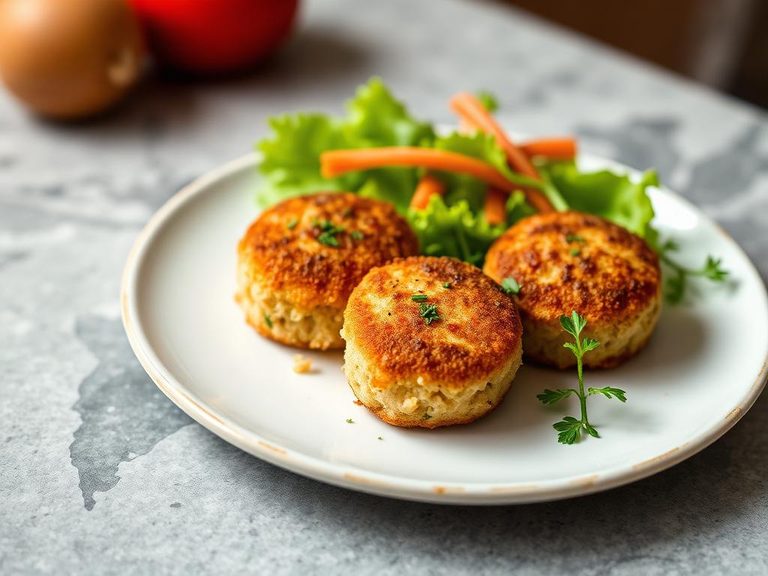
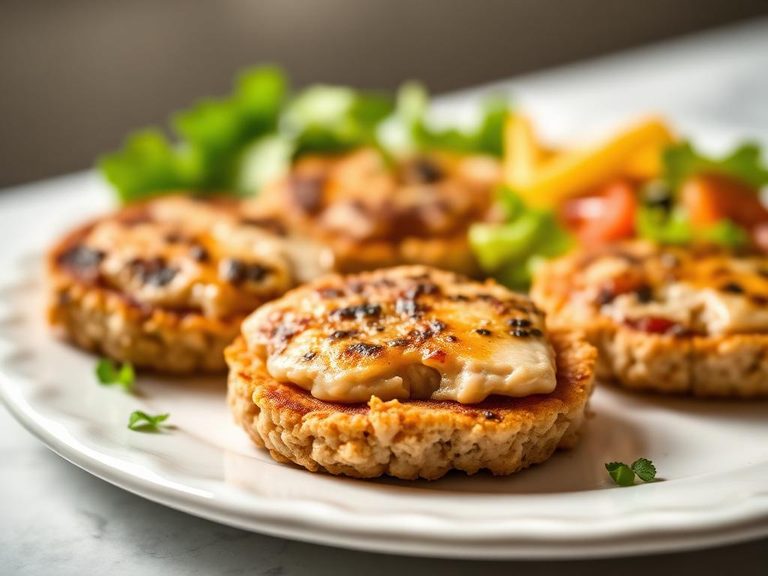
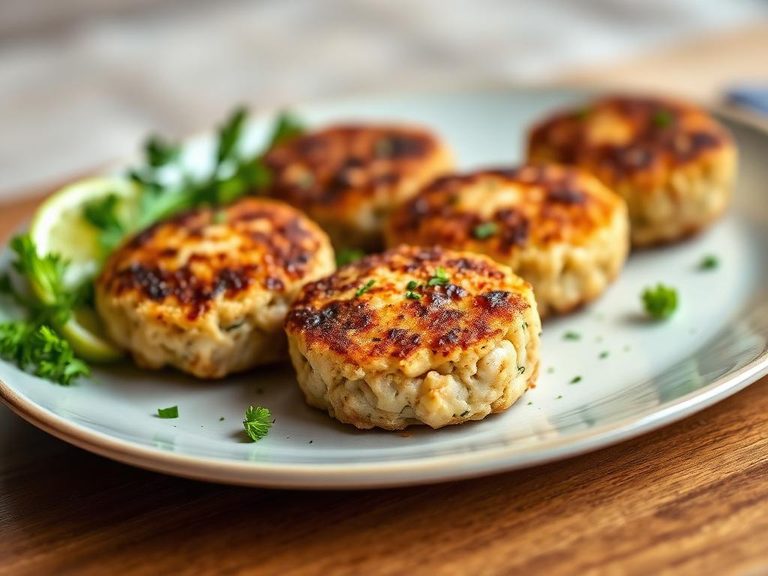
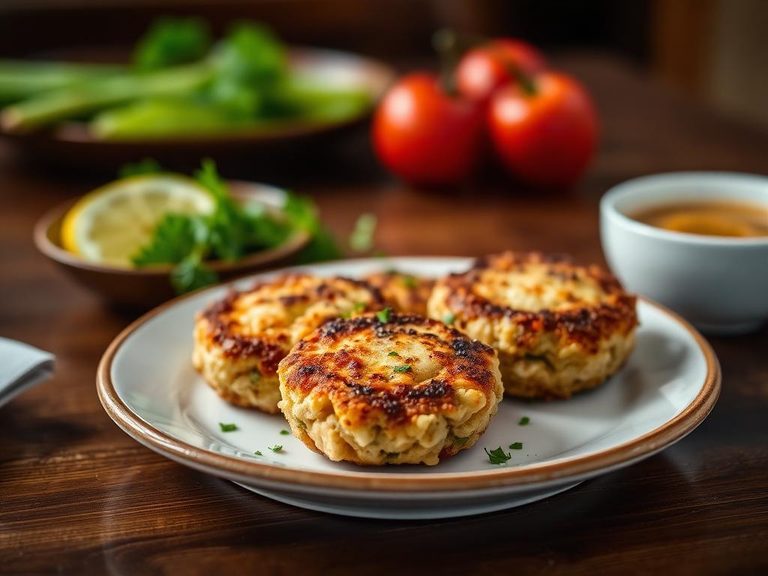
A tuna cake or patty is a savory, pan-fried or baked patty made primarily from canned or fresh tuna, bound with ingredients like egg, breadcrumbs, and seasonings. It offers a crispy exterior with a tender, flaky, and moist interior, delivering a rich, oceanic flavor. Nutritionally, it is a high-protein, low-carbohydrate food, making it a popular choice for those seeking a lean, satisfying meal.
Calorie split: 30% protein · 5% carbs · 65% fat
↓ Full nutrition💚 Why it's loved
People love tuna cakes for their savory, umami-rich flavor and satisfying texture that can be enjoyed hot or cold. Their versatility allows them to be served as a main course, appetizer, or salad topping, fitting into various cuisines and meal plans.
⚠️ Watch-outs & how to enjoy it better
Some may find them high in sodium, especially when made with canned tuna and added seasonings, which can be a concern for those monitoring blood pressure. They can also be a common allergen due to fish and potential binders like wheat or eggs. To counteract, choose low-sodium tuna, rinse it well, and use gluten-free binders if needed; pairing with a fresh, acidic salad can help balance the richness.
Key benefits
- Excellent source of complete protein for muscle repair and satiety
- Very low in carbohydrates and sugars, suitable for low-carb diets
- Rich in omega-3 fatty acids, which support heart and brain health
- Provides essential nutrients like selenium, vitamin D, and B12
- Offers a convenient way to incorporate fish into the diet
🍽️ Popular dishes
🌍 Where it's eaten
💡 Did you know?
The canned tuna used in most tuna cakes was originally developed as a military ration in the early 20th century, transforming tuna from a luxury canned item into a global pantry staple.
Full nutrition (USDA data · scales with serving)
| Water | 65.7 g |
| Energy | 206 kcal |
| Protein | 15.3 g |
| Total lipid (fat) | 14.9 g |
| Carbohydrate, by difference | 2.6 g |
| Fiber, total dietary | 0.20 g |
| Total Sugars | 0.49 g |
| Calcium, Ca | 25.0 mg |
| Iron, Fe | 1.5 mg |
| Magnesium, Mg | 19.0 mg |
| Phosphorus, P | 124 mg |
| Potassium, K | 155 mg |
| Sodium, Na | 372 mg |
| Zinc, Zn | 0.66 mg |
| Copper, Cu | 0.05 mg |
| Selenium, Se | 52.5 ug |
| Vitamin C, total ascorbic acid | 0.30 mg |
| Thiamin | 0.05 mg |
| Riboflavin | 0.11 mg |
| Niacin | 7.3 mg |
| Vitamin B-6 | 0.22 mg |
| Folate, total | 12.0 ug |
| Folic acid | 2.0 ug |
| Folate, food | 10.0 ug |
| Folate, DFE | 13.0 ug |
| Choline, total | 53.4 mg |
| Vitamin B-12 | 1.8 ug |
| Vitamin B-12, added | 0.00 ug |
| Vitamin A, RAE | 30.0 ug |
| Retinol | 30.0 ug |
| Carotene, beta | 1.0 ug |
| Carotene, alpha | 0.00 ug |
| Cryptoxanthin, beta | 2.0 ug |
| Lycopene | 0.00 ug |
| Lutein + zeaxanthin | 51.0 ug |
| Vitamin E (alpha-tocopherol) | 1.6 mg |
| Vitamin E, added | 0.00 mg |
| Vitamin D (D2 + D3) | 1.1 ug |
| Vitamin K (phylloquinone) | 23.1 ug |
| Alcohol, ethyl | 0.00 g |
| Caffeine | 0.00 mg |
| Theobromine | 0.00 mg |
Fat & fatty acid profile (per 100g)
| Fatty acids, total saturated | 2.4 g |
| SFA 4:0 | 0.00 g |
| SFA 6:0 | 0.00 g |
| SFA 8:0 | 0.00 g |
| SFA 10:0 | 0.00 g |
| SFA 12:0 | 0.00 g |
| SFA 14:0 | 0.02 g |
| SFA 16:0 | 1.7 g |
| SFA 18:0 | 0.61 g |
| Fatty acids, total monounsaturated | 4.4 g |
| MUFA 16:1 | 0.06 g |
| MUFA 18:1 | 4.3 g |
| MUFA 20:1 | 0.06 g |
| MUFA 22:1 | 0.00 g |
| Fatty acids, total polyunsaturated | 7.2 g |
| PUFA 18:2 | 6.1 g |
| PUFA 18:3 | 0.82 g |
| PUFA 18:4 | 0.00 g |
| PUFA 20:4 | 0.02 g |
| PUFA 20:5 n-3 (EPA) | 0.02 g |
| PUFA 22:5 n-3 (DPA) | 0.00 g |
| PUFA 22:6 n-3 (DHA) | 0.14 g |
| Cholesterol | 71.0 mg |
FAQ
Can tuna cakes be made ahead of time?
Yes, they are excellent for meal prep. Cook them, let them cool completely, and store them in an airtight container in the refrigerator for up to 3 days, or freeze them for up to 3 months. Reheat in a skillet or oven to maintain crispiness.
What can I use instead of breadcrumbs as a binder?
Common alternatives include crushed crackers, oats, almond flour, or mashed potatoes. For a low-carb version, try using grated Parmesan cheese or a small amount of mayonnaise and egg.
How do I prevent tuna cakes from falling apart?
Ensure the mixture isn't too wet; drain the tuna thoroughly. Use enough binder (like egg and breadcrumbs) to hold it together, and chill the mixture for 30 minutes before forming patties. Pan-fry in a well-oiled skillet over medium heat until a golden crust forms, which helps seal them.
Nutrient density (calculated · NRF9.3)
Nutrient Rich Foods index: beneficial nutrients (protein, fiber, vitamins, minerals) minus saturated fat, added sugar & sodium, per 100 kcal.
NRF9.3 index — Fulgoni, Keast & Drewnowski, 2009. Computed from USDA nutrients.
Weight-loss friendliness (composite index)
Energy density 2.06 kcal/g · 30% calories from protein · 0.2 g fiber · 0.5 g sugar per 100 g.
Composite of energy density (Rolls et al., 1999), protein & fiber satiety, minus sugar. A calculated heuristic — ranks satiety-per-calorie, not a clinical measure.
Dietary load (calculated from USDA values)
Potential renal acid load. Positive = acid-forming, negative = alkaline-forming.
Sodium-to-potassium ratio: 2.40 (lower is better — aim for ≤ 1)
Sodium:potassium per WHO potassium guidance. Computed from USDA nutrients.