

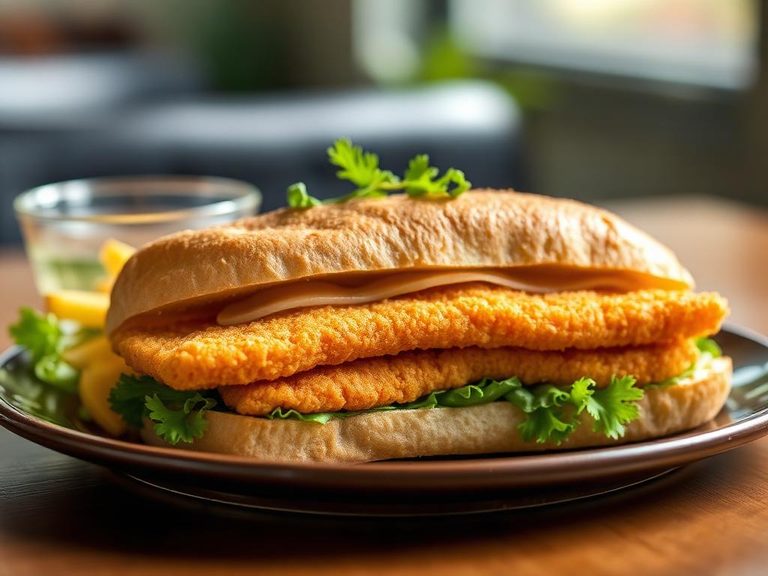
Salmon cake sandwich
Common food

Photo: Wikipedia
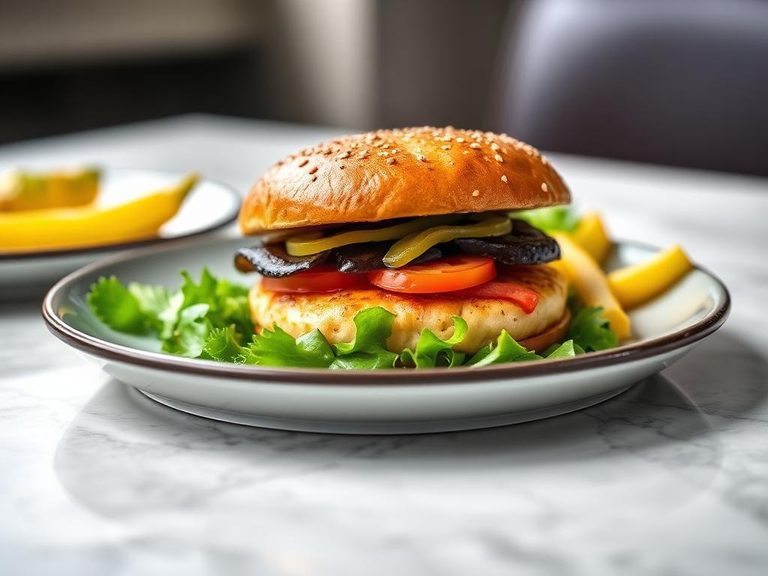
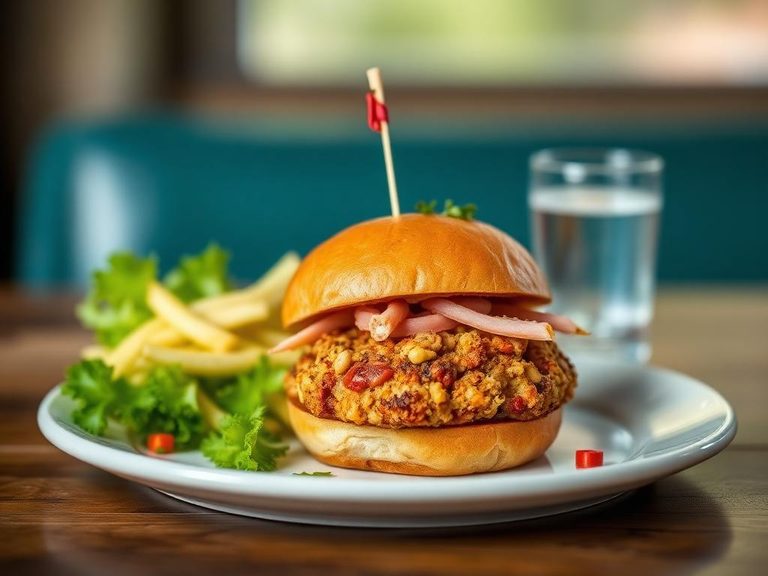
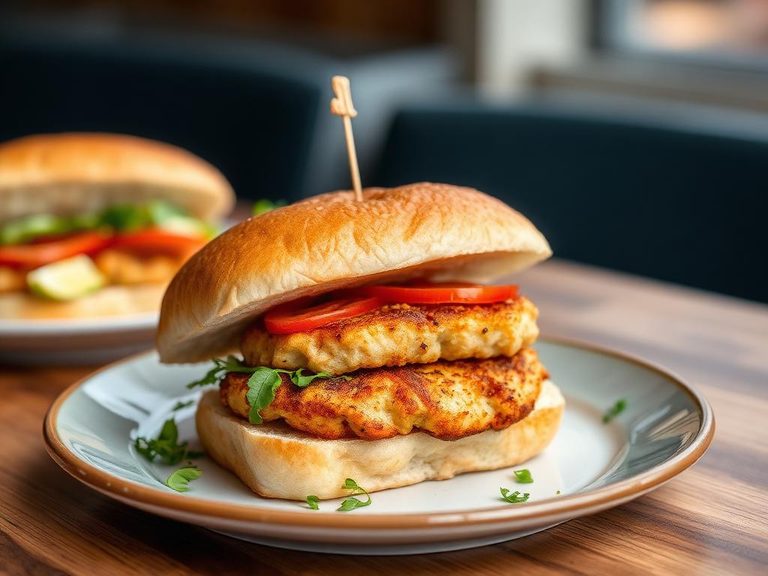
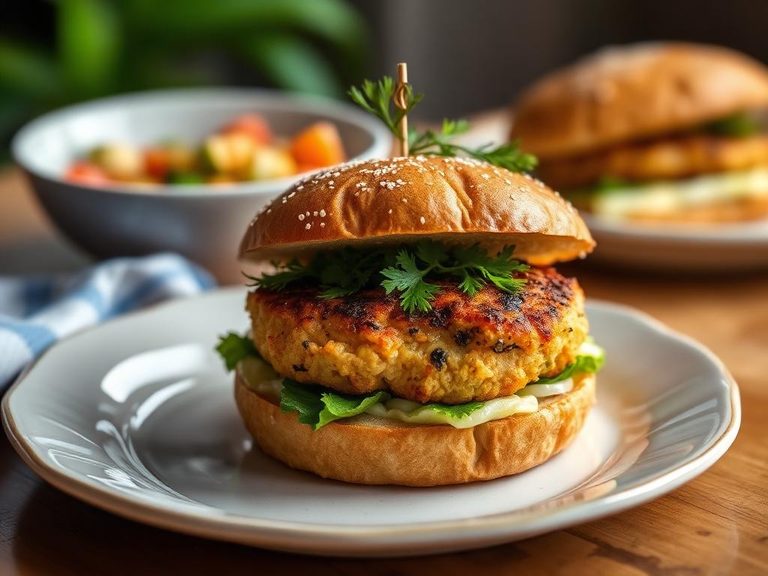
A golden, crispy patty of flaked salmon and breadcrumbs, often served between two slices of bread or a soft roll. The texture is a delightful contrast of a crunchy exterior and a moist, flaky interior, with a savory, slightly briny flavor. It's a protein-rich meal with a moderate calorie count, making it a satisfying yet balanced choice.
Calorie split: 20% protein · 28% carbs · 52% fat
↓ Full nutrition💚 Why it's loved
People love it for the comforting, familiar flavors of the sea combined with the satisfying crunch of a well-fried patty. It's a versatile dish that can be dressed up with gourmet sauces or enjoyed simply, bridging the gap between casual and special-occasion meals.
⚠️ Watch-outs & how to enjoy it better
The frying process can add significant fat and calories, and store-bought versions may be high in sodium. To counteract this, bake or air-fry the patties instead of pan-frying, and pair the sandwich with a fresh, leafy green salad or a side of steamed vegetables to add fiber and balance the meal.
Key benefits
- Excellent source of high-quality protein for muscle maintenance.
- Provides omega-3 fatty acids, beneficial for heart and brain health.
- A good source of B vitamins, particularly B12 and niacin.
- Contains selenium, an important antioxidant mineral.
- Offers a convenient way to incorporate fish into the diet.
🍽️ Popular dishes
🌍 Where it's eaten
💡 Did you know?
The concept of a 'fish cake' sandwich is often traced back to the 19th-century American fishery industry, where leftover salmon was minced and formed into patties to be sold cheaply to workers.
Full nutrition (USDA data · scales with serving)
| Water | 49.0 g |
| Energy | 279 kcal |
| Protein | 13.9 g |
| Total lipid (fat) | 15.9 g |
| Carbohydrate, by difference | 19.4 g |
| Fiber, total dietary | 1.0 g |
| Total Sugars | 2.2 g |
| Calcium, Ca | 85.0 mg |
| Iron, Fe | 1.6 mg |
| Magnesium, Mg | 24.0 mg |
| Phosphorus, P | 170 mg |
| Potassium, K | 227 mg |
| Sodium, Na | 419 mg |
| Zinc, Zn | 0.62 mg |
| Copper, Cu | 0.08 mg |
| Selenium, Se | 22.6 ug |
| Vitamin C, total ascorbic acid | 1.3 mg |
| Thiamin | 0.28 mg |
| Riboflavin | 0.19 mg |
| Niacin | 5.7 mg |
| Vitamin B-6 | 0.30 mg |
| Folate, total | 55.0 ug |
| Folic acid | 32.0 ug |
| Folate, food | 24.0 ug |
| Folate, DFE | 77.0 ug |
| Choline, total | 68.7 mg |
| Vitamin B-12 | 1.5 ug |
| Vitamin B-12, added | 0.00 ug |
| Vitamin A, RAE | 34.0 ug |
| Retinol | 34.0 ug |
| Carotene, beta | 0.00 ug |
| Carotene, alpha | 0.00 ug |
| Cryptoxanthin, beta | 1.0 ug |
| Lycopene | 0.00 ug |
| Lutein + zeaxanthin | 51.0 ug |
| Vitamin E (alpha-tocopherol) | 2.3 mg |
| Vitamin E, added | 0.00 mg |
| Vitamin D (D2 + D3) | 5.2 ug |
| Vitamin K (phylloquinone) | 15.4 ug |
| Alcohol, ethyl | 0.00 g |
| Caffeine | 0.00 mg |
| Theobromine | 0.00 mg |
Fat & fatty acid profile (per 100g)
| Fatty acids, total saturated | 3.0 g |
| SFA 4:0 | 0.00 g |
| SFA 6:0 | 0.00 g |
| SFA 8:0 | 0.00 g |
| SFA 10:0 | 0.00 g |
| SFA 12:0 | 0.00 g |
| SFA 14:0 | 0.23 g |
| SFA 16:0 | 1.9 g |
| SFA 18:0 | 0.66 g |
| Fatty acids, total monounsaturated | 4.6 g |
| MUFA 16:1 | 0.34 g |
| MUFA 18:1 | 4.1 g |
| MUFA 20:1 | 0.18 g |
| MUFA 22:1 | 0.01 g |
| Fatty acids, total polyunsaturated | 6.7 g |
| PUFA 18:2 | 5.0 g |
| PUFA 18:3 | 0.67 g |
| PUFA 18:4 | 0.05 g |
| PUFA 20:4 | 0.04 g |
| PUFA 20:5 n-3 (EPA) | 0.32 g |
| PUFA 22:5 n-3 (DPA) | 0.14 g |
| PUFA 22:6 n-3 (DHA) | 0.42 g |
| Cholesterol | 56.0 mg |
FAQ
Is a salmon cake sandwich healthy?
It can be a nutritious choice, providing protein and omega-3s. However, its healthiness depends on the preparation method (baked vs. fried) and the type of bread used. Opting for whole-grain bread and baking the patty can make it a well-balanced meal.
What is the difference between a salmon cake and a salmon burger?
A salmon cake is typically made with flaked cooked salmon mixed with binders like breadcrumbs or eggs, while a salmon burger is usually made from ground or minced raw salmon formed into a patty. Cakes are often more textured and may include other ingredients like herbs or vegetables.
Can I make salmon cake sandwiches ahead of time?
Yes, you can prepare the salmon patties in advance and refrigerate them for up to 24 hours or freeze them for longer storage. Cook them just before serving to maintain the best texture. The sandwich itself is best assembled just before eating to prevent the bread from becoming soggy.
Nutrient density (calculated · NRF9.3)
Nutrient Rich Foods index: beneficial nutrients (protein, fiber, vitamins, minerals) minus saturated fat, added sugar & sodium, per 100 kcal.
NRF9.3 index — Fulgoni, Keast & Drewnowski, 2009. Computed from USDA nutrients.
Weight-loss friendliness (composite index)
Energy density 2.79 kcal/g · 20% calories from protein · 1.0 g fiber · 2.2 g sugar per 100 g.
Composite of energy density (Rolls et al., 1999), protein & fiber satiety, minus sugar. A calculated heuristic — ranks satiety-per-calorie, not a clinical measure.
Dietary load (calculated from USDA values)
Potential renal acid load. Positive = acid-forming, negative = alkaline-forming.
Sodium-to-potassium ratio: 1.85 (lower is better — aim for ≤ 1)
Sodium:potassium per WHO potassium guidance. Computed from USDA nutrients.