

Fish finger sandwich

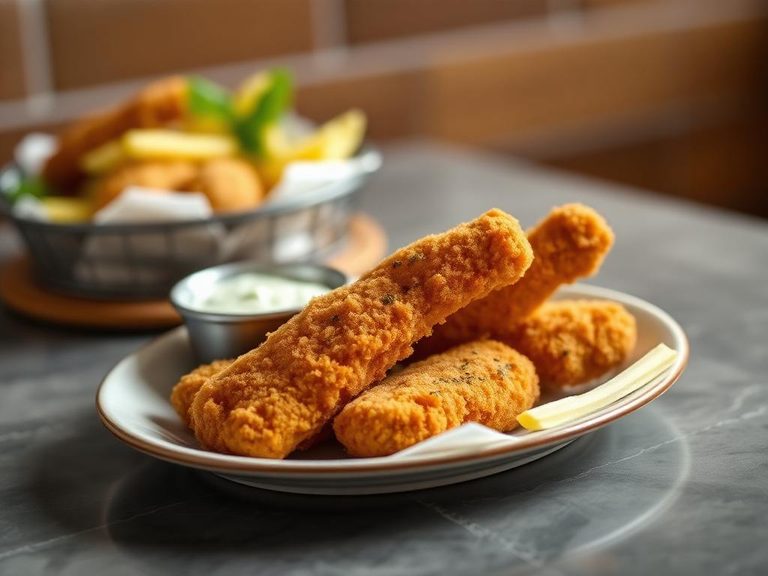
A fish finger sandwich is a beloved British comfort food, typically made by placing crispy, battered fish fingers between slices of soft white bread, often with a spread like tartare sauce or butter. It's a simple, nostalgic dish that transforms a freezer staple into a quick and satisfying meal.
🍳 View the full Fish finger sandwich recipe →
🍽️ Nutrition at a glance
This sandwich is generally high in carbohydrates from the bread and fish coating, with a moderate amount of protein from the fish. A typical serving provides roughly 400-500 calories, offering some B vitamins and minerals like selenium, but is often considered more of an indulgent treat than a health food.
Nutrition breakdown
| Calories | 450 kcal |
| Protein | 22 g |
| Carbs | 40 g |
| Fat | 20 g |
| Fiber | 2 g |
| Sugar | 4 g |
| Sodium | 850 mg |
| Potassium | 300 mg |
| Phosphorus | 200 mg |
| Vitamin B12 | 2.5 mcg |
| Niacin (B3) | 5 mg |
| Selenium | 30 mcg |
| Vitamin D | 2 mcg |
| Iron | 2 mg |
| Calcium | 100 mg |
Per 1 sandwich (approx. 200 g) · estimated, varies by recipe
💡 What's interesting
Culturally, the fish finger sandwich is a quintessential example of British culinary nostalgia, often associated with childhood, quick lunches, and post-pub snacks. Its uniqueness lies in its democratic appeal—it's a humble, affordable dish that bridges the gap between a snack and a meal, celebrated for its comforting simplicity.
🍽️ Related dishes







AI estimate may be inaccurate · Terms