

Fish, NS as to type, baked or broiled
Common food
Baked or broiled fish is a lean, protein-packed staple where the cooking method highlights the natural, clean flavor of the flesh. The texture is typically flaky and tender, with a subtle sweetness that varies by species. Its standout nutritional feature is the high-quality protein paired with virtually zero carbohydrates.
Calorie split: 45% protein · 0% carbs · 55% fat
↓ Full nutrition💚 Why it's loved
People love it for its clean, mild taste that serves as a perfect canvas for herbs, spices, and sauces, making it incredibly versatile. It's also a cornerstone of many healthy eating patterns and cultural cuisines worldwide.
⚠️ Watch-outs & how to enjoy it better
The main downside is the potential for mercury contamination in certain large predatory species, which is a concern for pregnant women and young children. To counteract this, choose low-mercury options like salmon, cod, or sardines and vary your seafood intake. Some people also dislike a 'fishy' odor, which can be minimized by using fresh fish, adding lemon, or soaking in milk before cooking.
Key benefits
- Excellent source of complete protein for muscle maintenance.
- Naturally very low in carbohydrates and sugars.
- Cooking method (baking/broiling) avoids added fats from frying.
- Provides essential nutrients like selenium and B vitamins.
🍽️ Popular dishes
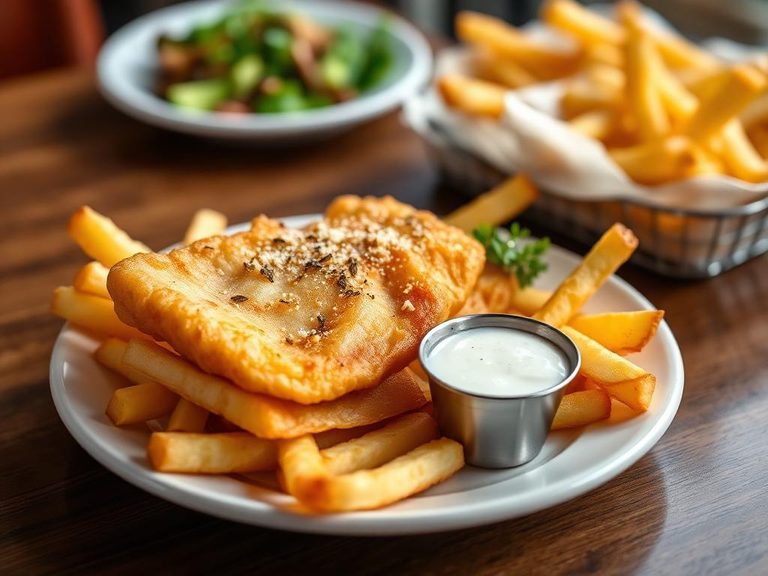
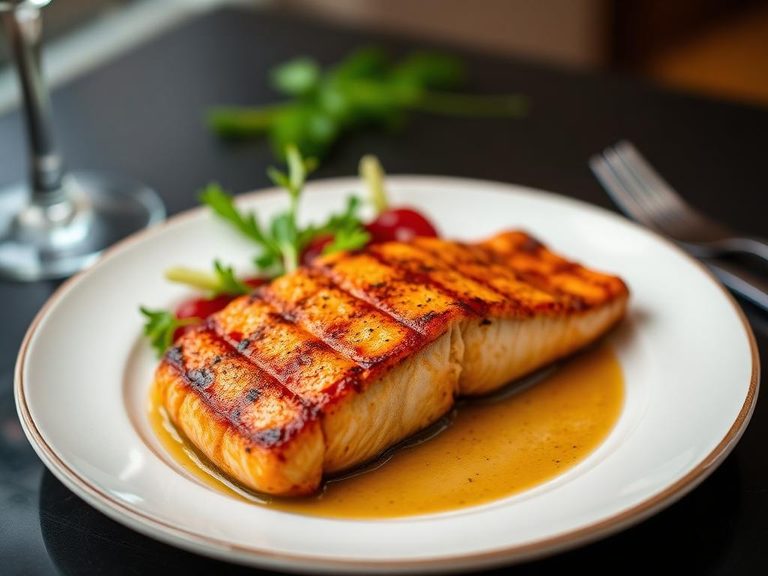
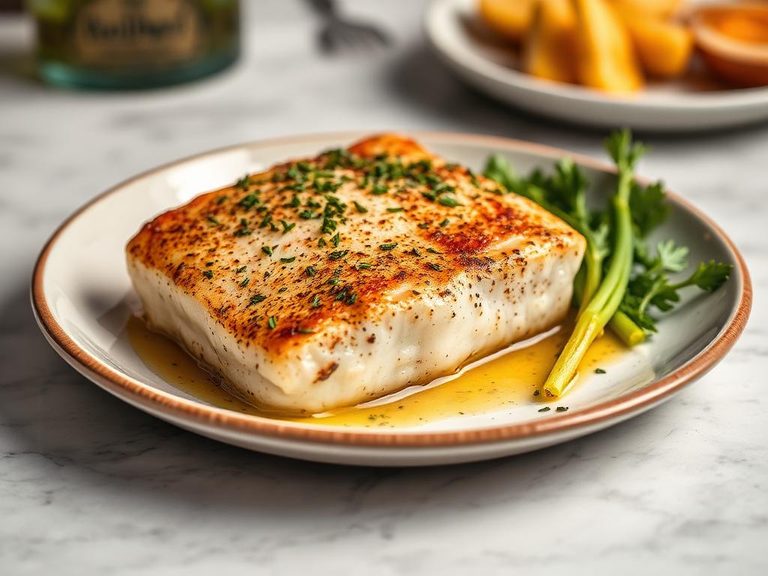
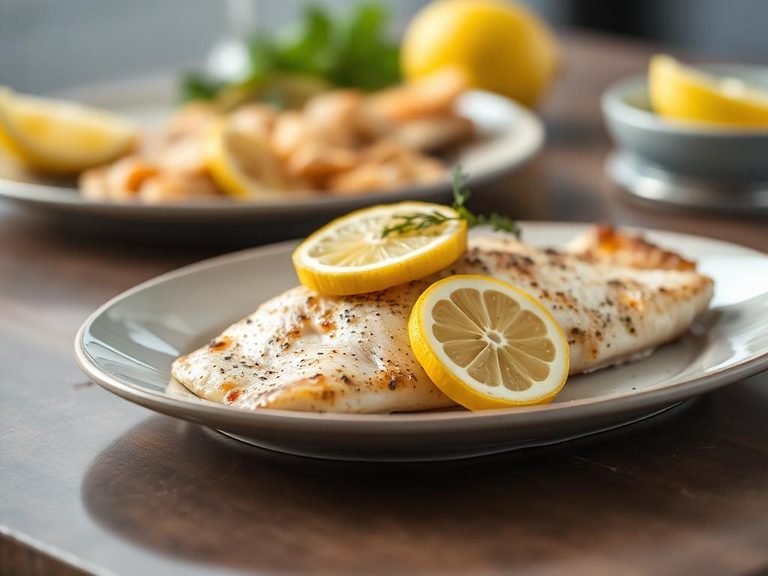
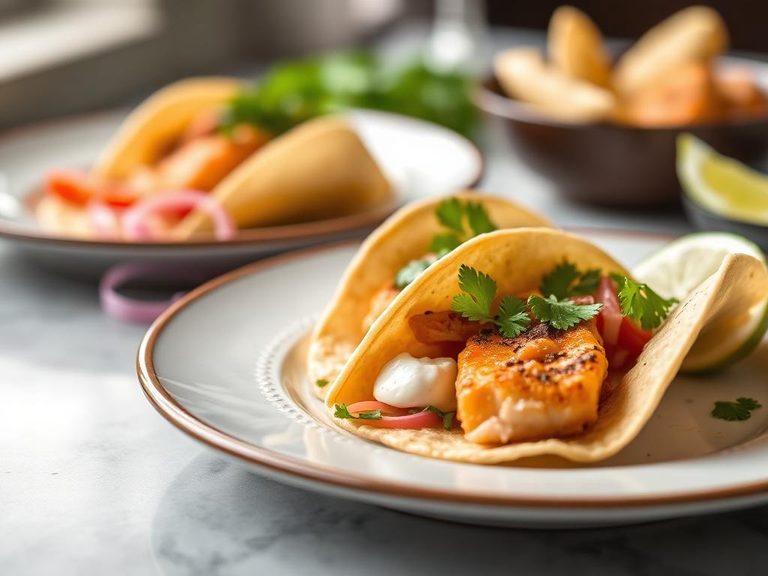
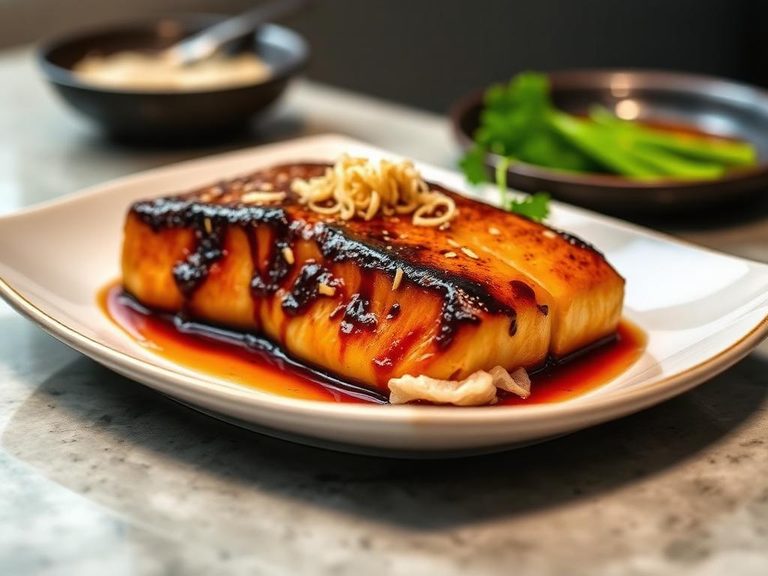
🌍 Where it's eaten
💡 Did you know?
The flakiness of cooked fish is due to its unique muscle structure, where short muscle fibers are arranged in layers separated by connective tissue that dissolves into gelatin when heated.
Full nutrition (USDA data · scales with serving)
| Water | 63.6 g |
| Energy | 208 kcal |
| Protein | 23.0 g |
| Total lipid (fat) | 12.4 g |
| Carbohydrate, by difference | 0.01 g |
| Fiber, total dietary | 0.00 g |
| Total Sugars | 0.01 g |
| Calcium, Ca | 12.0 mg |
| Iron, Fe | 0.44 mg |
| Magnesium, Mg | 30.0 mg |
| Phosphorus, P | 274 mg |
| Potassium, K | 397 mg |
| Sodium, Na | 307 mg |
| Zinc, Zn | 0.47 mg |
| Copper, Cu | 0.06 mg |
| Selenium, Se | 31.2 ug |
| Vitamin C, total ascorbic acid | 1.1 mg |
| Thiamin | 0.09 mg |
| Riboflavin | 0.12 mg |
| Niacin | 6.2 mg |
| Vitamin B-6 | 0.41 mg |
| Folate, total | 19.0 ug |
| Folic acid | 0.00 ug |
| Folate, food | 19.0 ug |
| Folate, DFE | 19.0 ug |
| Choline, total | 82.9 mg |
| Vitamin B-12 | 3.0 ug |
| Vitamin B-12, added | 0.00 ug |
| Vitamin A, RAE | 42.0 ug |
| Retinol | 41.0 ug |
| Carotene, beta | 9.0 ug |
| Carotene, alpha | 0.00 ug |
| Cryptoxanthin, beta | 0.00 ug |
| Lycopene | 0.00 ug |
| Lutein + zeaxanthin | 0.00 ug |
| Vitamin E (alpha-tocopherol) | 2.5 mg |
| Vitamin E, added | 0.00 mg |
| Vitamin D (D2 + D3) | 6.5 ug |
| Vitamin K (phylloquinone) | 5.1 ug |
| Alcohol, ethyl | 0.00 g |
| Caffeine | 0.00 mg |
| Theobromine | 0.00 mg |
Fat & fatty acid profile (per 100g)
| Fatty acids, total saturated | 3.0 g |
| SFA 4:0 | 0.03 g |
| SFA 6:0 | 0.02 g |
| SFA 8:0 | 0.01 g |
| SFA 10:0 | 0.03 g |
| SFA 12:0 | 0.04 g |
| SFA 14:0 | 0.38 g |
| SFA 16:0 | 1.8 g |
| SFA 18:0 | 0.56 g |
| Fatty acids, total monounsaturated | 4.1 g |
| MUFA 16:1 | 0.41 g |
| MUFA 18:1 | 3.5 g |
| MUFA 20:1 | 0.20 g |
| MUFA 22:1 | 0.01 g |
| Fatty acids, total polyunsaturated | 3.3 g |
| PUFA 18:2 | 1.8 g |
| PUFA 18:3 | 0.24 g |
| PUFA 18:4 | 0.06 g |
| PUFA 20:4 | 0.06 g |
| PUFA 20:5 n-3 (EPA) | 0.35 g |
| PUFA 22:5 n-3 (DPA) | 0.17 g |
| PUFA 22:6 n-3 (DHA) | 0.50 g |
| Cholesterol | 68.0 mg |
Amino acid profile (per 100g)
Estimated from Fish, fish sticks, frozen, prepared — USDA does not publish this profile for Fish.
| Tryptophan | 0.12 g |
| Threonine | 0.37 g |
| Isoleucine | 0.43 g |
| Leucine | 0.85 g |
| Lysine | 0.80 g |
| Methionine | 0.30 g |
| Phenylalanine | 0.47 g |
| Tyrosine | 0.29 g |
| Valine | 0.50 g |
| Arginine | 0.59 g |
| Histidine | 0.23 g |
| Alanine | 0.55 g |
| Aspartic acid | 0.82 g |
| Glutamic acid | 2.3 g |
| Glycine | 0.47 g |
| Proline | 0.78 g |
| Serine | 0.49 g |
| Hydroxyproline | 0.00 g |
FAQ
How do I know when baked or broiled fish is done?
The fish is done when it is opaque throughout and flakes easily with a fork. The internal temperature should reach 145°F (63°C) for safety.
Why is my baked fish dry?
Overcooking is the most common cause. Fish cooks quickly; check it a few minutes before the recipe's suggested time. Basting with butter or oil can also help retain moisture.
Is the nutrition the same for all types of baked fish?
The protein content is generally high and consistent, but fat content varies significantly. Fatty fish like salmon will have much higher healthy fats (omega-3s) than lean white fish like cod.
Nutrient density (calculated · NRF9.3)
Nutrient Rich Foods index: beneficial nutrients (protein, fiber, vitamins, minerals) minus saturated fat, added sugar & sodium, per 100 kcal.
NRF9.3 index — Fulgoni, Keast & Drewnowski, 2009. Computed from USDA nutrients.
Weight-loss friendliness (composite index)
Energy density 2.08 kcal/g · 44% calories from protein · 0.0 g fiber · 0.0 g sugar per 100 g.
Composite of energy density (Rolls et al., 1999), protein & fiber satiety, minus sugar. A calculated heuristic — ranks satiety-per-calorie, not a clinical measure.
Dietary load (calculated from USDA values)
Potential renal acid load. Positive = acid-forming, negative = alkaline-forming.
Sodium-to-potassium ratio: 0.77 (lower is better — aim for ≤ 1)
Sodium:potassium per WHO potassium guidance. Computed from USDA nutrients.