

Fish, NS as to type, fried
Common food

Photo: Wikipedia
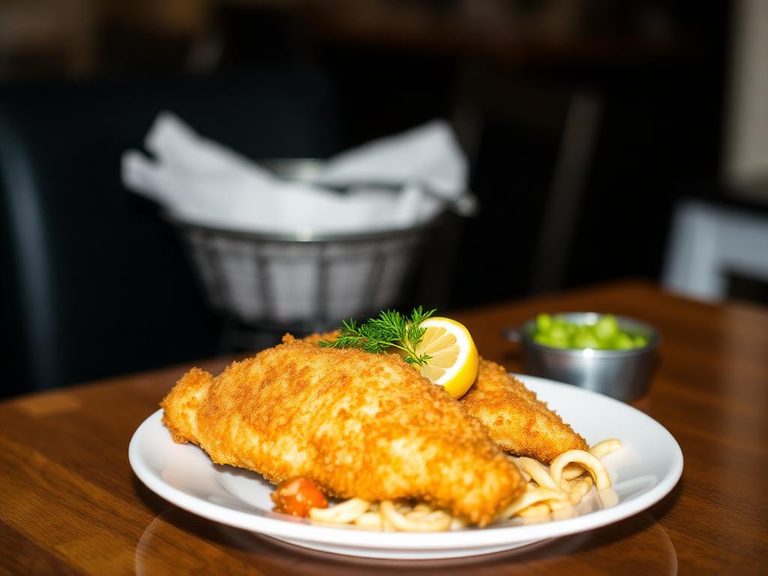
A golden, crispy fillet of fish, fried to a satisfying crunch that gives way to tender, flaky flesh inside. The coating, typically a light batter or breading, provides a savory, slightly salty flavor that complements the mild, sweet taste of the fish. Nutritionally, it's a solid source of protein, though the frying process adds a significant amount of fat and calories compared to other cooking methods.
Calorie split: 24% protein · 18% carbs · 58% fat
↓ Full nutrition💚 Why it's loved
People adore the universal appeal of fried fish for its irresistible contrast of textures—a shatteringly crisp exterior against a moist, tender interior. It's a beloved comfort food found in countless cultures, from British fish and chips to Japanese tempura, often associated with casual dining, celebrations, and seaside traditions.
⚠️ Watch-outs & how to enjoy it better
The primary downside is the high fat and calorie content from frying, which can be a concern for heart health or calorie management. The batter or breading can also be a source of refined carbohydrates and sodium. To counteract this, pair it with a large portion of non-starchy vegetables (like a side salad or steamed greens) to add fiber and volume, and opt for a smaller portion of the fish itself. Choosing a lighter batter or a cornmeal crust can sometimes reduce oil absorption.
Key benefits
- Excellent source of high-quality protein for muscle maintenance.
- Provides essential nutrients like Vitamin B12 and selenium.
- Quick and satisfying meal option, often ready in minutes.
- The crispy texture is highly palatable and can encourage fish consumption.
🍽️ Popular dishes
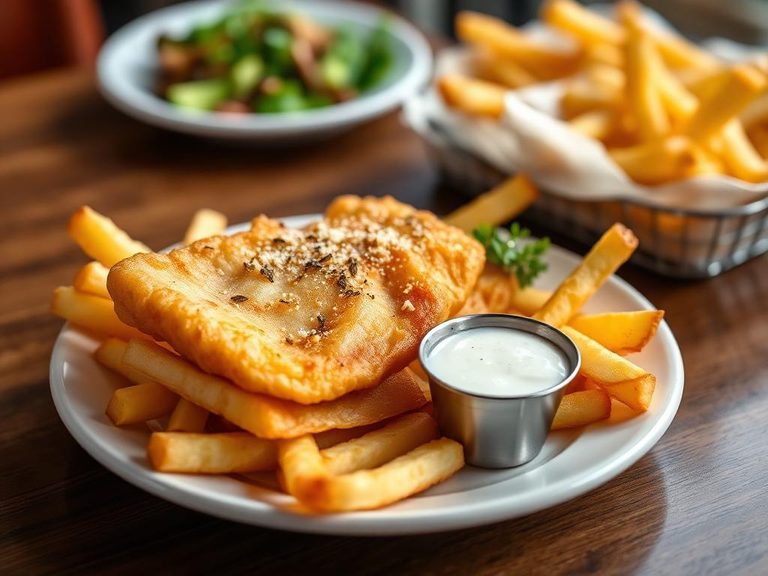
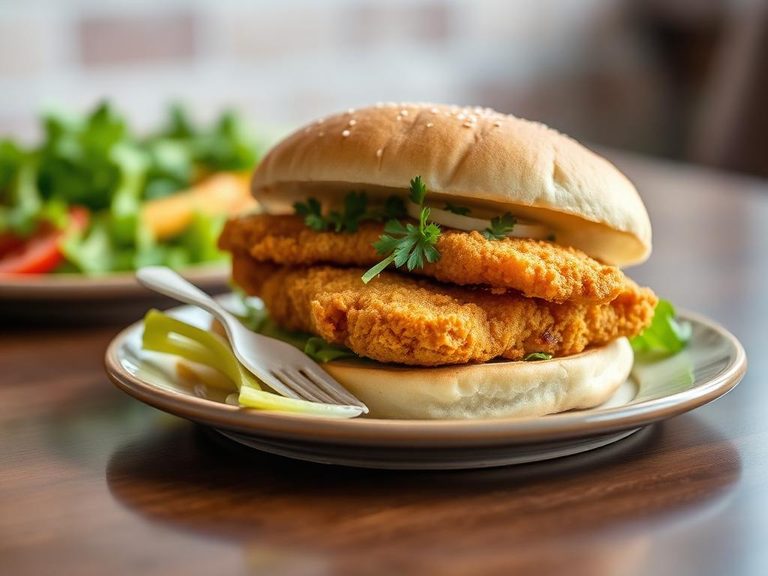
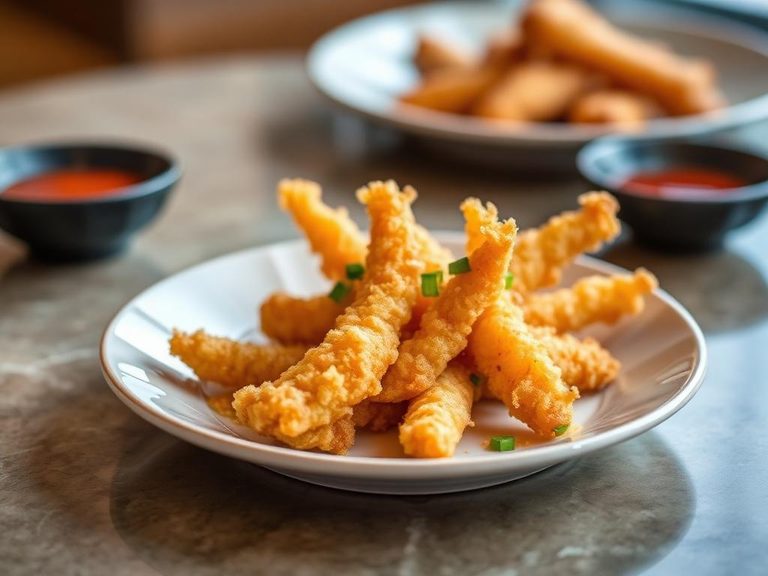
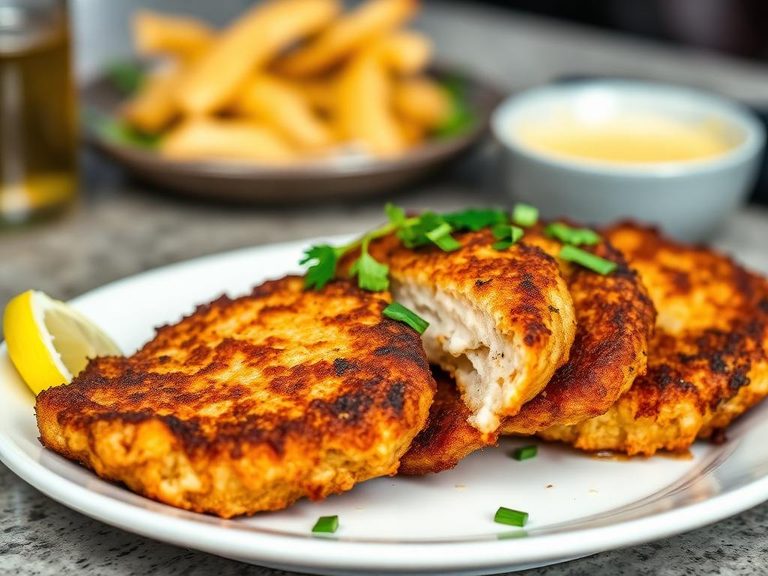
🌍 Where it's eaten
💡 Did you know?
The practice of frying fish in batter is believed to have been popularized in Britain by Jewish immigrants from Portugal and Spain in the 16th century, who fried fish before the Sabbath.
Full nutrition (USDA data · scales with serving)
| Water | 53.7 g |
| Energy | 269 kcal |
| Protein | 16.1 g |
| Total lipid (fat) | 17.2 g |
| Carbohydrate, by difference | 11.7 g |
| Fiber, total dietary | 0.50 g |
| Total Sugars | 0.20 g |
| Calcium, Ca | 21.0 mg |
| Iron, Fe | 1.2 mg |
| Magnesium, Mg | 23.0 mg |
| Phosphorus, P | 190 mg |
| Potassium, K | 269 mg |
| Sodium, Na | 399 mg |
| Zinc, Zn | 0.44 mg |
| Copper, Cu | 0.06 mg |
| Selenium, Se | 22.2 ug |
| Vitamin C, total ascorbic acid | 0.80 mg |
| Thiamin | 0.20 mg |
| Riboflavin | 0.14 mg |
| Niacin | 4.9 mg |
| Vitamin B-6 | 0.25 mg |
| Folate, total | 36.0 ug |
| Folic acid | 20.0 ug |
| Folate, food | 17.0 ug |
| Folate, DFE | 50.0 ug |
| Choline, total | 57.4 mg |
| Vitamin B-12 | 1.9 ug |
| Vitamin B-12, added | 0.00 ug |
| Vitamin A, RAE | 17.0 ug |
| Retinol | 17.0 ug |
| Carotene, beta | 0.00 ug |
| Carotene, alpha | 0.00 ug |
| Cryptoxanthin, beta | 0.00 ug |
| Lycopene | 0.00 ug |
| Lutein + zeaxanthin | 10.0 ug |
| Vitamin E (alpha-tocopherol) | 3.4 mg |
| Vitamin E, added | 0.00 mg |
| Vitamin D (D2 + D3) | 4.2 ug |
| Vitamin K (phylloquinone) | 12.8 ug |
| Alcohol, ethyl | 0.00 g |
| Caffeine | 0.00 mg |
| Theobromine | 0.00 mg |
Fat & fatty acid profile (per 100g)
| Fatty acids, total saturated | 2.8 g |
| SFA 4:0 | 0.00 g |
| SFA 6:0 | 0.00 g |
| SFA 8:0 | 0.00 g |
| SFA 10:0 | 0.00 g |
| SFA 12:0 | 0.00 g |
| SFA 14:0 | 0.18 g |
| SFA 16:0 | 1.9 g |
| SFA 18:0 | 0.57 g |
| Fatty acids, total monounsaturated | 6.6 g |
| MUFA 16:1 | 0.30 g |
| MUFA 18:1 | 6.1 g |
| MUFA 20:1 | 0.19 g |
| MUFA 22:1 | 0.00 g |
| Fatty acids, total polyunsaturated | 5.9 g |
| PUFA 18:2 | 4.5 g |
| PUFA 18:3 | 0.58 g |
| PUFA 18:4 | 0.04 g |
| PUFA 20:4 | 0.04 g |
| PUFA 20:5 n-3 (EPA) | 0.23 g |
| PUFA 22:5 n-3 (DPA) | 0.11 g |
| PUFA 22:6 n-3 (DHA) | 0.33 g |
| Cholesterol | 46.0 mg |
Amino acid profile (per 100g)
Estimated from Fish, fish sticks, frozen, prepared — USDA does not publish this profile for Fish.
| Tryptophan | 0.12 g |
| Threonine | 0.37 g |
| Isoleucine | 0.43 g |
| Leucine | 0.85 g |
| Lysine | 0.80 g |
| Methionine | 0.30 g |
| Phenylalanine | 0.47 g |
| Tyrosine | 0.29 g |
| Valine | 0.50 g |
| Arginine | 0.59 g |
| Histidine | 0.23 g |
| Alanine | 0.55 g |
| Aspartic acid | 0.82 g |
| Glutamic acid | 2.3 g |
| Glycine | 0.47 g |
| Proline | 0.78 g |
| Serine | 0.49 g |
| Hydroxyproline | 0.00 g |
FAQ
Is fried fish healthy?
It can be part of a balanced diet in moderation. It's a good source of protein, but the frying adds significant fat and calories. Baking, grilling, or poaching are generally healthier cooking methods.
How can I make fried fish less greasy?
Ensure the oil is hot enough (around 350°F/175°C) before adding the fish, use a wire rack to drain after frying instead of paper towels, and don't overcrowd the pan, which lowers the oil temperature.
What type of fish is best for frying?
Mild, white-fleshed fish with a firm texture hold up well. Common choices include cod, haddock, tilapia, catfish, and pollock.
Nutrient density (calculated · NRF9.3)
Nutrient Rich Foods index: beneficial nutrients (protein, fiber, vitamins, minerals) minus saturated fat, added sugar & sodium, per 100 kcal.
NRF9.3 index — Fulgoni, Keast & Drewnowski, 2009. Computed from USDA nutrients.
Weight-loss friendliness (composite index)
Energy density 2.69 kcal/g · 24% calories from protein · 0.5 g fiber · 0.2 g sugar per 100 g.
Composite of energy density (Rolls et al., 1999), protein & fiber satiety, minus sugar. A calculated heuristic — ranks satiety-per-calorie, not a clinical measure.
Dietary load (calculated from USDA values)
Potential renal acid load. Positive = acid-forming, negative = alkaline-forming.
Sodium-to-potassium ratio: 1.48 (lower is better — aim for ≤ 1)
Sodium:potassium per WHO potassium guidance. Computed from USDA nutrients.