

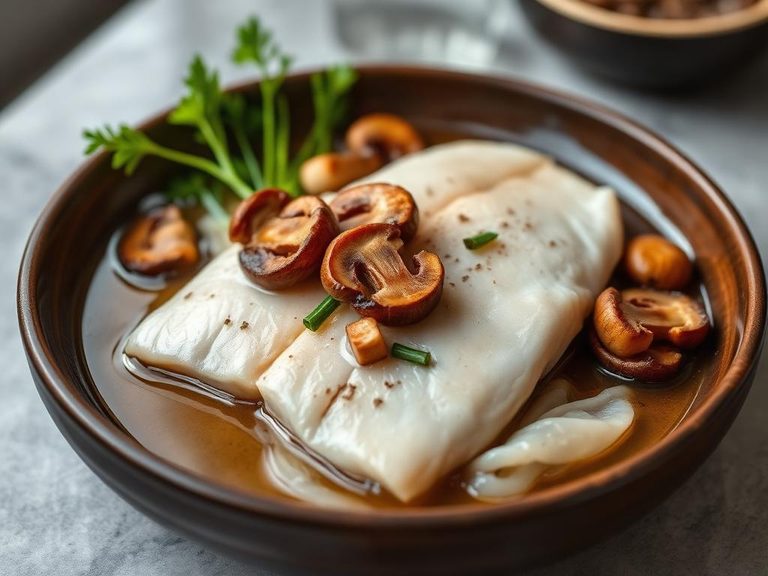
Fish, NS as to type, steamed
Common food

Photo: Wikipedia
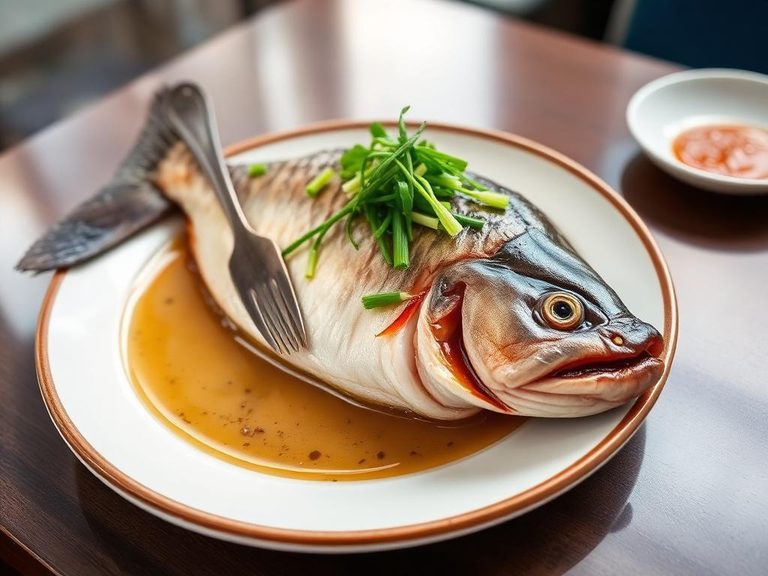
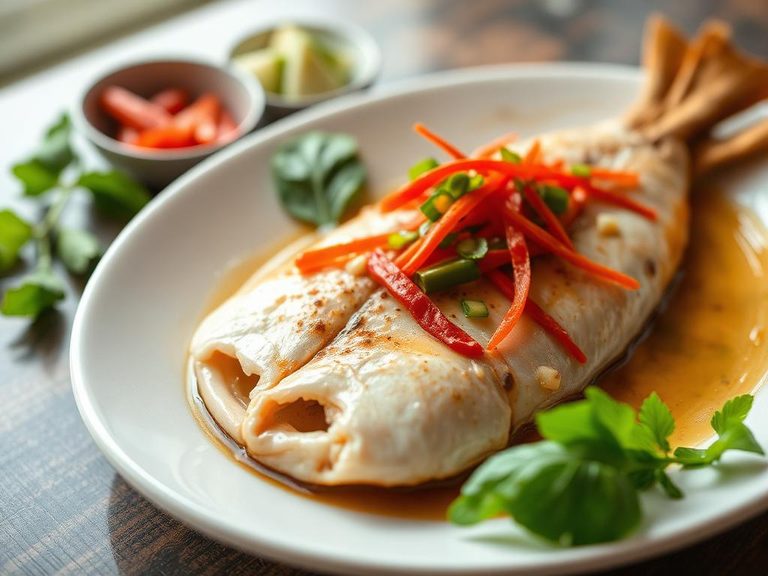
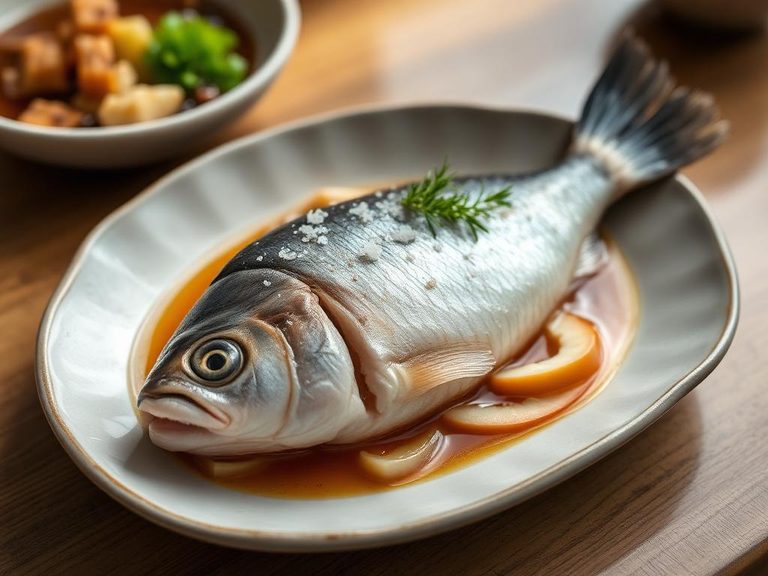
Steamed fish is a lean, delicate preparation where the gentle heat of steam cooks the flesh, preserving its natural moisture and subtle, sweet oceanic flavor. The texture is exceptionally tender and flaky, often described as silky or custard-like when perfectly cooked. Nutritionally, it is a powerhouse of high-quality protein with virtually no carbohydrates, making it an ideal choice for low-carb and high-protein diets.
Calorie split: 56% protein · 0% carbs · 44% fat
↓ Full nutrition💚 Why it's loved
People love steamed fish for its clean, pure flavor that highlights the quality of the seafood itself, often enhanced by simple aromatics like ginger, scallion, and soy. Its versatility allows it to be a centerpiece in celebratory banquets or a quick, healthy weeknight dinner across many cultures.
⚠️ Watch-outs & how to enjoy it better
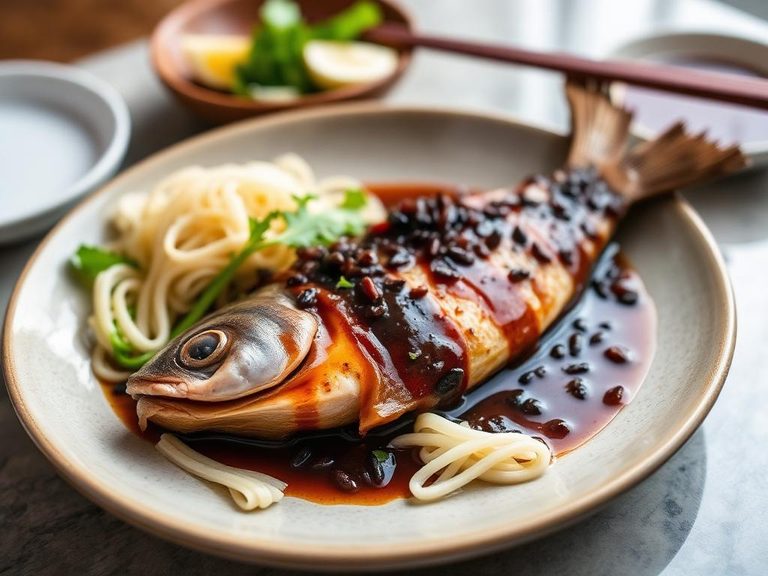
The mild flavor can be perceived as bland by some, and the texture may be too soft for those who prefer a firmer, crispier bite. Individuals on low-sodium diets should be cautious of the soy-based sauces often served alongside it, and those with fish or shellfish allergies must avoid it entirely. To counteract blandness, pair with a vibrant, flavorful sauce (like a chili-garlic or black bean sauce). For sodium control, use low-sodium soy sauce or season with herbs and citrus instead.
Key benefits
- Excellent source of complete protein (23.4g per 100g) for muscle repair and satiety.
- Very low in fat (8.1g per 100g), with a favorable profile of omega-3 fatty acids in many species.
- Zero carbohydrates and sugar, supporting stable blood sugar levels.
- Retains more water-soluble vitamins (like B vitamins) compared to boiling or frying.
- A light, easily digestible meal suitable for various dietary needs.
🍽️ Popular dishes
🌍 Where it's eaten
💡 Did you know?
The Chinese tradition of steaming a whole fish, head and tail intact, symbolizes a good beginning and end to the year, making it a mandatory dish for Lunar New Year feasts.
Full nutrition (USDA data · scales with serving)
| Water | 67.8 g |
| Energy | 171 kcal |
| Protein | 23.4 g |
| Total lipid (fat) | 8.1 g |
| Carbohydrate, by difference | 0.00 g |
| Fiber, total dietary | 0.00 g |
| Total Sugars | 0.00 g |
| Calcium, Ca | 11.0 mg |
| Iron, Fe | 0.45 mg |
| Magnesium, Mg | 31.0 mg |
| Phosphorus, P | 278 mg |
| Potassium, K | 404 mg |
| Sodium, Na | 191 mg |
| Zinc, Zn | 0.48 mg |
| Copper, Cu | 0.06 mg |
| Selenium, Se | 31.7 ug |
| Vitamin C, total ascorbic acid | 1.2 mg |
| Thiamin | 0.10 mg |
| Riboflavin | 0.12 mg |
| Niacin | 6.3 mg |
| Vitamin B-6 | 0.39 mg |
| Folate, total | 20.0 ug |
| Folic acid | 0.00 ug |
| Folate, food | 20.0 ug |
| Folate, DFE | 20.0 ug |
| Choline, total | 83.9 mg |
| Vitamin B-12 | 3.1 ug |
| Vitamin B-12, added | 0.00 ug |
| Vitamin A, RAE | 23.0 ug |
| Retinol | 23.0 ug |
| Carotene, beta | 0.00 ug |
| Carotene, alpha | 0.00 ug |
| Cryptoxanthin, beta | 0.00 ug |
| Lycopene | 0.00 ug |
| Lutein + zeaxanthin | 0.00 ug |
| Vitamin E (alpha-tocopherol) | 1.9 mg |
| Vitamin E, added | 0.00 mg |
| Vitamin D (D2 + D3) | 6.7 ug |
| Vitamin K (phylloquinone) | 1.3 ug |
| Alcohol, ethyl | 0.00 g |
| Caffeine | 0.00 mg |
| Theobromine | 0.00 mg |
Fat & fatty acid profile (per 100g)
| Fatty acids, total saturated | 1.9 g |
| SFA 4:0 | 0.00 g |
| SFA 6:0 | 0.00 g |
| SFA 8:0 | 0.00 g |
| SFA 10:0 | 0.00 g |
| SFA 12:0 | 0.00 g |
| SFA 14:0 | 0.27 g |
| SFA 16:0 | 1.2 g |
| SFA 18:0 | 0.33 g |
| Fatty acids, total monounsaturated | 2.6 g |
| MUFA 16:1 | 0.40 g |
| MUFA 18:1 | 2.0 g |
| MUFA 20:1 | 0.19 g |
| MUFA 22:1 | 0.01 g |
| Fatty acids, total polyunsaturated | 2.1 g |
| PUFA 18:2 | 0.66 g |
| PUFA 18:3 | 0.10 g |
| PUFA 18:4 | 0.06 g |
| PUFA 20:4 | 0.06 g |
| PUFA 20:5 n-3 (EPA) | 0.36 g |
| PUFA 22:5 n-3 (DPA) | 0.17 g |
| PUFA 22:6 n-3 (DHA) | 0.52 g |
| Cholesterol | 66.0 mg |
Amino acid profile (per 100g)
Estimated from Fish, fish sticks, frozen, prepared — USDA does not publish this profile for Fish.
| Tryptophan | 0.12 g |
| Threonine | 0.37 g |
| Isoleucine | 0.43 g |
| Leucine | 0.85 g |
| Lysine | 0.80 g |
| Methionine | 0.30 g |
| Phenylalanine | 0.47 g |
| Tyrosine | 0.29 g |
| Valine | 0.50 g |
| Arginine | 0.59 g |
| Histidine | 0.23 g |
| Alanine | 0.55 g |
| Aspartic acid | 0.82 g |
| Glutamic acid | 2.3 g |
| Glycine | 0.47 g |
| Proline | 0.78 g |
| Serine | 0.49 g |
| Hydroxyproline | 0.00 g |
FAQ
How do you know when steamed fish is perfectly cooked?
The flesh should be opaque and flake easily when pressed with a fork. A good rule is to steam for about 8-10 minutes per inch of thickness at the thickest part.
What are the best fish types for steaming?
Firm-fleshed, white-fleshed fish like sea bass, snapper, cod, halibut, and tilapia hold up well. Delicate fish like sole or flounder can also be steamed but require careful timing.
Can I steam fish from frozen?
Yes, but it's best to thaw it first for even cooking. If steaming from frozen, add about 50% more cooking time and ensure the internal temperature reaches 145°F (63°C).
Nutrient density (calculated · NRF9.3)
Nutrient Rich Foods index: beneficial nutrients (protein, fiber, vitamins, minerals) minus saturated fat, added sugar & sodium, per 100 kcal.
NRF9.3 index — Fulgoni, Keast & Drewnowski, 2009. Computed from USDA nutrients.
Weight-loss friendliness (composite index)
Energy density 1.71 kcal/g · 55% calories from protein · 0.0 g fiber · 0.0 g sugar per 100 g.
Composite of energy density (Rolls et al., 1999), protein & fiber satiety, minus sugar. A calculated heuristic — ranks satiety-per-calorie, not a clinical measure.
Dietary load (calculated from USDA values)
Potential renal acid load. Positive = acid-forming, negative = alkaline-forming.
Sodium-to-potassium ratio: 0.47 (lower is better — aim for ≤ 1)
Sodium:potassium per WHO potassium guidance. Computed from USDA nutrients.