

Fish, halibut
Common food

Photo: Wikipedia
Halibut is a large, lean, and flaky white fish prized for its mild, sweet flavor and firm, meaty texture that holds up beautifully to various cooking methods. It is a nutritional powerhouse, offering an impressive 20.73g of high-quality protein per 100g with minimal fat and very few carbohydrates. This makes it an excellent choice for those seeking a clean, protein-rich meal that is both satisfying and low in calories.
Calorie split: 49% protein · 18% carbs · 33% fat
↓ Full nutrition💚 Why it's loved
People love halibut for its delicate, slightly sweet flavor that doesn't overpower other ingredients, making it a versatile canvas for bold sauces or simple preparations. Its firm, steak-like texture is highly satisfying, appealing to those who prefer a substantial bite over flakier fish.
⚠️ Watch-outs & how to enjoy it better
As a common fish allergen, halibut must be avoided by individuals with fish allergies. Its mild flavor can become dry if overcooked, so careful monitoring is needed; to counteract this, cook it to an internal temperature of 130°F (54°C) and consider pairing it with a flavorful sauce or fat like butter or olive oil to add moisture and richness.
Key benefits
- Excellent source of complete, high-quality protein for muscle maintenance.
- Very low in fat and carbohydrates, ideal for lean diets.
- Rich in essential minerals like selenium and phosphorus.
- Provides a good amount of B vitamins, especially niacin and B12.
- Naturally low in sugar and fiber.
🍽️ Popular dishes
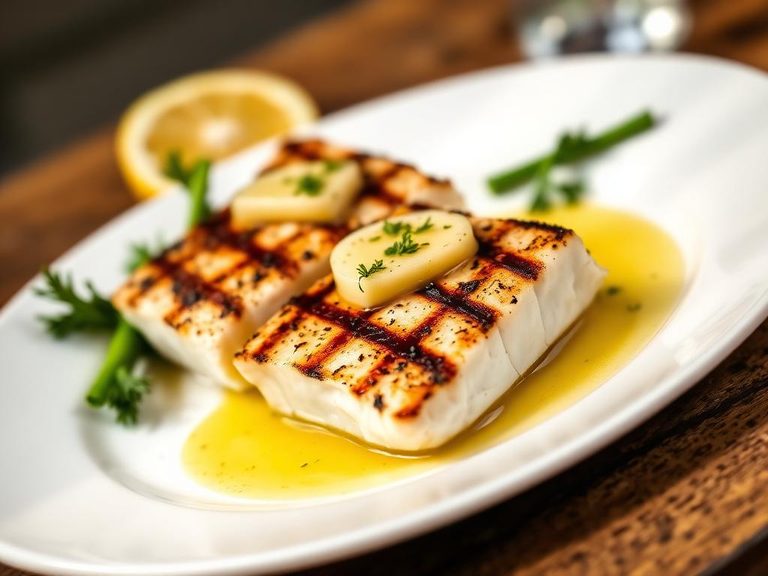
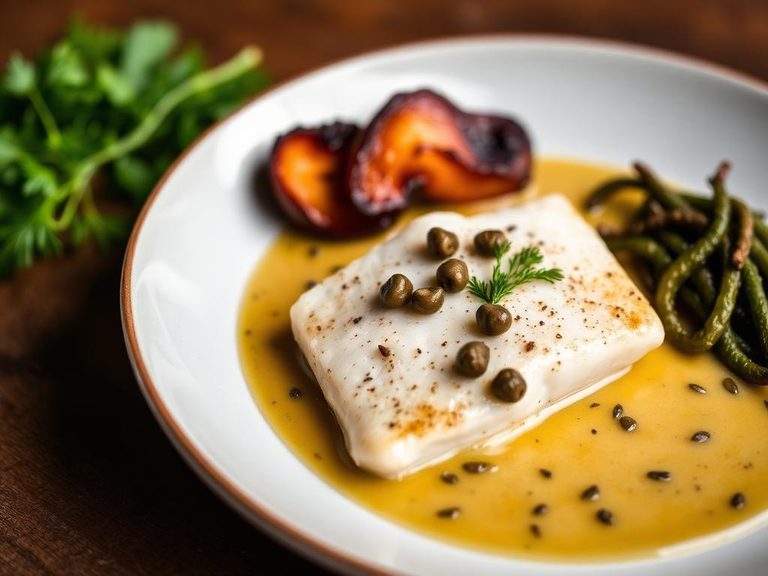
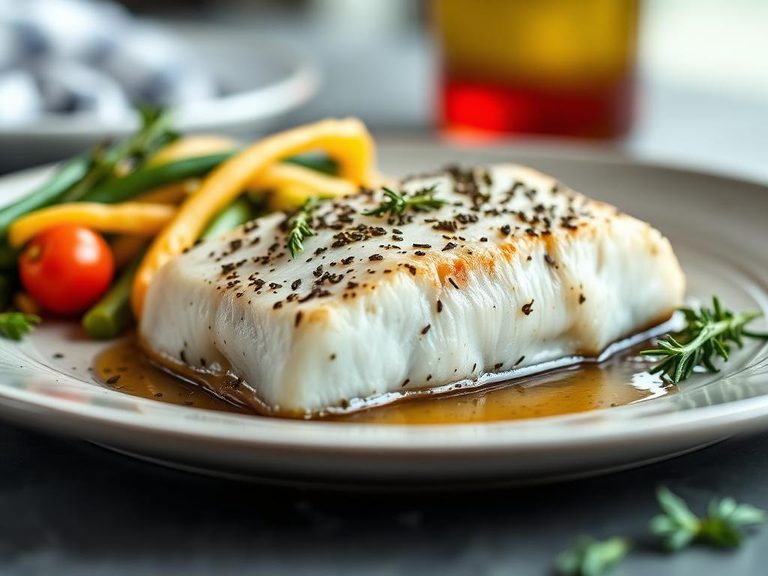
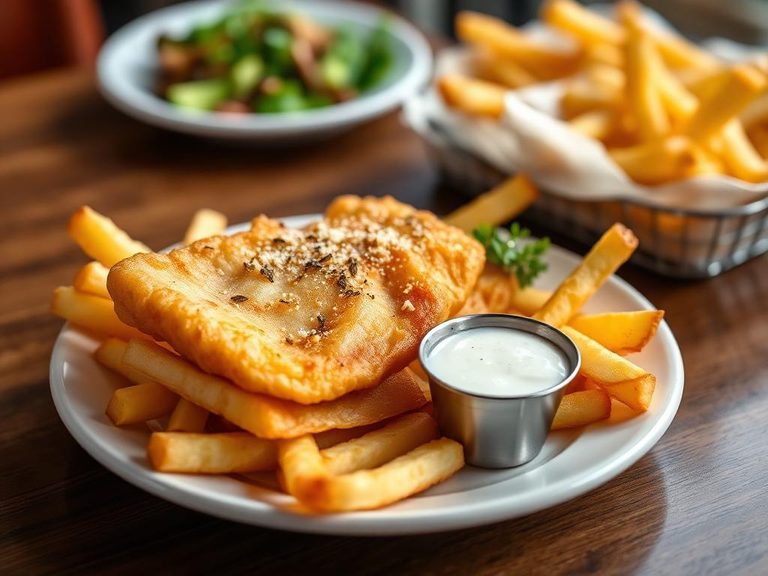
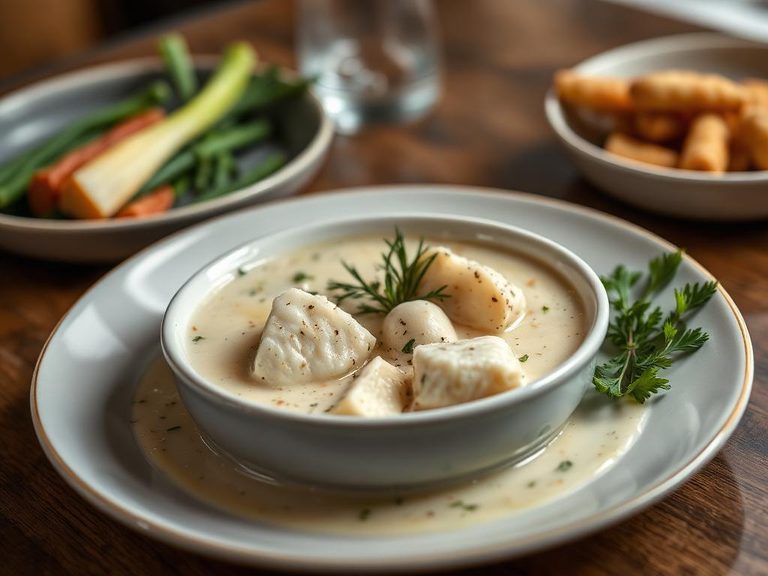
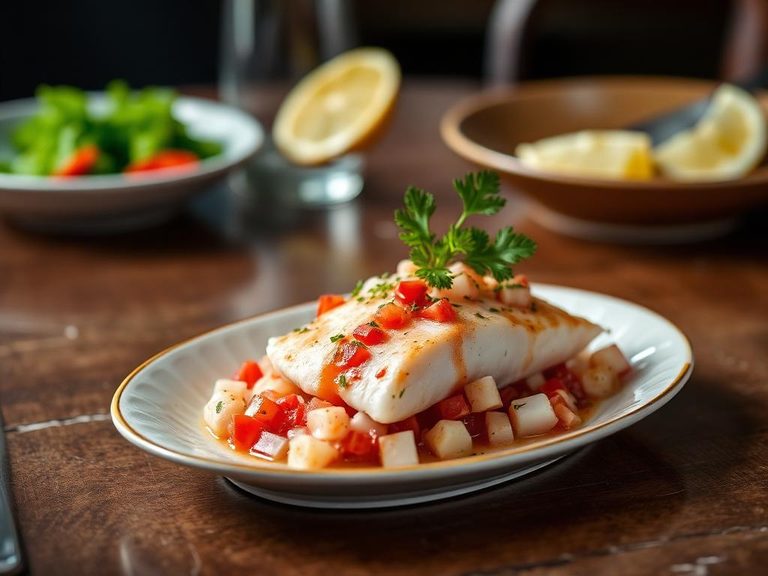
🌍 Where it's eaten
💡 Did you know?
Halibut are the largest flatfish in the world, with the record catch weighing over 500 pounds (227 kg), and they can live for over 50 years.
Full nutrition (USDA data · scales with serving)
| Water | 64.7 g |
| Energy | 175 kcal |
| Protein | 20.7 g |
| Total lipid (fat) | 6.2 g |
| Carbohydrate, by difference | 7.8 g |
| Fiber, total dietary | 0.30 g |
| Total Sugars | 0.14 g |
| Calcium, Ca | 18.0 mg |
| Iron, Fe | 0.75 mg |
| Magnesium, Mg | 27.0 mg |
| Phosphorus, P | 263 mg |
| Potassium, K | 473 mg |
| Sodium, Na | 334 mg |
| Zinc, Zn | 0.48 mg |
| Copper, Cu | 0.04 mg |
| Selenium, Se | 49.8 ug |
| Vitamin C, total ascorbic acid | 0.00 mg |
| Thiamin | 0.14 mg |
| Riboflavin | 0.08 mg |
| Niacin | 7.5 mg |
| Vitamin B-6 | 0.55 mg |
| Folate, total | 27.0 ug |
| Folic acid | 13.0 ug |
| Folate, food | 14.0 ug |
| Folate, DFE | 37.0 ug |
| Choline, total | 69.7 mg |
| Vitamin B-12 | 1.1 ug |
| Vitamin B-12, added | 0.00 ug |
| Vitamin A, RAE | 40.0 ug |
| Retinol | 39.0 ug |
| Carotene, beta | 9.0 ug |
| Carotene, alpha | 0.00 ug |
| Cryptoxanthin, beta | 0.00 ug |
| Lycopene | 0.00 ug |
| Lutein + zeaxanthin | 7.0 ug |
| Vitamin E (alpha-tocopherol) | 1.3 mg |
| Vitamin E, added | 0.00 mg |
| Vitamin D (D2 + D3) | 5.0 ug |
| Vitamin K (phylloquinone) | 3.9 ug |
| Alcohol, ethyl | 0.00 g |
| Caffeine | 0.00 mg |
| Theobromine | 0.00 mg |
Fat & fatty acid profile (per 100g)
| Fatty acids, total saturated | 1.6 g |
| SFA 4:0 | 0.03 g |
| SFA 6:0 | 0.02 g |
| SFA 8:0 | 0.01 g |
| SFA 10:0 | 0.03 g |
| SFA 12:0 | 0.04 g |
| SFA 14:0 | 0.17 g |
| SFA 16:0 | 0.88 g |
| SFA 18:0 | 0.32 g |
| Fatty acids, total monounsaturated | 2.2 g |
| MUFA 16:1 | 0.10 g |
| MUFA 18:1 | 1.8 g |
| MUFA 20:1 | 0.16 g |
| MUFA 22:1 | 0.01 g |
| Fatty acids, total polyunsaturated | 1.7 g |
| PUFA 18:2 | 1.3 g |
| PUFA 18:3 | 0.16 g |
| PUFA 18:4 | 0.01 g |
| PUFA 20:4 | 0.02 g |
| PUFA 20:5 n-3 (EPA) | 0.07 g |
| PUFA 22:5 n-3 (DPA) | 0.02 g |
| PUFA 22:6 n-3 (DHA) | 0.13 g |
| Cholesterol | 59.0 mg |
Amino acid profile (per 100g)
Estimated from Fish, fish sticks, frozen, prepared — USDA does not publish this profile for Fish.
| Tryptophan | 0.12 g |
| Threonine | 0.37 g |
| Isoleucine | 0.43 g |
| Leucine | 0.85 g |
| Lysine | 0.80 g |
| Methionine | 0.30 g |
| Phenylalanine | 0.47 g |
| Tyrosine | 0.29 g |
| Valine | 0.50 g |
| Arginine | 0.59 g |
| Histidine | 0.23 g |
| Alanine | 0.55 g |
| Aspartic acid | 0.82 g |
| Glutamic acid | 2.3 g |
| Glycine | 0.47 g |
| Proline | 0.78 g |
| Serine | 0.49 g |
| Hydroxyproline | 0.00 g |
FAQ
How do I know when halibut is done cooking?
Halibut is done when it reaches an internal temperature of 130°F (54°C) and flakes easily with a fork. The flesh should be opaque and white throughout.
Is halibut a sustainable fish to eat?
Sustainability varies by region. Pacific halibut from Alaska is generally well-managed and considered a sustainable choice, while Atlantic halibut populations have been overfished and are less sustainable. Look for certifications like MSC or consult seafood guides.
Can I eat halibut if I'm on a low-carb or keto diet?
Yes, halibut is an excellent choice for low-carb and keto diets due to its very low carbohydrate content (7.79g per 100g, primarily from glycogen) and high protein, which helps maintain ketosis.
Nutrient density (calculated · NRF9.3)
Nutrient Rich Foods index: beneficial nutrients (protein, fiber, vitamins, minerals) minus saturated fat, added sugar & sodium, per 100 kcal.
NRF9.3 index — Fulgoni, Keast & Drewnowski, 2009. Computed from USDA nutrients.
Weight-loss friendliness (composite index)
Energy density 1.75 kcal/g · 47% calories from protein · 0.3 g fiber · 0.1 g sugar per 100 g.
Composite of energy density (Rolls et al., 1999), protein & fiber satiety, minus sugar. A calculated heuristic — ranks satiety-per-calorie, not a clinical measure.
Dietary load (calculated from USDA values)
Potential renal acid load. Positive = acid-forming, negative = alkaline-forming.
Sodium-to-potassium ratio: 0.71 (lower is better — aim for ≤ 1)
Sodium:potassium per WHO potassium guidance. Computed from USDA nutrients.