

Egg, yolk only, cooked, fat added
Common food

Photo: Wikipedia
This is the rich, golden yolk of a chicken egg, cooked with added fat (like butter or oil), resulting in a velvety, intensely savory, and slightly creamy texture. Nutritionally, it's a powerhouse of concentrated energy, delivering a massive dose of healthy fats and high-quality protein in a small package.
Calorie split: 17% protein · 1% carbs · 82% fat
↓ Full nutrition💚 Why it's loved
People love its unparalleled richness and umami depth, which can elevate a simple dish into something luxurious. Its versatility is key—it can be a standalone star, a binding agent, or a glossy, enriching finish for sauces and pastries.
⚠️ Watch-outs & how to enjoy it better
The high cholesterol and saturated fat content mean those with specific heart health concerns should practice portion control. To counteract, pair it with fiber-rich vegetables or whole grains in the same meal, and consider it an occasional indulgence rather than a daily staple.
Key benefits
- Excellent source of choline for brain health.
- Packed with fat-soluble vitamins A, D, E, and K.
- Provides high-quality, complete protein.
- Rich in lutein and zeaxanthin for eye health.
- Contains essential minerals like selenium and phosphorus.
🍽️ Popular dishes
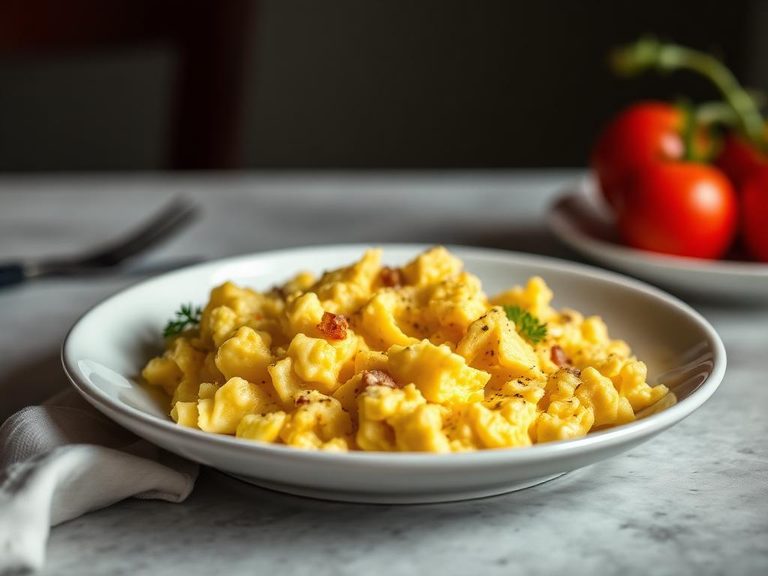
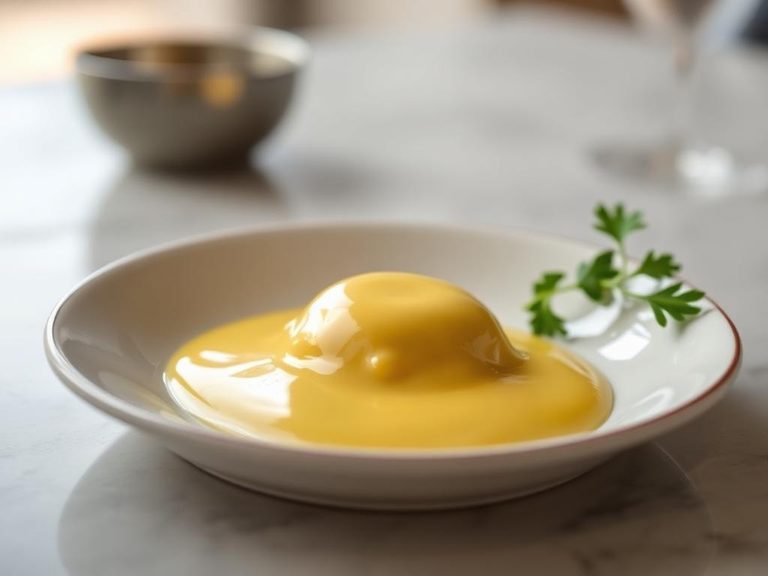




🌍 Where it's eaten
💡 Did you know?
A single large egg yolk contains about 266 micrograms of choline, which is nearly half of the recommended daily intake for adults, making it one of the most concentrated food sources of this essential nutrient.
Full nutrition (USDA data · scales with serving)
| Water | 49.3 g |
| Energy | 357 kcal |
| Protein | 15.1 g |
| Total lipid (fat) | 32.6 g |
| Carbohydrate, by difference | 0.96 g |
| Fiber, total dietary | 0.00 g |
| Total Sugars | 0.53 g |
| Calcium, Ca | 121 mg |
| Iron, Fe | 2.5 mg |
| Magnesium, Mg | 5.0 mg |
| Phosphorus, P | 364 mg |
| Potassium, K | 102 mg |
| Sodium, Na | 172 mg |
| Zinc, Zn | 2.1 mg |
| Copper, Cu | 0.07 mg |
| Selenium, Se | 52.0 ug |
| Vitamin C, total ascorbic acid | 0.00 mg |
| Thiamin | 0.13 mg |
| Riboflavin | 0.41 mg |
| Niacin | 0.02 mg |
| Vitamin B-6 | 0.35 mg |
| Folate, total | 102 ug |
| Folic acid | 0.00 ug |
| Folate, food | 102 ug |
| Folate, DFE | 102 ug |
| Choline, total | 612 mg |
| Vitamin B-12 | 1.4 ug |
| Vitamin B-12, added | 0.00 ug |
| Vitamin A, RAE | 381 ug |
| Retinol | 370 ug |
| Carotene, beta | 93.0 ug |
| Carotene, alpha | 35.0 ug |
| Cryptoxanthin, beta | 31.0 ug |
| Lycopene | 2.0 ug |
| Lutein + zeaxanthin | 1020 ug |
| Vitamin E (alpha-tocopherol) | 6.1 mg |
| Vitamin E, added | 0.00 mg |
| Vitamin D (D2 + D3) | 5.1 ug |
| Vitamin K (phylloquinone) | 5.4 ug |
| Alcohol, ethyl | 0.00 g |
| Caffeine | 0.00 mg |
| Theobromine | 0.00 mg |
Fat & fatty acid profile (per 100g)
| Fatty acids, total saturated | 10.4 g |
| SFA 4:0 | 0.04 g |
| SFA 6:0 | 0.03 g |
| SFA 8:0 | 0.03 g |
| SFA 10:0 | 0.05 g |
| SFA 12:0 | 0.05 g |
| SFA 14:0 | 0.24 g |
| SFA 16:0 | 7.2 g |
| SFA 18:0 | 2.6 g |
| Fatty acids, total monounsaturated | 13.0 g |
| MUFA 16:1 | 0.89 g |
| MUFA 18:1 | 11.9 g |
| MUFA 20:1 | 0.11 g |
| MUFA 22:1 | 0.01 g |
| Fatty acids, total polyunsaturated | 5.6 g |
| PUFA 18:2 | 4.8 g |
| PUFA 18:3 | 0.28 g |
| PUFA 18:4 | 0.00 g |
| PUFA 20:4 | 0.41 g |
| PUFA 20:5 n-3 (EPA) | 0.01 g |
| PUFA 22:5 n-3 (DPA) | 0.00 g |
| PUFA 22:6 n-3 (DHA) | 0.11 g |
| Cholesterol | 1016 mg |
Amino acid profile (per 100g)
Estimated from Fish, whitefish, eggs (Alaska Native) — USDA does not publish this profile for Egg.
| Tryptophan | 0.28 g |
| Threonine | 1.0 g |
| Isoleucine | 1.1 g |
| Leucine | 1.6 g |
| Lysine | 1.6 g |
| Methionine | 0.56 g |
| Cystine | 0.23 g |
| Phenylalanine | 0.90 g |
| Tyrosine | 0.76 g |
| Valine | 1.3 g |
| Arginine | 1.1 g |
| Histidine | 0.53 g |
| Alanine | 1.6 g |
| Aspartic acid | 1.6 g |
| Glutamic acid | 2.2 g |
| Glycine | 0.50 g |
| Proline | 1.1 g |
| Serine | 1.2 g |
FAQ
Is cooked egg yolk as nutritious as raw?
Cooking actually makes some nutrients, like protein and the antioxidant lutein, more bioavailable and digestible, while slightly reducing heat-sensitive vitamins like A and B12. Overall, the nutritional benefit is comparable and safer.
Nutrient density (calculated · NRF9.3)
Nutrient Rich Foods index: beneficial nutrients (protein, fiber, vitamins, minerals) minus saturated fat, added sugar & sodium, per 100 kcal.
NRF9.3 index — Fulgoni, Keast & Drewnowski, 2009. Computed from USDA nutrients.
Weight-loss friendliness (composite index)
Energy density 3.57 kcal/g · 17% calories from protein · 0.0 g fiber · 0.5 g sugar per 100 g.
Composite of energy density (Rolls et al., 1999), protein & fiber satiety, minus sugar. A calculated heuristic — ranks satiety-per-calorie, not a clinical measure.
Dietary load (calculated from USDA values)
Potential renal acid load. Positive = acid-forming, negative = alkaline-forming.
Sodium-to-potassium ratio: 1.69 (lower is better — aim for ≤ 1)
Sodium:potassium per WHO potassium guidance. Computed from USDA nutrients.