Salted Duck Egg Yolk

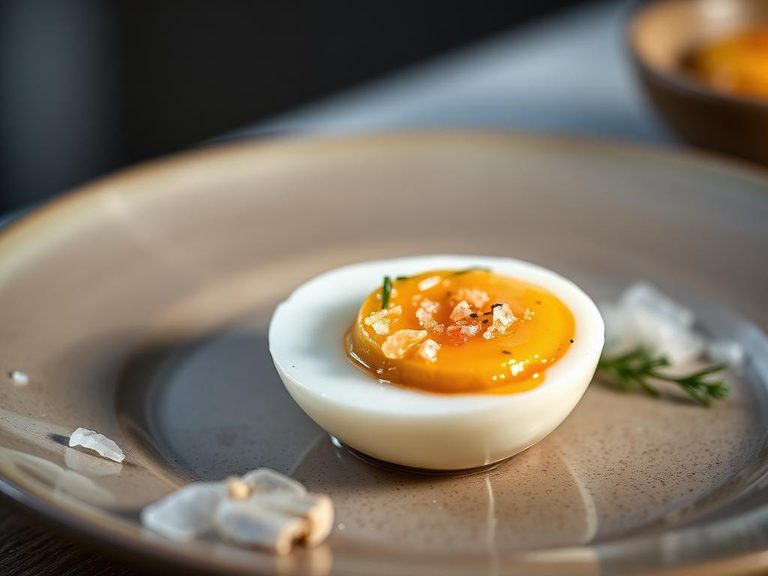
Salted duck egg yolk is a preserved food product made by curing duck egg yolks in a brine or salted charcoal paste until they become firm, oily, and intensely savory. It is a staple ingredient in Chinese and Southeast Asian cuisines, often used as a flavor enhancer in congee, mooncakes, and savory dishes. The process transforms the yolk into a rich, granular, and deeply orange delicacy.
🍽️ Nutrition at a glance
This food is very high in fat and protein, with minimal carbohydrates. It is a concentrated source of fat-soluble vitamins like Vitamin A and D, as well as minerals such as selenium and phosphorus, but it is also extremely high in sodium. A single yolk contains roughly 80-100 calories.
Nutrition breakdown
| Calories | 90 kcal |
| Protein | 3.5 g |
| Carbs | 0.5 g |
| Fat | 8 g |
| Fiber | 0 g |
| Sugar | 0 g |
| Sodium | 320 mg |
| Vitamin A | 120 µg RAE |
| Vitamin D | 1.2 µg |
| Selenium | 15 µg |
| Phosphorus | 65 mg |
| Iron | 0.7 mg |
| Choline | 35 mg |
| Cholesterol | 185 mg |
| Vitamin B12 | 0.4 µg |
Per 1 salted duck egg yolk (about 18 g) · estimated, varies by recipe
💡 What's interesting
The unique 'sandy' or granular texture of a perfectly cured yolk is highly prized and is the result of salt drawing out moisture and causing the fats to solidify into tiny crystals. Nutritionally, the curing process concentrates the yolk's nutrients, making it a very dense source of energy and certain micronutrients compared to a fresh egg yolk.