

Egg, yolk only, raw
Common food

Photo: Wikipedia
Raw egg yolk is a rich, golden orb with a luxuriously creamy, almost custard-like texture and a deep, savory, slightly sweet flavor. It's a nutritional powerhouse, packing nearly 29 grams of healthy fats and over 16 grams of high-quality protein per 100 grams, along with a wealth of vitamins and minerals.
Calorie split: 20% protein · 1% carbs · 79% fat
↓ Full nutrition💚 Why it's loved
People love it for its unparalleled richness and velvety mouthfeel, which can elevate simple dishes like pasta or salad dressings. It's a cornerstone of classic culinary techniques, prized for its ability to create stable emulsions and add luxurious depth.
⚠️ Watch-outs & how to enjoy it better
As a raw animal product, it carries a risk of Salmonella contamination, so it should be avoided by pregnant individuals, young children, the elderly, and immunocompromised. The high cholesterol content may be a concern for some; counteract this by enjoying it in moderation as part of a balanced diet and pairing it with fiber-rich vegetables.
Key benefits
- Excellent source of choline for brain health.
- Rich in fat-soluble vitamins A, D, E, and K.
- Provides high-quality, complete protein.
- Contains antioxidants like lutein and zeaxanthin for eye health.
- Natural emulsifier for sauces and dressings.
🍽️ Popular dishes
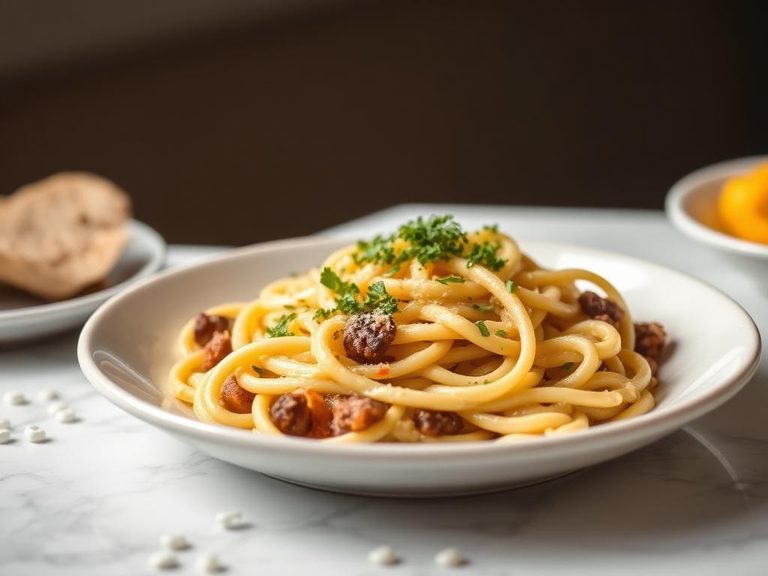
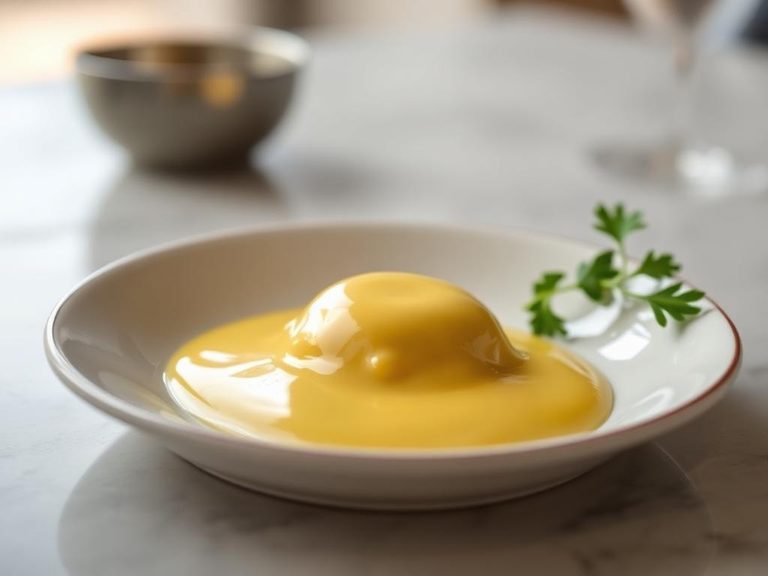
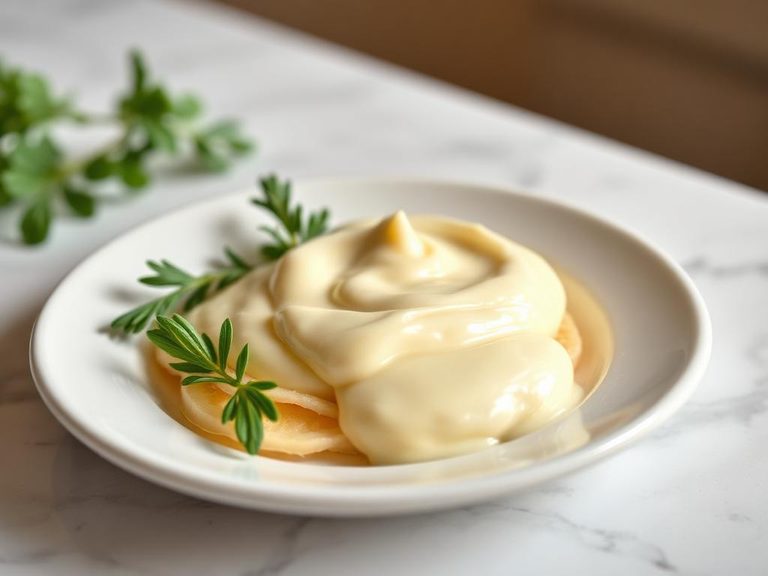
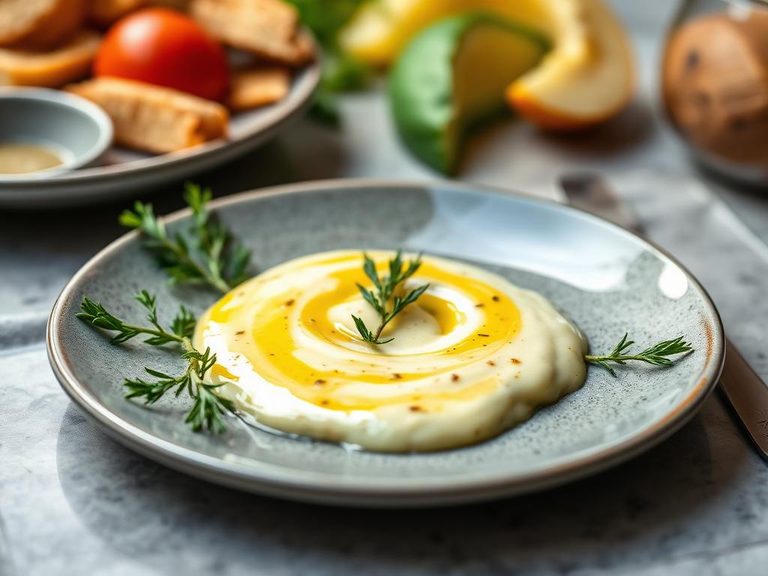

🌍 Where it's eaten
💡 Did you know?
A single egg yolk contains about 3.5 grams of fat, which is why it's such a powerful natural emulsifier—capable of binding oil and water to create stable sauces like mayonnaise.
Full nutrition (USDA data · scales with serving)
| Water | 52.1 g |
| Energy | 328 kcal |
| Protein | 16.2 g |
| Total lipid (fat) | 28.8 g |
| Carbohydrate, by difference | 1.0 g |
| Fiber, total dietary | 0.00 g |
| Total Sugars | 0.56 g |
| Calcium, Ca | 129 mg |
| Iron, Fe | 2.7 mg |
| Magnesium, Mg | 5.0 mg |
| Phosphorus, P | 390 mg |
| Potassium, K | 109 mg |
| Sodium, Na | 48.0 mg |
| Zinc, Zn | 2.3 mg |
| Copper, Cu | 0.08 mg |
| Selenium, Se | 55.8 ug |
| Vitamin C, total ascorbic acid | 0.00 mg |
| Thiamin | 0.18 mg |
| Riboflavin | 0.47 mg |
| Niacin | 0.02 mg |
| Vitamin B-6 | 0.35 mg |
| Folate, total | 146 ug |
| Folic acid | 0.00 ug |
| Folate, food | 146 ug |
| Folate, DFE | 146 ug |
| Choline, total | 820 mg |
| Vitamin B-12 | 1.9 ug |
| Vitamin B-12, added | 0.00 ug |
| Vitamin A, RAE | 381 ug |
| Retinol | 371 ug |
| Carotene, beta | 88.0 ug |
| Carotene, alpha | 38.0 ug |
| Cryptoxanthin, beta | 33.0 ug |
| Lycopene | 2.0 ug |
| Lutein + zeaxanthin | 1094 ug |
| Vitamin E (alpha-tocopherol) | 5.6 mg |
| Vitamin E, added | 0.00 mg |
| Vitamin D (D2 + D3) | 5.4 ug |
| Vitamin K (phylloquinone) | 0.70 ug |
| Alcohol, ethyl | 0.00 g |
| Caffeine | 0.00 mg |
| Theobromine | 0.00 mg |
Fat & fatty acid profile (per 100g)
| Fatty acids, total saturated | 9.6 g |
| SFA 4:0 | 0.00 g |
| SFA 6:0 | 0.00 g |
| SFA 8:0 | 0.01 g |
| SFA 10:0 | 0.01 g |
| SFA 12:0 | 0.01 g |
| SFA 14:0 | 0.10 g |
| SFA 16:0 | 6.9 g |
| SFA 18:0 | 2.4 g |
| Fatty acids, total monounsaturated | 11.7 g |
| MUFA 16:1 | 0.92 g |
| MUFA 18:1 | 10.7 g |
| MUFA 20:1 | 0.09 g |
| MUFA 22:1 | 0.01 g |
| Fatty acids, total polyunsaturated | 4.2 g |
| PUFA 18:2 | 3.5 g |
| PUFA 18:3 | 0.10 g |
| PUFA 18:4 | 0.00 g |
| PUFA 20:4 | 0.44 g |
| PUFA 20:5 n-3 (EPA) | 0.01 g |
| PUFA 22:5 n-3 (DPA) | 0.00 g |
| PUFA 22:6 n-3 (DHA) | 0.11 g |
| Cholesterol | 1085 mg |
Amino acid profile (per 100g)
Estimated from Fish, whitefish, eggs (Alaska Native) — USDA does not publish this profile for Egg.
| Tryptophan | 0.28 g |
| Threonine | 1.0 g |
| Isoleucine | 1.1 g |
| Leucine | 1.6 g |
| Lysine | 1.6 g |
| Methionine | 0.56 g |
| Cystine | 0.23 g |
| Phenylalanine | 0.90 g |
| Tyrosine | 0.76 g |
| Valine | 1.3 g |
| Arginine | 1.1 g |
| Histidine | 0.53 g |
| Alanine | 1.6 g |
| Aspartic acid | 1.6 g |
| Glutamic acid | 2.2 g |
| Glycine | 0.50 g |
| Proline | 1.1 g |
| Serine | 1.2 g |
FAQ
Is it safe to eat raw egg yolk?
The primary risk is Salmonella. Using pasteurized eggs significantly reduces this risk. For most healthy adults, the risk from a fresh, properly handled egg is very low, but it's not zero.
How does the nutrition compare to the whole egg?
The yolk contains almost all of the egg's fat, cholesterol, vitamins, and minerals. The white is primarily protein and water. Eating just the yolk means you get a more concentrated dose of fats and fat-soluble nutrients.
Can I use it as a substitute for whole eggs in baking?
It's not a direct 1:1 substitute, as you lose the binding and leavening properties of the white. However, you can use it in recipes like custards, rich sauces, or pasta dough where fat and emulsification are key.
Nutrient density (calculated · NRF9.3)
Nutrient Rich Foods index: beneficial nutrients (protein, fiber, vitamins, minerals) minus saturated fat, added sugar & sodium, per 100 kcal.
NRF9.3 index — Fulgoni, Keast & Drewnowski, 2009. Computed from USDA nutrients.
Weight-loss friendliness (composite index)
Energy density 3.28 kcal/g · 20% calories from protein · 0.0 g fiber · 0.6 g sugar per 100 g.
Composite of energy density (Rolls et al., 1999), protein & fiber satiety, minus sugar. A calculated heuristic — ranks satiety-per-calorie, not a clinical measure.
Dietary load (calculated from USDA values)
Potential renal acid load. Positive = acid-forming, negative = alkaline-forming.
Sodium-to-potassium ratio: 0.44 (lower is better — aim for ≤ 1)
Sodium:potassium per WHO potassium guidance. Computed from USDA nutrients.