

Egg, whole, fried with animal fat or meat drippings
Common food

Photo: Wikipedia
A whole egg fried in animal fat or meat drippings, resulting in a crispy, lacy edge and a rich, savory flavor from the rendered fat. The yolk remains runny or jammy, while the white sets into a tender, slightly chewy texture. This preparation boosts the calorie and fat content significantly compared to a poached or boiled egg, making it a dense source of energy and protein.
Calorie split: 25% protein · 2% carbs · 73% fat
↓ Full nutrition💚 Why it's loved
People adore the profound, savory depth that frying in animal fat imparts, creating a satisfying crunch and a rich mouthfeel. It's a versatile staple, easily elevated with a pinch of salt or served alongside everything from toast to rice.
⚠️ Watch-outs & how to enjoy it better
The high saturated fat and cholesterol content from the cooking medium can be a concern for those managing heart health or specific dietary restrictions. To mitigate, use a small amount of fat, consider draining on paper towels, and pair with high-fiber vegetables or whole grains to balance the meal.
Key benefits
- Excellent source of complete, high-quality protein for muscle maintenance.
- Provides choline, essential for brain and liver health.
- Fat-soluble vitamins (A, D, E, K) are well-absorbed due to the cooking fat.
- The added animal fat can enhance satiety and provide a quick energy source.
🍽️ Popular dishes




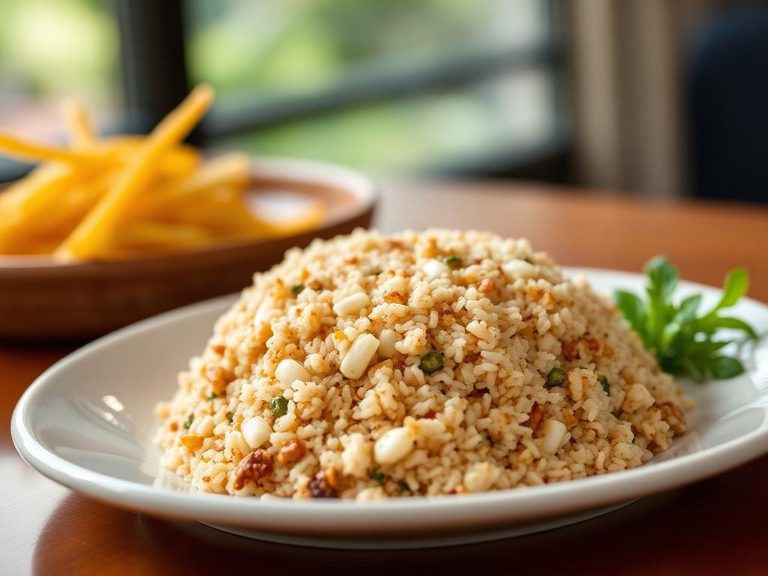
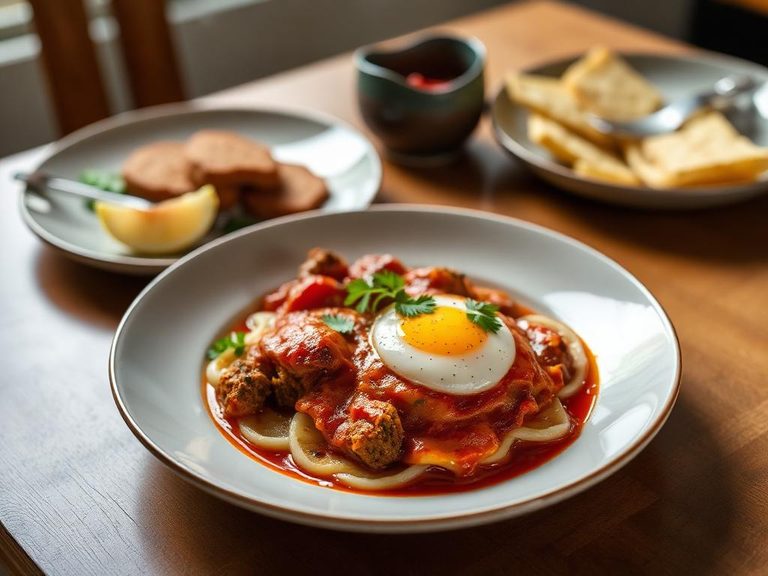
🌍 Where it's eaten
💡 Did you know?
The crispy, browned edges of the egg white are the result of the Maillard reaction, a chemical process between amino acids and sugars that creates complex flavors and aromas, which is significantly enhanced by the high heat of animal fat.
Full nutrition (USDA data · scales with serving)
| Water | 70.9 g |
| Energy | 188 kcal |
| Protein | 11.7 g |
| Total lipid (fat) | 15.3 g |
| Carbohydrate, by difference | 0.90 g |
| Fiber, total dietary | 0.00 g |
| Total Sugars | 0.19 g |
| Calcium, Ca | 45.0 mg |
| Iron, Fe | 1.6 mg |
| Magnesium, Mg | 10.0 mg |
| Phosphorus, P | 172 mg |
| Potassium, K | 124 mg |
| Sodium, Na | 268 mg |
| Zinc, Zn | 1.2 mg |
| Copper, Cu | 0.00 mg |
| Selenium, Se | 29.1 ug |
| Vitamin C, total ascorbic acid | 0.00 mg |
| Thiamin | 0.06 mg |
| Riboflavin | 0.37 mg |
| Niacin | 0.02 mg |
| Vitamin B-6 | 0.06 mg |
| Folate, total | 50.0 ug |
| Folic acid | 0.00 ug |
| Folate, food | 50.0 ug |
| Folate, DFE | 50.0 ug |
| Choline, total | 253 mg |
| Vitamin B-12 | 0.77 ug |
| Vitamin B-12, added | 0.00 ug |
| Vitamin A, RAE | 168 ug |
| Retinol | 167 ug |
| Carotene, beta | 0.00 ug |
| Carotene, alpha | 0.00 ug |
| Cryptoxanthin, beta | 12.0 ug |
| Lycopene | 0.00 ug |
| Lutein + zeaxanthin | 469 ug |
| Vitamin E (alpha-tocopherol) | 1.0 mg |
| Vitamin E, added | 0.00 mg |
| Vitamin D (D2 + D3) | 2.5 ug |
| Vitamin K (phylloquinone) | 0.30 ug |
| Alcohol, ethyl | 0.00 g |
| Caffeine | 0.00 mg |
| Theobromine | 0.00 mg |
Fat & fatty acid profile (per 100g)
| Fatty acids, total saturated | 5.3 g |
| SFA 4:0 | 0.00 g |
| SFA 6:0 | 0.00 g |
| SFA 8:0 | 0.00 g |
| SFA 10:0 | 0.01 g |
| SFA 12:0 | 0.01 g |
| SFA 14:0 | 0.13 g |
| SFA 16:0 | 3.6 g |
| SFA 18:0 | 1.5 g |
| Fatty acids, total monounsaturated | 6.1 g |
| MUFA 16:1 | 0.42 g |
| MUFA 18:1 | 5.6 g |
| MUFA 20:1 | 0.05 g |
| MUFA 22:1 | 0.00 g |
| Fatty acids, total polyunsaturated | 2.4 g |
| PUFA 18:2 | 1.9 g |
| PUFA 18:3 | 0.07 g |
| PUFA 18:4 | 0.00 g |
| PUFA 20:4 | 0.00 g |
| PUFA 20:5 n-3 (EPA) | 0.00 g |
| PUFA 22:5 n-3 (DPA) | 0.00 g |
| PUFA 22:6 n-3 (DHA) | 0.00 g |
| Cholesterol | 389 mg |
Amino acid profile (per 100g)
Estimated from Fish, whitefish, eggs (Alaska Native) — USDA does not publish this profile for Egg.
| Tryptophan | 0.28 g |
| Threonine | 1.0 g |
| Isoleucine | 1.1 g |
| Leucine | 1.6 g |
| Lysine | 1.6 g |
| Methionine | 0.56 g |
| Cystine | 0.23 g |
| Phenylalanine | 0.90 g |
| Tyrosine | 0.76 g |
| Valine | 1.3 g |
| Arginine | 1.1 g |
| Histidine | 0.53 g |
| Alanine | 1.6 g |
| Aspartic acid | 1.6 g |
| Glutamic acid | 2.2 g |
| Glycine | 0.50 g |
| Proline | 1.1 g |
| Serine | 1.2 g |
FAQ
How does frying in animal fat differ from using vegetable oil?
Animal fats like lard, tallow, or bacon grease have a distinct, savory flavor and a higher smoke point, allowing for crispier results. They also contain more saturated fat compared to most liquid vegetable oils.
Is the nutrition information for one egg or per 100g?
The provided data is per 100 grams. A typical medium fried egg weighs about 118 grams, so its total calories and macros would be roughly 18% higher than the per-100g values.
Can I reduce the fat content while still getting a fried egg?
Yes, use a non-stick pan with a minimal amount of fat, or try a 'fried' egg cooked in a small amount of broth or water (a technique sometimes called 'basted' or 'steam-fried').
Nutrient density (calculated · NRF9.3)
Nutrient Rich Foods index: beneficial nutrients (protein, fiber, vitamins, minerals) minus saturated fat, added sugar & sodium, per 100 kcal.
NRF9.3 index — Fulgoni, Keast & Drewnowski, 2009. Computed from USDA nutrients.
Weight-loss friendliness (composite index)
Energy density 1.88 kcal/g · 25% calories from protein · 0.0 g fiber · 0.2 g sugar per 100 g.
Composite of energy density (Rolls et al., 1999), protein & fiber satiety, minus sugar. A calculated heuristic — ranks satiety-per-calorie, not a clinical measure.
Dietary load (calculated from USDA values)
Potential renal acid load. Positive = acid-forming, negative = alkaline-forming.
Sodium-to-potassium ratio: 2.16 (lower is better — aim for ≤ 1)
Sodium:potassium per WHO potassium guidance. Computed from USDA nutrients.