

Egg, whole, fried no added fat
Common food

Photo: Wikipedia
A whole egg cooked in its own natural fats until the white sets and the yolk remains runny or jammy. The texture is tender and custard-like, with a rich, savory flavor that intensifies when heated. Nutritionally, it's a compact powerhouse of high-quality protein and healthy fats with minimal carbohydrates.
Calorie split: 35% protein · 3% carbs · 63% fat
↓ Full nutrition💚 Why it's loved
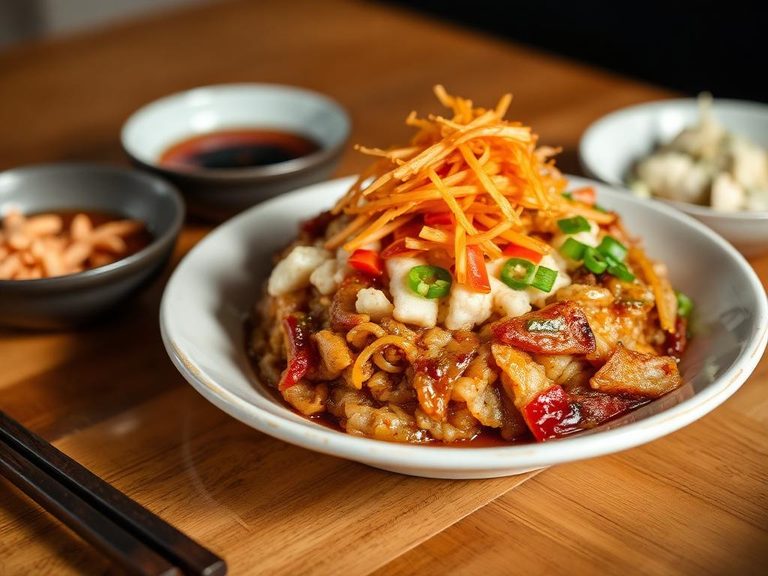
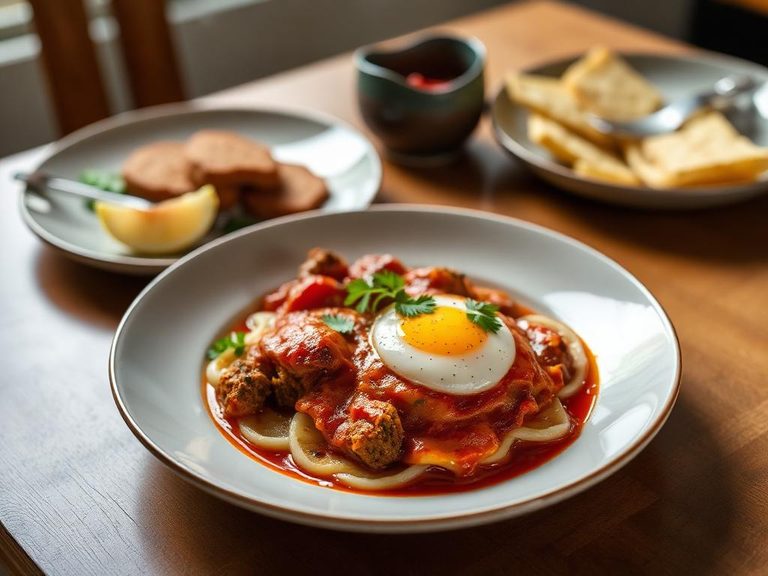
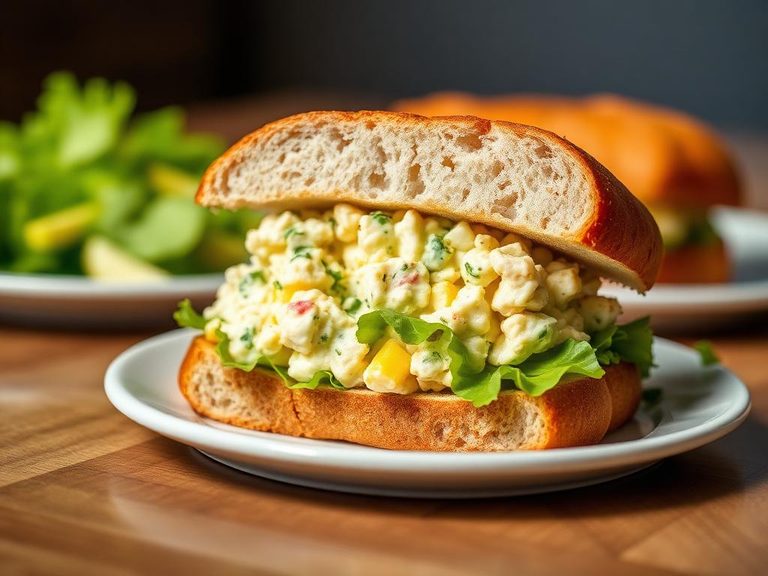
People love it for its incredible versatility—it can be a quick breakfast, a protein boost in a salad, or the star of a simple sandwich. Its rich, savory flavor and satisfying texture make it a universal comfort food across countless cuisines.
⚠️ Watch-outs & how to enjoy it better
As a common allergen, eggs can cause reactions in some individuals. The yolk is high in dietary cholesterol, which may be a consideration for people with specific health conditions. To counteract, pair with high-fiber vegetables to balance the meal and practice portion control if monitoring cholesterol intake.
Key benefits
- Excellent source of complete protein for muscle maintenance
- Rich in choline, essential for brain and liver health
- Contains lutein and zeaxanthin, antioxidants for eye health
- Provides fat-soluble vitamins A, D, E, and K
- Naturally low in carbohydrates, suitable for low-carb diets
🍽️ Popular dishes


🌍 Where it's eaten
💡 Did you know?
A fried egg's yolk color is determined by the hen's diet, not cooking method—darker yellow yolks often indicate a diet rich in carotenoids from plants like marigold or alfalfa.
Full nutrition (USDA data · scales with serving)
| Water | 75.6 g |
| Energy | 143 kcal |
| Protein | 12.4 g |
| Total lipid (fat) | 9.9 g |
| Carbohydrate, by difference | 0.96 g |
| Fiber, total dietary | 0.00 g |
| Total Sugars | 0.20 g |
| Calcium, Ca | 48.0 mg |
| Iron, Fe | 1.7 mg |
| Magnesium, Mg | 11.0 mg |
| Phosphorus, P | 183 mg |
| Potassium, K | 132 mg |
| Sodium, Na | 244 mg |
| Zinc, Zn | 1.2 mg |
| Copper, Cu | 0.00 mg |
| Selenium, Se | 31.0 ug |
| Vitamin C, total ascorbic acid | 0.00 mg |
| Thiamin | 0.06 mg |
| Riboflavin | 0.40 mg |
| Niacin | 0.00 mg |
| Vitamin B-6 | 0.06 mg |
| Folate, total | 53.0 ug |
| Folic acid | 0.00 ug |
| Folate, food | 53.0 ug |
| Folate, DFE | 53.0 ug |
| Choline, total | 267 mg |
| Vitamin B-12 | 0.81 ug |
| Vitamin B-12, added | 0.00 ug |
| Vitamin A, RAE | 179 ug |
| Retinol | 178 ug |
| Carotene, beta | 0.00 ug |
| Carotene, alpha | 0.00 ug |
| Cryptoxanthin, beta | 13.0 ug |
| Lycopene | 0.00 ug |
| Lutein + zeaxanthin | 501 ug |
| Vitamin E (alpha-tocopherol) | 1.1 mg |
| Vitamin E, added | 0.00 mg |
| Vitamin D (D2 + D3) | 2.5 ug |
| Vitamin K (phylloquinone) | 0.30 ug |
| Alcohol, ethyl | 0.00 g |
| Caffeine | 0.00 mg |
| Theobromine | 0.00 mg |
Fat & fatty acid profile (per 100g)
| Fatty acids, total saturated | 3.2 g |
| SFA 4:0 | 0.00 g |
| SFA 6:0 | 0.00 g |
| SFA 8:0 | 0.00 g |
| SFA 10:0 | 0.00 g |
| SFA 12:0 | 0.00 g |
| SFA 14:0 | 0.03 g |
| SFA 16:0 | 2.3 g |
| SFA 18:0 | 0.81 g |
| Fatty acids, total monounsaturated | 3.6 g |
| MUFA 16:1 | 0.24 g |
| MUFA 18:1 | 3.3 g |
| MUFA 20:1 | 0.00 g |
| MUFA 22:1 | 0.00 g |
| Fatty acids, total polyunsaturated | 1.8 g |
| PUFA 18:2 | 1.5 g |
| PUFA 18:3 | 0.01 g |
| PUFA 18:4 | 0.00 g |
| PUFA 20:4 | 0.00 g |
| PUFA 20:5 n-3 (EPA) | 0.00 g |
| PUFA 22:5 n-3 (DPA) | 0.00 g |
| PUFA 22:6 n-3 (DHA) | 0.00 g |
| Cholesterol | 410 mg |
Amino acid profile (per 100g)
Estimated from Fish, whitefish, eggs (Alaska Native) — USDA does not publish this profile for Egg.
| Tryptophan | 0.28 g |
| Threonine | 1.0 g |
| Isoleucine | 1.1 g |
| Leucine | 1.6 g |
| Lysine | 1.6 g |
| Methionine | 0.56 g |
| Cystine | 0.23 g |
| Phenylalanine | 0.90 g |
| Tyrosine | 0.76 g |
| Valine | 1.3 g |
| Arginine | 1.1 g |
| Histidine | 0.53 g |
| Alanine | 1.6 g |
| Aspartic acid | 1.6 g |
| Glutamic acid | 2.2 g |
| Glycine | 0.50 g |
| Proline | 1.1 g |
| Serine | 1.2 g |
FAQ
Is a no-added-fat fried egg the same as a poached egg?
Not exactly. A no-added-fat fried egg uses the egg's own yolk and white fats, resulting in a slightly crisper edge than a poached egg, which is gently cooked in water. The nutritional profile is very similar.
How do I prevent the yolk from breaking when frying without added fat?
Use a non-stick skillet over medium-low heat, crack the egg gently into the pan, and avoid moving it until the white is fully set. A lid can help steam the top of the egg evenly.
Are the nutrients in the yolk as valuable as in the white?
Yes, the yolk contains the majority of the egg's vitamins, minerals, antioxidants, and healthy fats. The white is primarily protein. Eating the whole egg provides the most complete nutritional benefit.
Nutrient density (calculated · NRF9.3)
Nutrient Rich Foods index: beneficial nutrients (protein, fiber, vitamins, minerals) minus saturated fat, added sugar & sodium, per 100 kcal.
NRF9.3 index — Fulgoni, Keast & Drewnowski, 2009. Computed from USDA nutrients.
Weight-loss friendliness (composite index)
Energy density 1.43 kcal/g · 35% calories from protein · 0.0 g fiber · 0.2 g sugar per 100 g.
Composite of energy density (Rolls et al., 1999), protein & fiber satiety, minus sugar. A calculated heuristic — ranks satiety-per-calorie, not a clinical measure.
Dietary load (calculated from USDA values)
Potential renal acid load. Positive = acid-forming, negative = alkaline-forming.
Sodium-to-potassium ratio: 1.85 (lower is better — aim for ≤ 1)
Sodium:potassium per WHO potassium guidance. Computed from USDA nutrients.