

Egg omelet or scrambled egg, with cheese and meat, no added fat
Common food
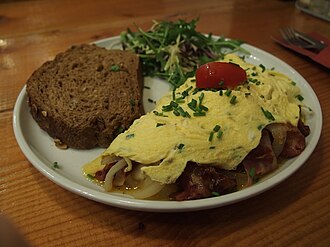
Photo: Wikipedia
A fluffy, savory blend of beaten eggs cooked with cheese and diced meat, creating a tender, protein-packed meal with a rich, salty-savory flavor profile. The texture is soft and custardy, with the cheese adding a creamy melt and the meat providing a satisfying chew. With over 14g of protein per 100g and minimal carbs, it's a powerhouse for muscle maintenance and satiety.
Calorie split: 32% protein · 3% carbs · 65% fat
↓ Full nutrition💚 Why it's loved
People adore its comforting, savory richness and the endless versatility of fillings. It's a beloved staple for quick breakfasts, brunches, or light dinners across countless cultures.
⚠️ Watch-outs & how to enjoy it better
The primary downsides are its high saturated fat and cholesterol content, which may concern those managing heart health or specific dietary conditions. To counteract, use leaner meats (like turkey or chicken), opt for lower-fat cheese, and pair with a large portion of non-starchy vegetables to add volume and fiber without significant calories.
Key benefits
- High-quality complete protein source
- Very low carbohydrate content
- Rich in essential nutrients like choline and B12
- Supports muscle maintenance and repair
- Promotes long-lasting satiety
🍽️ Popular dishes
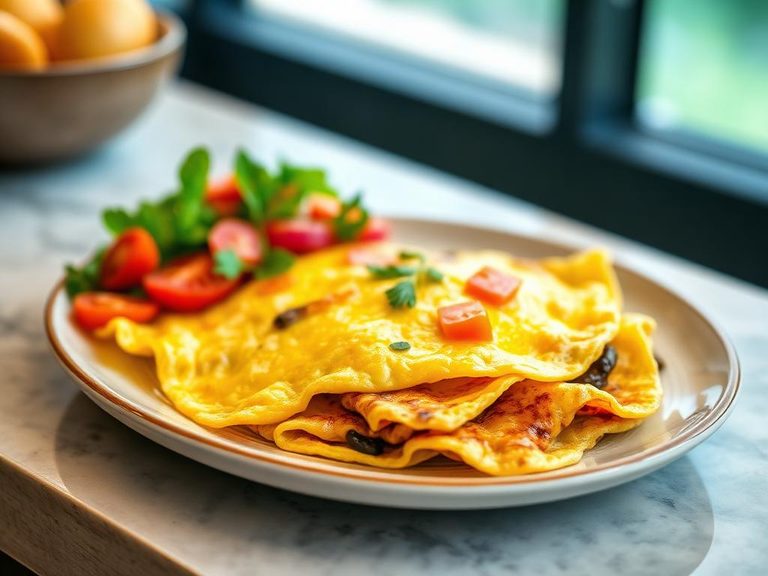
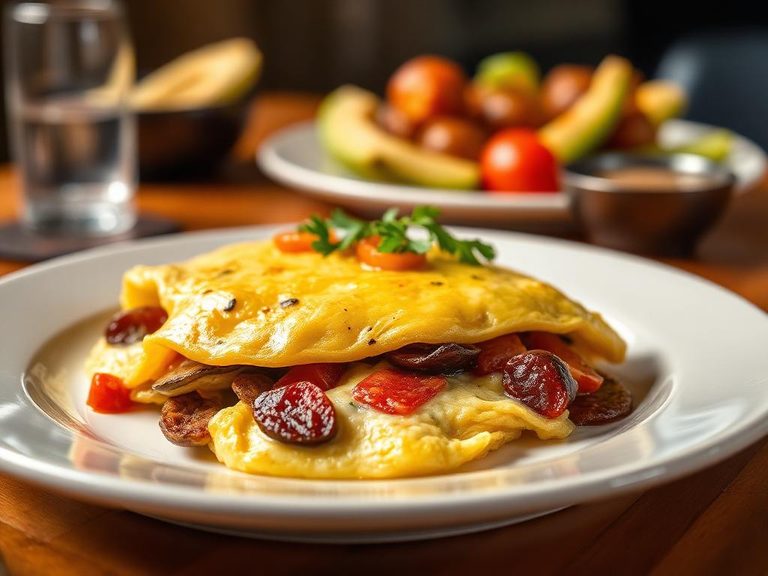
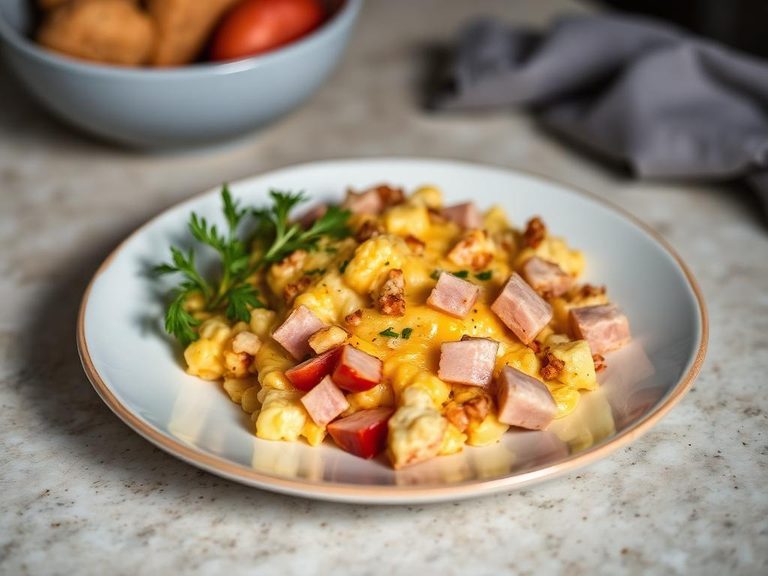
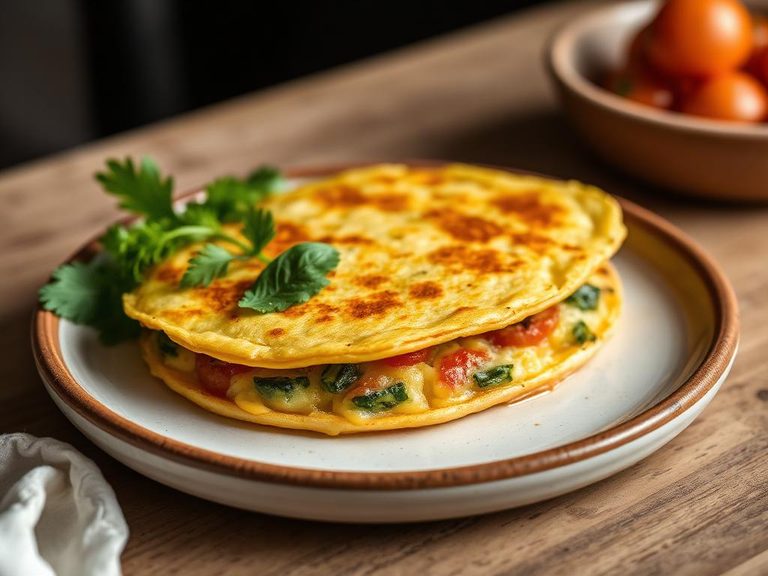
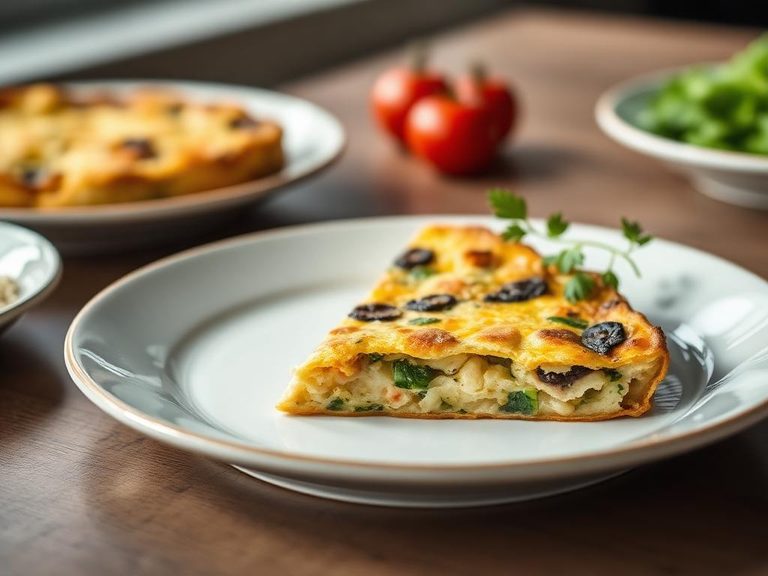
🌍 Where it's eaten
💡 Did you know?
The French word for omelette, 'omelette,' was famously (though likely apocryphally) used by Napoleon Bonaparte, who supposedly demanded one during a battle and had it served on his horse's saddle.
Full nutrition (USDA data · scales with serving)
| Water | 69.9 g |
| Energy | 177 kcal |
| Protein | 14.0 g |
| Total lipid (fat) | 12.8 g |
| Carbohydrate, by difference | 1.5 g |
| Fiber, total dietary | 0.00 g |
| Total Sugars | 0.57 g |
| Calcium, Ca | 147 mg |
| Iron, Fe | 1.5 mg |
| Magnesium, Mg | 14.0 mg |
| Phosphorus, P | 236 mg |
| Potassium, K | 153 mg |
| Sodium, Na | 404 mg |
| Zinc, Zn | 1.5 mg |
| Copper, Cu | 0.01 mg |
| Selenium, Se | 29.9 ug |
| Vitamin C, total ascorbic acid | 0.00 mg |
| Thiamin | 0.08 mg |
| Riboflavin | 0.38 mg |
| Niacin | 0.55 mg |
| Vitamin B-6 | 0.09 mg |
| Folate, total | 44.0 ug |
| Folic acid | 0.00 ug |
| Folate, food | 44.0 ug |
| Folate, DFE | 44.0 ug |
| Choline, total | 222 mg |
| Vitamin B-12 | 0.89 ug |
| Vitamin B-12, added | 0.00 ug |
| Vitamin A, RAE | 177 ug |
| Retinol | 175 ug |
| Carotene, beta | 9.0 ug |
| Carotene, alpha | 0.00 ug |
| Cryptoxanthin, beta | 11.0 ug |
| Lycopene | 0.00 ug |
| Lutein + zeaxanthin | 404 ug |
| Vitamin E (alpha-tocopherol) | 0.97 mg |
| Vitamin E, added | 0.00 mg |
| Vitamin D (D2 + D3) | 2.5 ug |
| Vitamin K (phylloquinone) | 0.60 ug |
| Alcohol, ethyl | 0.00 g |
| Caffeine | 0.00 mg |
| Theobromine | 0.00 mg |
Fat & fatty acid profile (per 100g)
| Fatty acids, total saturated | 5.0 g |
| SFA 4:0 | 0.07 g |
| SFA 6:0 | 0.06 g |
| SFA 8:0 | 0.04 g |
| SFA 10:0 | 0.08 g |
| SFA 12:0 | 0.10 g |
| SFA 14:0 | 0.36 g |
| SFA 16:0 | 3.0 g |
| SFA 18:0 | 1.1 g |
| Fatty acids, total monounsaturated | 4.3 g |
| MUFA 16:1 | 0.28 g |
| MUFA 18:1 | 4.0 g |
| MUFA 20:1 | 0.02 g |
| MUFA 22:1 | 0.00 g |
| Fatty acids, total polyunsaturated | 1.8 g |
| PUFA 18:2 | 1.5 g |
| PUFA 18:3 | 0.03 g |
| PUFA 18:4 | 0.00 g |
| PUFA 20:4 | 0.01 g |
| PUFA 20:5 n-3 (EPA) | 0.00 g |
| PUFA 22:5 n-3 (DPA) | 0.00 g |
| PUFA 22:6 n-3 (DHA) | 0.00 g |
| Cholesterol | 345 mg |
Amino acid profile (per 100g)
Estimated from Egg, whole, cooked, omelet — USDA does not publish this profile for Egg omelet or scrambled egg.
| Tryptophan | 0.14 g |
| Threonine | 0.47 g |
| Isoleucine | 0.56 g |
| Leucine | 0.91 g |
| Lysine | 0.77 g |
| Methionine | 0.32 g |
| Cystine | 0.23 g |
| Phenylalanine | 0.57 g |
| Tyrosine | 0.42 g |
| Valine | 0.72 g |
| Arginine | 0.69 g |
| Histidine | 0.26 g |
| Alanine | 0.62 g |
| Aspartic acid | 1.1 g |
| Glutamic acid | 1.4 g |
| Glycine | 0.36 g |
| Proline | 0.43 g |
| Serine | 0.82 g |
FAQ
Is this a good post-workout meal?
Yes, it's excellent. The high protein content aids muscle recovery, and the very low carbs make it suitable for low-carb or ketogenic diets. Pairing it with a small portion of fruit or whole-grain toast can add quick-digesting carbs if needed.
How can I make it healthier?
Use egg whites or a mix of whole eggs and whites to reduce fat and cholesterol. Choose low-fat cheese and lean protein like turkey breast or lean ham. Load it with vegetables like spinach, peppers, or mushrooms to increase volume and nutrients.
Can I freeze leftovers?
While you can freeze cooked eggs, the texture often becomes rubbery and watery upon thawing. It's best enjoyed fresh. If you must, freeze in airtight containers for up to 3 months and reheat gently in a skillet or microwave.
Nutrient density (calculated · NRF9.3)
Nutrient Rich Foods index: beneficial nutrients (protein, fiber, vitamins, minerals) minus saturated fat, added sugar & sodium, per 100 kcal.
NRF9.3 index — Fulgoni, Keast & Drewnowski, 2009. Computed from USDA nutrients.
Weight-loss friendliness (composite index)
Energy density 1.77 kcal/g · 32% calories from protein · 0.0 g fiber · 0.6 g sugar per 100 g.
Composite of energy density (Rolls et al., 1999), protein & fiber satiety, minus sugar. A calculated heuristic — ranks satiety-per-calorie, not a clinical measure.
Dietary load (calculated from USDA values)
Potential renal acid load. Positive = acid-forming, negative = alkaline-forming.
Sodium-to-potassium ratio: 2.64 (lower is better — aim for ≤ 1)
Sodium:potassium per WHO potassium guidance. Computed from USDA nutrients.