

Egg, whole, boiled or poached
Common food

Photo: Wikipedia
A whole egg, cooked by gentle simmering or steaming, offers a firm, springy white and a creamy, rich yolk. Its flavor is subtly savory and buttery, with a clean, satisfying mouthfeel. Nutritionally, it's a powerhouse of high-quality protein and healthy fats with minimal carbohydrates.
Calorie split: 35% protein · 3% carbs · 63% fat
↓ Full nutrition💚 Why it's loved
People adore it for its perfect balance of simplicity and richness, serving as a reliable, portable protein source. Its neutral flavor makes it a culinary chameleon, seamlessly fitting into breakfasts, salads, and snacks across countless cultures.
⚠️ Watch-outs & how to enjoy it better
As a common food allergen, eggs can cause reactions in sensitive individuals. The yolk contains dietary cholesterol, which some people monitor. To mitigate, those with concerns can limit yolk intake or pair the egg with fiber-rich vegetables. For allergies, strict avoidance is necessary.
Key benefits
- Excellent source of complete, high-biological-value protein.
- Rich in choline, essential for brain and liver health.
- Provides fat-soluble vitamins A, D, E, and K from the yolk.
- Contains lutein and zeaxanthin, antioxidants for eye health.
- Highly satiating, aiding in appetite control.
🍽️ Popular dishes

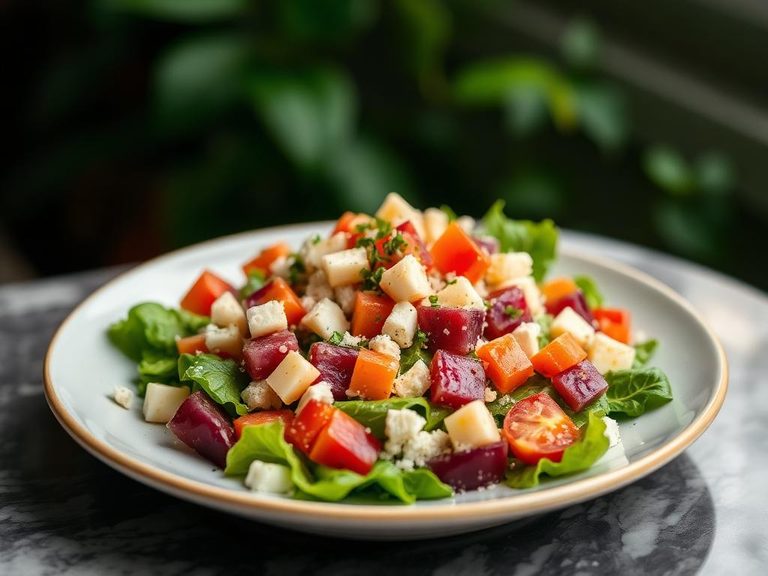
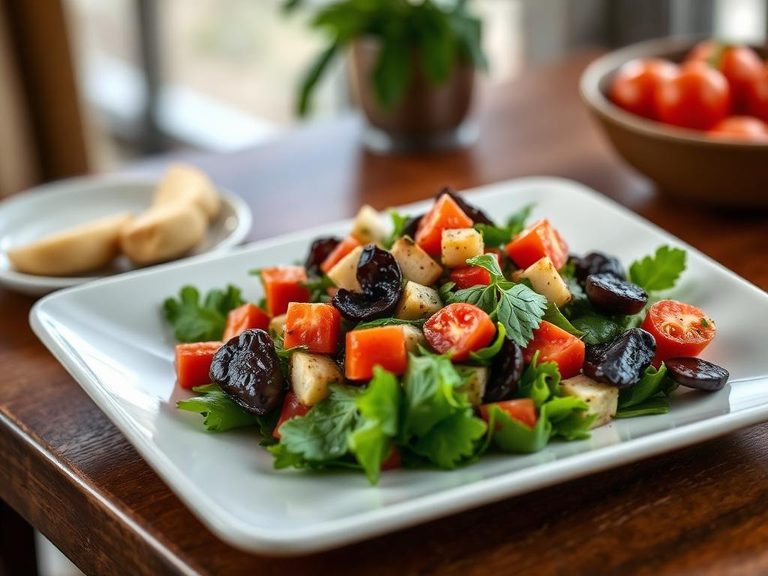



🌍 Where it's eaten
💡 Did you know?
A single large boiled egg contains about 6 grams of protein, but the yolk holds nearly half of that, along with almost all the fat and vitamins.
Full nutrition (USDA data · scales with serving)
| Water | 75.8 g |
| Energy | 143 kcal |
| Protein | 12.4 g |
| Total lipid (fat) | 10.0 g |
| Carbohydrate, by difference | 0.96 g |
| Fiber, total dietary | 0.00 g |
| Total Sugars | 0.20 g |
| Calcium, Ca | 48.0 mg |
| Iron, Fe | 1.7 mg |
| Magnesium, Mg | 11.0 mg |
| Phosphorus, P | 184 mg |
| Potassium, K | 132 mg |
| Sodium, Na | 129 mg |
| Zinc, Zn | 1.2 mg |
| Copper, Cu | 0.00 mg |
| Selenium, Se | 31.1 ug |
| Vitamin C, total ascorbic acid | 0.00 mg |
| Thiamin | 0.06 mg |
| Riboflavin | 0.40 mg |
| Niacin | 0.00 mg |
| Vitamin B-6 | 0.06 mg |
| Folate, total | 53.0 ug |
| Folic acid | 0.00 ug |
| Folate, food | 53.0 ug |
| Folate, DFE | 53.0 ug |
| Choline, total | 268 mg |
| Vitamin B-12 | 0.82 ug |
| Vitamin B-12, added | 0.00 ug |
| Vitamin A, RAE | 180 ug |
| Retinol | 179 ug |
| Carotene, beta | 0.00 ug |
| Carotene, alpha | 0.00 ug |
| Cryptoxanthin, beta | 13.0 ug |
| Lycopene | 0.00 ug |
| Lutein + zeaxanthin | 503 ug |
| Vitamin E (alpha-tocopherol) | 1.1 mg |
| Vitamin E, added | 0.00 mg |
| Vitamin D (D2 + D3) | 2.5 ug |
| Vitamin K (phylloquinone) | 0.30 ug |
| Alcohol, ethyl | 0.00 g |
| Caffeine | 0.00 mg |
| Theobromine | 0.00 mg |
Fat & fatty acid profile (per 100g)
| Fatty acids, total saturated | 3.2 g |
| SFA 4:0 | 0.00 g |
| SFA 6:0 | 0.00 g |
| SFA 8:0 | 0.00 g |
| SFA 10:0 | 0.00 g |
| SFA 12:0 | 0.00 g |
| SFA 14:0 | 0.03 g |
| SFA 16:0 | 2.3 g |
| SFA 18:0 | 0.81 g |
| Fatty acids, total monounsaturated | 3.6 g |
| MUFA 16:1 | 0.24 g |
| MUFA 18:1 | 3.4 g |
| MUFA 20:1 | 0.00 g |
| MUFA 22:1 | 0.00 g |
| Fatty acids, total polyunsaturated | 1.8 g |
| PUFA 18:2 | 1.5 g |
| PUFA 18:3 | 0.01 g |
| PUFA 18:4 | 0.00 g |
| PUFA 20:4 | 0.00 g |
| PUFA 20:5 n-3 (EPA) | 0.00 g |
| PUFA 22:5 n-3 (DPA) | 0.00 g |
| PUFA 22:6 n-3 (DHA) | 0.00 g |
| Cholesterol | 411 mg |
Amino acid profile (per 100g)
Estimated from Fish, whitefish, eggs (Alaska Native) — USDA does not publish this profile for Egg.
| Tryptophan | 0.28 g |
| Threonine | 1.0 g |
| Isoleucine | 1.1 g |
| Leucine | 1.6 g |
| Lysine | 1.6 g |
| Methionine | 0.56 g |
| Cystine | 0.23 g |
| Phenylalanine | 0.90 g |
| Tyrosine | 0.76 g |
| Valine | 1.3 g |
| Arginine | 1.1 g |
| Histidine | 0.53 g |
| Alanine | 1.6 g |
| Aspartic acid | 1.6 g |
| Glutamic acid | 2.2 g |
| Glycine | 0.50 g |
| Proline | 1.1 g |
| Serine | 1.2 g |
FAQ
Are boiled eggs a good post-workout food?
Yes, they are excellent. The high-quality protein supports muscle repair and growth, and the healthy fats provide sustained energy without spiking blood sugar.
How long can I store a hard-boiled egg?
In its shell, a hard-boiled egg will keep in the refrigerator for up to one week. Once peeled, it should be eaten within a couple of days.
Why does the yolk sometimes have a green ring?
That greenish ring is a harmless reaction between sulfur in the white and iron in the yolk, caused by overcooking. It's safe to eat but can be prevented by cooling the egg quickly after cooking.
Nutrient density (calculated · NRF9.3)
Nutrient Rich Foods index: beneficial nutrients (protein, fiber, vitamins, minerals) minus saturated fat, added sugar & sodium, per 100 kcal.
NRF9.3 index — Fulgoni, Keast & Drewnowski, 2009. Computed from USDA nutrients.
Weight-loss friendliness (composite index)
Energy density 1.43 kcal/g · 35% calories from protein · 0.0 g fiber · 0.2 g sugar per 100 g.
Composite of energy density (Rolls et al., 1999), protein & fiber satiety, minus sugar. A calculated heuristic — ranks satiety-per-calorie, not a clinical measure.
Dietary load (calculated from USDA values)
Potential renal acid load. Positive = acid-forming, negative = alkaline-forming.
Sodium-to-potassium ratio: 0.98 (lower is better — aim for ≤ 1)
Sodium:potassium per WHO potassium guidance. Computed from USDA nutrients.