

Egg substitute, omelet, scrambled, or fried, with cheese and meat
Common food

Photo: Wikipedia
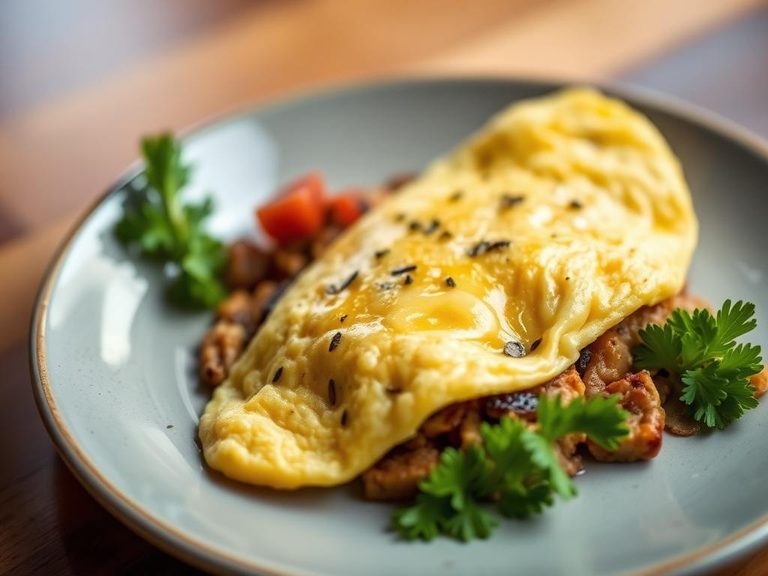
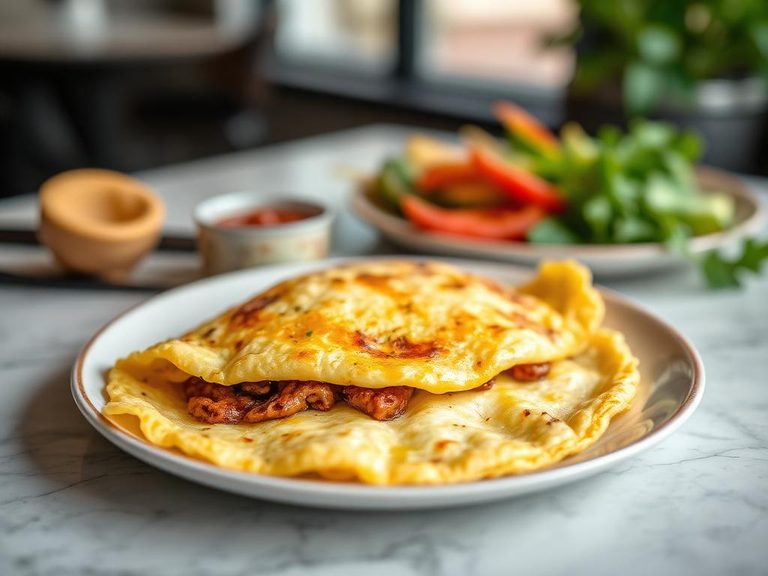
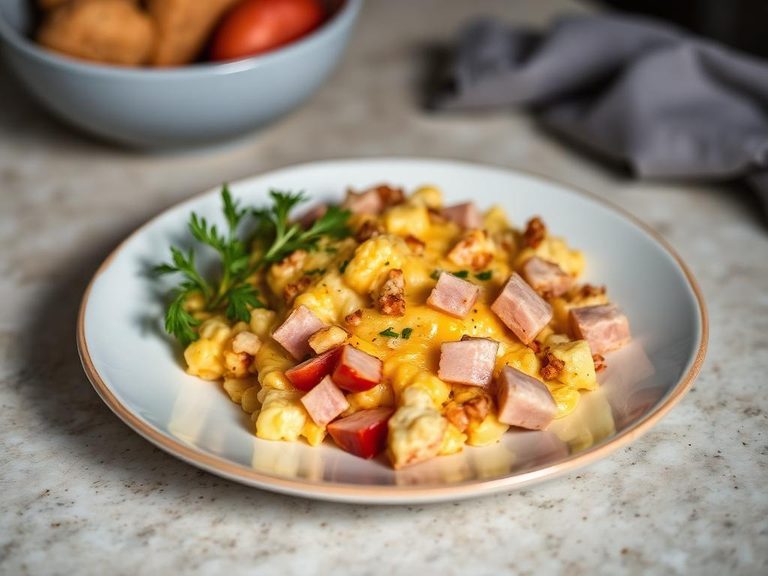
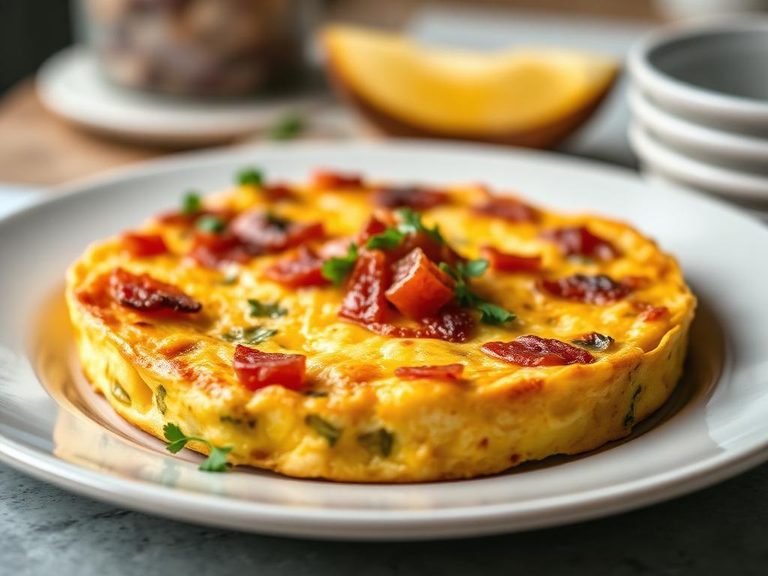
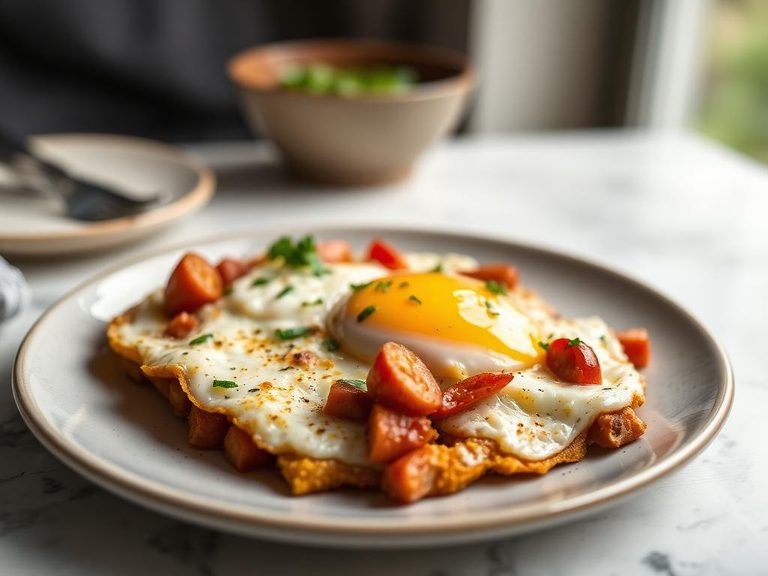
This is a hearty, protein-packed meal of fluffy scrambled, folded omelet, or fried egg whites and yolks, generously studded with melted cheese and savory bits of meat like ham, bacon, or sausage. The texture is a delightful contrast of soft, custardy egg, gooey cheese, and chewy, salty meat. Nutritionally, it's a low-carb, high-protein powerhouse, delivering over 11 grams of protein per 100 grams with minimal sugars.
Calorie split: 33% protein · 6% carbs · 60% fat
↓ Full nutrition💚 Why it's loved
People adore this dish for its savory, umami-rich flavor and incredible versatility—it's a canvas for countless cheese and meat combinations. It's a beloved comfort food staple, from American diner breakfasts to quick weeknight dinners, offering a satisfying, complete meal in one pan.
⚠️ Watch-outs & how to enjoy it better
The primary downsides are its high saturated fat and sodium content, especially with processed meats and salty cheeses, which can be a concern for heart health or blood pressure. To counteract this, opt for leaner meats like turkey or chicken, choose lower-sodium cheeses, and balance the meal with a large side of fibrous vegetables like spinach or tomatoes to add volume and nutrients without extra salt.
Key benefits
- Excellent source of complete, high-quality protein for muscle repair and satiety.
- Very low in carbohydrates and sugars, making it suitable for low-carb diets.
- Provides essential nutrients like vitamin B12, selenium, and choline from the eggs.
- The fat from cheese and meat enhances the absorption of fat-soluble vitamins (A, D, E, K).
- A highly customizable meal that can be tailored to various dietary preferences.
🍽️ Popular dishes
🌍 Where it's eaten
💡 Did you know?
The 'omelet' as we know it is a relatively modern French refinement; the word itself is a corruption of the French 'amelette,' which was likely a mispronunciation of 'la lamette,' meaning 'the blade,' referring to the thin, folded shape.
Full nutrition (USDA data · scales with serving)
| Water | 75.2 g |
| Energy | 138 kcal |
| Protein | 11.5 g |
| Total lipid (fat) | 9.2 g |
| Carbohydrate, by difference | 2.2 g |
| Fiber, total dietary | 0.00 g |
| Total Sugars | 1.9 g |
| Calcium, Ca | 159 mg |
| Iron, Fe | 1.6 mg |
| Magnesium, Mg | 16.0 mg |
| Phosphorus, P | 139 mg |
| Potassium, K | 207 mg |
| Sodium, Na | 452 mg |
| Zinc, Zn | 1.3 mg |
| Copper, Cu | 0.03 mg |
| Selenium, Se | 36.1 ug |
| Vitamin C, total ascorbic acid | 0.30 mg |
| Thiamin | 0.10 mg |
| Riboflavin | 0.34 mg |
| Niacin | 0.61 mg |
| Vitamin B-6 | 0.16 mg |
| Folate, total | 11.0 ug |
| Folic acid | 0.00 ug |
| Folate, food | 11.0 ug |
| Folate, DFE | 11.0 ug |
| Choline, total | 9.9 mg |
| Vitamin B-12 | 0.43 ug |
| Vitamin B-12, added | 0.00 ug |
| Vitamin A, RAE | 61.0 ug |
| Retinol | 51.0 ug |
| Carotene, beta | 120 ug |
| Carotene, alpha | 0.00 ug |
| Cryptoxanthin, beta | 1.0 ug |
| Lycopene | 0.00 ug |
| Lutein + zeaxanthin | 2.0 ug |
| Vitamin E (alpha-tocopherol) | 2.0 mg |
| Vitamin E, added | 0.00 mg |
| Vitamin D (D2 + D3) | 1.7 ug |
| Vitamin K (phylloquinone) | 4.3 ug |
| Alcohol, ethyl | 0.00 g |
| Caffeine | 0.00 mg |
| Theobromine | 0.00 mg |
Fat & fatty acid profile (per 100g)
| Fatty acids, total saturated | 3.5 g |
| SFA 4:0 | 0.10 g |
| SFA 6:0 | 0.07 g |
| SFA 8:0 | 0.05 g |
| SFA 10:0 | 0.11 g |
| SFA 12:0 | 0.13 g |
| SFA 14:0 | 0.43 g |
| SFA 16:0 | 1.8 g |
| SFA 18:0 | 0.70 g |
| Fatty acids, total monounsaturated | 2.9 g |
| MUFA 16:1 | 0.11 g |
| MUFA 18:1 | 2.8 g |
| MUFA 20:1 | 0.04 g |
| MUFA 22:1 | 0.00 g |
| Fatty acids, total polyunsaturated | 1.7 g |
| PUFA 18:2 | 1.5 g |
| PUFA 18:3 | 0.17 g |
| PUFA 18:4 | 0.00 g |
| PUFA 20:4 | 0.01 g |
| PUFA 20:5 n-3 (EPA) | 0.00 g |
| PUFA 22:5 n-3 (DPA) | 0.00 g |
| PUFA 22:6 n-3 (DHA) | 0.00 g |
| Cholesterol | 20.0 mg |
Amino acid profile (per 100g)
Estimated from Egg substitute, liquid or frozen, fat free — USDA does not publish this profile for Egg substitute.
| Tryptophan | 0.16 g |
| Threonine | 0.48 g |
| Isoleucine | 0.66 g |
| Leucine | 0.97 g |
| Lysine | 0.71 g |
| Methionine | 0.39 g |
| Cystine | 0.23 g |
| Phenylalanine | 0.65 g |
| Tyrosine | 0.46 g |
| Valine | 0.79 g |
| Arginine | 0.58 g |
| Histidine | 0.26 g |
| Alanine | 0.62 g |
| Aspartic acid | 0.93 g |
| Glutamic acid | 1.7 g |
| Glycine | 0.36 g |
| Proline | 0.56 g |
| Serine | 0.75 g |
FAQ
Is this a good meal for weight loss?
It can be, due to its high protein content which promotes fullness. However, be mindful of portion size and the type/amount of cheese and fatty meats used, as they significantly increase the calorie density. Load up on vegetables to add volume.
Can I make this without dairy?
Absolutely. You can omit the cheese entirely or use a dairy-free alternative. The dish will still be flavorful from the eggs and meat, though you'll lose the creamy, gooey texture and some of the fat and protein.
What's the best way to cook the eggs for this?
For a scramble, cook over medium-low heat, stirring gently for soft curds. For an omelet, pour beaten eggs into a hot, buttered pan, add fillings to one half when the bottom sets, and fold. For fried, cook to your desired doneness for the yolk.
Nutrient density (calculated · NRF9.3)
Nutrient Rich Foods index: beneficial nutrients (protein, fiber, vitamins, minerals) minus saturated fat, added sugar & sodium, per 100 kcal.
NRF9.3 index — Fulgoni, Keast & Drewnowski, 2009. Computed from USDA nutrients.
Weight-loss friendliness (composite index)
Energy density 1.38 kcal/g · 33% calories from protein · 0.0 g fiber · 1.9 g sugar per 100 g.
Composite of energy density (Rolls et al., 1999), protein & fiber satiety, minus sugar. A calculated heuristic — ranks satiety-per-calorie, not a clinical measure.
Dietary load (calculated from USDA values)
Potential renal acid load. Positive = acid-forming, negative = alkaline-forming.
Sodium-to-potassium ratio: 2.18 (lower is better — aim for ≤ 1)
Sodium:potassium per WHO potassium guidance. Computed from USDA nutrients.